
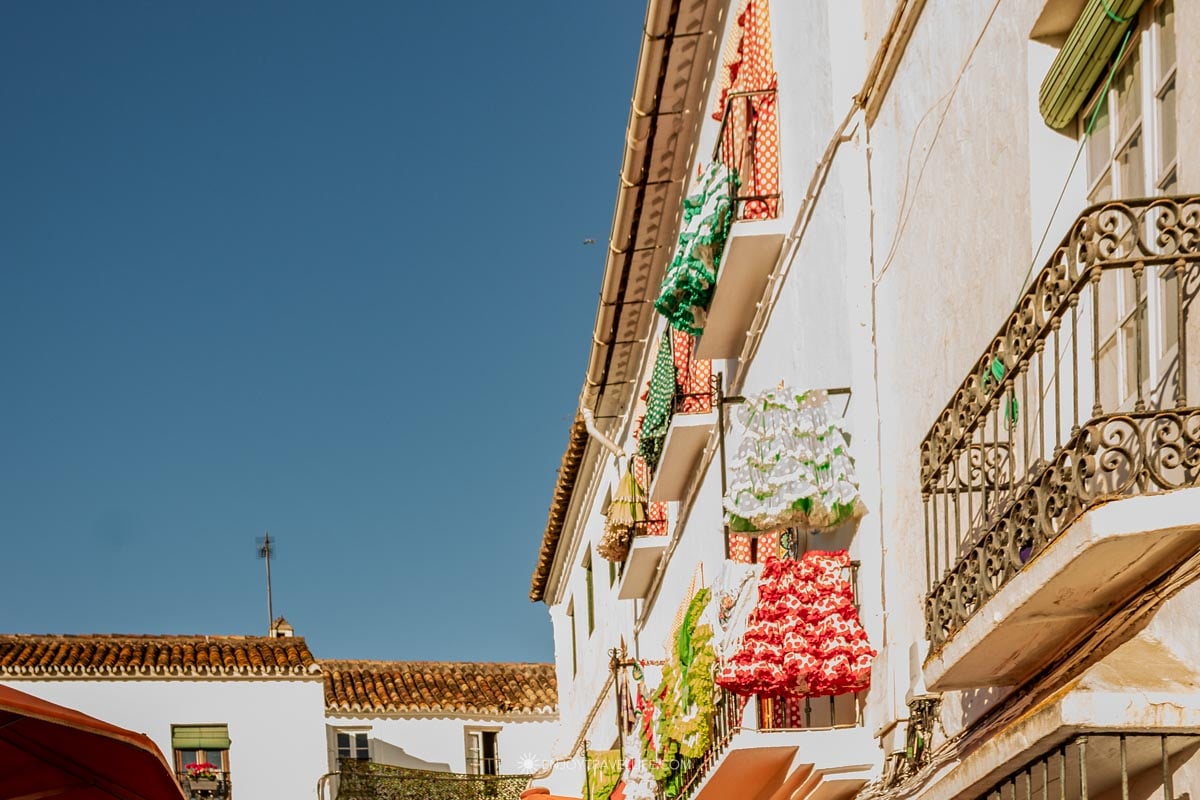

Most travelers come to Marbella for the beaches, then never venture beyond the shoreline. That’s a mistake.
When you fully explore the Marbella Costa del Sol region, you’ll discover white villages in the hills, historic old towns, scenic mountain drives, and pockets of unbelievable luxury all within easy reach of each other. You might spend the morning wandering quiet cobblestone streets and end the day surrounded by yachts and designer storefronts.
If you’re planning a Southern Spain itinerary, Marbella makes an ideal base for exploring this stretch of the Costa del Sol. Continue reading to learn about my favorite places and day trips along the coast.
IN THIS ARTICLE
Exploring the Costa del Sol
I flew into Málaga Airport (AGP) from Boston on a Sunday afternoon in June. Málaga is the main gateway to the Costa del Sol, Spain’s southern Mediterranean coast in the Andalusia region, and Marbella is about 30 miles (50 km) west along the highway.
The taxi to Marbella took about 45 minutes and cost €60–80 ($65–87) depending on traffic and time of day. Bus service is also available if you’re on a tighter budget.
Once I arrived in the Costa del Sol, I explored Marbella’s old town, drove into the hills to Mijas, and meandered Puerto Banús.
“Costa del Sol” literally translates to “Coast of the Sun,” which truly fits the destination. You’ll find warm Mediterranean weather, long sunny days, and beach towns stretching along Spain’s southern coast.
But what stood out most was how varied the Costa del Sol felt from one stop to the next, far beyond the beach destination reputation most travelers associate with the region.
Marbella as a Base to Explore the Costa del Sol
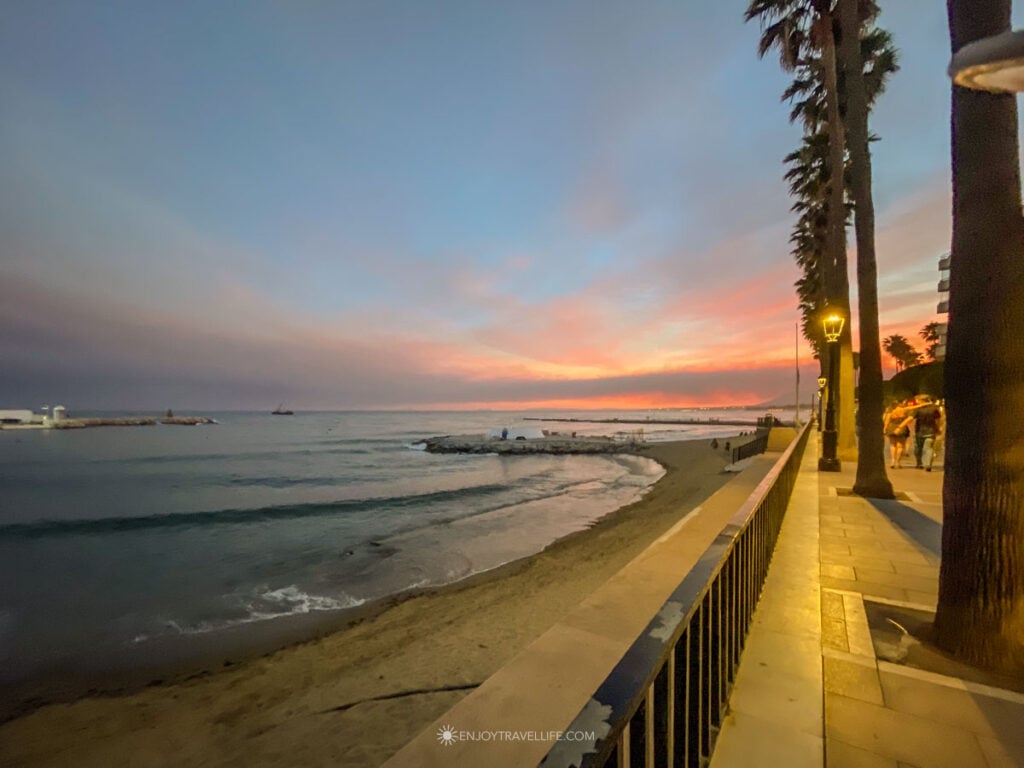
Using Marbella Costa del Sol as your home base makes sense because it’s easy to combine beach towns, white villages, and larger Andalusian cities without constantly changing hotels. Most of the places I visited on this trip worked well as day trips or overnight extensions from a Marbella base.
Here are some options you might consider when you choose Marbella as your home base.
Distances from Marbella
- Puerto Banús: 10 minutes by car or taxi
- Mijas Pueblo: 30 minutes by car
- Málaga city center: 45–60 minutes by car
- Ronda: about 1.5 hours by car
- Nerja: about 1.5 hours by car
- Córdoba: about 2 hours by car
- Seville: about 2.5 hours by car (or take the organized FAM trip like I did)
- Granada: about 2.5-3 hours by car, or 6 hours by car via Seville if you’re making a loop
For the Costa del Sol specifically, having a car gives you the most flexibility for hitting Mijas and the smaller beach towns. But Marbella itself is walkable, and taxis to Puerto Banús are cheap and plentiful.
If you’re planning to explore beyond the Costa del Sol (Seville, Granada), consider renting a car for those legs and using taxis locally in Marbella. Parking in Marbella Old Town is a headache you don’t need.
Where to Stay in Marbella
I spent 5 nights on the Costa del Sol at the NH Marbella hotel along Marbella’s Golden Mile.
The hotel is a solid mid-range option: clean and modern with a pool that was a welcome break after long afternoons exploring in the Andalusian heat.
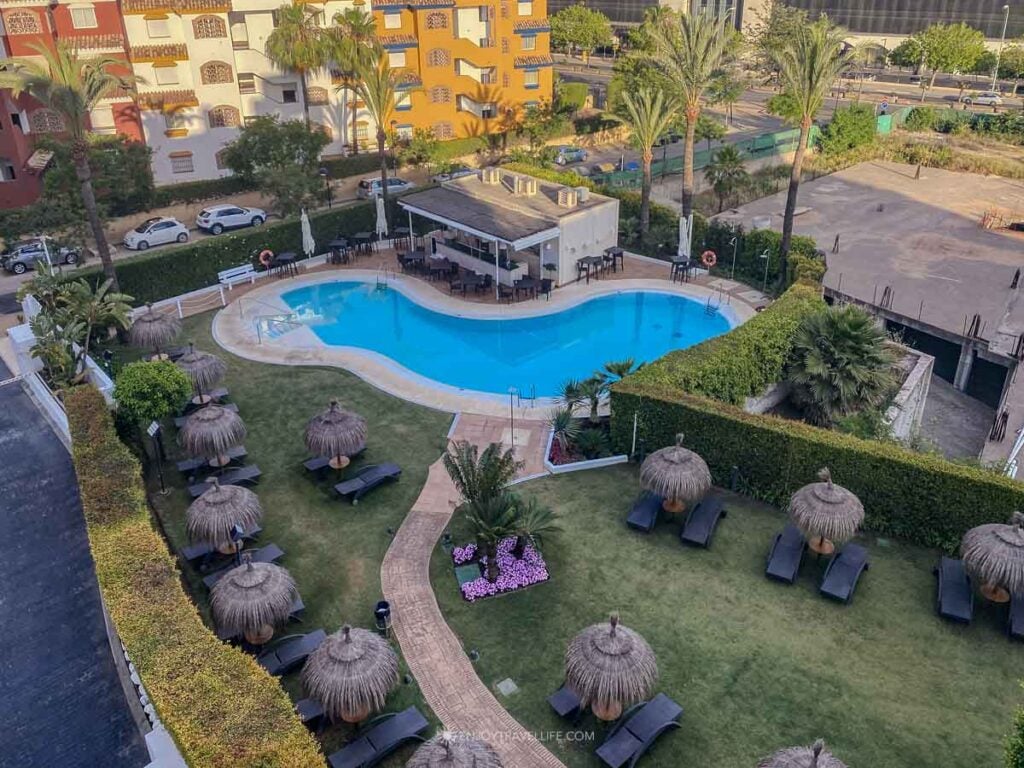
Located right on the main road, it is about a 15-minute walk from the Old Town and promenade with easy access to the beach.
If NH Collection Marbella is booked, you might also consider these hotels:
- Best Budget Hotel: Hotel San Cristóbal, a solid value option within walking distance of both the beach and Marbella’s Old Town.
- Best Mid-Range Hotel: Amàre Beach Hotel Marbella, an adults-only beachfront hotel with a stylish atmosphere and easy access to Old Town restaurants and nightlife.
- Best Luxury Hotel: Marbella Club Hotel, one of Marbella’s iconic luxury resorts, known for its beachfront setting, gardens, and classic Costa del Sol glamour.
Use the interactive map below to browse hotels in Marbella, compare prices, and narrow your search by dates, budget, or amenities. It’s an easy way to see which areas work best for your Costa del Sol itinerary before booking.
Why the Costa del Sol Deserves More Than a Beach Day
The Costa del Sol runs about 93 miles (150 km.) along Spain’s southern Mediterranean coast, from Málaga in the east to just past Estepona in the west.
Most of the tourist infrastructure clusters around Marbella and Torremolinos. But the real culture reveals itself when you delve inland. Go up into the hill towns, into the old quarters, and through the morning markets.
You’ll be delighted that the weather cooperates almost year-round.
June through September averages 86°F (30°C) with almost zero rain. Even the shoulder months stay warm enough for outdoor dining and long walks through town.
My trip was in early June, and every evening felt like a gift. I enjoyed warm air, no humidity, and sunsets that lasted past 9:30 PM.
If you’re based in Marbella, you can reach Mijas in 30 minutes, Puerto Banús in 10, and Málaga in under an hour. That makes it an ideal base for covering the Costa del Sol without switching hotels every night.
Here’s what you can expect.
1. Marbella Old Town and the Orange Square

History, Charm, and Orange Trees
Marbella’s Old Town is a tangle of narrow streets, white buildings, and the kind of quiet plazas where people sit with coffee for two hours and nobody rushes them.
The center of it all is the Plaza de los Naranjos, the Orange Square. It’s named for the trees that shade the outdoor restaurant tables.
Remarkably, it’s been the heart of Marbella since the 15th century, and it still works.
I walked through the Old Town on my first evening in Marbella. The conference had an opening reception at 8:30 PM, which is early by Spanish standards, and the walk from NH Marbella into the old quarter took about 15 minutes.
The streets were warm and mostly empty. Bougainvillea spilled over the white walls. A few restaurants were just starting to fill up.
The Orange Square itself is small enough to cross in a minute but charming enough to take pause. The orange trees provide natural shade, and the restaurants that ring the plaza serve solid Spanish food at tourist-area prices. It’s not the cheapest meal in Marbella, but the setting earns the markup.
Beyond the square, the old town rewards wandering.
You’ll want to visit Iglesia de la Encarnación, a church dating to the 16th century. It was built partly on the site of a former mosque after the Christian reconquest of the city.
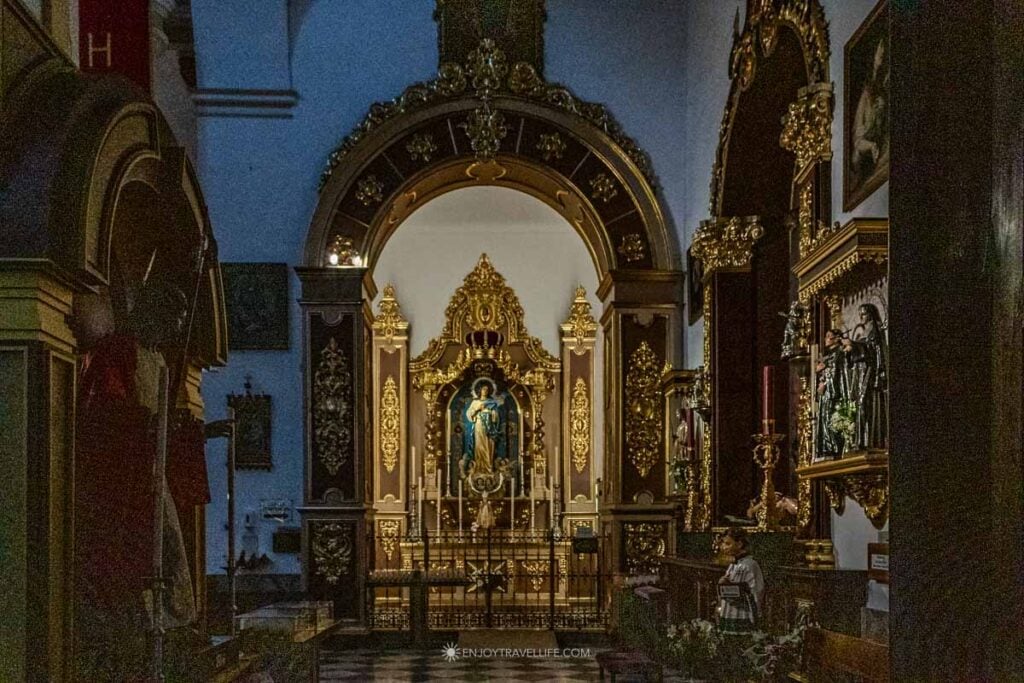
Then look for the remnants of the old Moorish fortress walls along the surrounding streets.
Together, they offer a glimpse into just how much history is layered into Marbella’s Old Town.
The side alleys around the Orange Square are also worth exploring for flower-filled courtyards and small plazas for picturesque scenes.
You’ll also find small shops selling Andalusian ceramics, olive oil, leather goods, and other locally inspired souvenirs that feel far more authentic than the commercial strips closer to the beach.
If you have extra time, continue downhill toward Marbella’s beachfront promenade.
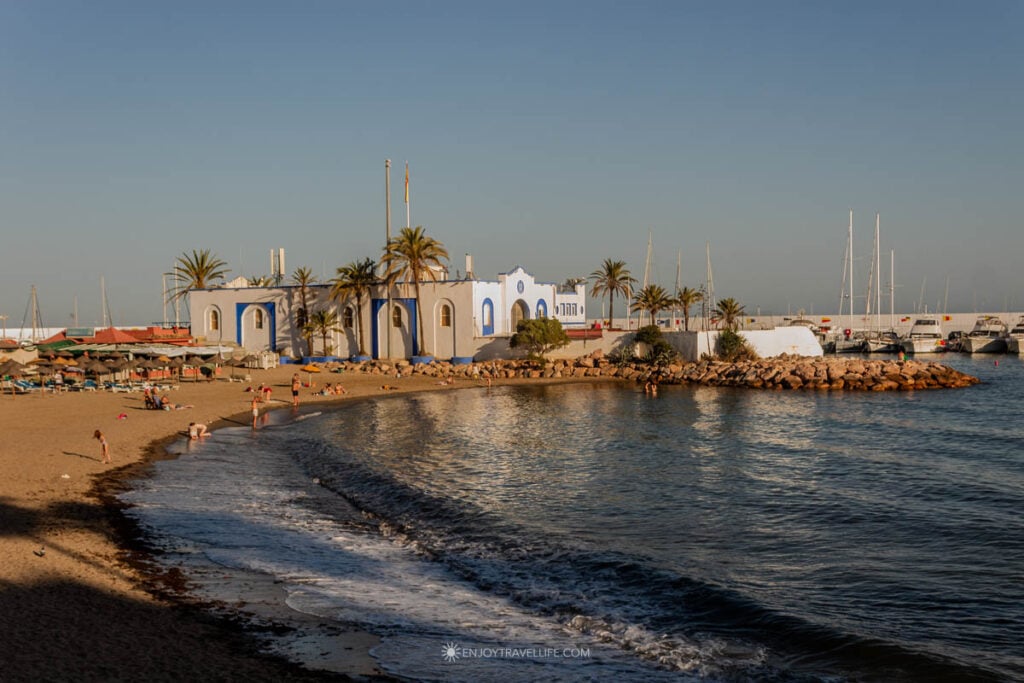
The contrast between the quiet old quarter and the lively waterfront gives you a better sense of how Marbella blends historic charm with resort-town energy.
Visit the Old Town in the early evening, around 7:00 or 8:00 PM. The day-trippers clear out, the light turns golden on the white walls, and the restaurants start setting up for dinner. It’s a completely different vibe from the midday crowds.
2. Puerto Banús
Yachts, Shopping, and People-Watching
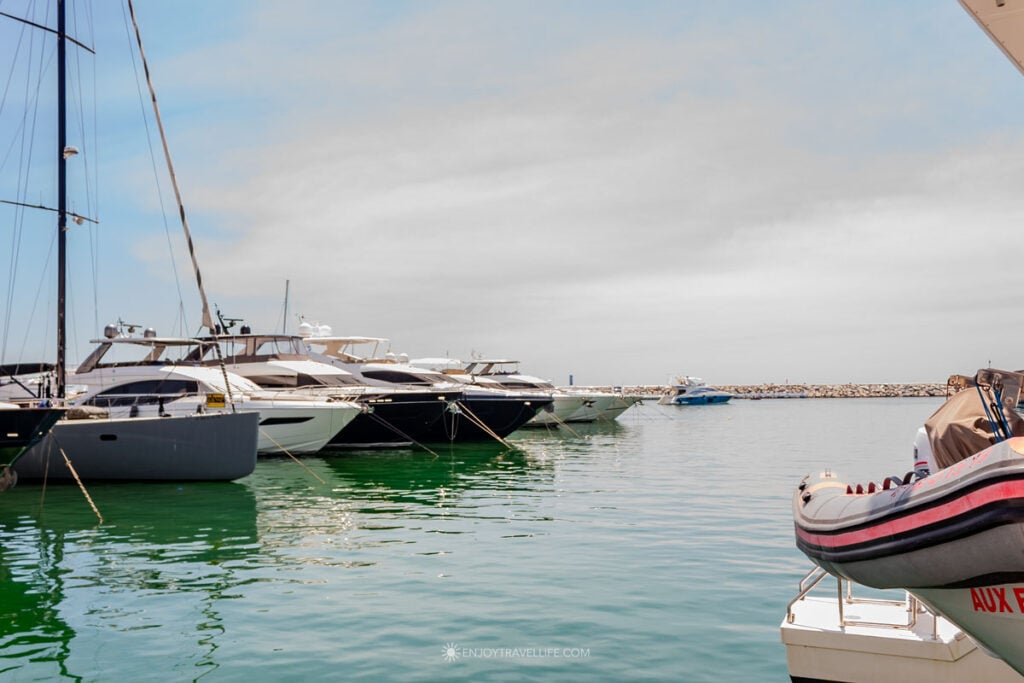
Puerto Banús is the glamour stop on any Marbella Costa del Sol itinerary. It’s about 10 minutes by taxi from Marbella’s Old Town and even closer from NH Collection Marbella. I took a cab there, which was much easier than dealing with marina parking.
This is where the Costa del Sol’s wealth and glamour are on full display.
The marina is lined with superyachts.
The streets behind it are packed with luxury storefronts.
The cocktail bars charge accordingly.
Fortunately, you don’t need to spend a fortune to enjoy Puerto Banús. The best activity there is free: walking the marina and watching the boats. Some of these yachts are legitimately enormous.
You’ll likely see exotic cars, like Lamborghinis and Corvettes, which are almost as common along the streets nearby.

And the people-watching from a waterfront bench is entertainment in itself.
The shopping ranges from luxury boutiques like Gucci, Versace, and Dolce & Gabbana to more approachable stores along the side streets. Luxury car dealerships and showrooms are near the marina, too, displaying high-end vehicles that feel perfectly in character with Puerto Banús.
Even if you’re not shopping, the window displays tell the story of what the Costa del Sol became in the 1960s, when Puerto Banús was developed as a luxury playground for Europe’s elite.
Save this article to Pinterest for later.
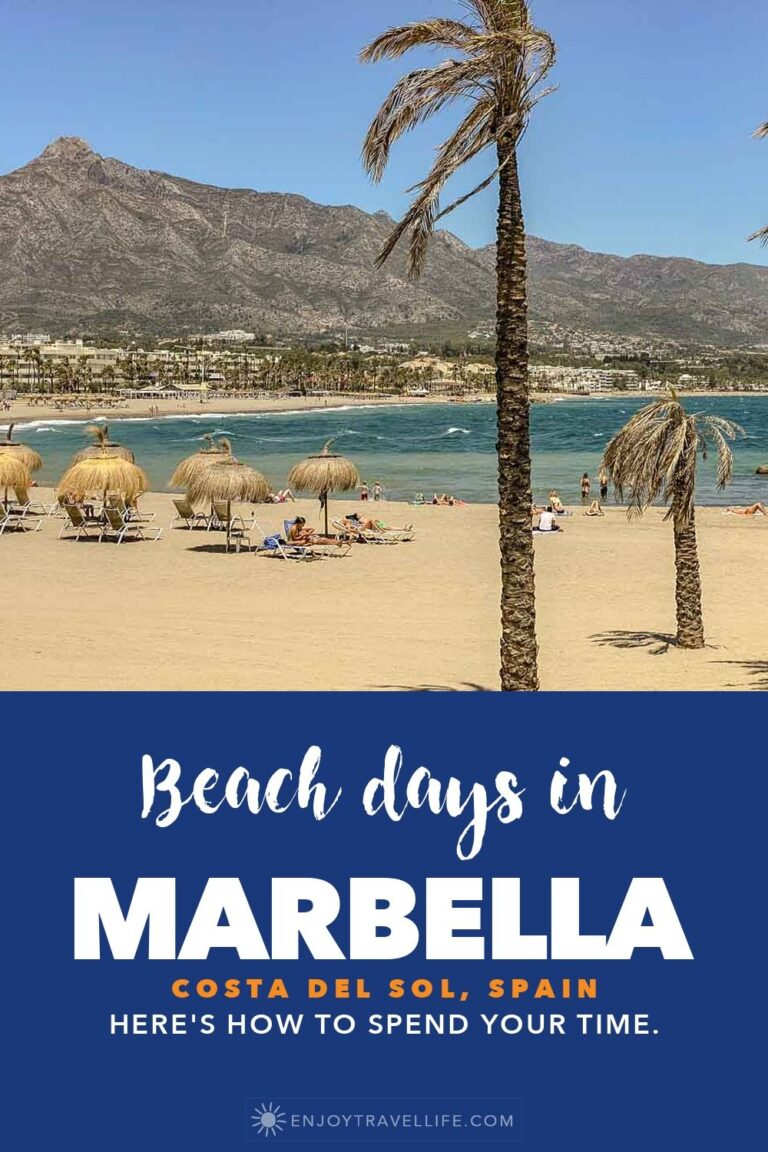

On my visit to Puerto Banús, I stopped for boquerones fritos (lightly fried anchovies), a regional favorite along Spain’s southern coast paired with a glass of cava (Spanish sparkling wine). My table overlooked the beach and Mediterranean Sea for a truly memorable experience.
After lunch, I kicked off my sandals and walked along the wooden beach walkways (the sand is hot if you’re barefoot!). From the shoreline of Playa de Puerto Banús, you can see La Concha rising behind Marbella. This gives the landscape a dramatic natural backdrop beyond the marina and luxury shops.
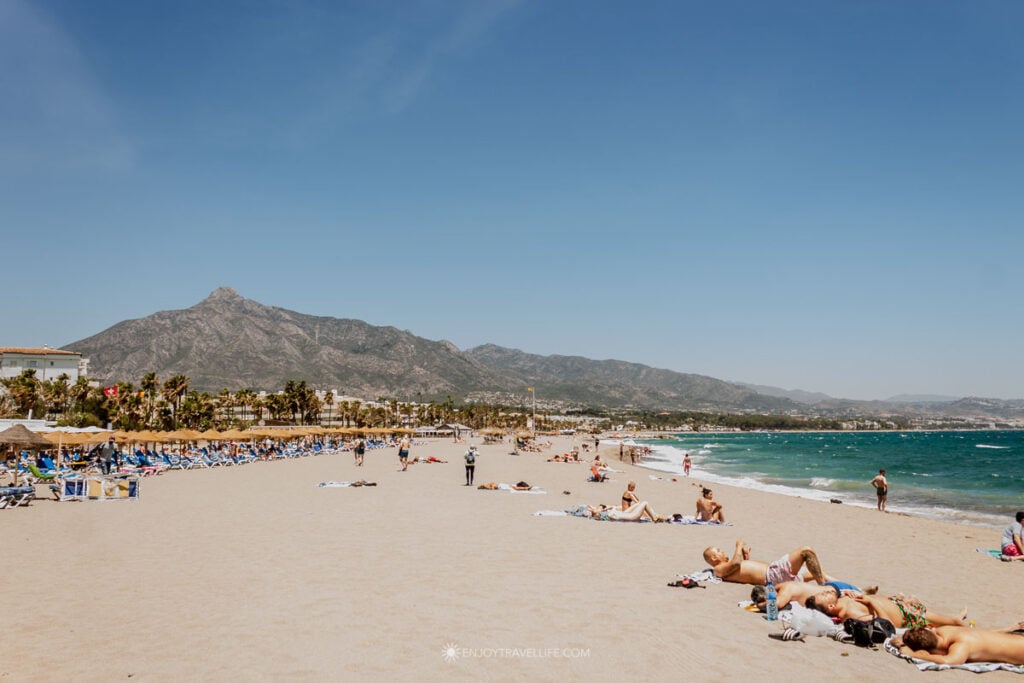
I recommend Puerto Banús as a half-day visit. You can walk the marina, browse the shops, have lunch or a drink, and then head back to Marbella or continue up to Mijas.
If you decide to stay the full day, you might rent beach loungers for the afternoon, book a short boat cruise or catamaran excursion, or grab a drink at sunset when the marina crowds begin to thin out.
Unless shopping is your main agenda, you probably don’t need more than a half day here.
A visit to Puerto Banus offers a glimpse into how “the other half lives” on the Costa del Sol, making for a perfect escape for a day trip.
Skip the waterfront restaurants at the marina’s edge. Walk one or two streets back from the water for the same food at roughly half the price. The marina views aren’t worth the 40% markup.
3. Mijas Pueblo
The White Village Above the Coast
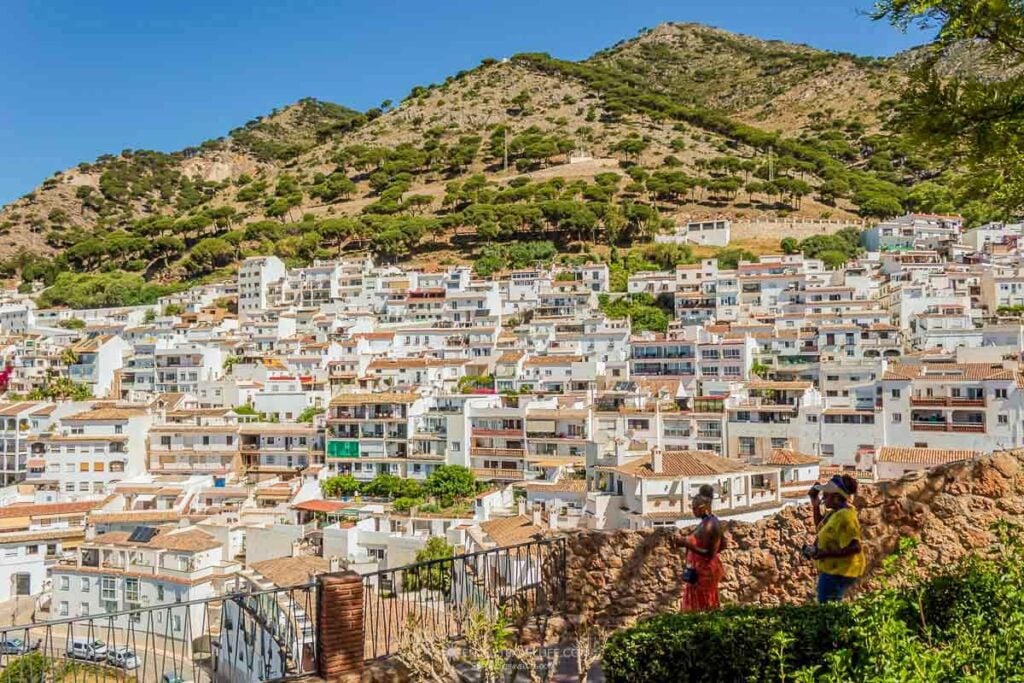
Mijas was a highlight of my Costa del Sol time, and I almost didn’t expect it.
The day before the TBEX conference started, the organizers offered a complimentary excursion up to Mijas Pueblo, the hilltop village about 30 minutes above the coast. By 10 AM we were walking through whitewashed streets with views of the Mediterranean below and the Andalusian mountains behind us.
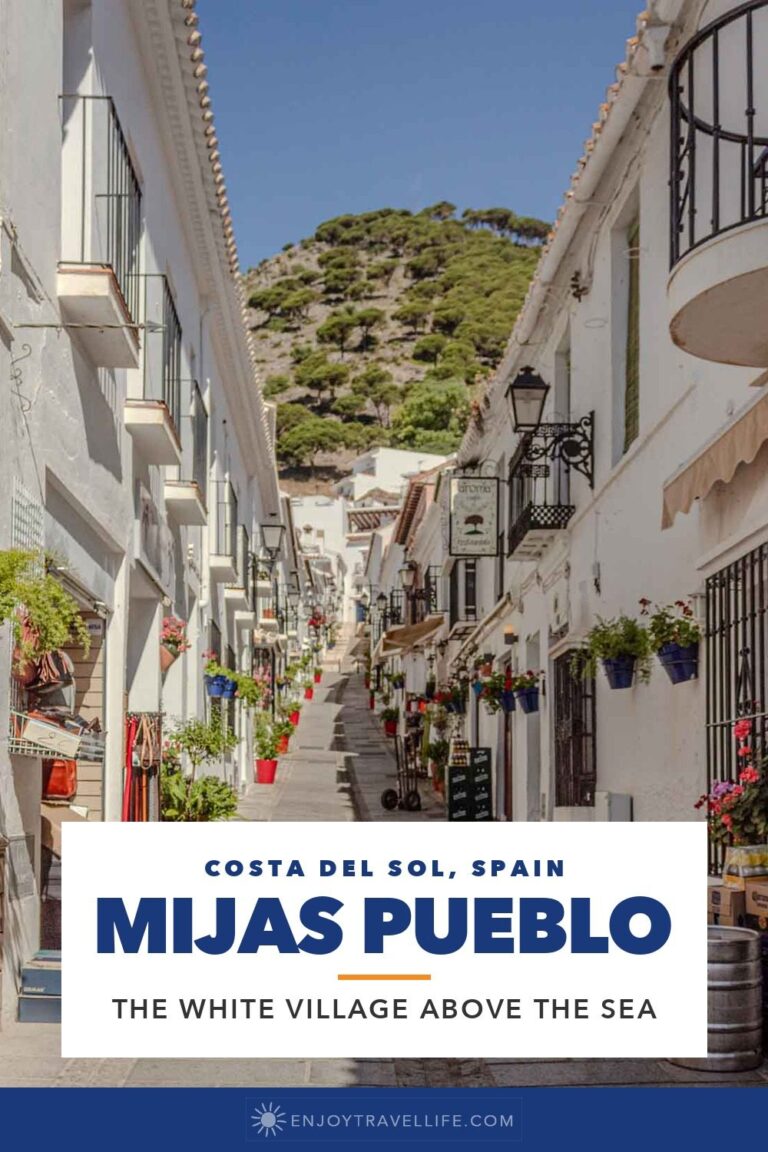
Mijas Pueblo is a textbook white village.
White villages, known as pueblos blancos in Spain, are traditional Andalusian towns famous for their whitewashed buildings, narrow streets, and hilltop settings designed to reflect the intense southern sun.
And Mijas didn’t disappoint.
Every building is white.
The streets are narrow and mostly car-free.
Burros (donkeys) are still part of the town’s identity, though the controversial donkey taxi rides have been scaled back in recent years. You can still take a burro ride through town if that experience appeals to you.
The village is small enough to walk end to end in 20 minutes, but the details slow you down: hand-painted ceramic tiles on the walls, geraniums in every window box, and scenic overlooks where you can see all the way to the coast and, on a clear day, across the Mediterranean to the coast of Morocco.
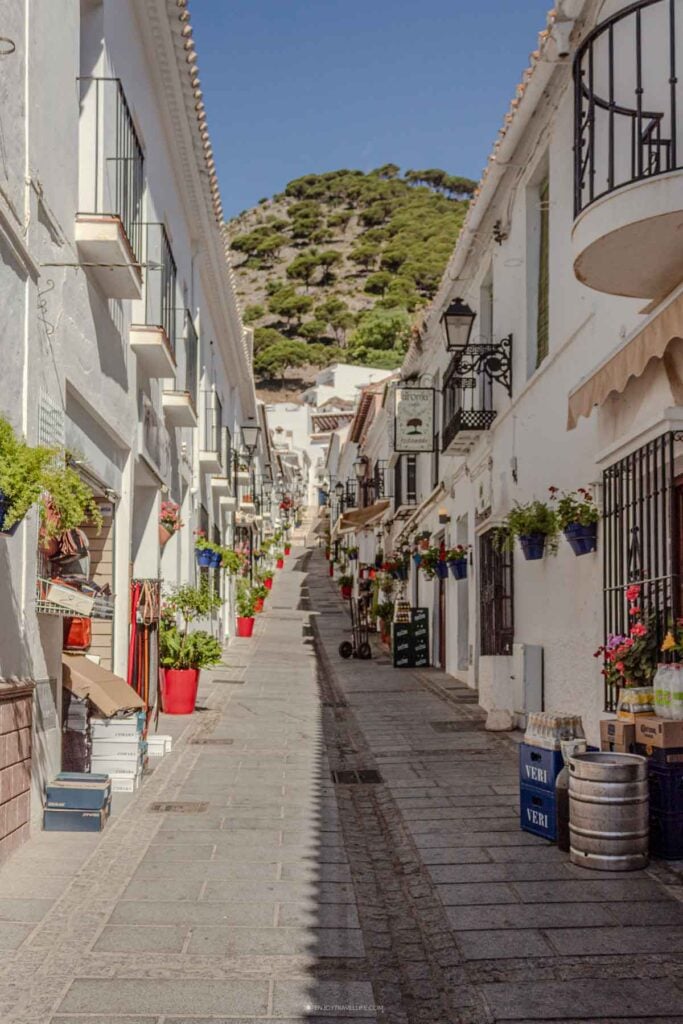
During my visit, calima, Saharan dust storms that occasionally sweep across southern Spain from North Africa, had recently passed through the region. The famous whitewashed buildings looked slightly muted at first, though the town regularly cleans them to preserve Mijas Pueblo’s postcard-perfect charm.
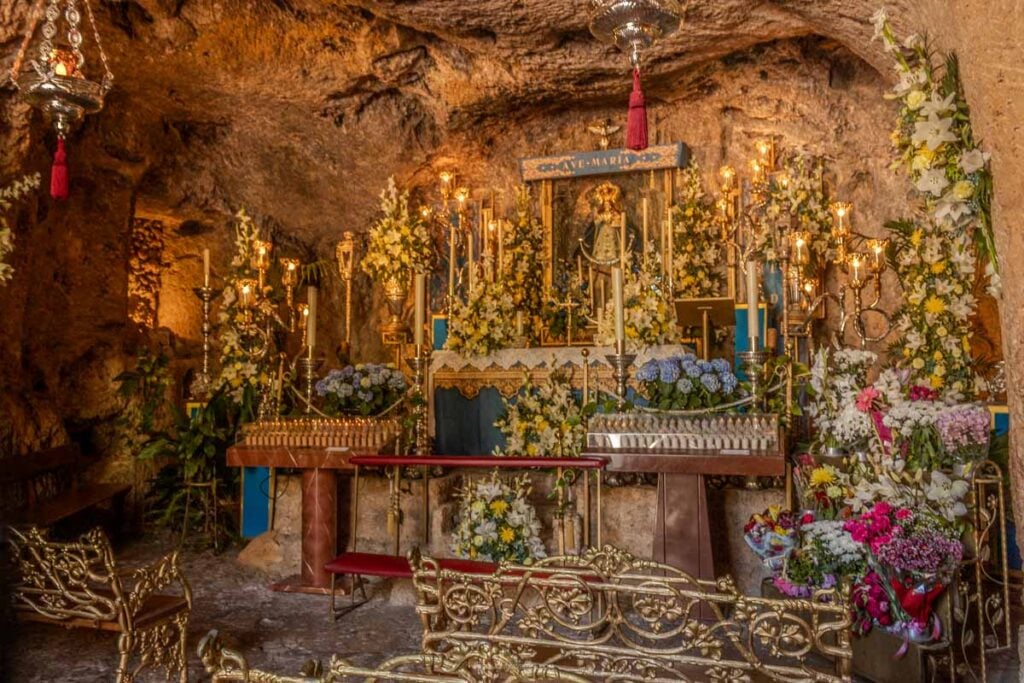
Our guided tour covered the main square, the 17th-century chapel carved into the rock (Ermita de la Virgen de la Peña), and several scenic overlooks above the village.
The rock chapel is genuinely surprising: it’s built directly into a cliff face, and the interior is small but beautiful. If you visit on your own, don’t miss it. Bring a coin offering if you’d like to leave a remembrance for a loved one.
As you continue uphill, you’ll also pass remnants of the old city walls, a small fountain garden filled with flowers, and the historic oval bullring at the top of town. Bullfighting remains controversial in Spain today, and the arena now functions primarily as a historic landmark and cultural attraction.
One of the prettiest streets to walk is Calle San Sebastián, where flower-covered walls frame views back toward the village’s white houses and the sea below.
Mijas Pueblo is also a wonderful place for slow browsing.
We wandered through small artisan shops and local markets selling hand-painted Andalusian tiles, ceramics, olive wood crafts, leather goods, spices, and bottles of local Spanish wine.
Mijas’ small shops sell excellent local Spanish wines at great prices. If you plan to bring bottles home, pack them in checked luggage. (Carry-on liquid limits still apply.)
Mijas is also home to CAC Mijas, a contemporary art museum known for works by Picasso and Dalí, which feels surprisingly modern against the backdrop of the historic white village. It’s a must-see stop if you’re an art-lover.
Back in town, I loved walking the landscaped promenades lined with flowers, palms, and snack vendors selling roasted peanuts.
Near the center of town, we also passed a restaurant preparing an enormous pan of paella in the front window, the kind of scene that immediately makes you want to stop for lunch.

I’d plan at least a half day for Mijas Pueblo, or closer to a full day if you want time for shopping, lunch, museum stops, and a relaxed drive back along the coast. Between the mountain views, small shops, scenic walks, and waterfront stops on the return trip, this ended up being one of the most memorable days of my time on the Costa del Sol.
If you enjoy Mijas Pueblo, other famous white villages within driving distance of Málaga include Frigiliana (about 1 hour), Ronda (about 1.5 hours), and Casares (about 1 hour).
If you’re driving to Mijas yourself, go early. The parking lot at the top fills up by mid-morning in summer. Alternatively, take the bus from Fuengirola (line M-122), which drops you right in the village center.
Where to Eat Along the Costa del Sol
Spanish meal times threw me off on day one. Lunch starts around 2:00 PM, and dinner rarely begins before 9:00 PM. By my third day, I’d adjusted, and the rhythm actually makes sense once you stop fighting it. A late breakfast, a big lunch, tapas in the early evening, and a late dinner if you’re still hungry.
Best Restaurants in Marbella
In Marbella, two evening food experiences stood out.
The Farm Marbella in the Old Town felt cozy, authentic, and tucked among the small shops and winding streets of Marbella’s historic center. It was extremely busy during our visit, but they still managed to seat our group of six. Reservations are a smart idea if you’re traveling in summer.
We stopped in for cava, cocktails, and tapas around sunset. The table quickly filled with olives, fresh vegetables and dip, crispy appetizers, and sesame-crusted tuna served with soy sauce. The atmosphere felt relaxed and social, the kind of place where you naturally linger over drinks and small plates late into the evening.
Another memorable meal was at Restaurante La Barca along the waterfront promenade. The atmosphere felt noticeably more upscale, with elegant outdoor seating overlooking the water. There was a wait for a table, but strolling the beachfront at sunset made the time pass quickly.
Once seated, we ordered fresh shellfish, glasses of cava, and later espresso martinis alongside a massive seafood paella served directly in the pan. The paella arrived steaming hot and loaded with mussels, shrimp, clams, and langoustines. It easily became one of the standout meals of the trip.

It was one of those long Spanish dinners where nobody rushes you from the table, and the evening stretches naturally late into the night.
Here are a few more tips for eating in Marbella:
- Old Town restaurants around the Orange Square serve reliable Spanish fare. Expect to pay €15–25 ($16–27) for a solid lunch with a drink.
- For seafood, look for the chiringuitos (beach restaurants) along the Paseo Marítimo. Grilled sardines on a stick (espetos) are the local specialty and cost almost nothing.
Where to Eat when Visiting Mijas
When it comes to food in Mijas, consider these tips:
- Lunch at a terrace restaurant in the village center is a must. The views add as much to the meal as the food does. Budget €12–20 ($13–22) per person.
- Look for places serving local goat cheese and Andalusian gazpacho.
On the drive back toward Marbella, we stopped at Beach Club Higuerón in Fuengirola for a hosted lunch that turned out to be one of the best meals of the trip. The venue sits right on the beachfront with an infinity pool, palm trees, and floor-to-ceiling windows overlooking the Mediterranean.
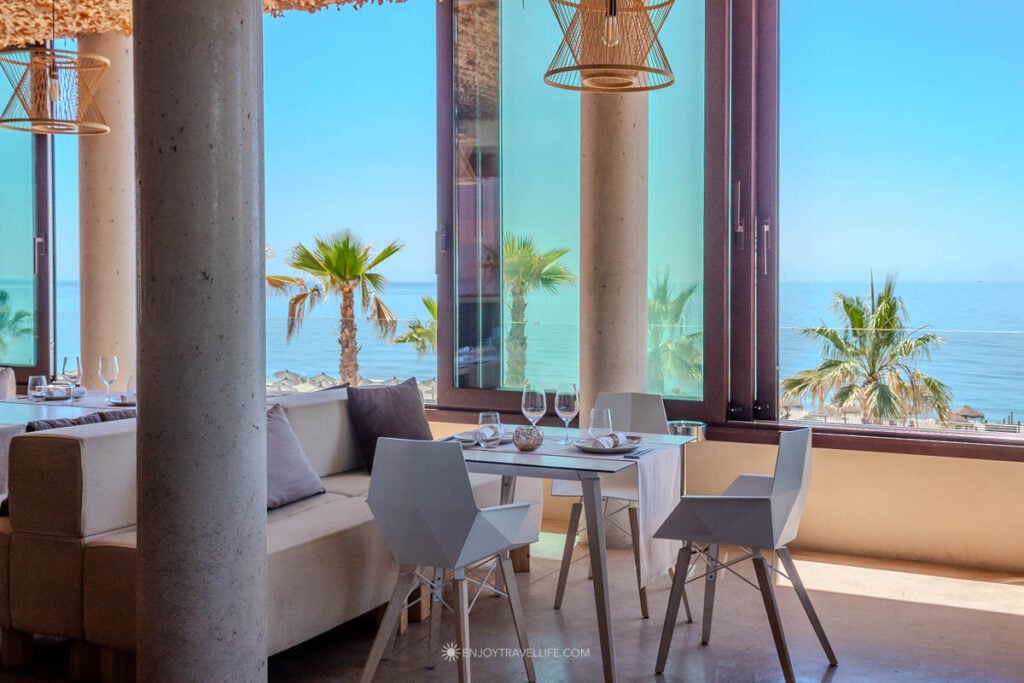
The menu is curated by Chef Diego Gallegos, and it showed.
Course after course arrived beautifully plated: artisan bread with olive oil, a bright and innovative ceviche, fresh seafood, and elegantly composed fish dishes that felt more fine dining than beach club. A sommelier poured local wines between courses while the sea stretched out behind the glass.
If you’re driving between Mijas and Marbella, Beach Club Higuerón is worth a deliberate stop for an elevated experience. It’s the kind of place you come for lunch and end up staying through the afternoon.
Puerto Banús
Puerto Banús was a different story entirely. At La Pesquera del Faro, a chiringuito on Levante Beach, I ordered boquerones fritos and a glass of cava. The anchovies arrived crispy and golden on paper, the cava was cold, and the Mediterranean was right there.
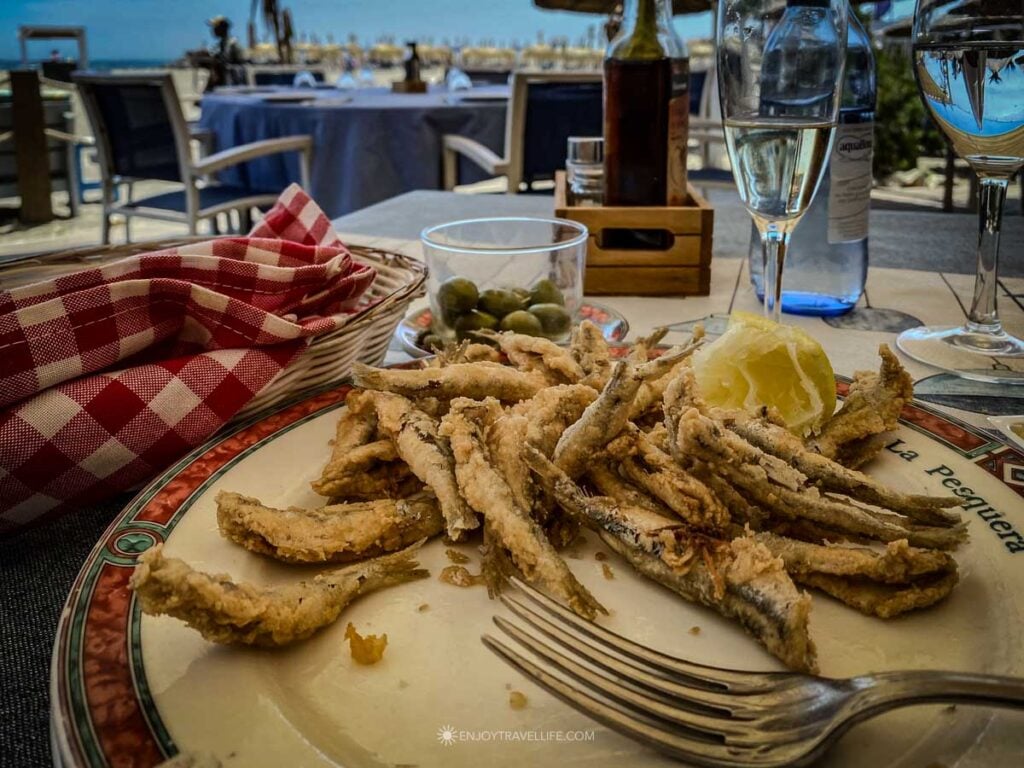
No reservations, no tasting menu, just the kind of simple beachfront meal the Costa del Sol does better than anywhere.
The main tip for eating in Puerto Banús: skip the waterfront restaurants at the marina’s edge. Walk one or two streets back for the same food at roughly half the price. Budget €20–35 ($22–38) for a waterfront lunch with drinks, or €12–20 ($13–22) one block inland.
Prices can fluctuate seasonally, but these ranges should give you a reasonable sense of what to expect along the Costa del Sol. The gap between waterfront and side-street pricing, though, is probably permanent
Final Thoughts on Marbella Costa del Sol
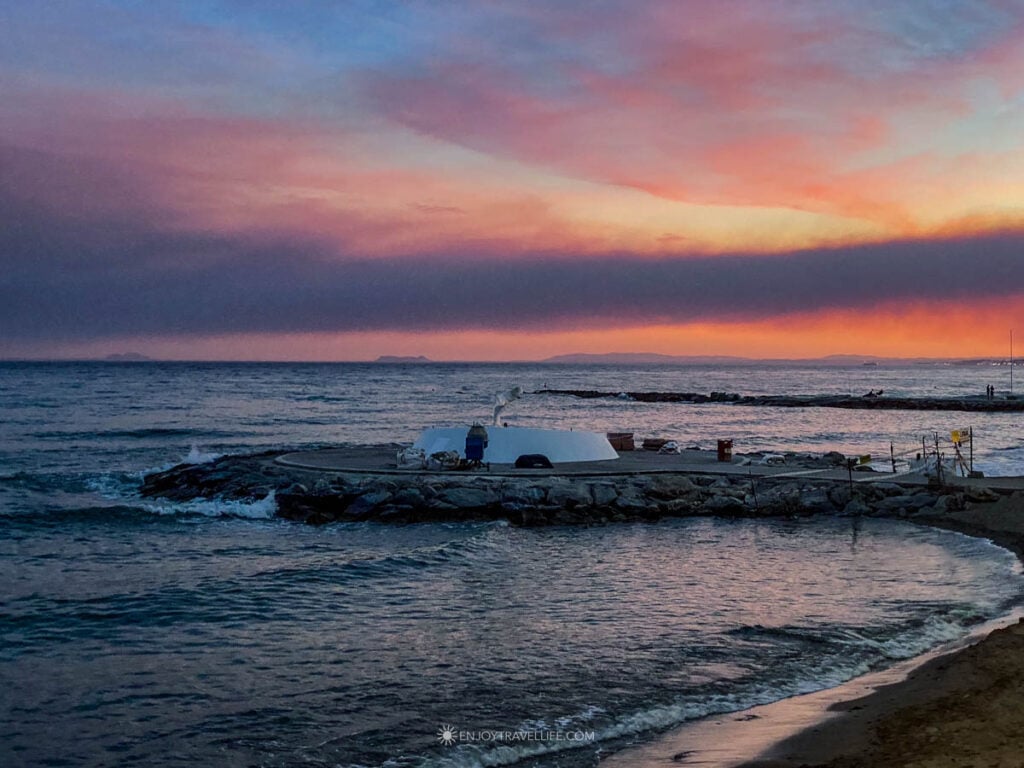
The Costa del Sol surprised me. I went for a conference and left with a genuine appreciation for this stretch of coast.
Marbella’s Old Town has the charm that the resort strip doesn’t advertise. Mijas is worth the 30-minute drive into the hills even if you only have a few hours. And Puerto Banús is the kind of place where you go for the spectacle and end up staying for the sunset over the marina.
For a first visit to the Marbella Costa del Sol, the Marbella-Mijas-Puerto Banús triangle covers the range.Costa del Sol, the Marbella-Mijas-Puerto Banús triangle covers the range: old, new, glamorous, traditional, and everything in between.
Pack sunscreen, adjust to Spanish meal times, and don’t skip the white villages.

Next Steps
For more travel guides to help plan your trip to Spain, read this articles next:
- First Time to Spain? 27 Top Spain Travel Tips to Plan the Best Trip!
- Best Beaches In Costa Adeje And Other Great Experiences [Spain]
- Spain and Morocco Trip? Discover Both Sides of the Strait of Gibraltar
- From Spain to Morocco: How to Plan A Perfect Moroccan Day Trip
- How to Book the Best Barcelona Short Term Rentals
- 10 Insightful Things to Know Inside Casa Batlló in Barcelona
- Top 10 Fun Experiences in Barcelona You Won’t Want to Miss!
- Drive from Barcelona to Madrid: The Ultimate Spain Road Trip
- Fun 4 Day Madrid Itinerary: 10 Things Not to Miss in Madrid Spain
- Walking the Pyrenees: Popular Routes and Easy Day Hikes
- 10 Best National Parks in Spain by Region for your Spanish Vacation
- 25 Fun Spain Experiences You Definitely Won’t Want to Miss!
- 5 Best Gran Canaria Tips Before Traveling to the Spanish Canary Islands
- 2 Days in Seville
Frequently Asked Questions
What should you do in Marbella for a day?
Start in Marbella Old Town at the Plaza de los Naranjos (Orange Square) for coffee and a walk through the narrow streets. Drive 30 minutes up to Mijas Pueblo, the famous white village with Mediterranean views. End the afternoon in Puerto Banús, where you can walk the marina, watch the superyachts, and grab a late lunch. All three stops fit comfortably in a single day from a Marbella base.
Is Marbella worth visiting on the Costa del Sol?
Yes. Marbella’s Old Town is one of the most charming historic centers on the Costa del Sol, and the town makes an ideal base for day trips to Mijas, Puerto Banús, and Málaga. It’s more than a beach resort if you explore beyond the waterfront strip.
How do you get from Málaga Airport to Marbella?
A taxi from Málaga Airport (AGP) to Marbella takes about 45–60 minutes and costs approximately €60–70. Bus service is also available from the airport to Marbella bus station. If you’re renting a car, the drive follows the AP-7 motorway along the coast.
What is Mijas Pueblo known for?
Mijas Pueblo is a traditional Andalusian white village perched in the hills above the Costa del Sol. It’s known for its whitewashed buildings, the rock chapel (Ermita de la Virgen de la Peña), panoramic Mediterranean views, and a compact village center that’s walkable in under 30 minutes. The village is about 30 minutes from Marbella by car.