

Monhegan Island sits ten miles off the Maine coast, and the 90-minute ferry ride from Boothbay Harbor is just long enough to feel like you’re leaving the modern world behind. In many ways, you are.
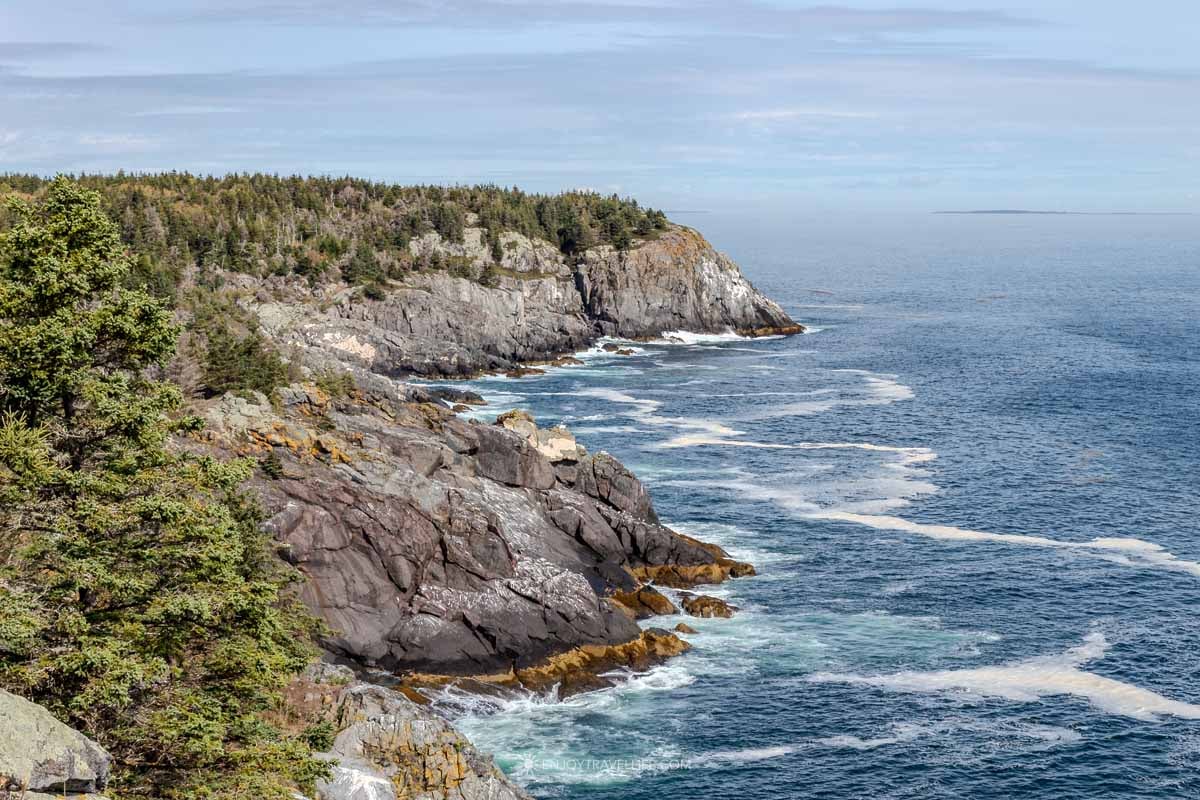
There are no cars, no cell service worth mentioning, and no crowds. Instead, you’ll find a dirt road, a lighthouse on a hill, and a far shore where the Atlantic crashes against granite cliffs. For generations, artists and photographers have been making the trip to this idyllic island.
If you’re planning a Monhegan Island day trip, here’s how to make the most of a day on the island. Monhegan is one of many hidden gems of New England.
CONTENTS — In this article, you will discover…
- Why Monhegan Island Is Worth the Trip
- Getting to Monhegan Island
- What to Pack and Know Before You Go
- First Impressions
- The Village
- Monhegan Museum of Art & History
- The Trails and the Far Shore
- The Art Colony Legacy
- Eating on Monhegan
- Should You Stay Overnight?
- What I’d Do Differently
- The Return to the Mainland
- Final Thoughts
- FAQs
- Next Steps
Why Monhegan Island Is Worth the Trip
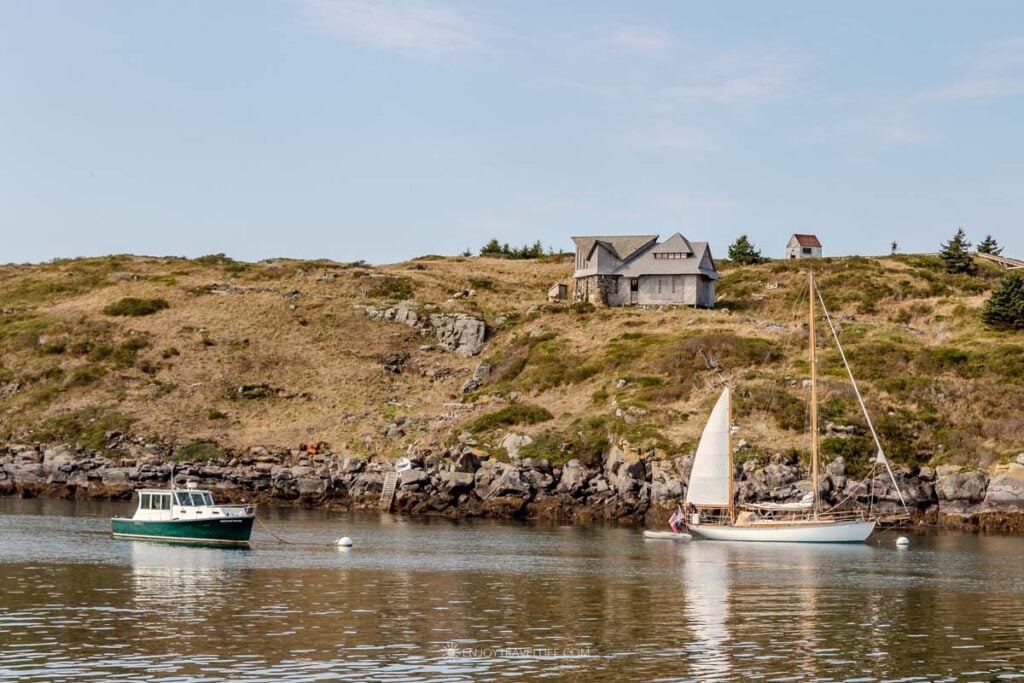
Monhegan has been drawing artists to its shores for more than 150 years.
Edward Hopper painted here. Rockwell Kent built a cottage on the island. Three generations of Wyeths found inspiration here. Today, artists still arrive with sketchbooks, easels, and cameras in hand.
I visited on a late September day trip from Boothbay Harbor with someone who had long wanted to visit Monhegan, an island legendary among artists.
When the island comes into view, low and green against the open Atlantic, you’ll start to understand the appeal.
But you don’t need to be an artist to fall for this place.
Monhegan is small. You’ll find a handful of places to eat, a lighthouse, miles of hiking trails with incredible overlooks, and a year-round population small enough that everyone probably knows everyone else.
That’s about it.
And that’s the whole point.
Whether you’re visiting for the day or staying overnight, your trip starts on the mainland. Boothbay Harbor and nearby Southport make convenient bases for exploring Monhegan, with easy access to the ferry dock. Here’s a look at what’s available in the area.
Getting to Monhegan Island
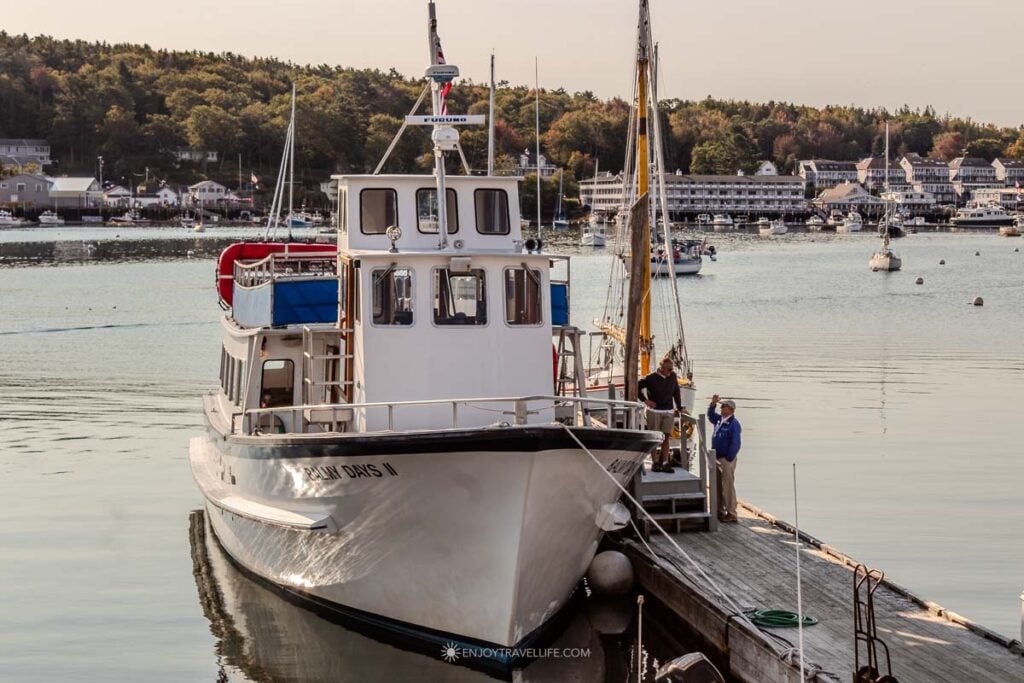
The Balmy Days II typically departs from Pier 8 in Boothbay Harbor at 9:30 every morning from mid-June through late September. It’s a passenger-only ferry, smaller than what you might picture when you hear the word ferry.
This is a working boat, not a car-carrying vessel with a snack bar and an upper deck. You’ll feel every swell on the open water.
As the mainland slips away, it’s a chance to slow down, look out at the water, and leave the rest of the world behind for a while.
You’ll arrive on Monhegan around 11:00 and the return trip leaves at 4:15. That gives you just over three and a half hours on the island. It sounds tight, but it’s enough to see the village, hike to the cliffs, and grab something to eat before heading back.
I sailed from Boothbay, but it isn’t the only way over. Three mainland ports run boats to the island, and the best one depends on where you’re driving from.
The Balmy Days II from Boothbay Harbor is the longest crossing at about 90 minutes. New Harbor, served by the Hardy Boat, and Port Clyde, served by the Monhegan Boat Line (the only year-round service), are both closer to an hour. If you get seasick, the shorter Port Clyde or New Harbor runs are worth a look.
| Departure port | Ferry line | Crossing | Parking |
|---|---|---|---|
| Boothbay Harbor | Balmy Days II | About 90 minutes | Limited dock parking; reserve ahead |
| New Harbor | Hardy Boat | About 1 hour | Free (as of 2025) |
| Port Clyde | Monhegan Boat Line (year-round) | About 1 hour | About $10 per day |
You’ll want to sort out parking before you go, too. The lots vary by port, so check ahead. Whichever one you choose, give yourself enough time to park and pick up your tickets before boarding.
Book your Balmy Days tickets in advance during peak season. The boat holds a limited number of passengers, and summer sailings can sell out. In late September, I had no trouble walking up, but July and August are a different story. Saturdays are the busiest sailings, so arrive early. Bring a layer for the crossing, too. It’s noticeably cooler on the open water than it is on the mainland.
What to Pack and Know Before You Go
Before you board the ferry, a little preparation will make your day on Monhegan much more enjoyable.
- Dress in Layers. It can be 80 degrees on the mainland and noticeably cooler out on the water, and the far shore is exposed with almost no shade. Bring a sweatshirt or a windbreaker.
- Sturdy shoes. The village roads are easy gravel, but the woodland trails are rooty and uneven, and the coastal rocks get slippery. Hiking shoes beat sandals.
- Cash in small bills. Some spots are cash-only, and when the island’s internet drops, card payments can become unreliable. There are ATMs on the island, but I wouldn’t rely on them.
- Water and snacks. Food options are limited and pricey, and the hiking is more demanding than it looks. Bring water and snacks from the mainland.
- Bug protection. The wooded trails can be buggy, especially in summer, so consider bringing bug spray and a light long-sleeved shirt.
- Sun protection. Once you leave the village, there is very little shade. A hat, sunglasses, and sunscreen will make the day much more comfortable.
- Camera gear. Whether you’re shooting with a DSLR or your phone, bring a backup battery or power bank and an extra SD card. Between the ferry ride, hiking trails, harbor views, and dramatic coastline, you’ll take more photos than you expect.
- A bag for your trash. Monhegan is pack-in, pack-out, so plan to carry off everything you bring.
One last tip: plan around the island’s limited infrastructure. There are few places to charge your phone, public restrooms are limited, and cell service becomes patchy once you leave the harbor. So, download your map and any information you’ll need before you board.
If you have long hair, bring something to keep it under control, like a hair band or clip. The ferry ride and the far shore can be surprisingly windy!
First Impressions
You know you’re somewhere different the moment you step off the boat.
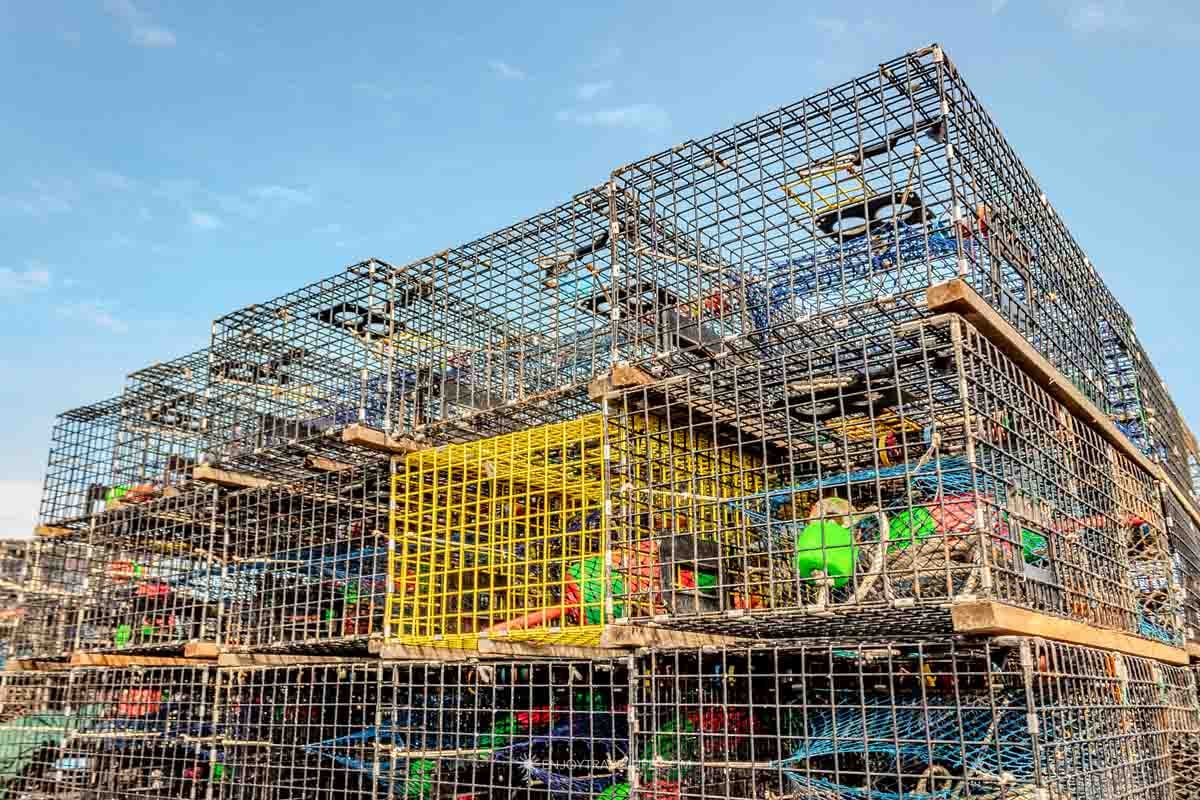
Lobster traps are stacked in walls along the dock.
The Monhegan Store sits just up from the wharf, selling provisions, groceries, and wine.
Next to it, The Barnacle has coffee, pastries, and sandwiches.
A few benches face the harbor, and across the water, the small hump of Manana Island rises close enough that you could almost swim to it. Painters have been capturing that view for over a century. Manana was once home to a sheep-farming hermit who lived there for 45 years. His driftwood shack later inspired sculptor Louise Nevelson.
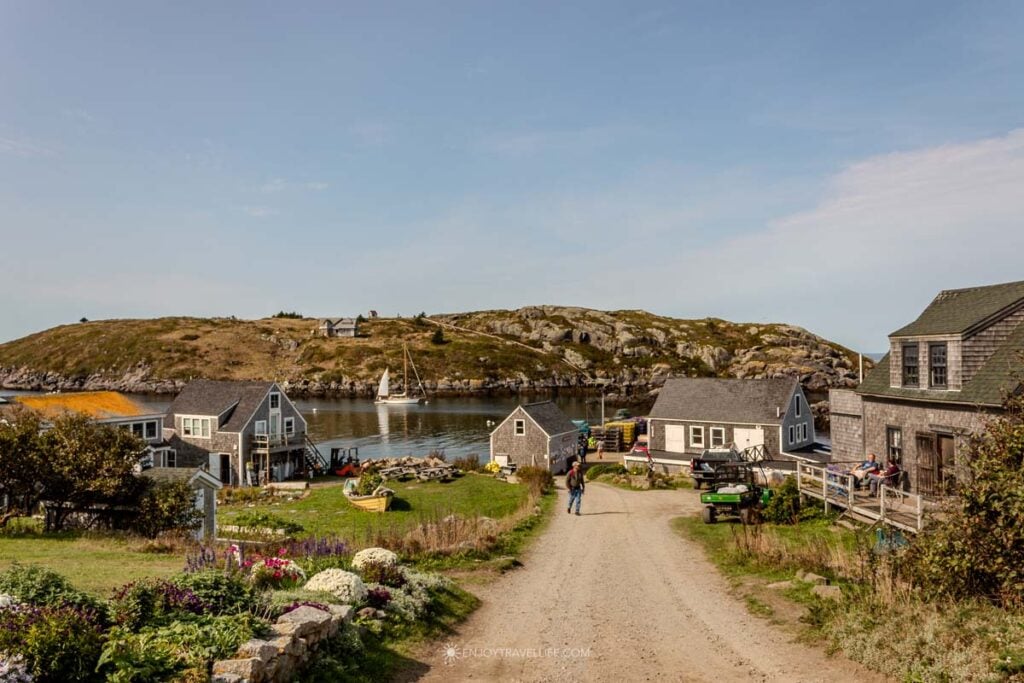
A dirt road leads up from the dock into the village.
The island rises toward its center, so the walk is an incline, but nothing that will wind you.
Within a few steps, the noise of the boat engine fades and you’re surrounded by a quiet that takes a moment to register. It’s just wind, birds, and your own footsteps on packed earth.
The Village
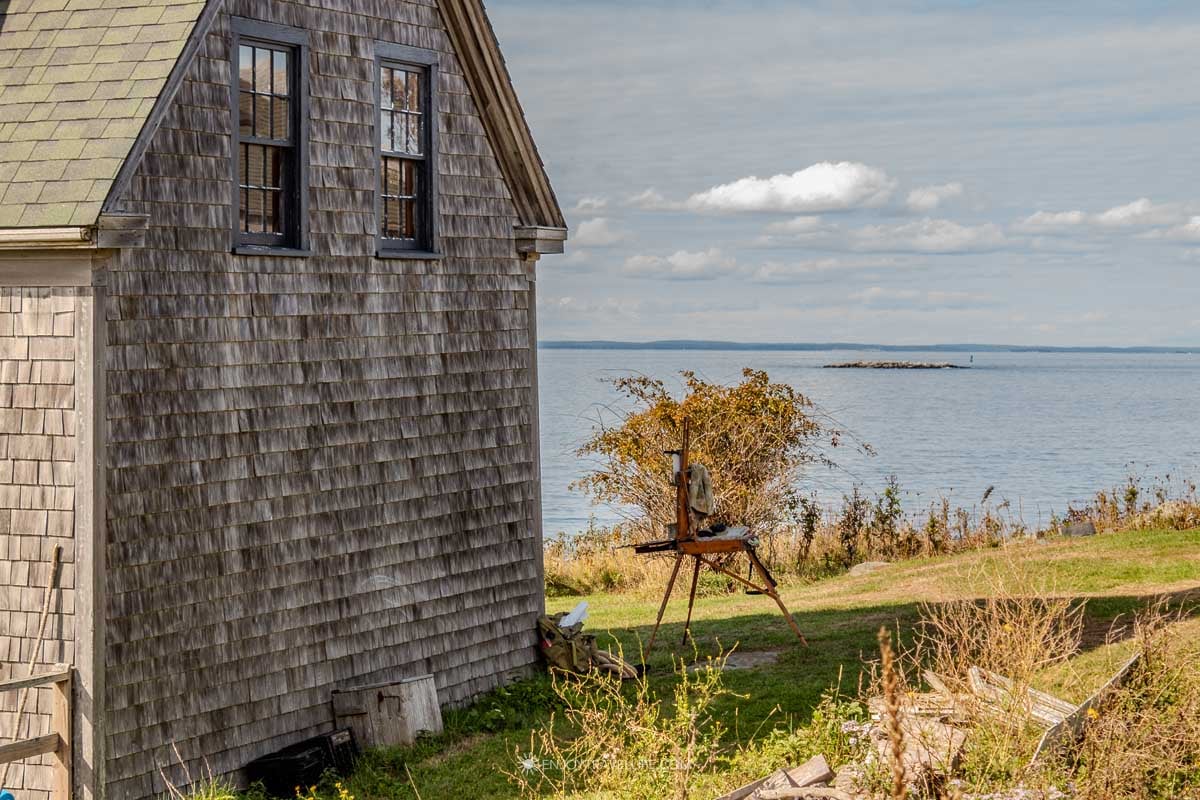
The village is small enough to cover on foot in twenty minutes, but you won’t want to rush it.
The homes are beautiful old New England structures, not boastful but deeply charming, with white fences and weathered shingles.
Apple trees and wildflowers grow thick along the road.
At one house, an artist’s easel was set up on the lawn overlooking a small bay, boats resting at their moorings. Nobody was painting when I passed. The easel just stood there, waiting, like it had all the time in the world.
Lupine Gallery is worth a stop. Established in 1985, it occupies two floors on the main village road and represents more than fifty contemporary artists.
The work is strong, and the person staffing the gallery when I visited was warm and approachable, the way Mainers tend to be. Not performative, not stiff. Just present and happy to talk about the art.
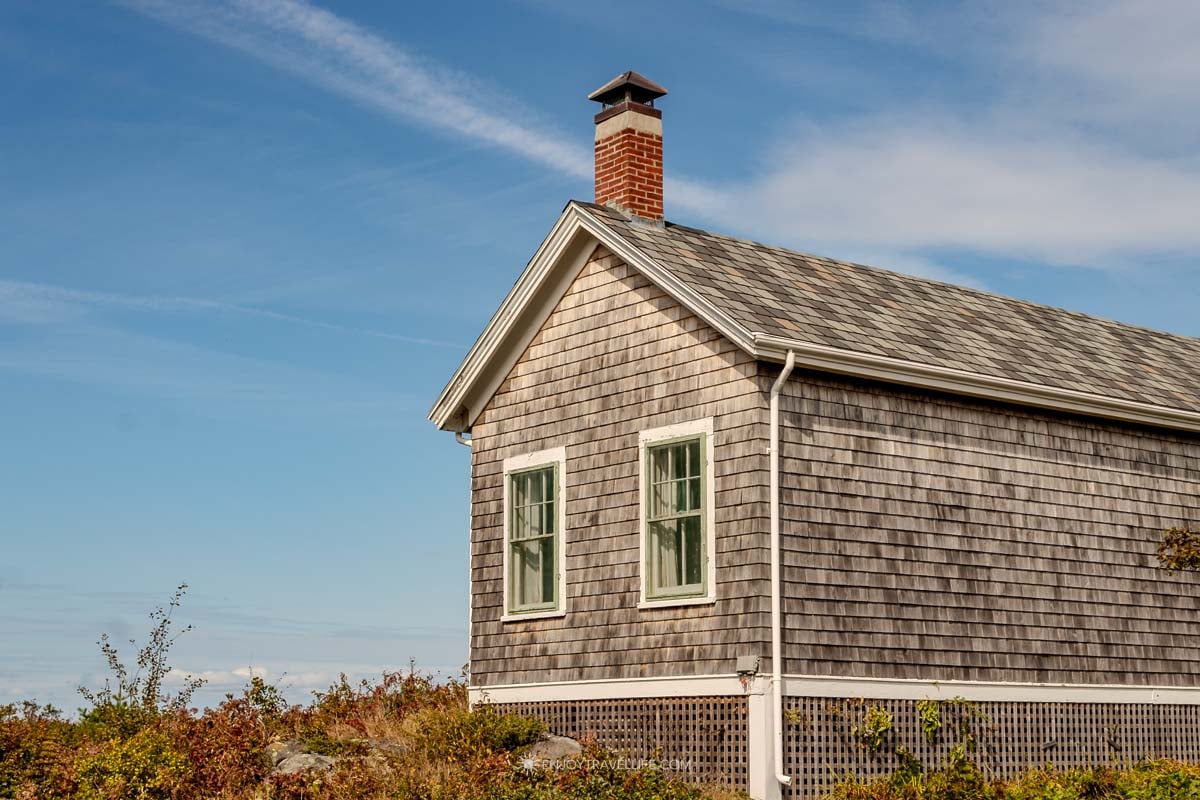
Beyond the gallery, the village has a church, a one-room schoolhouse, a post office, and not much else in the way of infrastructure.
As I passed the school, I wondered what it would be like to grow up here, with a year-round population smaller than most apartment buildings. Then again, this is the island that inspired three generations of Wyeths, so maybe growing up a little differently is part of the point.
Either way, it’s a life focused on craft, played out in one of the most beautiful settings on the coast.
Monhegan Museum of Art & History
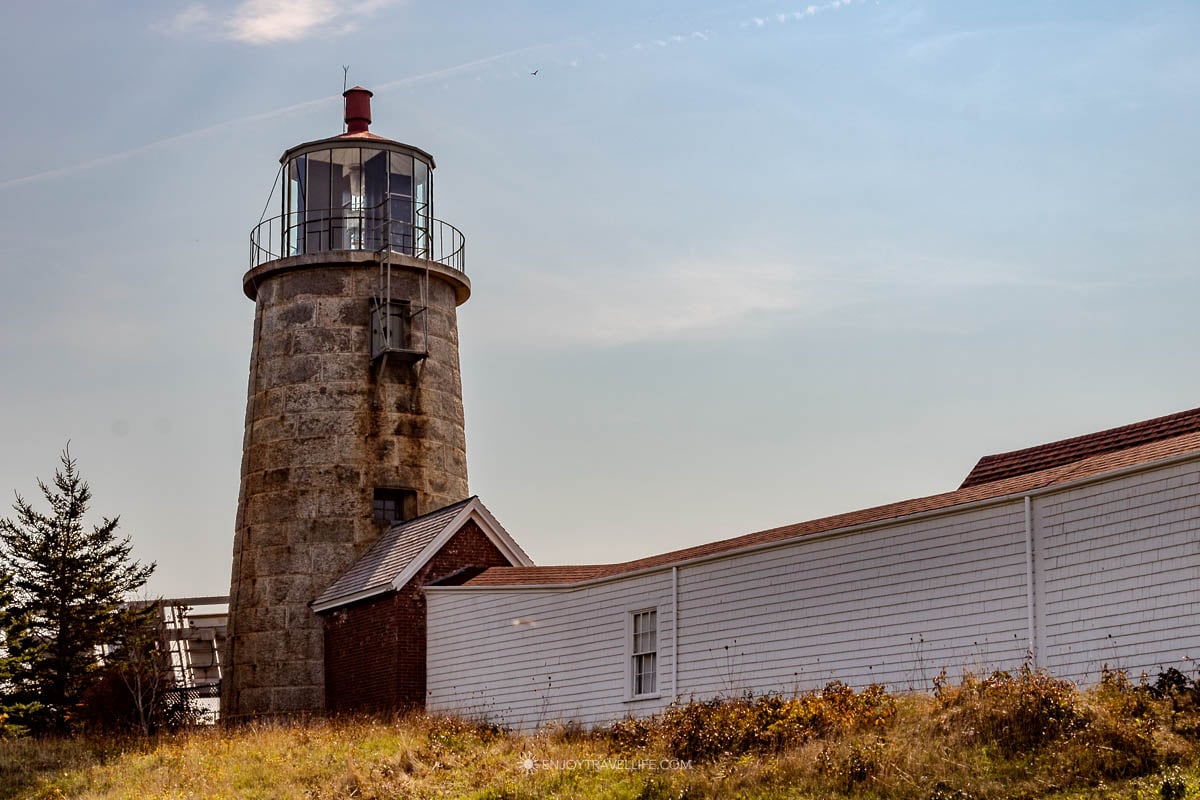
Follow the road uphill and you’ll reach Monhegan Island Light, first lit in 1824. The lighthouse sits at the island’s highest point, and the views from the surrounding grounds sweep across the village, the harbor, and the open ocean beyond.
The Monhegan Museum of Art and History occupies buildings on the lighthouse grounds, including the former keeper’s house and a gallery featuring artists who painted on the island. It explores both Monhegan’s maritime history and its long artistic legacy.
Save this article to Pinterest for later.
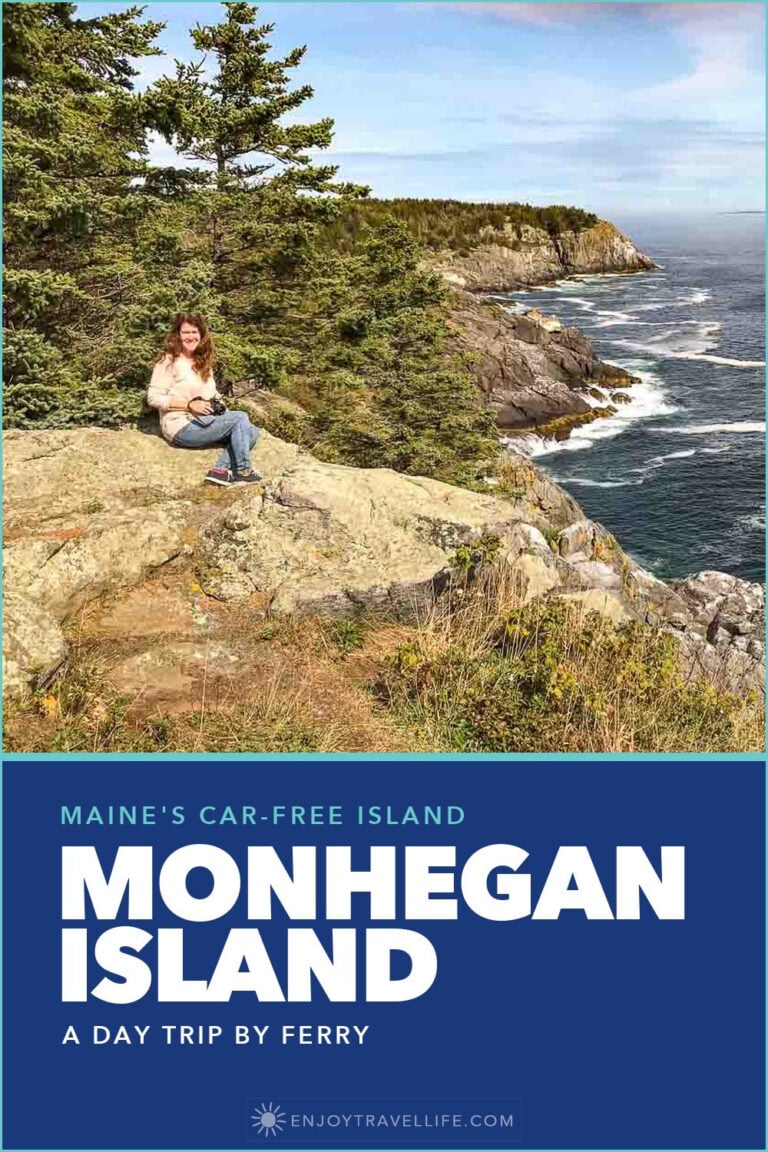
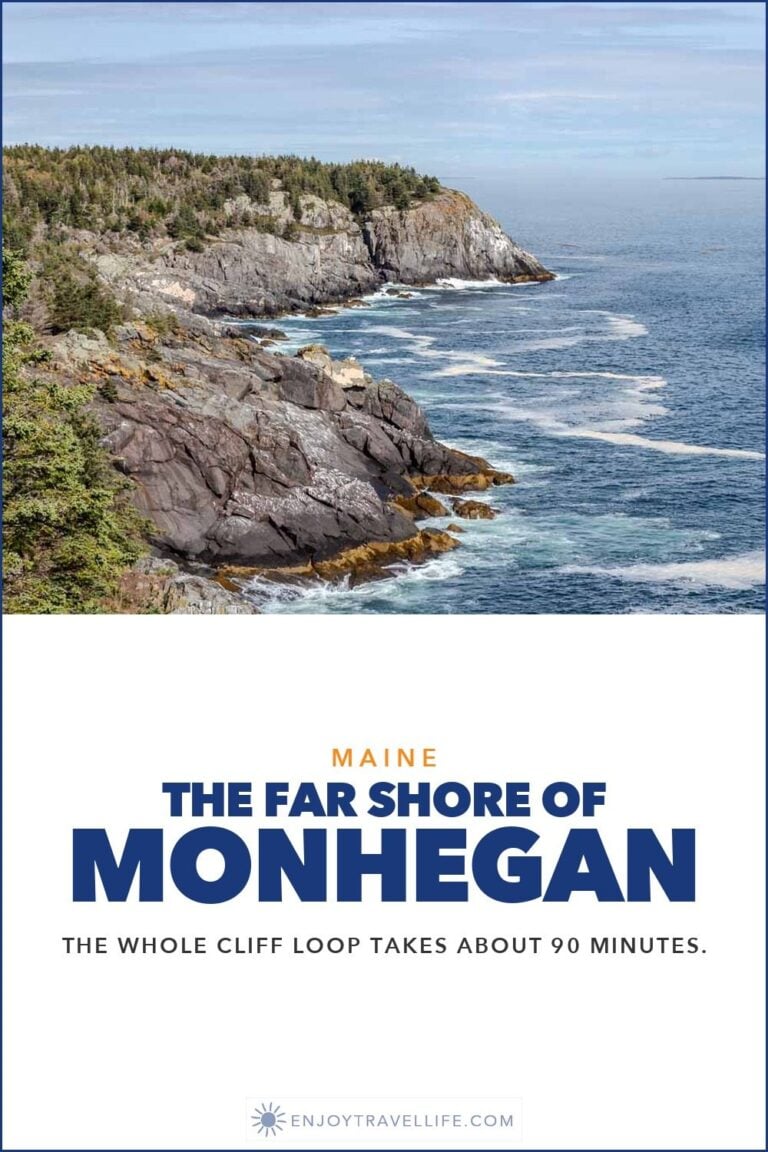
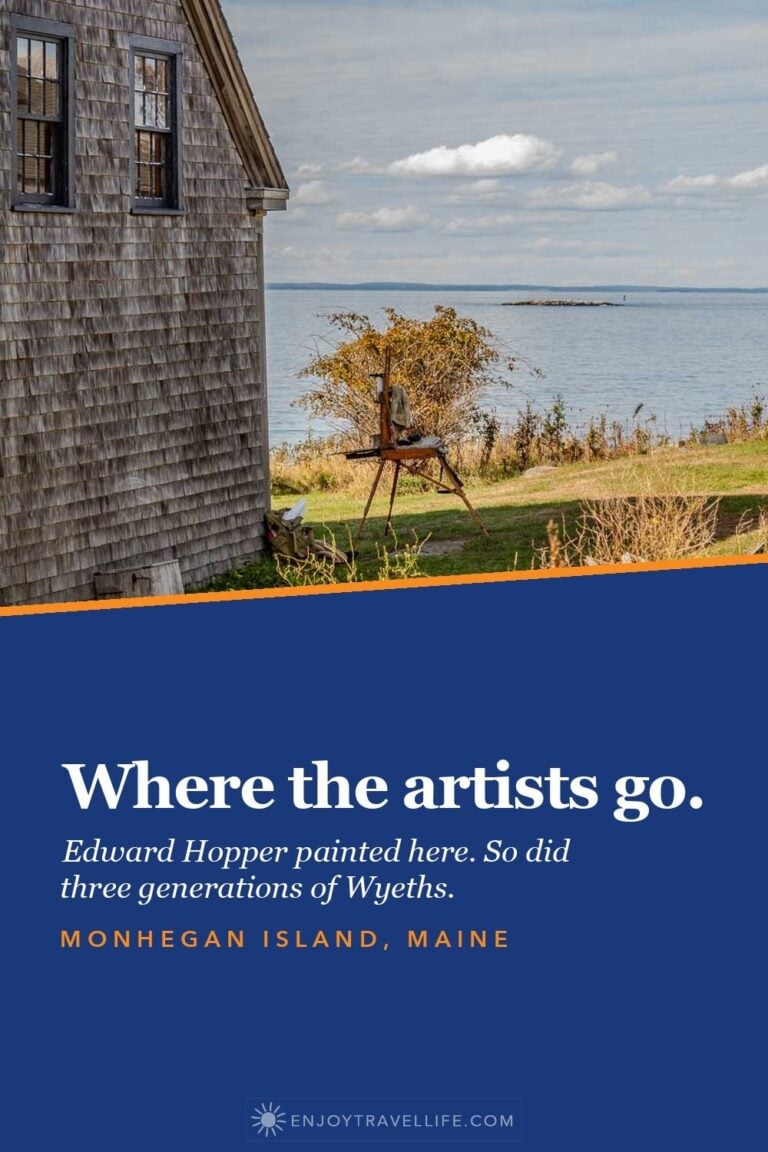
When I visited in late September, the museum was closed for the season, but the grounds were open and worth the walk on their own.
Here, you’ll find a bronze fog bell that once warned ships approaching Manana Island, along with plaques recognizing the Wabanaki people and marking the site of Captain John Smith’s 1614 fishing colony.
A bench facing the water makes this a great place to sit down for a minute to reflect and take in the breathtaking views.
The Trails and the Far Shore
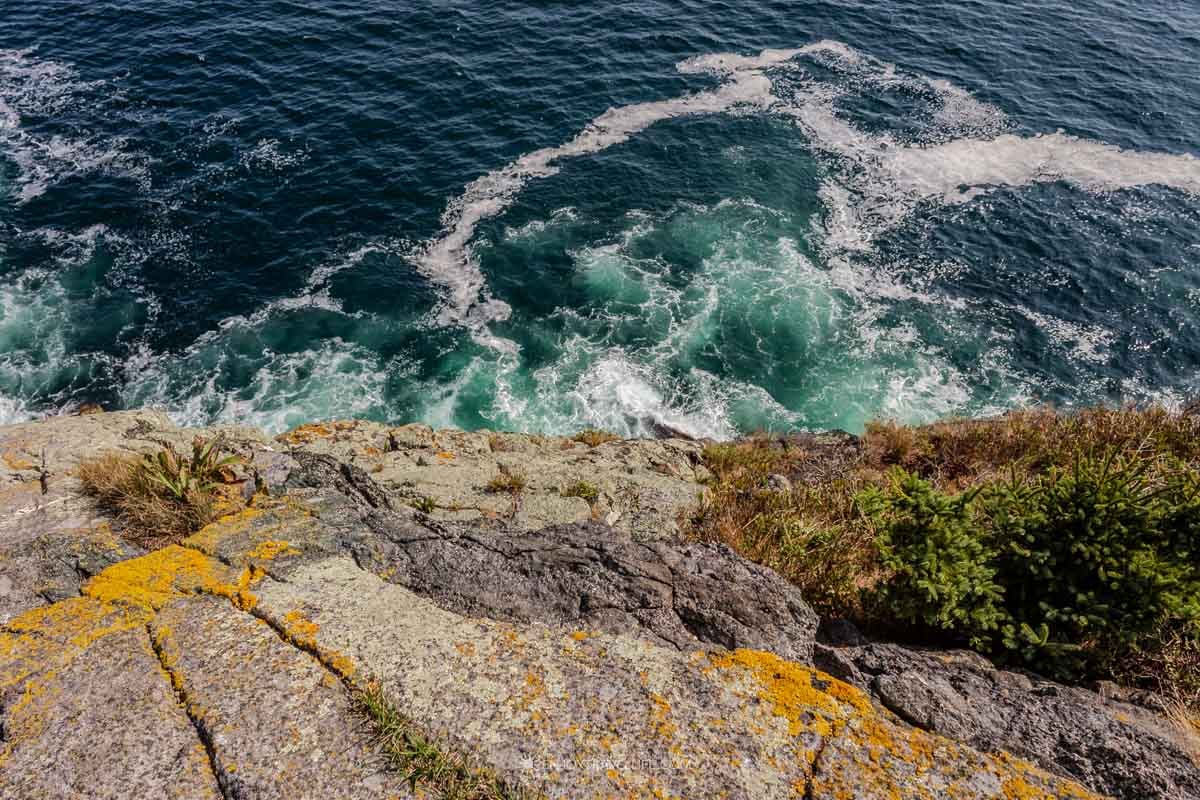
This is the reason to come. The real one.
A network of woodland paths crosses the island, winding through evergreen forest along soft, root-laced trails. The walk is shaded, quiet, and surprisingly peaceful.
Then the trees open up, and suddenly you’re standing on the edge of the Atlantic.
Waves crash against massive granite ledges below in explosions of white foam, contrasting the turquoise and deep blue water.
There’s no railing, no signage, no boardwalk. It’s just you and the ocean and a horizon line that seems impossibly far away.
Depending on the day, you might spot seals, a distant sailboat, or even the spout of a whale offshore.
A few other visitors sat scattered across the rocks when I arrived. Some were taking photographs. Others simply stared out at the water. It’s a truly hypnotic scene with the roar of the waves and the incredible view.
Nobody seemed in a hurry to leave, and there wasn’t much to say.
I wasn’t in a hurry either.
The trails loop back through the woods to the village side of the island, so you don’t need to retrace your steps. The whole circuit takes about an hour and a half at a leisurely pace, but you’ll want to allow extra time for the far shore.
You’ll want it.
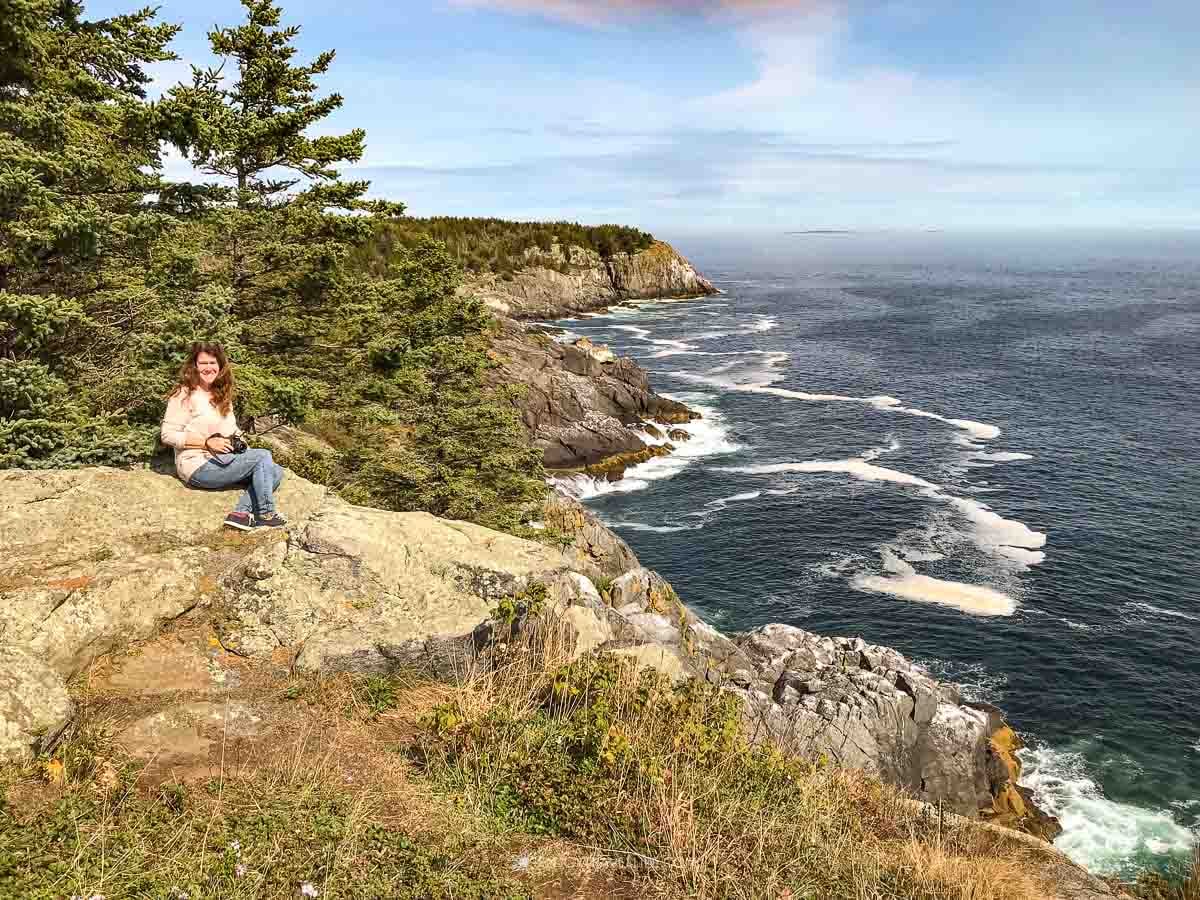
Wear sturdy shoes for the trails. The paths on the village side are easy dirt roads, but the woodland trails and coastal rocks are uneven and can be slippery. Sneakers will work, but hiking shoes are better. And bring water. There’s no place to refill once you leave the village.
The Art Colony Legacy
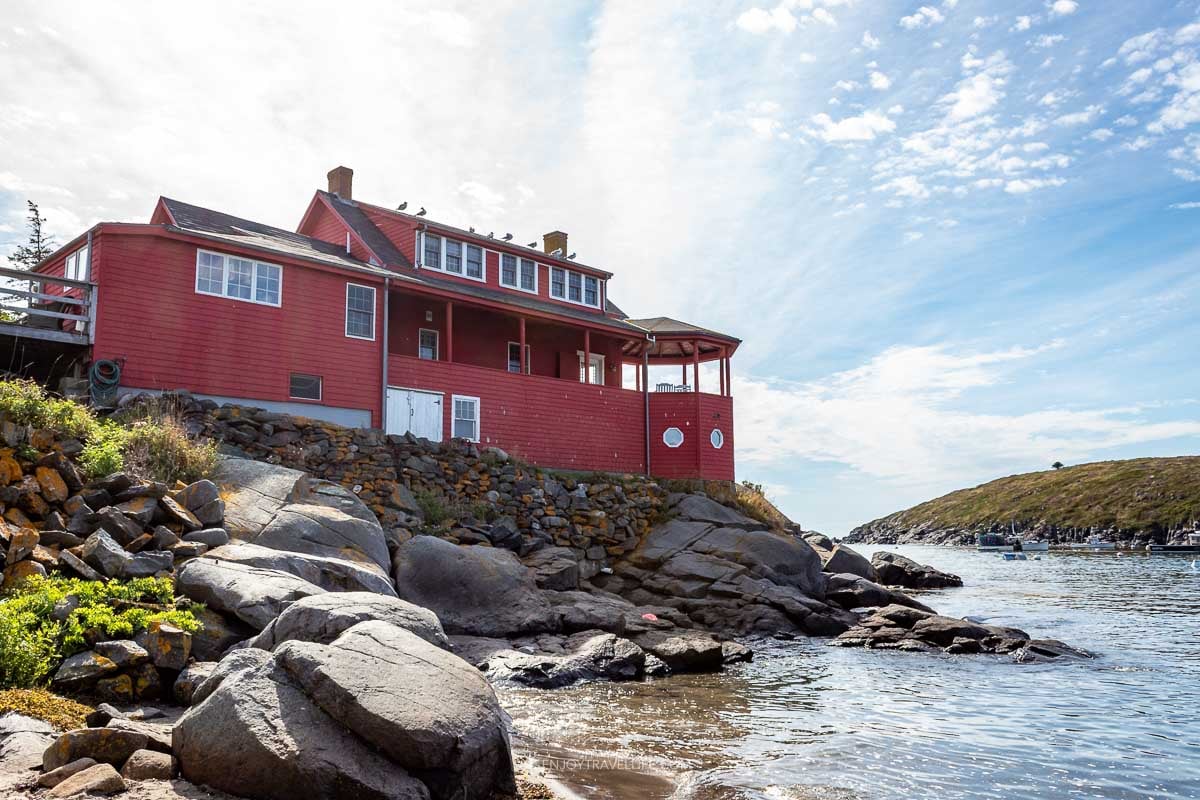
Monhegan’s identity as an art colony runs deeper than a marketing label. Artists have been coming here since the mid-1800s, drawn by the island’s dramatic coastline, changing weather, and distinctive light.
The list of artists associated with Monhegan is remarkable for such a small island.
Rockwell Kent built a cottage on the island’s southern tip in 1905.
George Bellows painted here.
Edward Hopper did too.
Even Winslow Homer has a place in Monhegan lore, though historians have never been able to prove he actually painted on the island.
The strongest artistic connection may be the Wyeth family. N.C. Wyeth visited in the early twentieth century. Andrew Wyeth followed.
Jamie Wyeth spent decades painting the island and its people, producing some of Monhegan’s most recognizable images, including Kent House and the 1972 watercolor The Red House.
But he also painted what he calls the less-celebrated aspects of island life: the gulls, the fog, the working boats, the quiet corners that most visitors walk past without noticing.
What struck me most wasn’t the history itself. It was how present it still feels.
Earlier in the day, I passed an easel set up on a lawn overlooking the harbor. Galleries line the village road. Artists still arrive carrying sketchbooks, paint boxes, and cameras, hoping to capture something of the island for themselves.
Spend a day on Monhegan and it’s easy to understand why they keep coming back.
Eating on Monhegan
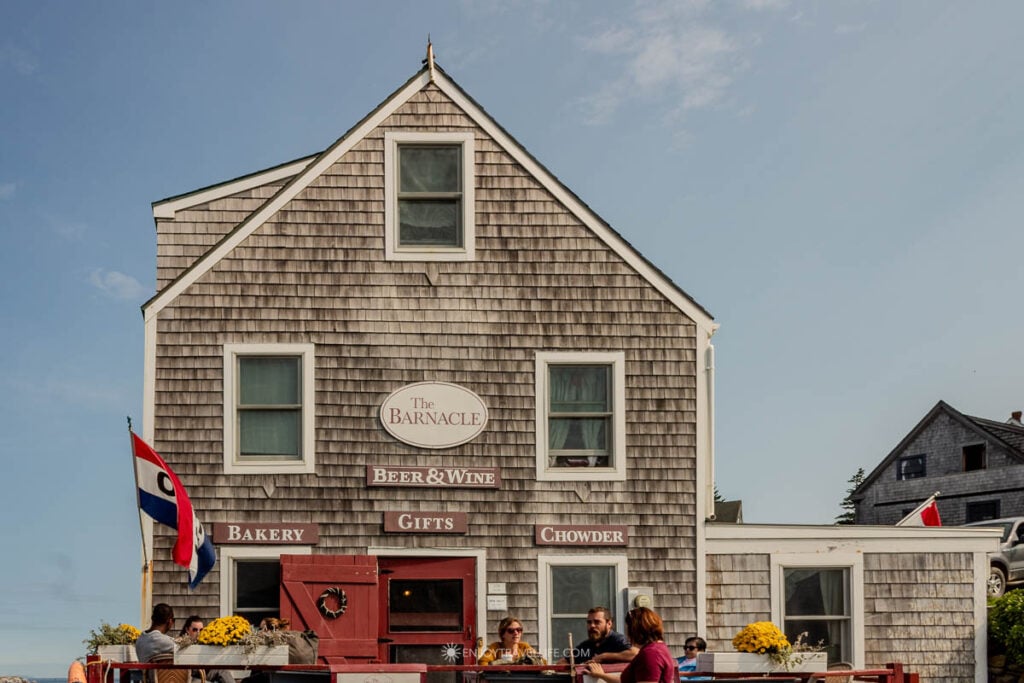

After a few hours on the trails and the lingering afterglow of the far shore, a pastry and an iced coffee by the harbor felt like exactly the right way to end the day.
Food options on Monhegan are more spread out than plentiful, so it helps to think about them by location.
Expect island prices. Supplies arrive by boat, after all. But few places can match the view while you enjoy a bite.
Near the ferry dock, The Barnacle serves coffee, espresso drinks, baked goods, sandwiches, and chowder. It’s an easy stop before heading out on the trails or while waiting for the return ferry. We stopped for a pastry and an iced coffee here before boarding, and it was the perfect transition back to the mainland.
If you’re exploring farther afield, Monhegan Coffee Roasters operates out of The Mooring Chain on the south end of the island, serving coffee, bagels, and pastries. Monhegan Brewing Company is also located away from the harbor and worth considering if you have extra time.
For a full meal, The Fish House at Fish Beach is known for fresh seafood and fish tacos. The Novelty, tucked behind Monhegan House, serves pizza, ice cream, beer, wine, and picnic-friendly fare.
Both Island Inn and Monhegan House also welcome non-guests for meals in their dining rooms. Check availability or make a reservation in advance during peak season.
On a day trip, every hour counts. If food is part of your plan, it’s worth deciding where you’d like to eat before setting out across the island.
Should You Stay Overnight?
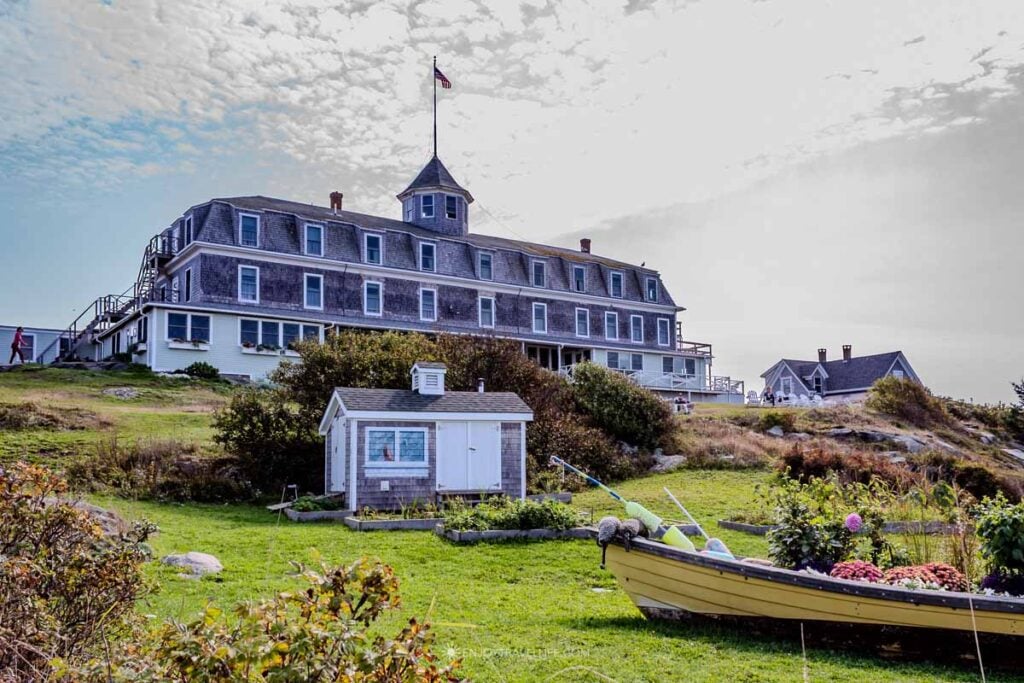
I visited Monhegan as a day trip, and the 3.5 hours I spent on the island were enough for a strong first taste. But just about everyone who stays overnight says the island changes when the day boats depart and the trails and harbor grow quiet.
If you’ve got the time, an overnight stay lets you experience a side of Monhegan that day-trippers miss.
Lodging is limited and books up early, so you’ll want to reserve well ahead.
- The Island Inn has overlooked the harbor since 1907, with accommodations ranging from ocean-view rooms to more budget-friendly options with shared baths.
- The Monhegan House, an 1870s inn in the center of the village, offers guest rooms and a restaurant of its own.
- Shining Sails rounds things out with bed-and-breakfast rooms, cottages, and efficiencies for travelers who want a little more space.
- A handful of private cottage rentals are available on Airbnb as well, though availability varies from season to season.
What I’d Do Differently
I loved the day, but I’d change a few things on a second visit:
- Get off the main loop. I walked the far-shore circuit, which is the highlight, but the island has 17 miles of trails and I only saw a slice of them. Next time I’d spend more time exploring the quieter corners of the island.
- Visit when the museum is open. The Monhegan Museum was closed for the season when I visited in late September. I’d return earlier in the year and set aside time to explore both the exhibits and the galleries.
- Slow down in the village. I spent most of my time on the trails, but Monhegan rewards wandering. Next time I’d linger longer in the galleries, browse the shops, and spend more time simply watching harbor life unfold.
- Stay overnight. The day-trip clock moves faster than you’d think. By the time I felt like I was settling into the rhythm of the island, it was time to head back to the ferry. One night would let me experience Monhegan after the day visitors leave and catch the light at both ends of the day.
The Return to the Mainland
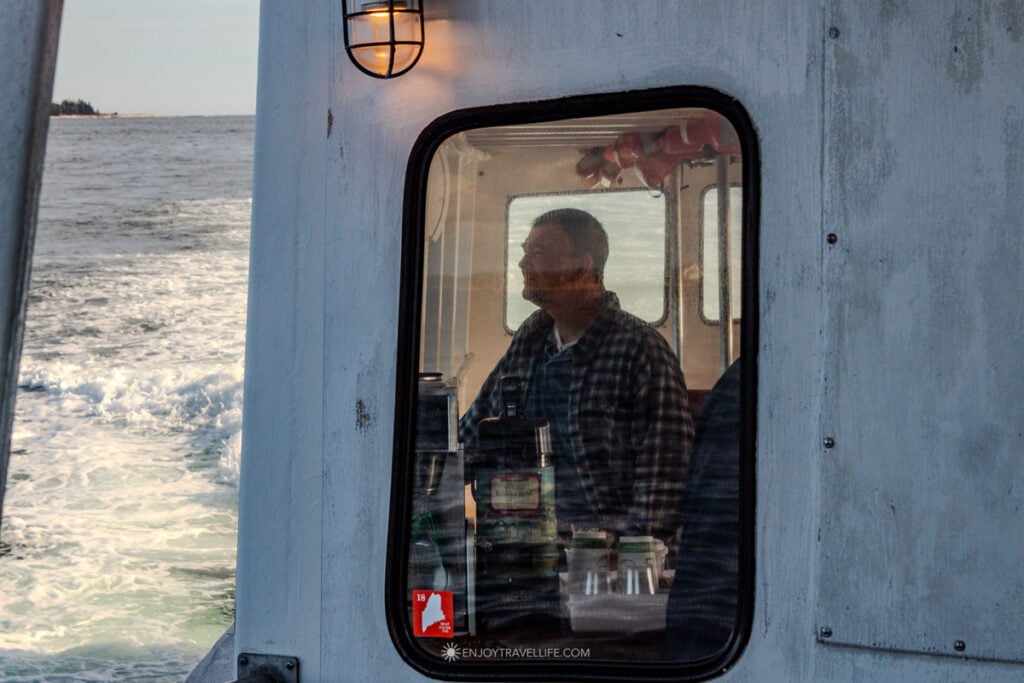
The ride back to Boothbay feels different than the ride out.
The island gets smaller behind you as the mainland slowly comes back into view. Most people sit quietly, looking out at the water or scrolling through the photos they took during the day.
My traveling companion had wanted to visit for years. He came looking for the island that inspired generations of artists, experiencing it through an artist’s lens. I saw it through my camera lens. By the end of the day, we both understood the same thing.
Monhegan is not a checklist destination. It’s a place to meander, linger, and take things in.
Final Thoughts on Monhegan Island, Maine
Monhegan isn’t polished or packaged. It’s a small island with a lighthouse, a dirt road, a handful of galleries, and a coastline worth the trip on its own.
Add the trails, the artistic legacy, the village, and the feeling that you’ve stepped into a different rhythm of life, and it’s easy to understand the island’s appeal.
If you can get to Boothbay Harbor, you can get to Monhegan. Give it a day. If you have the time, give it two.
Frequently Asked Questions
How long is the ferry to Monhegan Island?
The Balmy Days II takes about 90 minutes each way from Boothbay Harbor. The boat departs at 9:30 AM and returns at 4:15 PM, giving you roughly three-and-a-half hours on the island.
Is Monhegan Island worth visiting for a day trip?
Absolutely. Roughly three-and-a-half hours is enough to explore the village, hike to the coastal cliffs on the far side, visit the lighthouse, and grab a bite. It’s a full experience, not just a quick look around.
Can you stay overnight on Monhegan Island?
Yes. The Island Inn has 32 rooms overlooking the harbor, and the Monhegan House offers 28 rooms on four floors. Both are seasonal and book up in summer. There are also a limited number of rental cottages and Airbnbs on the island.
When is the best time to visit Monhegan Island?
The ferry runs mid-June through late September. Summer is the busiest season, with all businesses and galleries open. Late September offers cooler weather, fewer visitors, and fall color starting in the trees, though some businesses begin closing for the season.
Are there cars on Monhegan Island?
No. The island has about two miles of dirt road and 17 miles of hiking trails. Everyone gets around on foot. There are a few utility vehicles for hauling supplies, but no personal cars and no paved roads.

Next Steps
For more on coastal Maine, read these articles next: