
If you’re planning a few days in Florence, you’ve probably seen the ads: A Tuscany tour from Florence that promises medieval villages, rolling vineyards, and a wine tasting, all for under a hundred euros. They sound too good. Too rushed. Too touristy. Consider the best day trips from Rome.
I booked one anyway, and it turned out to be one of the best experiences of my entire Italy trip.
Continue reading to learn exactly how the day unfolds, stop by stop, so you can decide if a 1-day Tuscan tour belongs on your itinerary.
IN THIS ARTICLE
- What a Full-Day Tuscany Tour Includes
- The Bus: What to Know Before You Board
- Stop 1: San Gimignano
- Stop 2: Monteriggioni
- Stop 3: Siena
- Stop 4: Wine Tasting at Tenuta Torciano
- The Chianti Countryside Between Stops
- Is a Tuscany Day Tour Worth It?
- 7 Tips for Your Tuscany Day Tour
- Final Thoughts
- FAQs
- Next Steps
What a Full-Day Tuscany Tour from Florence Includes
Most Tuscany day tours from Florence follow the same general route: a loop through the Chianti hills south of the city, stopping at three or four historic towns and finishing with a wine tasting at a family-run estate.
The tour company I chose advertises a 10.5 hour day. In actuality, my day ran closer to 12 hours door-to-door, with the bus pulling back into Florence around 8:45 PM. Remember, you’re on Italy-time, so don’t expect an overly strict schedule.
The four stops on the tour unfolded in this order:
| Stop | Highlights | Time |
|---|---|---|
| San Gimignano | Medieval towers, Piazza della Cisterna, artisan shops, gelato | ~1 hr 15 min |
| Monteriggioni | Walled fortress, panoramic views, quick photo stop | ~30 minutes |
| Siena | Guided walking tour, Piazza del Campo, Duomo, free time for lunch | ~3.5 hours |
| Tenuta Torciano | Wine tasting, Tuscan antipasti, cellar tour | ~1 hour |
Expect your Tuscany tour from Florence to start at around 65 euros (about $75 USD), depending on the operator and season. That typically includes the bus, a tour guide, wireless headsets for the guided portion in Siena, and the wine tasting with food pairings at the end.
Your tour operator may run the stops in a different order depending on the day. My tour started with San Gimignano in the morning and ended with the wine tasting, but the same route sometimes runs Monteriggioni first. The stops are the same either way.
Most tours depart from near Santa Maria Novella train station, so confirm your exact meeting point when you book.
Book a Tuscany day tour from Florence
The Bus: What to Know Before You Board
Before you board the bus to begin your tour, you should know a few things.
Many tours offer a full-size coach, air conditioned, with WiFi and charging ports at the seats.
That said, some of the charging ports on my bus were broken, so don’t count on them. You’ll want to bring a portable battery for your phone or camera, because you don’t want to miss the incredible photo opportunities ahead.
You can’t eat or drink on the bus. If you like to sip coffee or enjoy snacks during a drive, this might be an adjustment.
The upside is that the coach is clean and comfortable.
You can, however, bring water, and you should. You’ll be doing a lot of walking and depending on the season, it will be hot.
The best part of being on the bus is the drive itself.
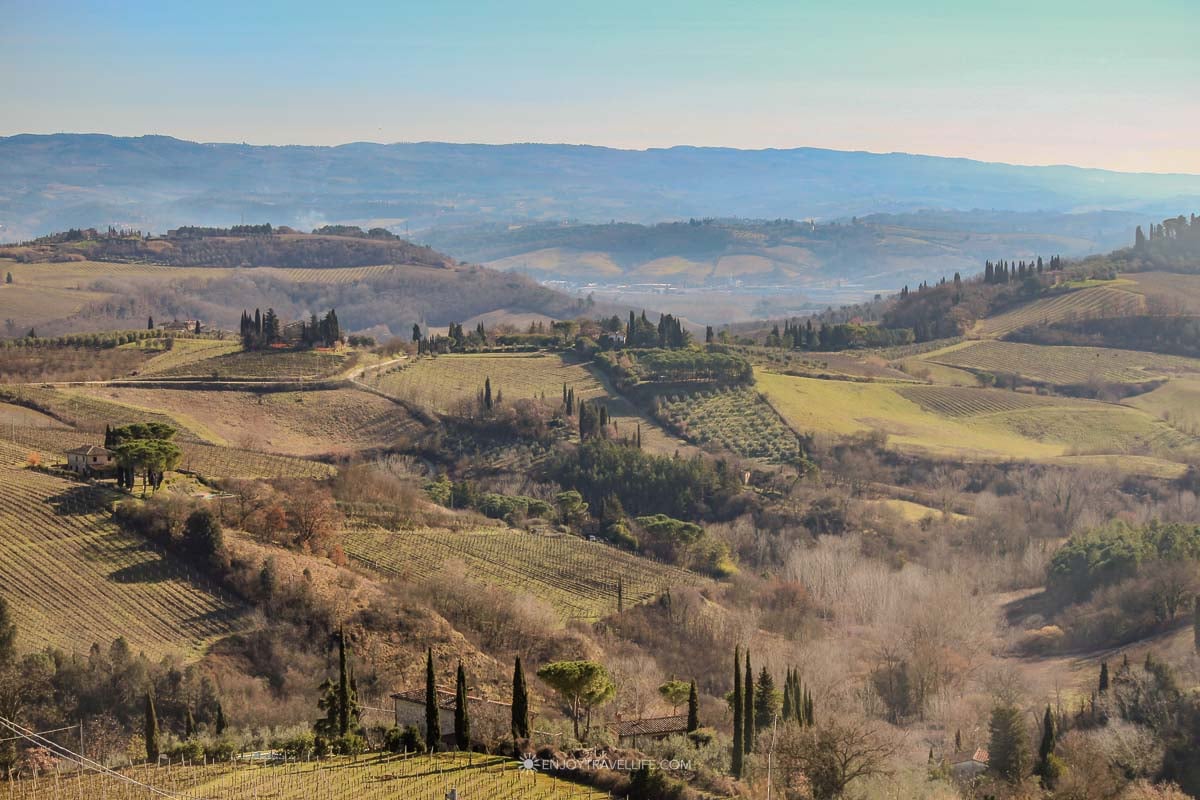
The route takes you through the Chianti hills, past vineyards, olive groves, and those iconic rows of cypress trees.
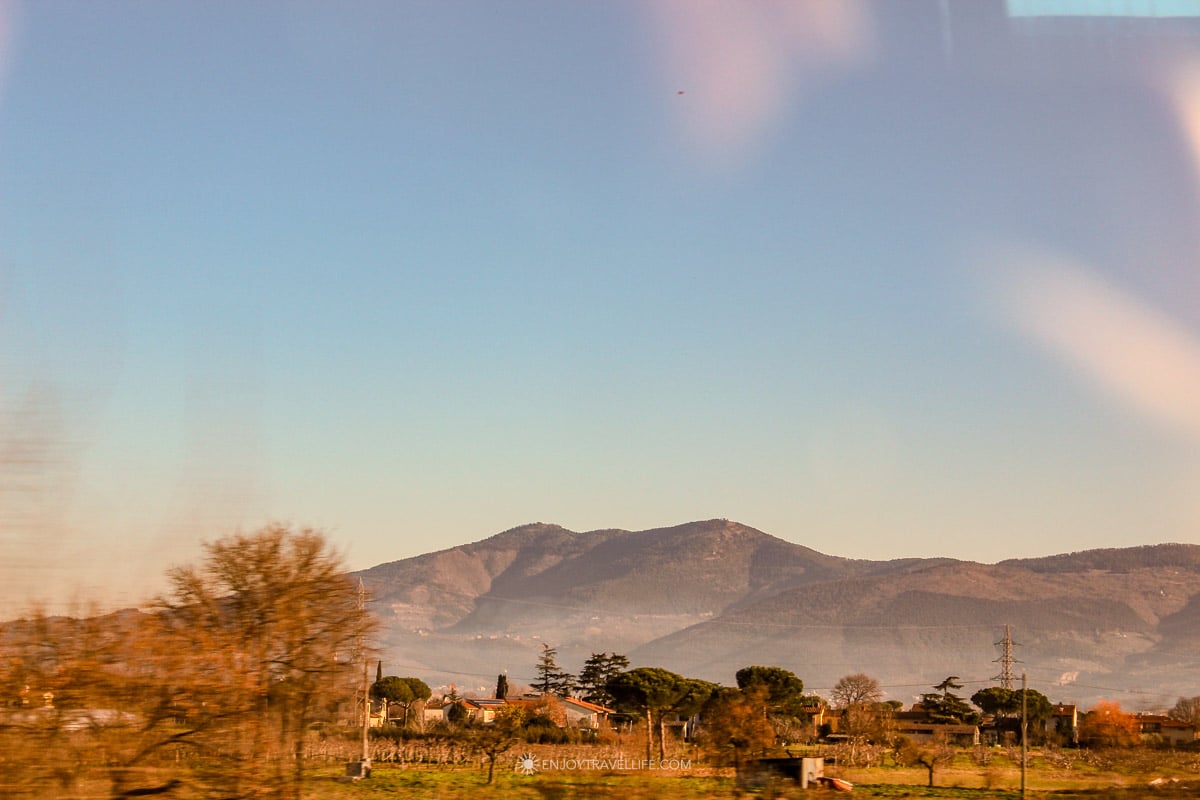
If you’re sitting on the right side heading south from Florence, you’ll get the best views.
The WiFi actually works for checking maps to follow your journey (and for checking messages, if you must). In general, you can expect the following travel time.
Bus ride durations between stops:
- Florence to San Gimignano: ~50 minutes
- San Gimignano to Monteriggioni: ~10 minutes
- Monteriggioni to Siena: ~45 minutes
- Siena to Torciano: ~50 minutes
- Torciano back to Florence: ~1.5 hours
Total time on the bus across the full day is roughly three hours. That sounds like a lot, but the scenery makes most of it feel like part of the experience rather than dead time.
Stop 1: San Gimignano
San Gimignano is where the day begins in earnest.
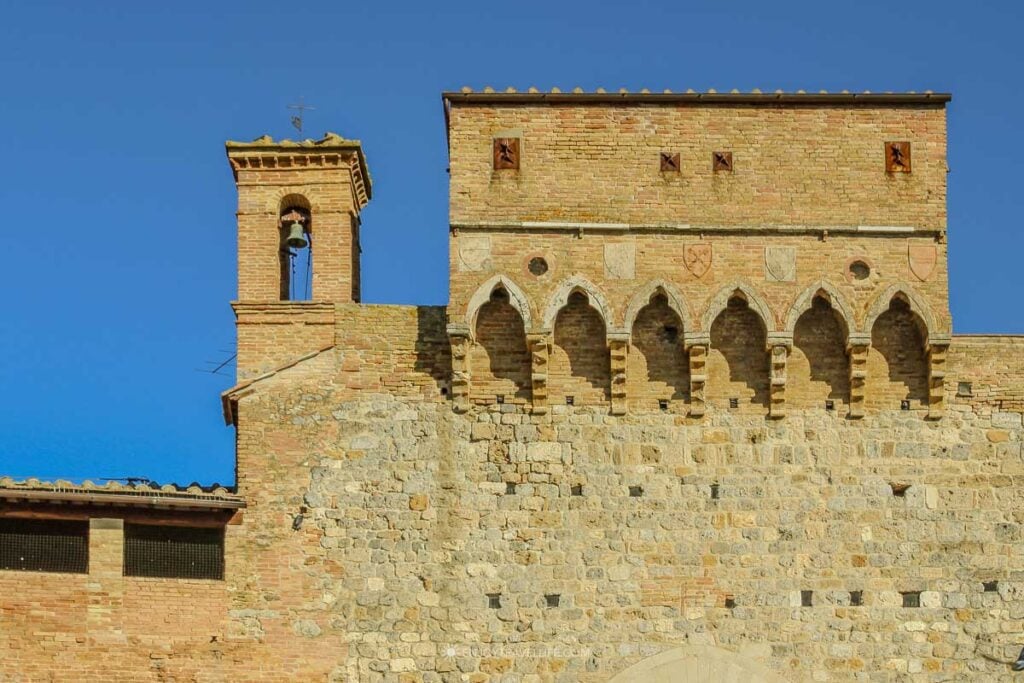
The bus parks below the walls and you walk up through Porta San Giovanni, the main gate, into a hilltop town famous for its 14 medieval towers.
The towers were built by rival families trying to outdo each other in height during the 13th century. From a distance, the skyline looks like a miniature Manhattan made of stone.
It’s an excellent display of a wealthy walled hill town.
You’ll get about an hour and fifteen minutes here, so make the most of it.
The main gathering point is Piazza della Cisterna, a triangular medieval piazza ringed by towers and cafes with a 13th-century stone well at its center.
From there, it’s a short walk to Piazza del Duomo, the second main square, where you’ll find the Collegiata di San Gimignano.
The church has a plain Romanesque facade that doesn’t prepare you for what’s inside: the walls are covered in frescoes dating to the 14th century.
Even a quick look through the doorway is worth the walk.
If you’re in San Gimignano on the hour, stop and listen. Multiple church bells ring across Piazza della Cisterna and echo off the stone towers. Stand in the piazza for the full effect. It may not be listed as a tour attraction, but it’s a memorable experience.
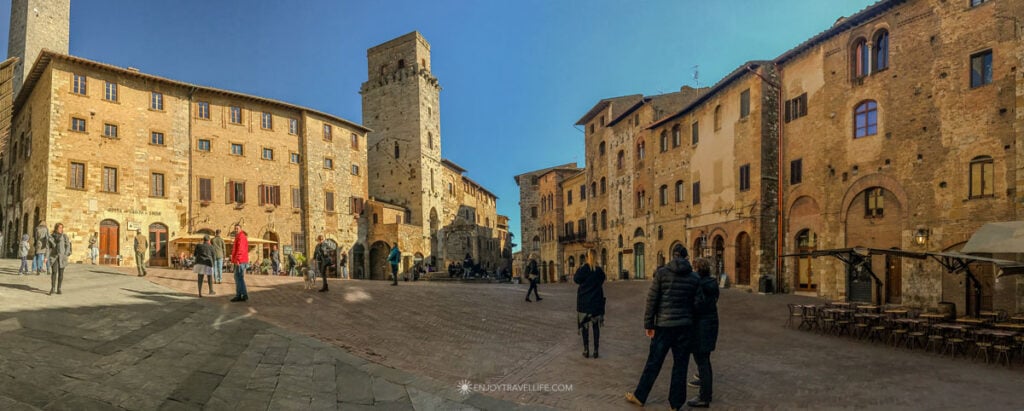
If you thought the views from the bus were good, the panorama from the perimeter of San Gimignano is on another level.
You’ll see rolling Chianti hills, cypress-lined ridges, and olive groves stretching to the horizon. It’s the quintessential Tuscany view, and in the morning light with fewer crowds, you can walk the full perimeter at your own pace.
You’ll also have time to browse the artisan shops (leather goods, ceramics, wild boar salami) and get gelato. The gelato shops here are famous, and the competition between them is fierce.
For more detail on this fascinating Medieval hill town, read my full San Gimignano article. It covers the towers’ history and the family rivalries behind them. This is worth reading before your visit so you know what you’re looking at.
Stop 2: Monteriggioni
Monteriggioni is about ten minutes down the road from San Gimignano. This is a brief stop, about 30 minutes, but it’s worthwhile.
Unlike San Gimignano, Monteriggioni was built as a military fortress. A ring of crenellated walls (battlement squares) with 14 round towers surrounds the town. The center includes a single piazza so small you can walk across it in two minutes.
The whole thing sits on a hilltop, visible for miles in every direction. That’s exactly what its builders intended, since Monteriggioni was constructed to help defend Siena from Florence.
When Dante wrote the Inferno, he compared the giants standing in the pit of Hell to Monteriggioni’s towers as seen from a distance (Canto XXXI).
As the fortress comes into view from the bus, you’ll understand exactly what he meant.
You’ll have time to walk along the perimeter of the walls (for a small fee) as the guards once did, take in the panoramic views of the surrounding countryside, and grab a coffee at one of the restaurants on the piazza.
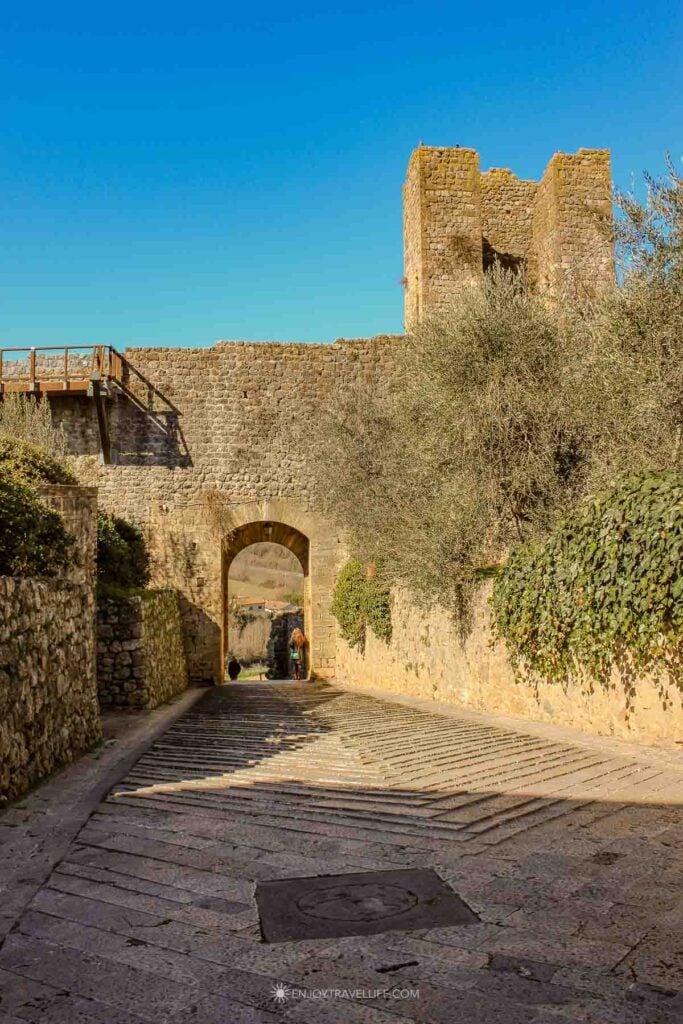
It isn’t enough time to linger, but the town is genuinely that small. Most people are done exploring before the guide calls everyone back to the bus. Still, it gives you an idea what life in a small Medieval community might be like.
I wrote a full guide to Monteriggioni with history, photos, and planning tips. If this stop interests you, start there.
Stop 3: Siena
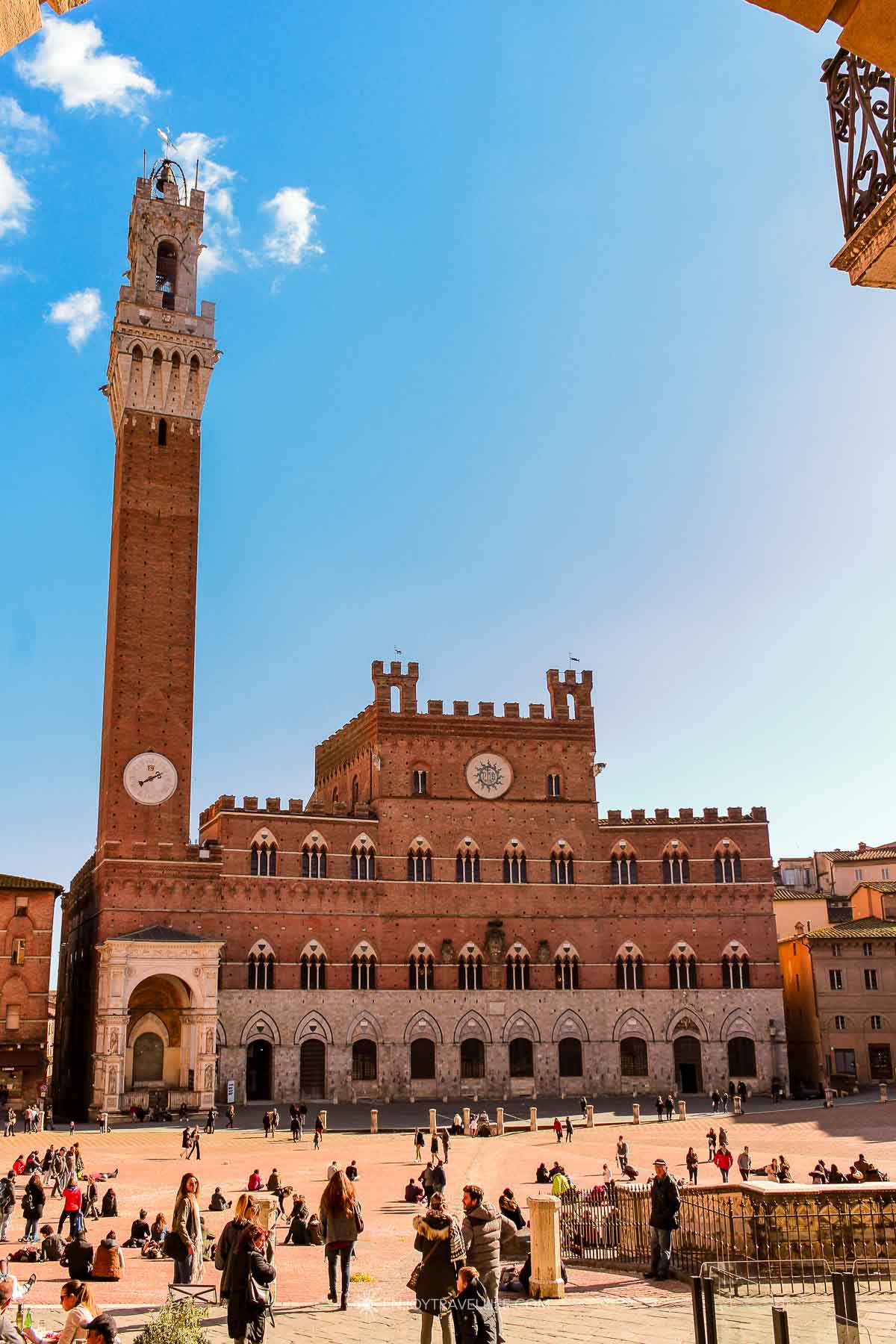
Siena is the main event for most Tuscany day tours, and you’ll get about three and a half hours here. That’s significantly more time than the other stops, and for good reason. There’s a lot to see.
The bus drops you near Piazza Salimbeni, a quiet square anchored by the headquarters of Monte dei Paschi di Siena, the oldest operating bank in the world (founded 1472).
It’s an interesting footnote most tours skip. The building’s Gothic facade has been the face of Sienese banking for over five centuries. And you’ll see the Medici crest prominently displayed.
The Siena visit starts with a guided walking tour.
Your guide leads the group through the historic center while you listen through wireless headsets, which means you can spread out and find your own angle on things without huddling around the guide.
It’s one of the better tour logistics I’ve encountered but I will say, the headsets are a bit clunky and some are staticky, so check it when the tour begins. You might need to request another set.
The guided portion covers Piazza del Campo (the fan-shaped piazza where the famous Palio horse race happens twice each summer), the Fonte Gaia fountain, and the exterior of the Palazzo Pubblico with its soaring Torre del Mangia.
After the guided section, you get free time to explore on your own.
Use that free time for the Duomo. The Siena Cathedral is extraordinary.
The black and white striped marble exterior is dramatic. I wasn’t prepared for the interior.
There, you’ll find inlaid marble floors depicting intricate biblical scenes and a carved pulpit by Nicola Pisano. A rose window fills the nave with colored light. Overhead, a coffered dome painted deep blue and covered in gold stars draws your eye upward.
Entry costs around €7–10 ($8–12 USD), depending on the season, and is worth every cent.
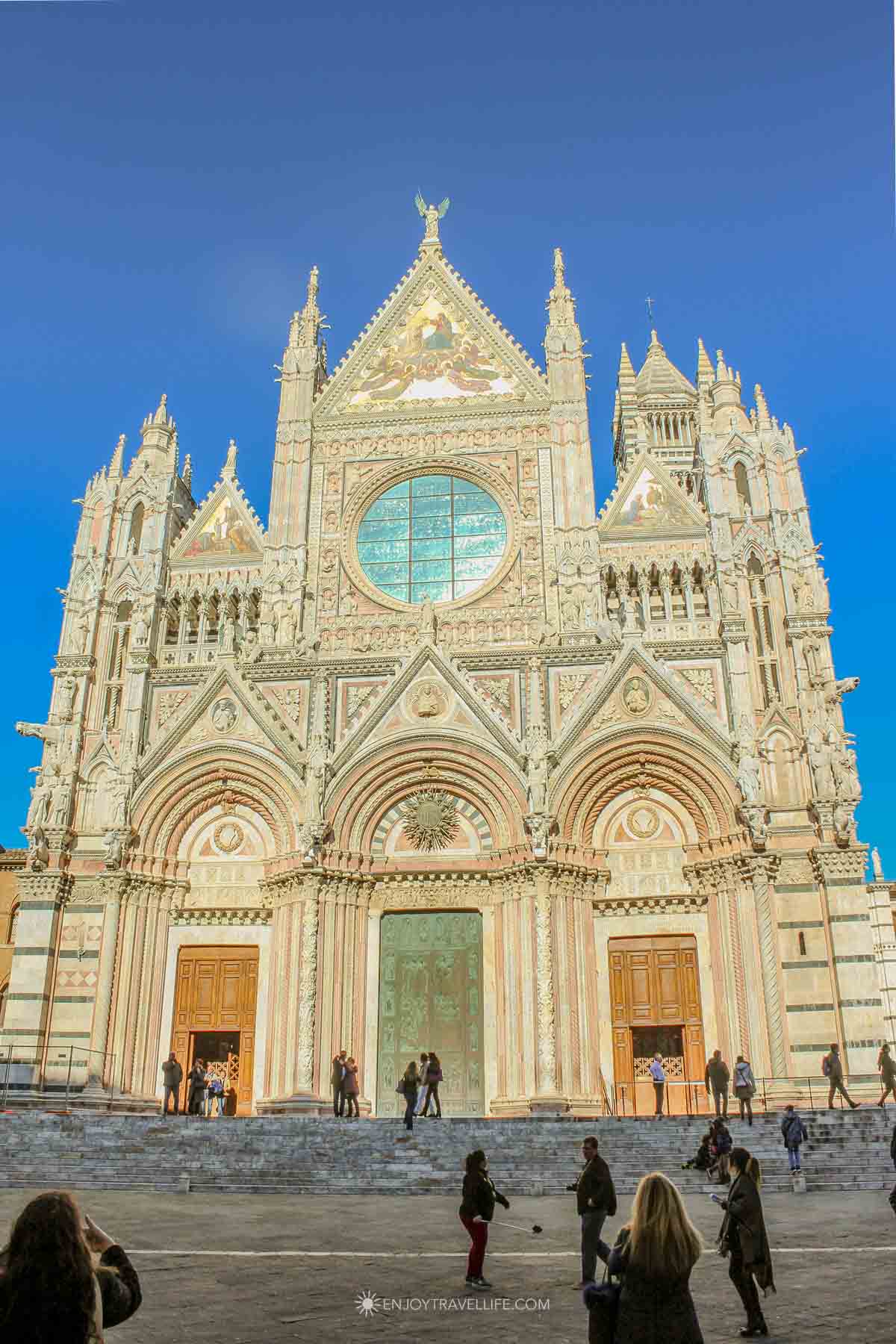
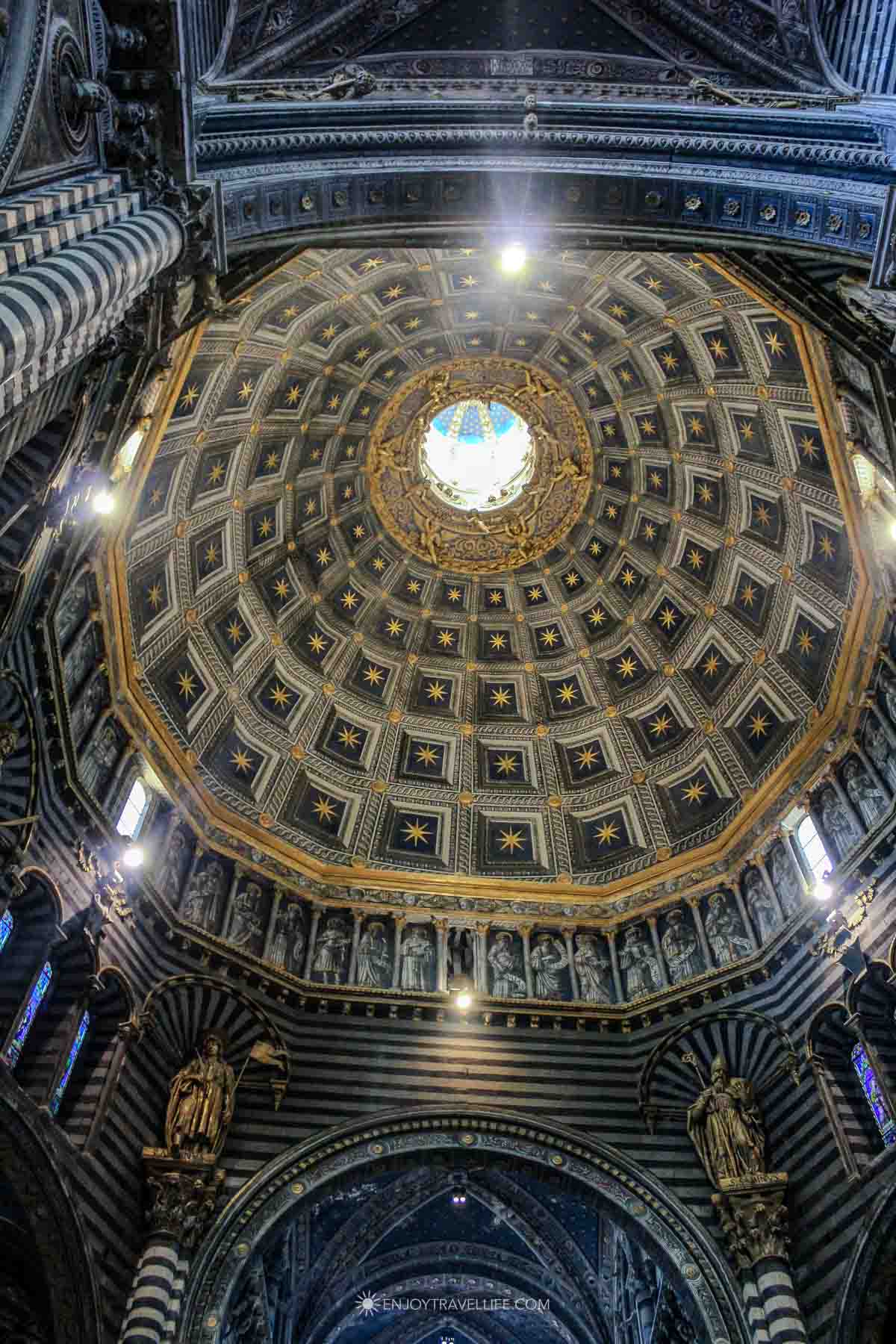
Siena’s Duomo from the outside (left) and the gold-starred dome from within (right). The black and white stripes are Siena’s signature.
My full Siena guide covers all the must-see attractions, traditional Sienese food, and the 17 contrade (neighborhood wards) that make this city unlike anywhere else in Italy.
Stop 4: Wine Tasting at Tenuta Torciano
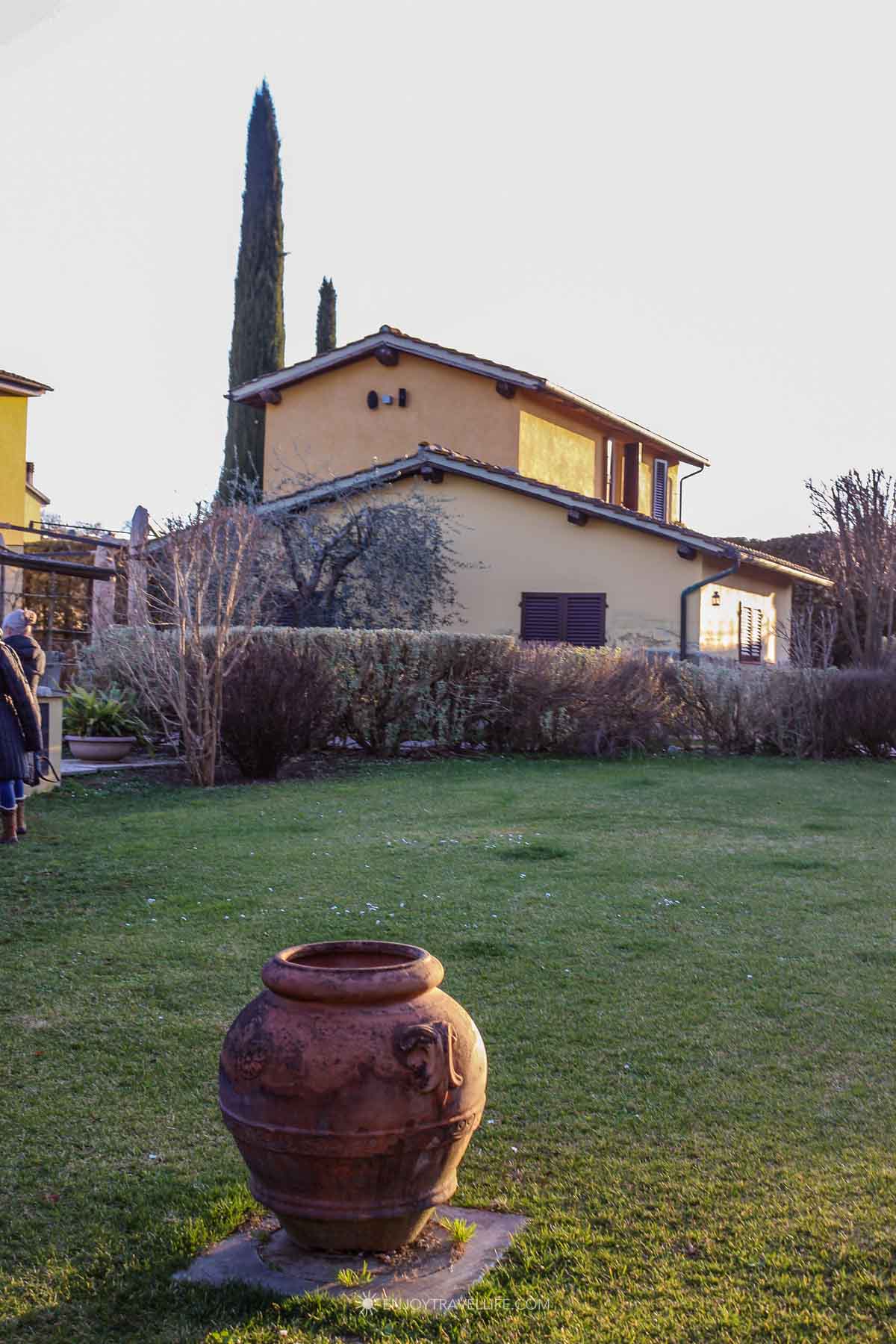
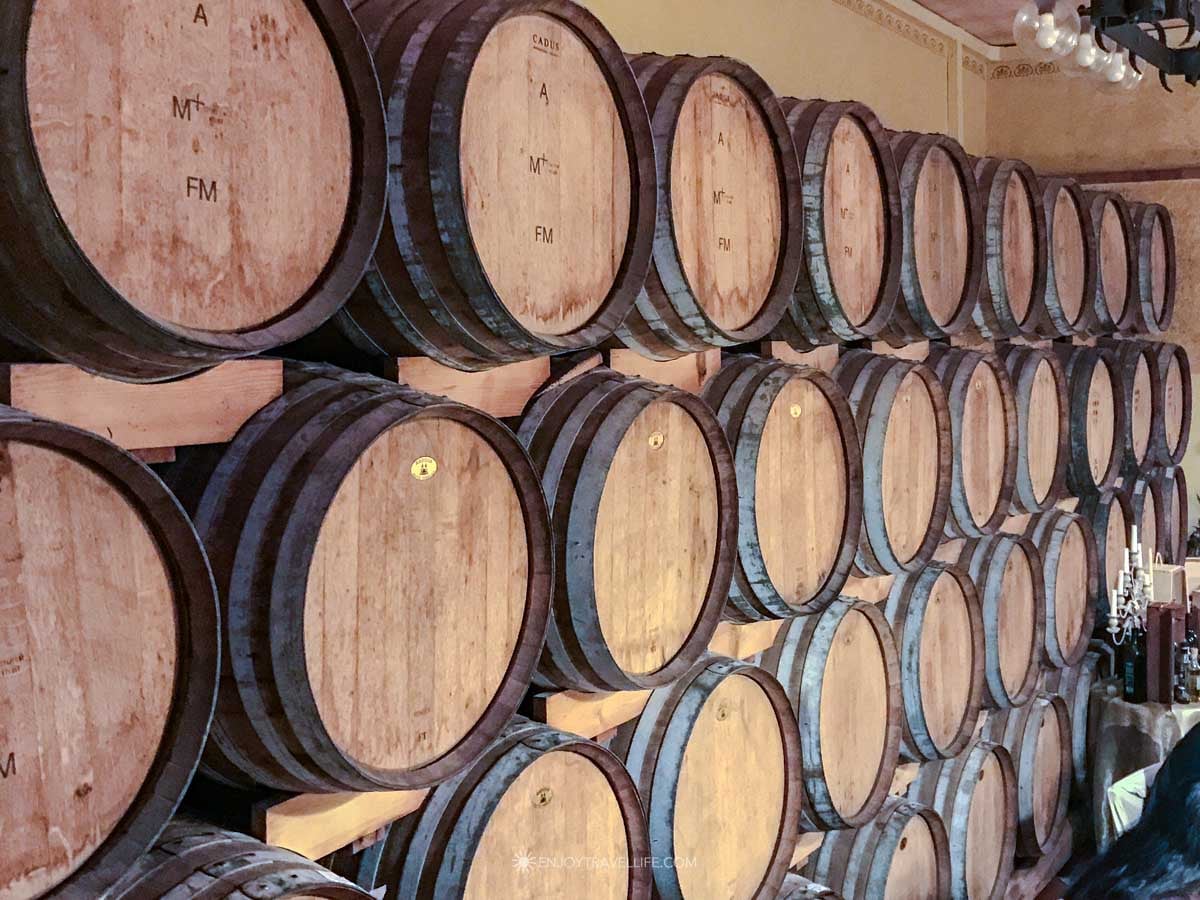
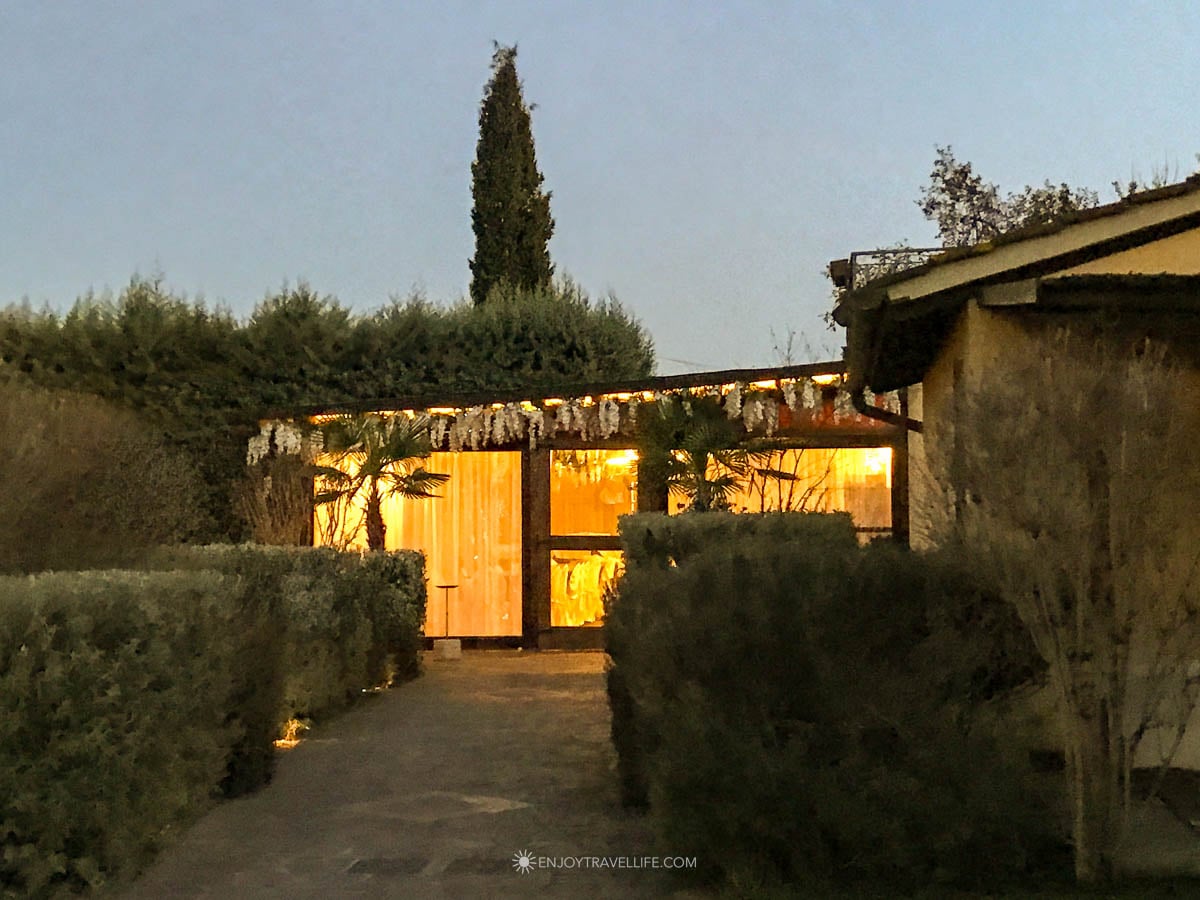
The last stop of the day is the one everyone on the bus has been waiting for. After a drive through the Chianti countryside (about 50 minutes from Siena), the bus pulls into Tenuta Torciano. This family-run winery near San Gimignano has been producing wine for 15 generations.
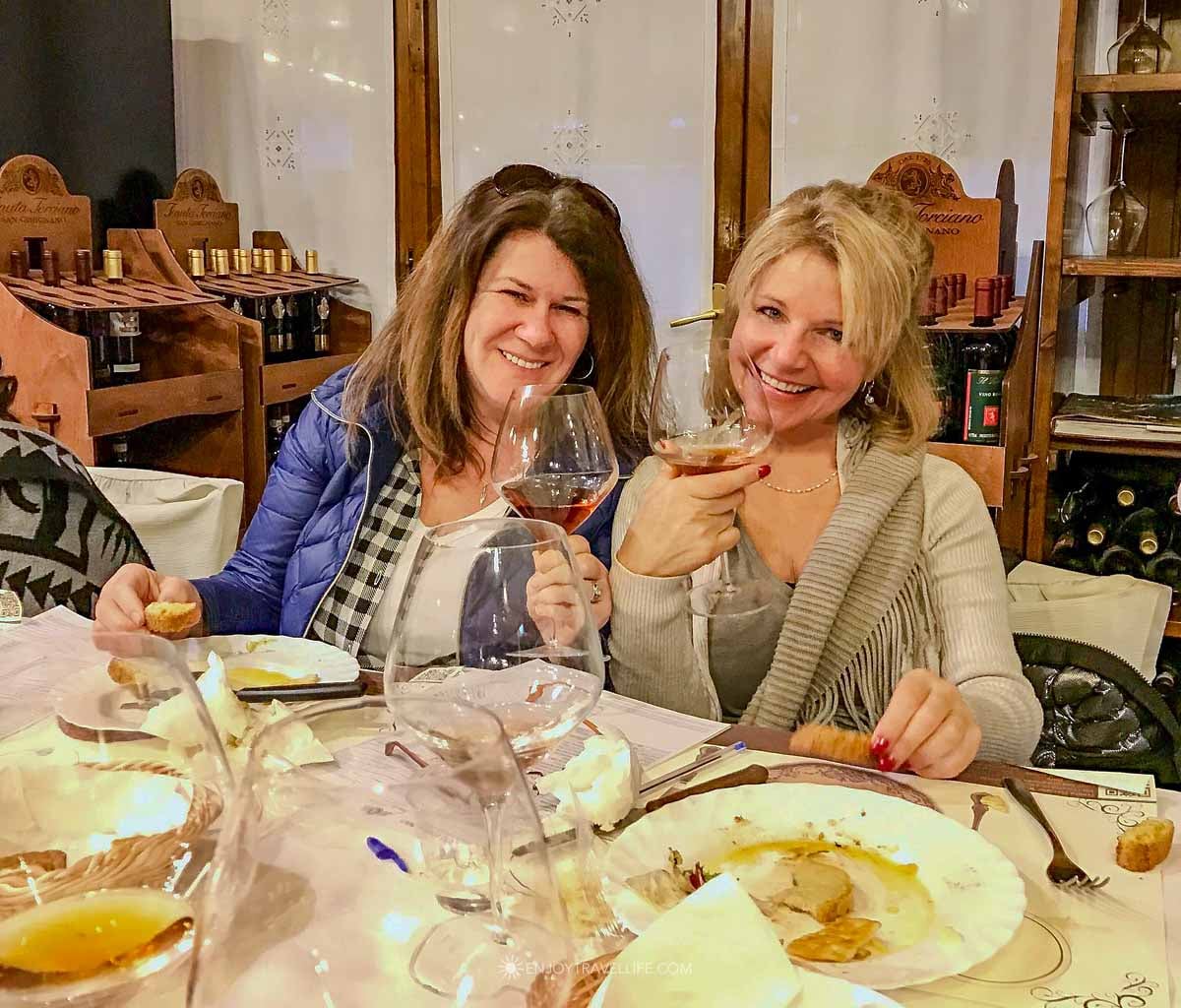
You’ll sit down first at a long communal table with the rest of your tour group, and something shifts.
The formal tour feeling fades. Tasting notes cards are set at each place. Wine glasses are lined up. Plates of Tuscan antipasti appear: salami, pecorino, bruschetta with fresh olive oil, and bread that’s clearly not from a supermarket.
The host walks you through each wine, and the table starts talking.
What surprised me was the atmosphere. Everyone at the table started talking. The people you’ve been sharing the day with started to feel familiar.
People compared notes, laughed about their favorite stops, swapped travel recommendations.
A couple from Australia sat across from me and we ended up trading restaurant tips for Florence.
It felt less like a tour activity and more like a dinner party with interesting strangers.
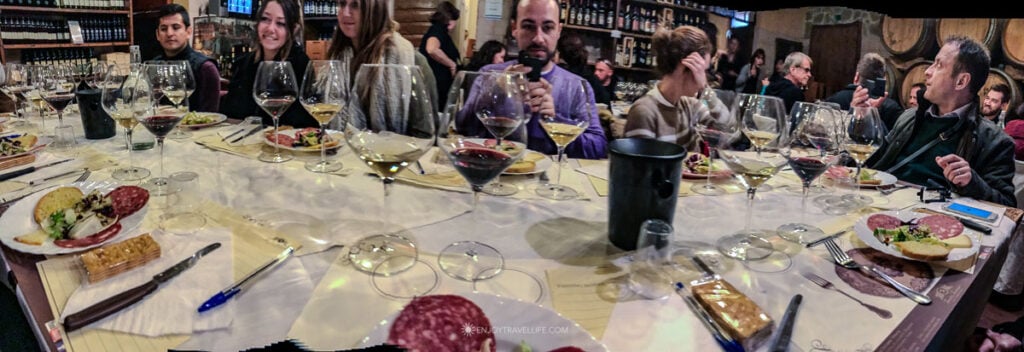
After the tasting, the tour continues into the winery’s barrel room.
Big oak barrels line the walls from floor to ceiling in a dimly lit room that smells like aged wood and tannins. The guide explains the aging process and points out barrels that have been there for decades.
Torciano also sells wine and olive oil directly, and they ship internationally. If you find something you love, by all means, send a case or two home. It will extend your experience and bring you back to Torciano with every glass.
The Chianti Countryside Between Stops
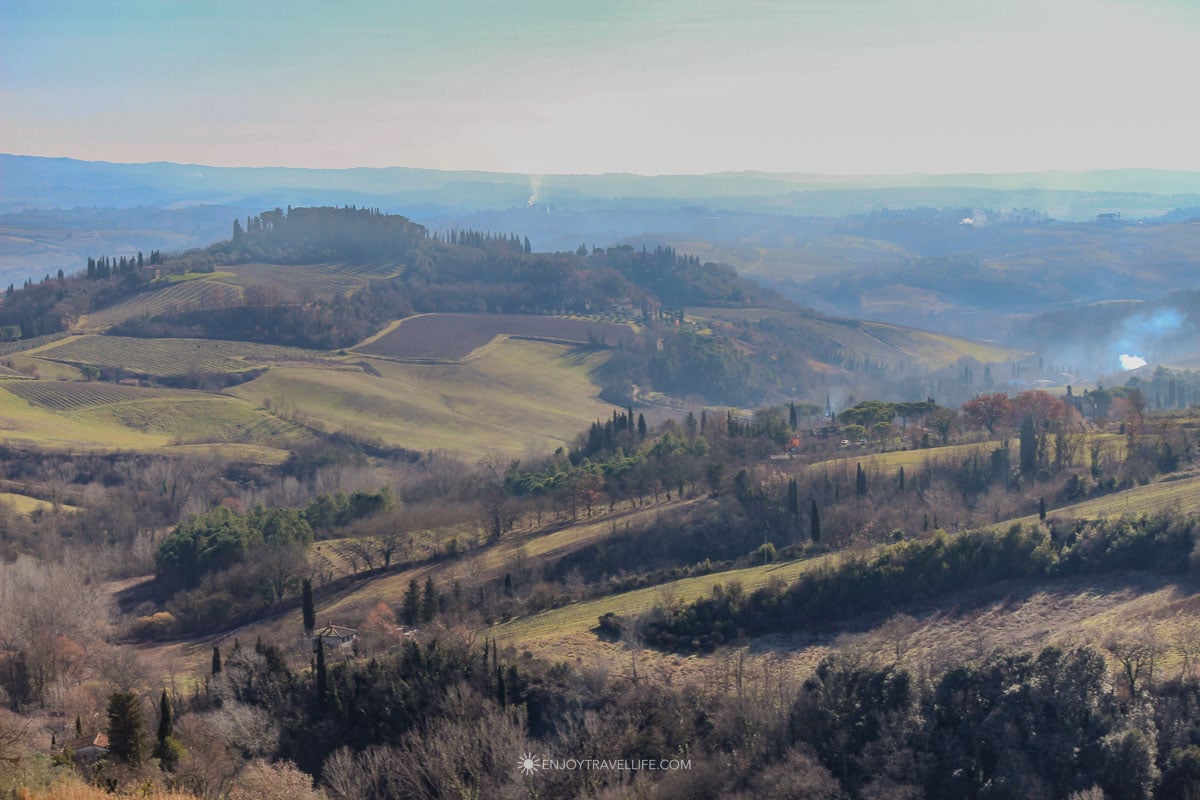
The drive between stops when you plan a Tuscany tour from Florence deserves its own mention.
This isn’t all highway driving.
The bus follows winding two-lane roads through the Chianti hills. Along the way, you’ll pass vineyards lined up in neat winter rows and stone farmhouses topped with red tile roofs. Long driveways flanked by cypress trees disappear over the ridgelines.
Several times, the views from the bus were so striking that the whole coach went silent. You could hear cameras clicking and see phones held to the windows.
The countryside itself is a stop on the tour, even if the bus doesn’t pull over. You may not get the clearest photo while in motion on the bus, but even a blurry shot of the Italian countryside preserves the scene beautifully.
Is a Tuscany Day Tour Worth It?
Here’s the honest answer about whether a Tuscany tour from Florence is worth it: it depends on what you want from Tuscany.
If you’re based in Florence for a few days and you want to see the countryside without renting a car or planning logistics, a guided day tour is one of the best values in Italian travel.
There’s a tradeoff when you see everything that you experience nothing.
For roughly 65 to 100 euros ($75 to $115 USD), you get transportation, a knowledgeable guide, multiple medieval towns, and a proper wine tasting with food.
You don’t have to worry about parking, navigating unfamiliar roads, finding your way through historic town centers with restricted traffic zones, or driving after drinking wine.
The tradeoff is time.
Thirty minutes in Monteriggioni is a taste, not a visit. Even Siena, with three and a half hours, leaves you wanting more.
And you won’t discover your own hidden courtyard or stumble onto a local’s recommendation, because the schedule keeps you moving.
But if you want the overview, the scenery, and the wine, this day delivers. It’s a great way to see the Tuscan countryside and several hill towns in a single day.
How to Do This Route on Your Own
If you prefer to drive yourself, this same route works well as a one-day road trip from Florence.
My recommended order is the same as the tour: San Gimignano first (arrive by 9:30 AM for morning light and smaller crowds), Monteriggioni as a quick stop on the way south, Siena for the long afternoon, and a Chianti estate like Torciano to finish.
Realistic driving times from Florence to San Gimignano is about 1 hour 15 minutes. From San Gimignano to Monteriggioni is about 20 minutes. And Monteriggioni to Siena is 20 minutes. Lastly, Siena to the Chianti wine region is 30 to 45 minutes depending on the estate. You’ll want to make sure you book a tasting in advance.
San Gimignano and Monteriggioni both have paid lots outside the walls (you can’t drive inside). Siena has a ZTL (restricted traffic zone) in the historic center; park at the Stadio or Santa Caterina garages and take the escalators up. Book any winery tastings in advance, especially in high season.
Rent a car for your Tuscany road trip (Discover Cars)
Other Ways to Experience Tuscan Wine
My wine tasting at Torciano was about an hour as part of the full-day tour. If wine is the main reason you’re visiting Tuscany, you may want a more dedicated experience.
Here are some options you might consider:
- Dedicated Chianti wine tours: Half-day or full-day tours focused entirely on the Chianti region, visiting two or three wineries. These run 70 to 150 euros and give you more time at each estate.
- Montepulciano and Montalcino: South of Chianti, these towns are famous for Vino Nobile di Montepulciano and Brunello di Montalcino, two of Tuscany’s most celebrated wines. Day tours from Florence run 100 to 180 euros.
- Wine bars in Florence: If a full tour doesn’t fit your schedule, Florence has excellent enotecas (wine bars) where you can taste local wines by the glass for a few euros each. Ask for a Chianti Classico Riserva.
- Buy at the source: Wine is remarkably affordable throughout Tuscany. A good bottle of Chianti at a local shop costs 8 to 15 euros. You don’t need a formal tasting to enjoy Tuscan wine.
Book a dedicated Chianti wine tour from Florence
7 Tips for Your Tuscany Tour from Florence
If you go the organized Tuscany day tour route, these are the essential tips to make the best of your experience based on mine.
- Eat breakfast before you board. Most tours don’t allow food or drinks on the bus. Your first chance to eat will be at the first stop, which could be an hour or more into the day.
- Bring a portable battery. The bus has charging ports, but they aren’t all functional. Between photos, GPS, and WiFi, your phone will drain fast.
- Wear comfortable walking shoes. You’ll be on cobblestones all day. San Gimignano, Monteriggioni, and Siena are all hilly medieval towns with uneven surfaces.
- Sit on the right side heading south. The best countryside views are on the right side of the bus as you drive from Florence into Chianti.
- Budget for lunch in Siena. Most tours include the wine tasting snacks but not a full meal. Siena is your longest stop and the best place to sit down for a proper lunch. Budget 12 to 25 euros ($14 to $29 USD).
- Keep your phone charged for Siena. The Duomo interior and Piazza del Campo are the two most photogenic spots on the entire tour. Don’t arrive with a dead battery.
- Pace yourself at the wine tasting. It’s the last stop of a long day. The food pairings help absorb the wine, but drink water between pours. Your driver handles the road.
Final Thoughts on a Tour of Tuscany from Florence
I almost didn’t book this tour.
I worried it would be rushed, touristy, and impersonal. There’s a tradeoff when you see everything that you experience nothing.
Instead, it turned into one of the days I think about most. Not because of any single stop, but because of the way the day unfolded.
The towers caught the morning light, a fortress town from a Dante poem, a cathedral that quite literally took my breath away, and then wine with strangers who didn’t feel like strangers by the second pour.
If you’re visiting Florence and you have one day to give to Tuscany, give it to a tour like this one. I’m glad I did.
Frequently Asked Questions
How long is a Tuscany day tour from Florence?
Most full-day tours are advertised at 10 to 11 hours, departing in the morning and returning to Florence by evening. In my experience, the actual day ran about 12 hours door-to-door. The time includes transportation between stops, guided tours, free time, and the wine tasting at the end.
How much does a Tuscany day tour cost?
Group tours typically cost 65 to 120 euros per person, depending on the operator and what’s included. Basic tours include transportation, a guide, and a wine tasting. Premium options may add lunch, private vehicle upgrades, or smaller group sizes.
Is lunch included on the tour?
Usually not. Most tours include wine tasting with snacks (cheese, salami, crostini) but not a full lunch. Budget 12 to 25 euros for lunch in Siena, where you’ll have your longest free time.
Can I do this tour in winter?
Yes, and there are advantages. I took this tour in February and the towns were noticeably less crowded than they would be in summer. The countryside is golden instead of green, and the wine tasting is more intimate with fewer people at the table. The tradeoff is shorter daylight hours and cooler temperatures (bring layers).
What is the best Tuscany day tour from Florence?
Look for a tour that includes Siena with a guided walking tour (ideally with headsets so you can spread out), at least one other medieval town (San Gimignano is the most rewarding for a longer stop), and a wine tasting at a Chianti estate. Tours that rush through five or six stops often don’t give you enough time at any of them.

Next Steps
Ready to explore each stop in detail? Start here: