

Some places you visit once and move on. Old Sturbridge Village is not one of them. I wandered its dirt lanes as a child, returned on a chilly March day when maple syrup simmered over an open fire, and found myself back again this July as the village celebrated America’s 250th.
It’s the largest living history museum in New England, an entire early New England town recreated across more than 200 acres about an hour from Boston. Every return trip rewards you with something new.
If you want to know what makes it worth the drive, how the 250th anniversary programming changes things this year, and the practical details that make a visit easy, keep reading.
IN THIS ARTICLE
What Is Old Sturbridge Village?
Sturbridge sits at the crossroads of the Mass Pike (I-90) and I-84 in Central Massachusetts, which made it a natural stop in the stagecoach era and makes it an easy one now.
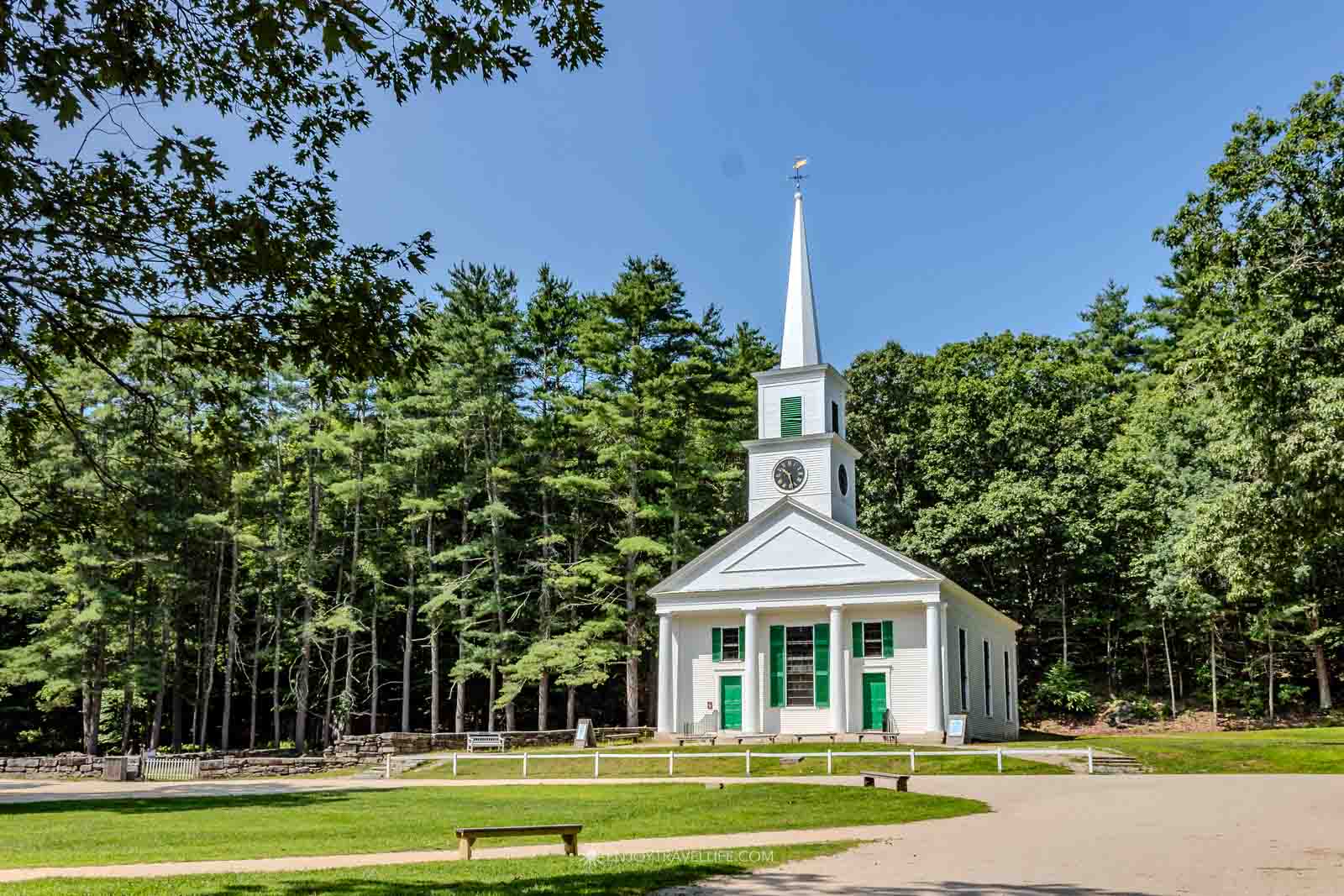
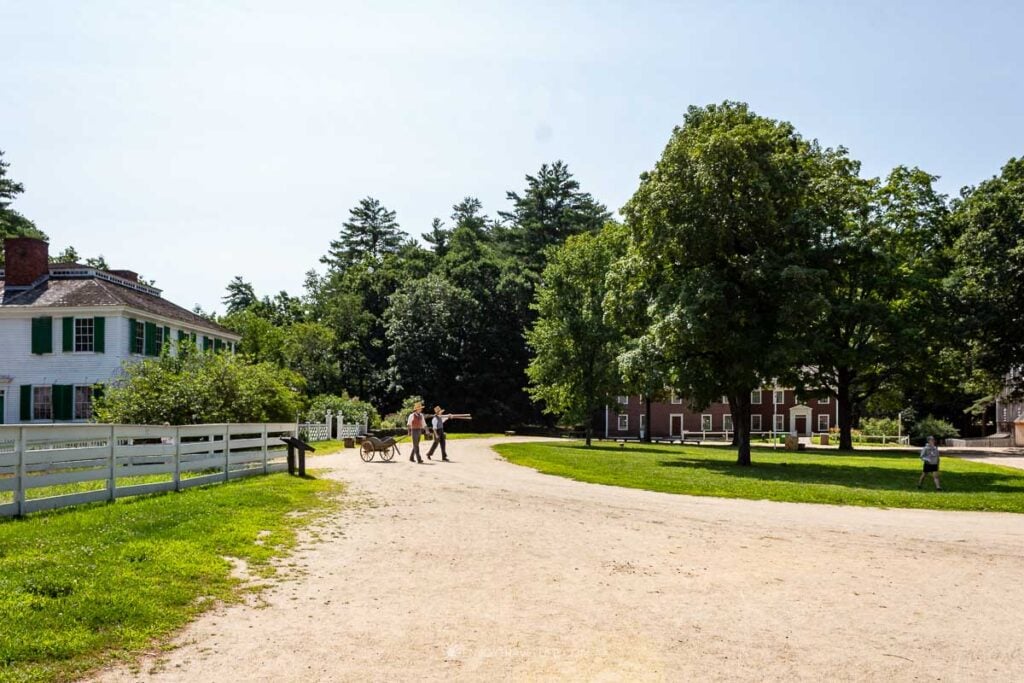
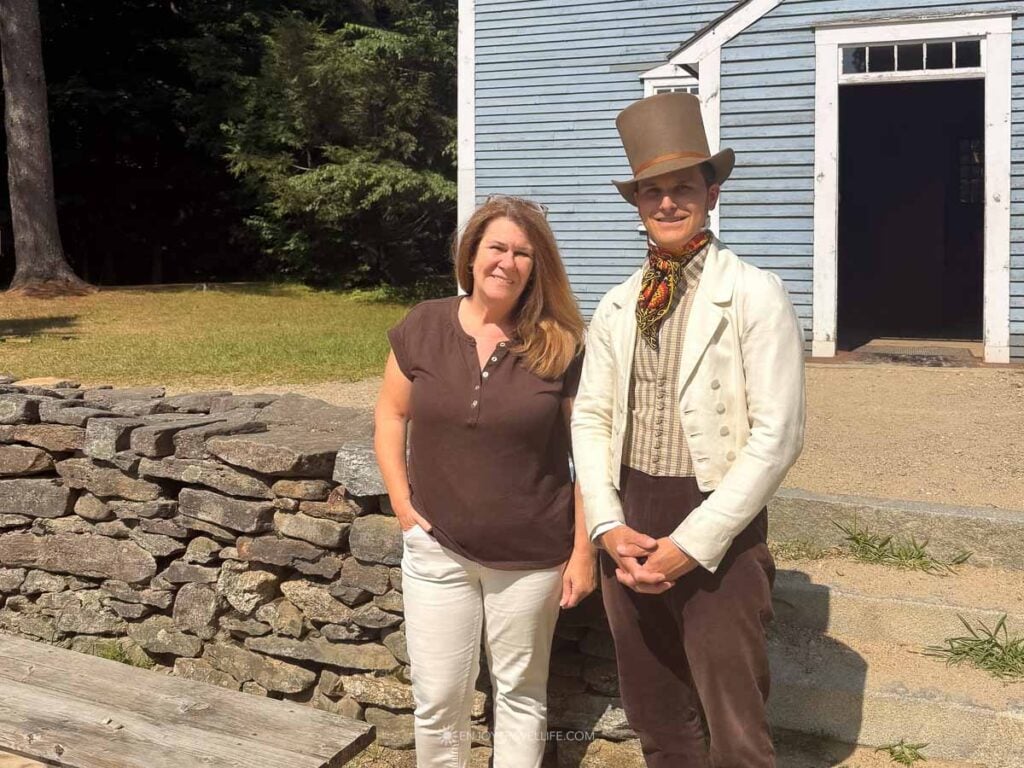
The village itself is a re-created rural New England town. Here, you’ll discover more than 40 historic buildings dating from 1790 to 1840. Dirt paths wind past a charming common, a meetinghouse, working farms, water-powered mills, and trade shops, where costumed historians actually practice the crafts.
That last part matters.
The people in period clothing aren’t reciting scripts. They’re historians who work the forge, throw pots, cook over open hearths, and tend heritage-breed animals.
And they’ll talk with you in plain present-day English about how it was all done. Ask them questions. It’s the difference between reading about the past and standing inside it.
If you’d rather listen as you walk, you’ll find QR codes throughout the village that link to short audio insights.
The Tradespeople Are the Best Part
On this visit, the trade shops stole the show, each one offering a glimpse into a different craft.
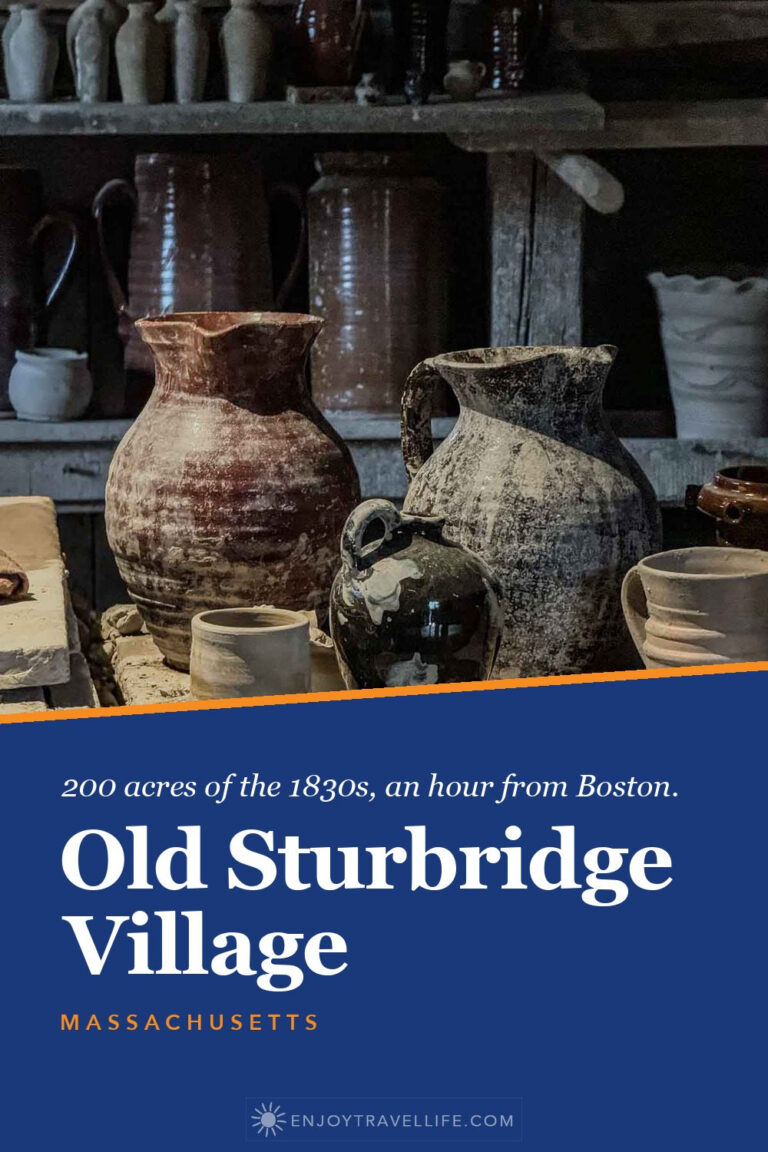
The potter explained that in those days, clay might have been dug locally, a few feet down where the earth runs clean of debris.
The cooper talked fire. He explained the temperature at which wood combusts, why he wets down the inside of a barrel as he shapes it, how the staves are bent, and why the metal rings sit ready before the wood ever takes its curve.
At the blacksmith shop, with the fire burning, a big bellows overhead, and a range of tools laid out before him, the smith unpacked the word as he told it: “smithing” comes from smiting, the striking of the metal.
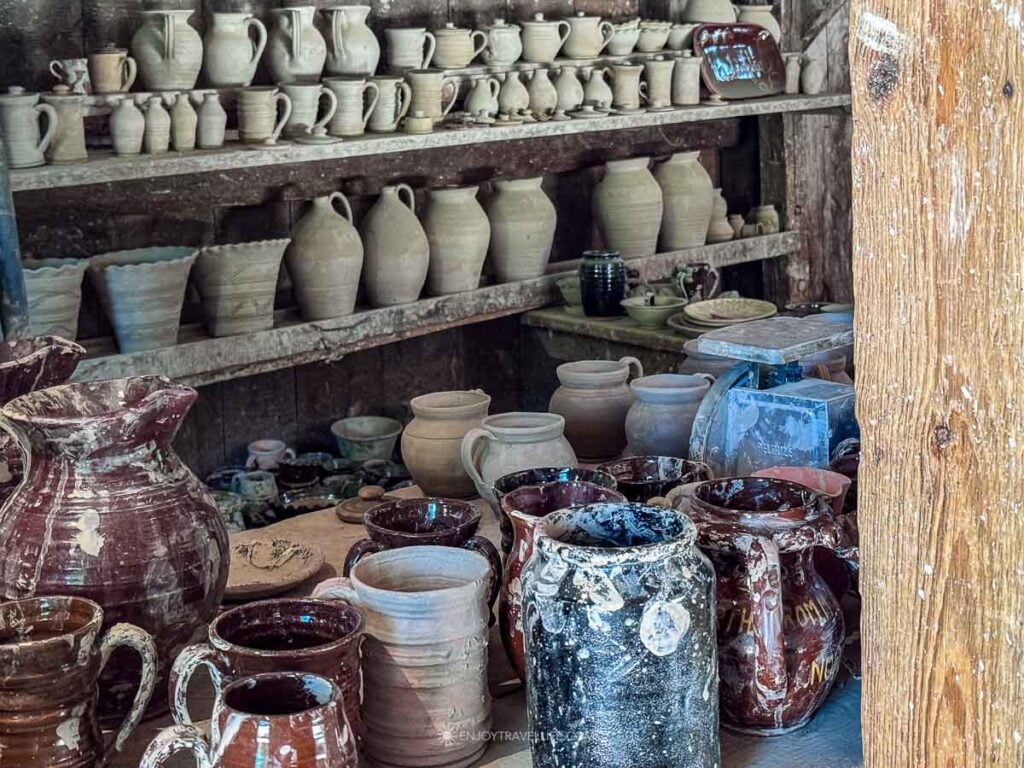
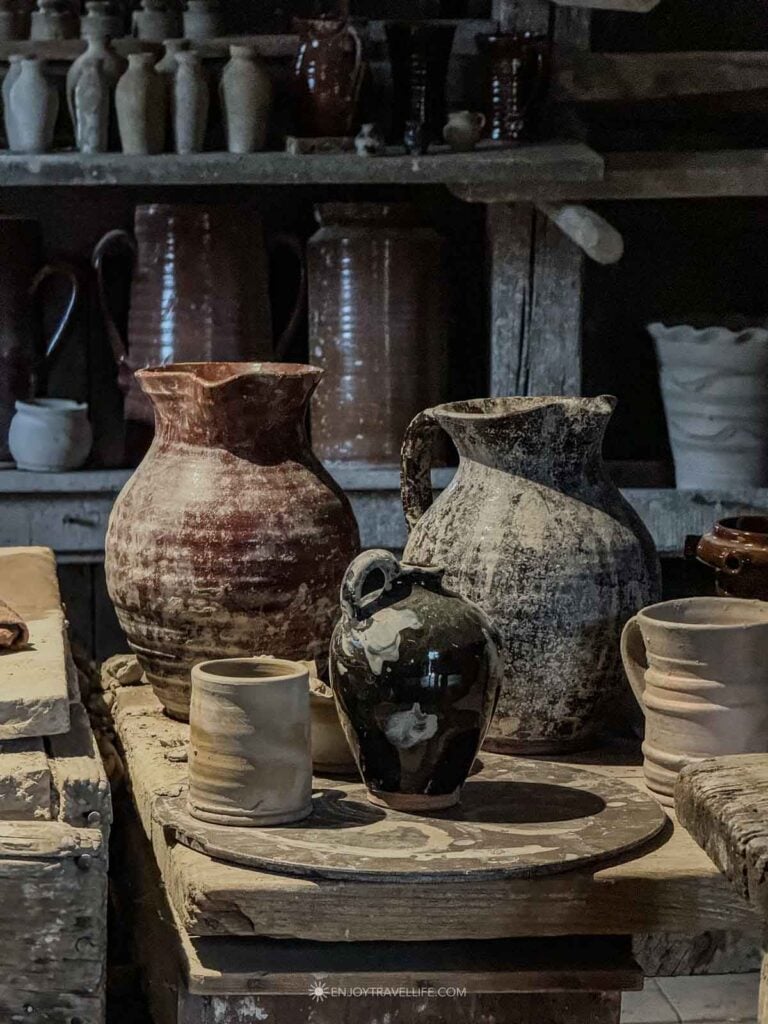
Finished redware fills the pottery shop shelves while a fresh pot takes shape on the wheel.
The printing office was my favorite stop.
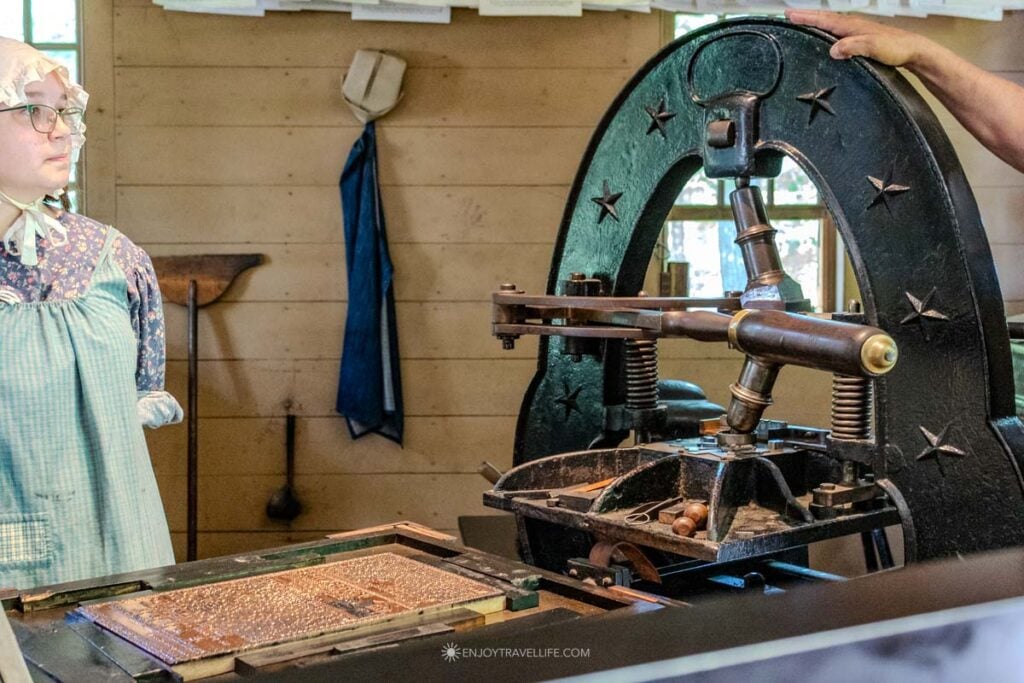
Here, the printer demonstrated a period press decorated with the 13 stars of the original colonies, commemorating the nation’s 50th anniversary. He showed how printers first inked the type with kidskin pads before switching to composition rollers made from a mixture of molasses and hide glue.
If you run your fingers over the pressed words on a finished page, you’ll feel the impression left by the type. You’ll also learn the paper itself was made from rags and that local papermaking reduced dependence on paper imported from England.
In a year built around the Revolution and its pamphlets, there’s no better room in the village.
Screenshot the village map from the OSV site before you go. There are “you are here” signs, but it’s a big place and easy to get turned around. Arrive when the gates open at 9:30 a.m. to stay ahead of both the heat and the crowds.
At the cabinet shop, the craftsmen worked in slacks, vests, and long sleeves, which brings up the clothing generally: beautiful natural fibers, hand-blocked prints, fine embroidery, and, for the women, corsets and layered undergarments.
In the July heat, watching historians cook at open hearths and wash dishes in big fire-heated pans of water while dressed in all those layers, I kept thinking how hot they must have been, then and now.
The wool house pulled the whole textile story together. Pet one of the village’s sheep and you’ll gain a new appreciation for everything that stands between animal and cloth. That includes cleaning the fleece, carding it, dyeing it with colors the historians can trace to their plant sources, and finally working the great looms.
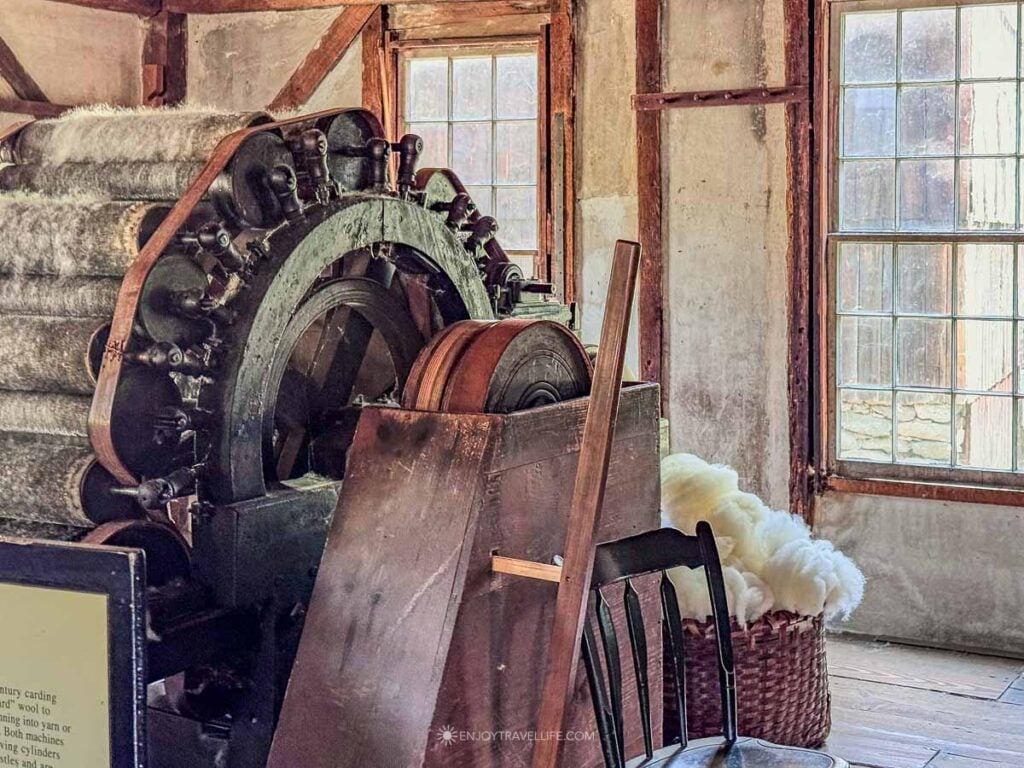
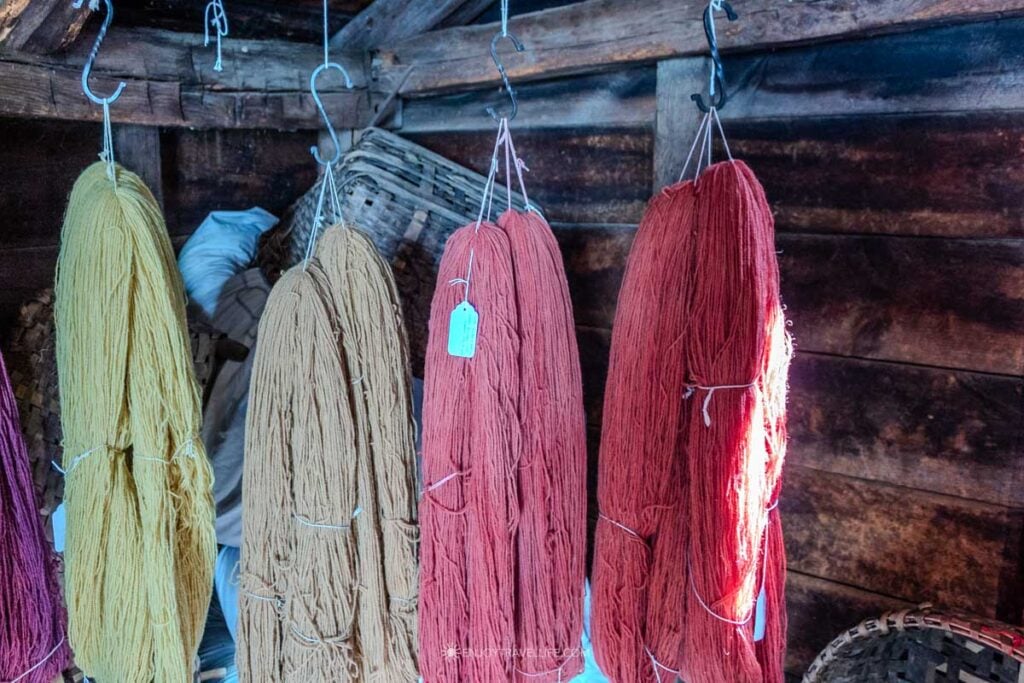
The carding mill prepares the fleece before the wool house turns it to color.
Houses, Farms, and the Rhythm of the Village
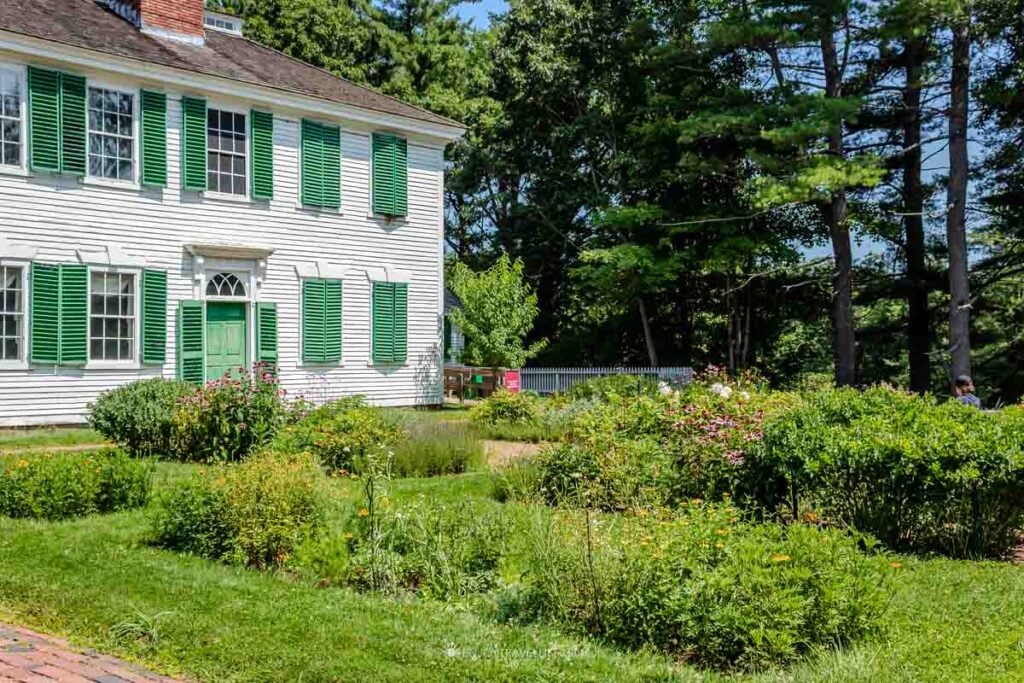
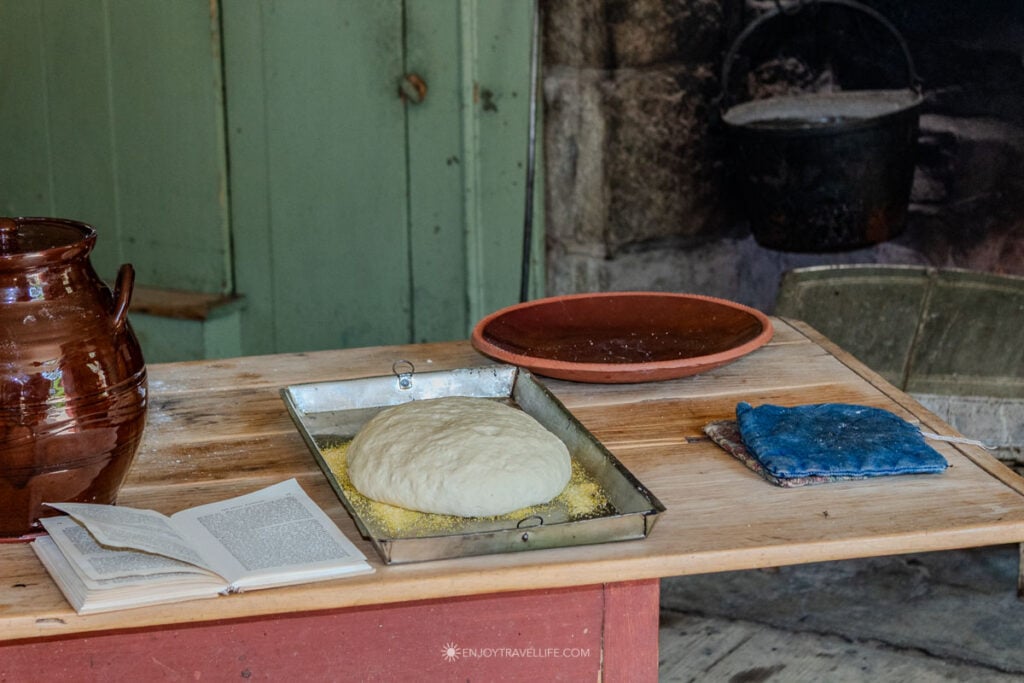
The houses often smell of ash from the hearth and stay perpetually dim, even with daylight coming through the wavy glass of their many windows. In the homes, women historians cook at the fire, wash dishes, and sit with needlepoint or knitting, and they’re happy to tell you about any of it.
Two houses make a point worth lingering on. We were told a modest “starter” home could be had for about $150 in the money of the day and pay for itself quickly, while across the village the sprawling Salem Towne House shows how the more affluent lived.
The gap between those two doorsteps says more about the era than any placard.
Outside, you’ll find a working landscape and a quiet reminder of the self-reliance New England was built on.
A young cow, sheep, and chickens complete the farmyard scene. Kitchen gardens and flower beds, planted as much for medicine as for beauty, brim with echinacea and tansy, while netted berries and rose hips ripen for the season ahead.
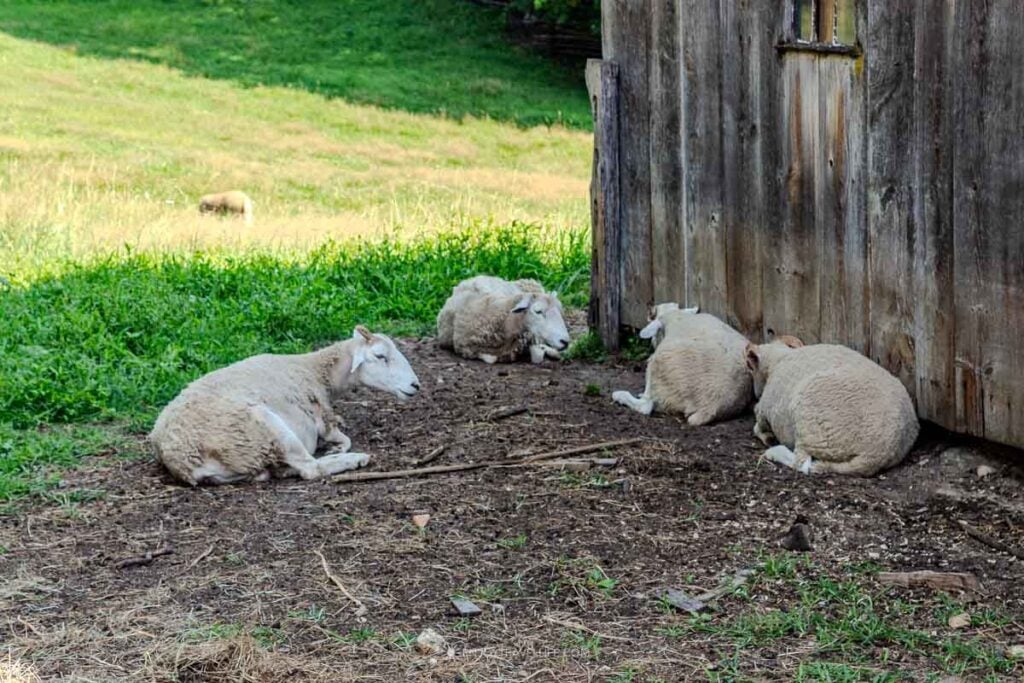
There’s a grape arbor and a gazebo, a small apiary where you can watch the bees, wells with simple but soaring sweep levers, and apple orchards on a rolling hill. Beyond them, post-and-rail fences give way to stone walls, a familiar sight throughout New England.
Look down and you’ll spot giant slabs of granite serving as church stairs and threshold stones.
Inside the grist mill, the massive millstones and interpretive exhibits explain how water power turned grain into flour. Even standing still, it’s easy to appreciate the ingenuity behind the machinery.
The sawmill wasn’t running during our visit, but studying the up-and-down blade and trying to trace the path of the gears and levers was humbling. These were considered simple machines, yet it’s surprisingly difficult to picture how all the moving parts worked together.
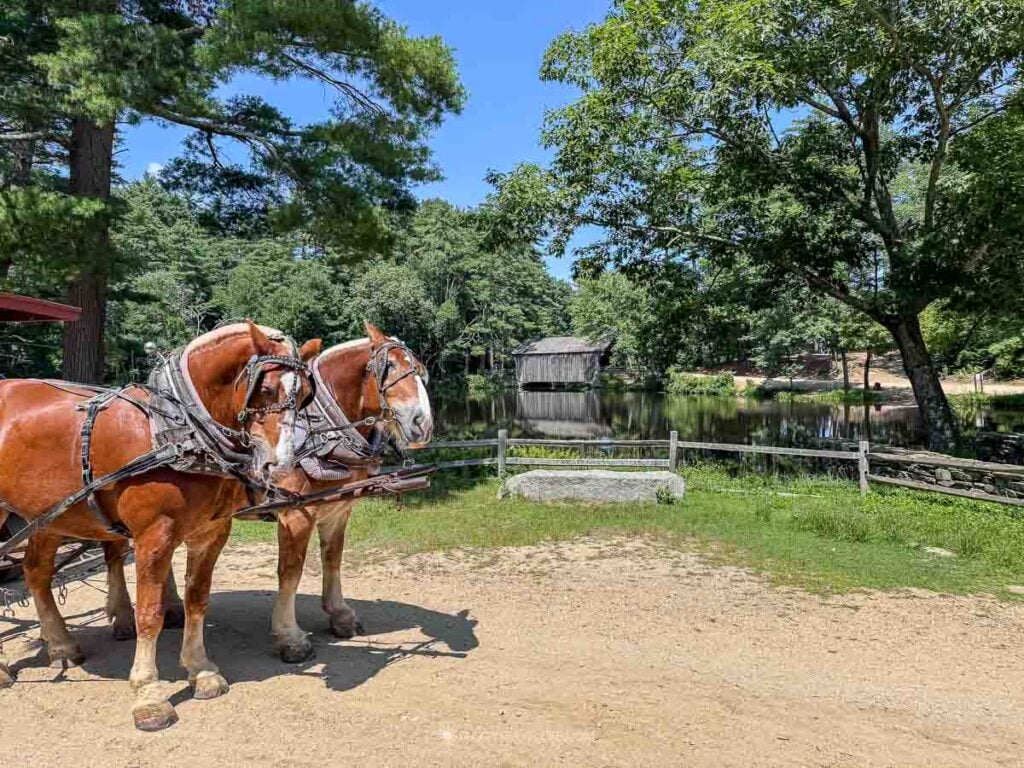
A covered bridge spans the millpond, one of those classic New England sights that feels right at home here. A horse-drawn stagecoach circles the village while the driver shares stories and historical details along the way.
Don’t skip the Thompson Bank, a stately brick building with towering columns. Inside, you’ll learn the gold and silver stored in the safe backed the paper currency the bank issued. For the record, the safe doesn’t look up to the job.
Buy tickets online before you go. It’s $3 less per ticket than at the gate, and daytime admission is $27 for adults online versus $30 at the door. If the village wins you over, and it tends to, you can apply a recent admission purchase toward a membership. If I lived a short drive away, I’d have a membership already, just for the right to take my regular walks on these lanes.
Stepping Into 1776: The 250th at Old Sturbridge Village
This year the village went back another century. For America’s 250th anniversary, Old Sturbridge Village built a season of Revolutionary-era programming called Independence Forever, and it changed the whole feel of our summer visit.
Inside the unadorned but majestic Center Meetinghouse, under a beautiful blue-green ceiling, a townsperson told us a town meeting was coming. It was a vote on whether the town would stay loyal to the Crown , and she wasn’t sure how it would go.
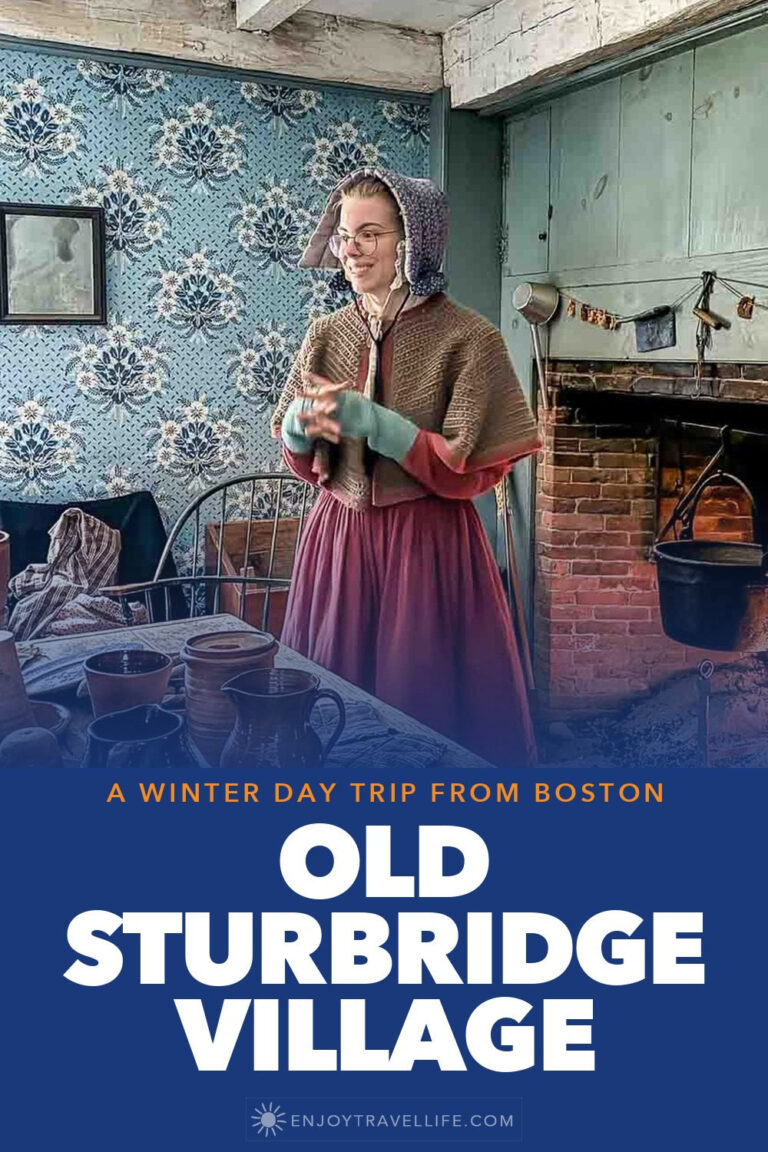
Save this article to Pinterest for later.
Through July, six Revolutionary-era characters, including a printer, housemaid, lawyer, shopkeeper, tavern keeper, and farmer’s wife, shared competing viewpoints as part of Voices of a Revolution. Visitors debate the issues before casting their own votes at daily Town Meetings. Some of the Loyalist arguments are uncomfortably compelling.
Voices of a Revolution ended July 26, but the 250th anniversary programming continues through the season:
- Redcoats & Rebels (August 1-2): New England’s largest Revolutionary War reenactment, with hundreds of reenactors, military camps, and a battle staged near the Freeman Farm. This special event requires a separate ticket, so reserve yours in advance.
- Songs of Liberty: Revolutionary-era songs with a folk-rock twist, performed in the air-conditioned Visitor Center Theater.
- American Reflections: An exhibit exploring the nation’s founding and its continuing ideals.
- Summer, Sounds & Sparks (August 15): An evening of fife and drum music, cannon and musket demonstrations, and a fireworks finale celebrating America’s 250th.
A Simpler Time, and a Harder One
Old Sturbridge Village reads at first like a throwback to simpler times, and in many ways it is.
But walk it long enough and the questions pile up. Every day here was organized around basic survival: the garden, the weather, the woodpile. (Imagine how much wood one household stacked to get through a Massachusetts winter!)
What happened when squash bugs took the crop, or when the snow came in feet and someone fell ill?
Where were the support systems for a neighbor struggling with alcohol or mental illness?
And with all those open fireplaces, candles, long dresses, and straw-filled beds, how did the whole town not burn?
Here’s an odd question that followed me from house to house: where’s the mess? Every room has a place for everything and everything in its place, but no working household lives like that, not in 1836 and not now. Somewhere there were chores backed up, a fence in disrepair, a floor nobody had swept since Tuesday.
Museums curate the past the way we tidy our own homes for company, and I kept wondering what the uncurated version looked like.
Ask the historians; questions like that are exactly what they’re there for.
That tension is what makes Old Sturbridge Village more than a pretty walk. Consider the tavern with its games and open seating, the meetinghouse, the bank, the mills, and you’ll start to see the village itself as the support system, a community built to get everyone through a New England year.
Simpler, yes. Easier, no.
Winter at the Village
I’ve now seen the village in both seasons, and I’d tell first-timers to come in the warm months and returners to try the off-season on purpose.
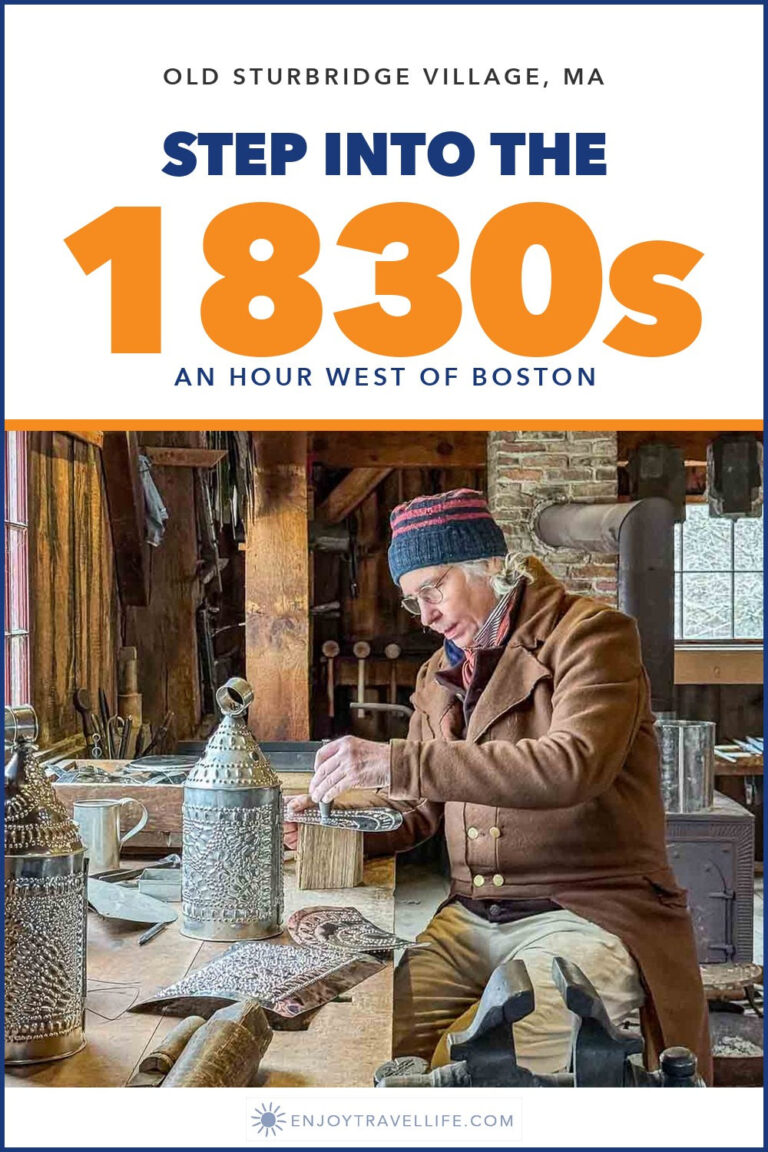
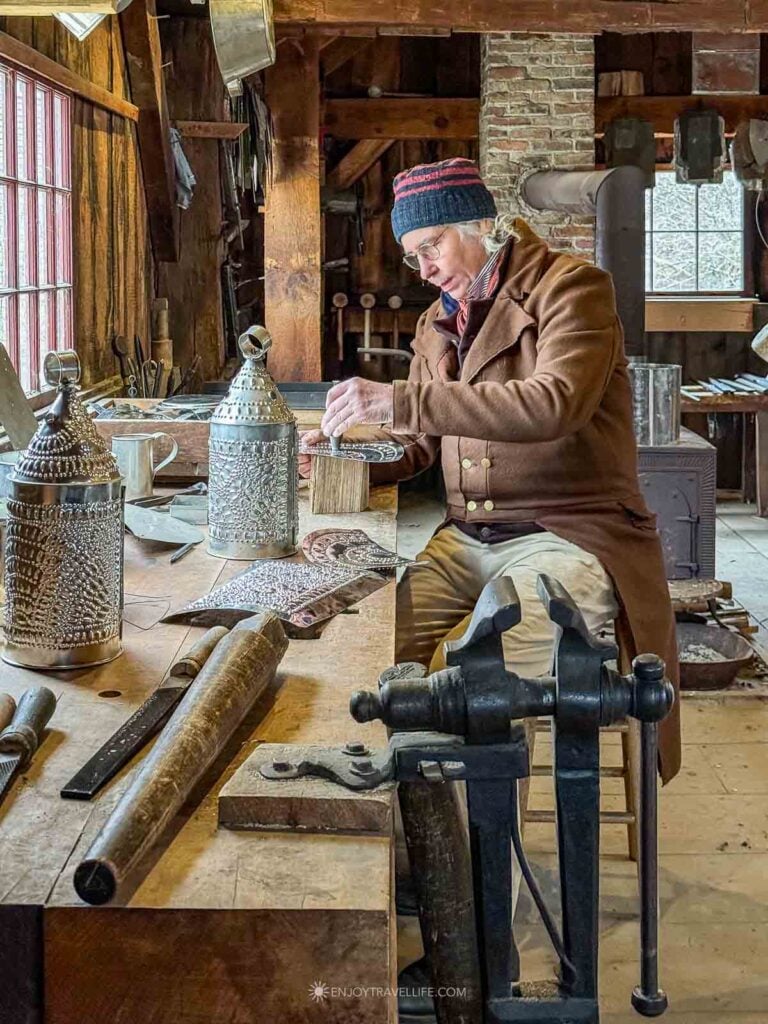
During my March visit, the tinsmith was shaping lanterns by hand while a fire burned outside and the smell of maple syrup hung in the air. The animals huddled together, and the houses felt smaller and warmer with the hearths going.
Winter strips the village down to what it really was – a small community getting through the cold together.
If you visit in the cold months, dress like you mean it. You’ll want to wear warm boots, real layers, and a couple of the crack-to-activate hand warmers in your pockets.
On the way out that day, a hot chocolate at the coffee shop by the entrance was a welcome thaw.
Planning Your Visit to Old Sturbridge Village
July in New England can be hot and humid, so bring water and sun protection. The village offers plenty of shade, but the stretches between buildings are in full sun. Bring a refillable water bottle and use the drinking fountains located throughout the village. The Visitor Center provides an indoor break from the heat. Time your indoor stops for the early-afternoon peak and save the farm and mills for late day, when the light is better for photos anyway.
Here’s what you need to know to plan a trip to Old Sturbridge Village.
Where: 1 Old Sturbridge Village Road, Sturbridge, MA, right off the I-90/I-84 interchange. It’s about an hour from Boston, Hartford, or Providence, and parking is free.
Getting around: The lanes are dirt, so wear comfortable shoes and skip your best whites. A free horse-drawn wagon circles the village about every 20 minutes, and when the stagecoach is running, rides are $3, with tickets at the information desk or cash on board. (Bring a few extra dollars in cash to tip the drivers of both, if you’re so inclined.)
When: Through September 27, 2026, the village is open Wednesday through Sunday, 9:30 a.m. to 5:00 p.m. From September 30 through November 14 it closes at 4:00 p.m. It then closes for two weeks and reopens on select evenings (2:00 to 8:00 p.m.) from late November through December 27 for Christmas by Candlelight. This is a separate ticketed event that turns the village into a firelit 19th-century Christmas scene, with lanterns and candlelight, horse-drawn rides, seasonal demonstrations, and holiday music. Be sure to confirm the hours on the official Old Sturbridge Village site before you go.
Cost: Online, adults are $27, seniors 60+ are $25, youths 4 to 17 are $12, and children 3 and under are free. Each ticket is $3 more at the door. Standard tickets don’t cover special programs like Christmas by Candlelight, Phantoms by Firelight, or Redcoats & Rebels. Check the official ticket page for current pricing and event admission.
How long: Plan on staying a good three hours at minimum, and a full day if you can. Even at three hours, we could have stayed longer. The village has a way of slowing your pace, as though time operates differently inside the gate. The demonstrations are the best parts, so grab the daily schedule when you arrive and build your loop around two or three of them.
Eating and drinking: Old Sturbridge Village offers several dining options, including Bullard Tavern Café, the Miner Grant Store & Bake Shop, and the Ox & Yoke Café across from the Visitor Center.
On a hot afternoon, though, the Scoop Shop is worth a stop. My son chose a cup of Maine Wild Blueberry ice cream and I ordered Cherry Blossom in a sugar cone. We savored both silently on a nearby bench.

If you’d rather pack a lunch, you’ll find picnic areas and benches throughout the Village. Just outside the entrance, Saw Dust Coffee House is worth remembering for coffee before your visit or dessert on the way home.
Restrooms: You’ll find restrooms in the Country Bank Visitor Center before you enter the Village, so it’s a good idea to make a stop there before setting out. Once inside, there are additional restrooms at Bullard Tavern, the Countryside Gallery, and the Ox & Yoke Café, so you’re never too far from one on the 200-acre campus
Gift shops: The Village’s two gift shops are easy to lose time in. You’ll find Village-made pottery and tinware, old-fashioned candy, maple syrup, honey, books, toys, handcrafted gifts, and more. Many reflect New England’s heritage, and are also available through the Village’s online store.
More Things to Do in Sturbridge MA
An honest note first: the village filled our itinerary, so the rest of Sturbridge is still on my list for a return visit. The town gives you reasons to make a weekend of it.
- Antique hunting on Route 20. The shops run along the highway, and 15 minutes west sits Brimfield, whose antique flea markets take over the town for six days each May, July, and September. Time your visit right and you can pair the 1830s with a mile of dealers’ fields.
- Wells State Park. Some 1,400 acres of woods and trails wrap around Walker Pond, with swimming and camping in season.
- The Publick House. The historic inn is as much a dining destination as a place to stay, known for Yankee pot roast and its famous sticky buns.
Where to Stay Nearby
The Publick House Historic Inn has anchored Sturbridge’s common since 1771, and staying somewhere older than the village re-creation itself is a fitting move here. Sturbridge also has a full run of modern hotels along the highway corridor, so it’s an easy overnight even on a busy summer weekend.
You can use the interactive map below to compare what’s open around Sturbridge, with current rates near the village and the I-90/I-84 interchange.


Final Thoughts on Old Sturbridge Village
Three visits in, spread across most of my life, Old Sturbridge Village keeps proving the same point. Living history done well doesn’t get old, because the village changes with the season, the programming, and the person you’ve become since your last trip.
This time I brought my son, touched the pressed ink on a printed page, and stood in a meetinghouse wondering how the town would vote on a revolution.
It’s a really idyllic picture of a really tough life, and holding both of those at once is the whole point.
The 250th makes 2026 the best year in a long while to go. Buy the ticket online, ask questions, and don’t leave without a scoop of ice cream. Chances are, you’ll be planning the return trip on the drive home.
FAQs
Is Old Sturbridge Village worth visiting?
Yes. It’s the largest living history museum in New England, with more than 200 acres, working farms, water-powered mills, and craftspeople demonstrating period trades daily. It rewards repeat visits across different seasons.
How much does Old Sturbridge Village cost?
Online tickets are $27 for adults, $25 for seniors 60 and over, $12 for youths 4 to 17, and free for children 3 and under. Tickets cost $3 more at the door. Special events like Christmas by Candlelight and Redcoats & Rebels require separate tickets.
How long does it take to visit Old Sturbridge Village?
Plan at least three hours, and a full day if you can. The village spans more than 200 acres, and timed demonstrations and performances run throughout the day.
When is Old Sturbridge Village open?
Through September 27, 2026: Wednesday through Sunday, 9:30 a.m. to 5:00 p.m. Hours shorten to 4:00 p.m. closings from September 30 through November 14, then the village reopens on select evenings for Christmas by Candlelight from late November through December 27.
What is special at Old Sturbridge Village in 2026?
For America’s 250th anniversary, the village is running Independence Forever, a season of Revolutionary-era programming including immersive performances, Town Meeting votes, the Songs of Liberty concert, the American Reflections exhibit, and the Redcoats & Rebels reenactment weekend each August.

Next Steps
For more New England history and trip inspiration, read these articles next:
- The American Heritage Museum, an Unforgettable Military Museum Near Boston
- Explore 30 Fascinating Massachusetts Military Museums for History Buffs
- Culture Trip: The Best Art Museums in New England
- 9 Gorgeous New England Road Trips You’ll Want to Take This Year
- The Best Things to Pack for Summer in New England
- 3 Outstanding Cultural Things to Do in Worcester, Massachusetts
Old Sturbridge Village hosted my July 2026 visit, and my March 2024 visit was part of a hosted regional press trip. As always, all opinions are my own.