
The best things to do in Worcester, Massachusetts can easily fill a weekend. About an hour west of Boston, the city offers an unexpected mix of art, history, architecture, live theater, and good food. And yet, it’s more often a pass-through than a destination.
If Worcester hasn’t been on your radar, it may be time to make it your next stop.
Find out more about the cultural highlights worth seeing, along with where to eat, stay, and explore nearby, below.
IN THIS ARTICLE
Why Worcester Is Worth a Weekend
Worcester is the second-largest city in New England, which makes it strange how easy it is to overlook. The Worcester Art Museum holds works spanning 50 centuries. The theater rivals houses in cities ten times its size. And the immigrant story that built the place is told plainly, in the museums and the streets.
This isn’t a list of everything in Worcester. There’s much more to this Central Massachusetts city than one weekend can cover. This itinerary is what earns a place on a weekend built around art, history, and a couple of very good meals. Take note on what to combine and where a little planning pays off.
The Worcester Art Museum
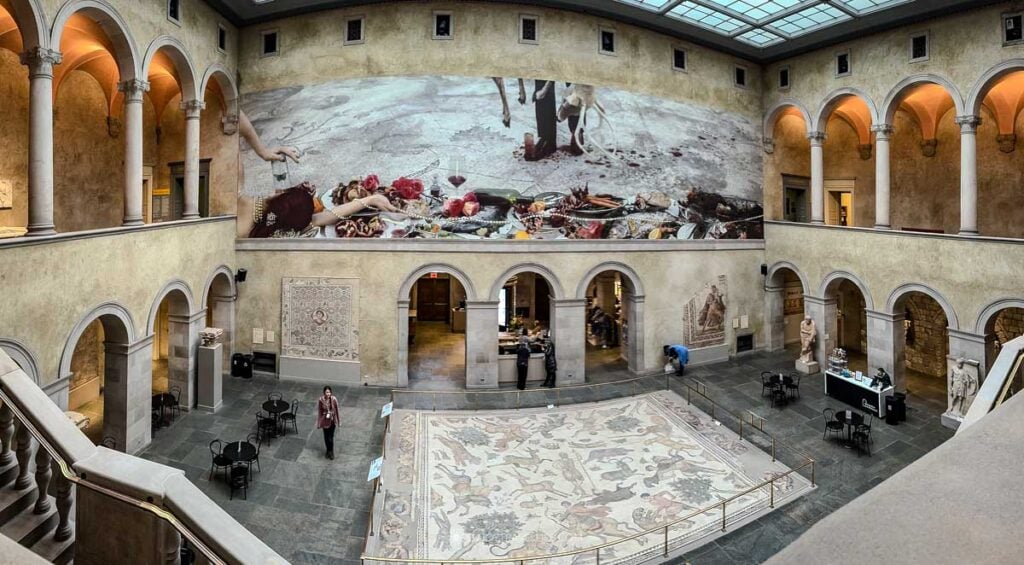
You’ll want to start your trip to Worcester at the Worcester Art Museum. It opened in 1898, and its collection runs from ancient Roman mosaics to Rembrandt. Better yet, it’s rarely crowded.
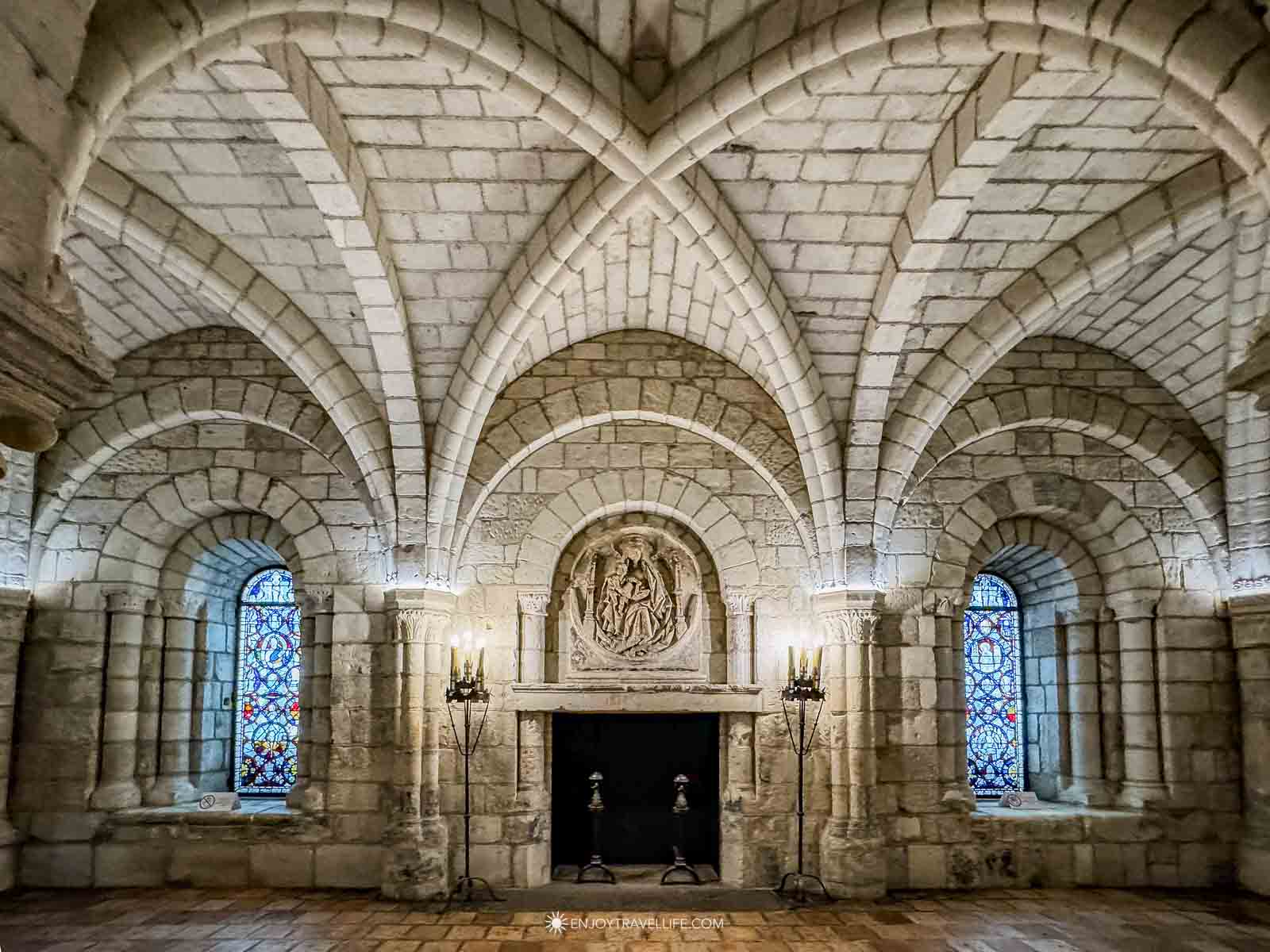
If you’re short on time, the Chapter House is one exhibit not to miss.
It’s a 12th-century stone hall from a Benedictine priory in western France. The museum bought it in 1927, shipped across the Atlantic, and rebuilt inside the museum in 1933. In fact, it’s one of the first medieval buildings relocated from Europe and reconstructed in the United States.
When you walk beneath the vaulted stone ceiling and past the fireplace, it’s easy to forget you’re inside a Massachusetts art museum. You’re standing inside a nearly 900-year-old chapter house that once stood in France. Here, monks gathered each day to hear a chapter of their monastic rule read aloud and conduct the business of the priory. That daily reading is where the Chapter House gets its name.
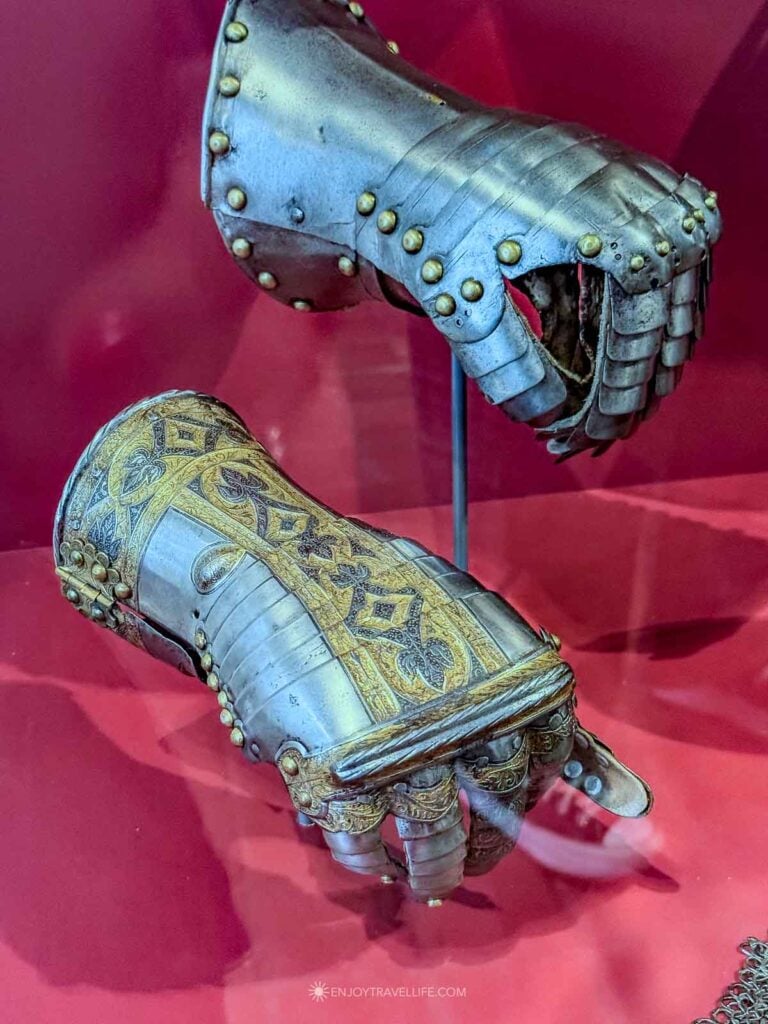
The arms and armor galleries offer a completely different experience, with a backstory.
This isn’t strictly a collection of medieval knights.
More than 1,000 objects span centuries and cultures, from ancient Greece and Egypt to medieval and Renaissance Europe, India, and Japan. Suits of armor stand alongside swords, helmets, shields, and other weapons, while an open-storage wall puts hundreds of pieces in view at once.
When Worcester’s Higgins Armory closed in 2013, its collection came here. Today, the Higgins Armory Collection is one of the country’s largest holdings of arms and armor.
Downstairs, the Worcester Hunt Mosaic stretches across about 500 square feet of the Renaissance Court floor. Dating to the early 6th century, it was excavated in 1932 from a villa at Daphne (a suburb of ancient Antioch in present-day Turkey).
The hunting scene shows figures on foot and horseback pursuing lions, tigers, and other animals. It came to Worcester in five sections, each weighing more than a ton, and was reassembled at the museum.
I almost walked right past it.
Unlike a painting displayed prominently on a wall, the mosaic is underfoot, where a floor mosaic would have been in the first place. Once you stop and take in its size and detail, it becomes one of the most memorable pieces in the museum.
These three things alone make the Worcester Art Museum worth the visit. The Chapter House transports you to medieval France. The arms and armor move you across centuries and cultures. The Antioch mosaic takes you back to the ancient world.
That’s the beauty of this museum. It transports you, even though you’re standing in Worcester, MA.
The collection reaches far beyond these highlights, so get your tickets and don’t rush your visit. You’ll want to give it about two to three hours on your itinerary.
The museum is open Wednesday through Sunday, 10 to 4, with free parking in the Salisbury Street and Lancaster Street lots. Admission is $22 for adults, less for seniors and students, and free for anyone 17 and under. The arms and armor galleries are included with general admission, and you don’t need a separate timed-entry reservation. Enter from the Lancaster Street lot, which sits across the street from its own entrance and confuses first-timers.
The Hanover Theatre
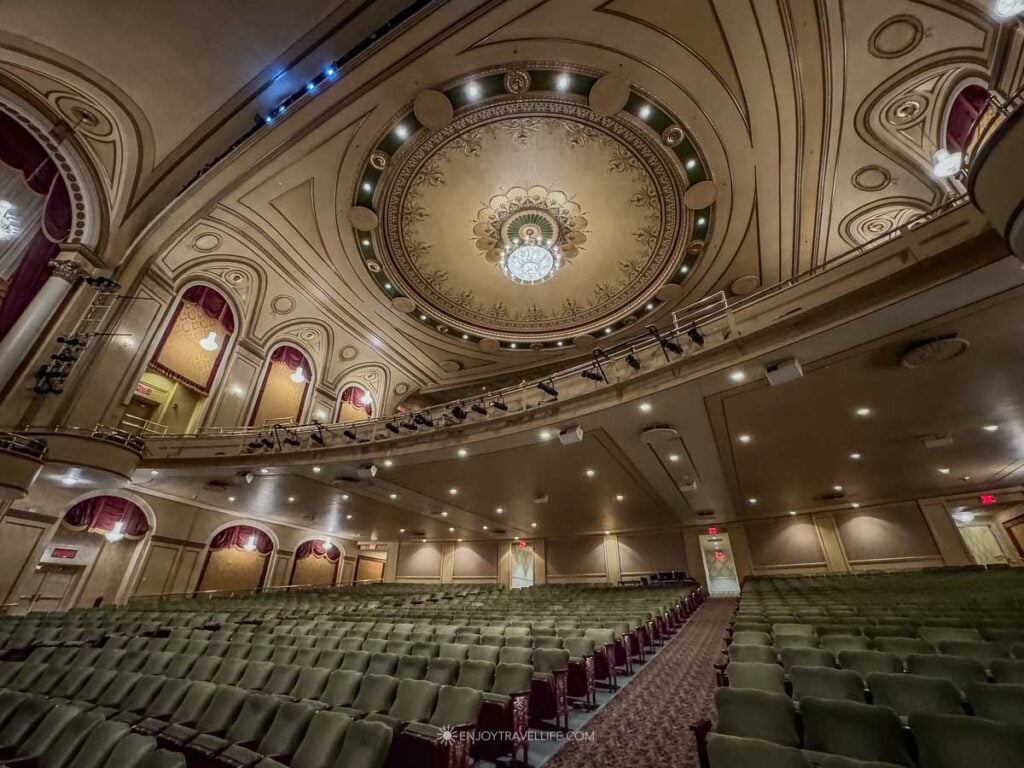
Five minutes away in downtown Worcester, the Hanover Theatre is a 2,300-seat theater in gold and deep crimson, with painted plasterwork, an ornate dome, and an orchestra pit.
The theater opened in 1904 as the Franklin Square Theatre. Much of what you see inside today reflects a 1926 redesign by Thomas Lamb, one of the era’s great theater architects. After decades of decline and the threat of demolition, a nonprofit restored the theater and reopened it in 2008.
Today, the Hanover hosts touring Broadway productions, concerts, comedy, dance, and other live performances throughout the year. Past performers have included Aretha Franklin, Neil Young, John Legend, Jerry Seinfeld, and Jay Leno.
You’ll want to check the calendar before your trip. If something lines up with your Worcester weekend, this is a great place to spend an evening.
If not, try the Historic & Architectural Tour. The approximately two-hour guided walking tour takes you behind the scenes and through the theater’s history and architecture, including the Franklin Square Salon. Tours are offered on select dates, so check the schedule and book ahead.
My favorite space was the Franklin Square Salon upstairs, where an enormous Gothic-style window overlooks Franklin Square.
The Salon and façade survive from the original 1904 Franklin Square Theatre, before Lamb’s 1926 transformation. A small piece of the theater’s original stained glass remains within the window. The original green-tiled fireplace is still here, too.
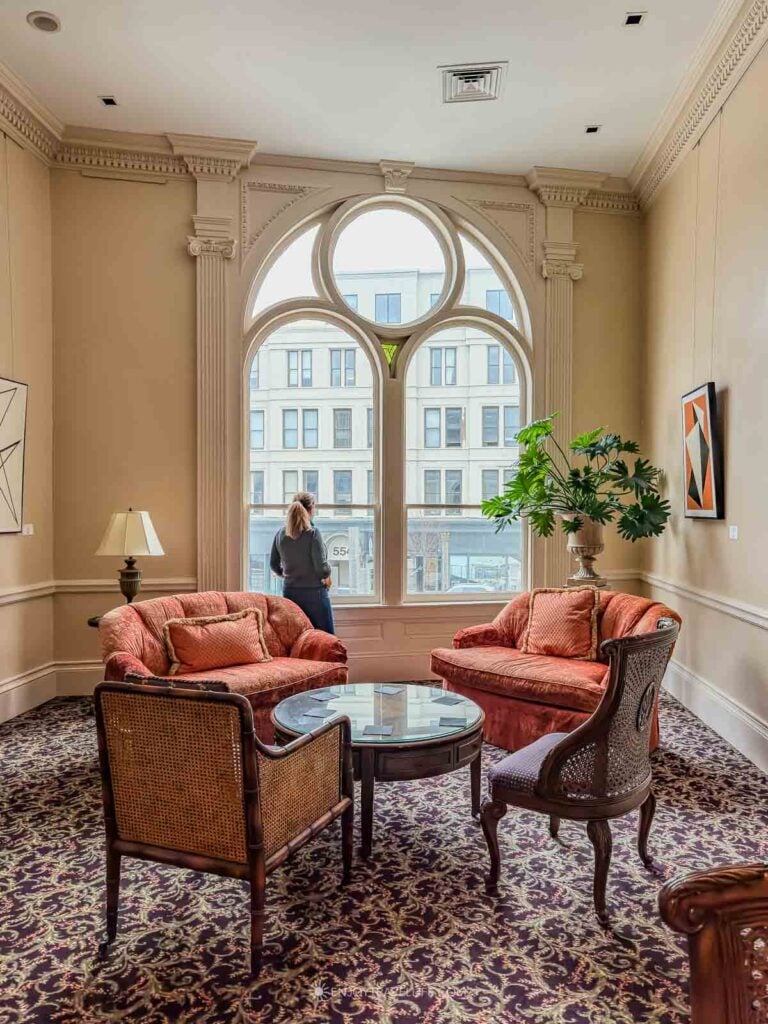
Standing in the salon, it’s easy to imagine people gathering before a performance more than a century ago, dressed for an evening out, maybe with a martini in hand. It gave me a little Great Gatsby vibe, even though the room predates the Jazz Age.
Getting to see the Salon makes the visit that much more meaningful. It’s one thing to see a beautifully restored theater. It’s another to stand in one of the rooms that was here at the beginning.
The Downtown Murals
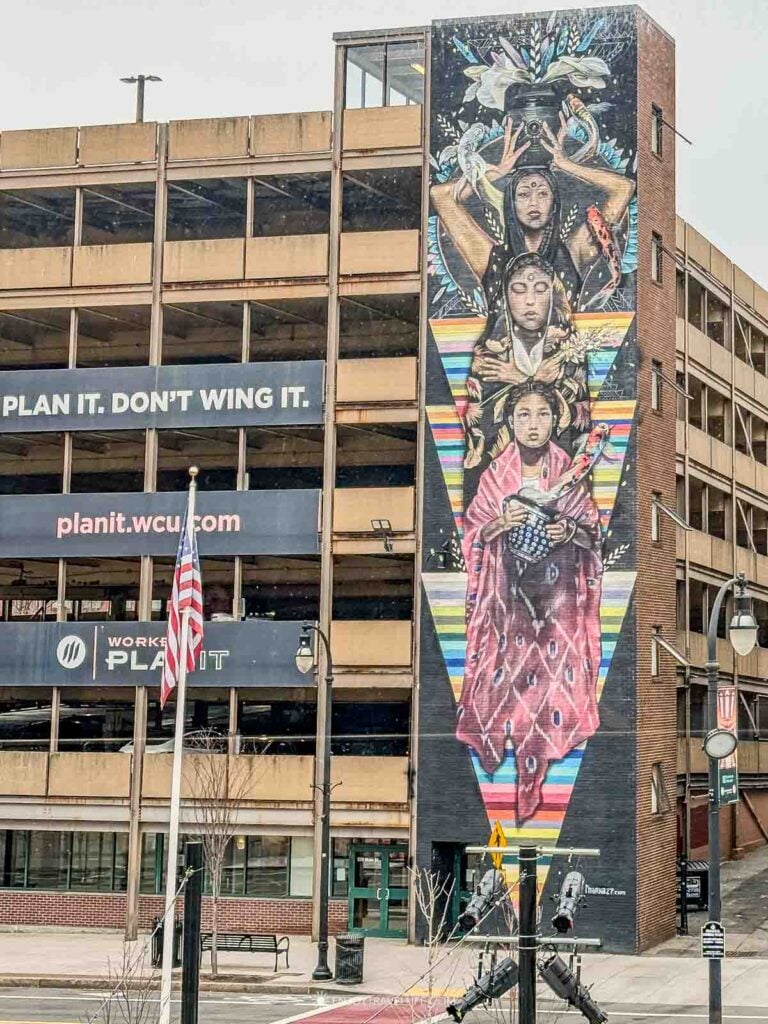
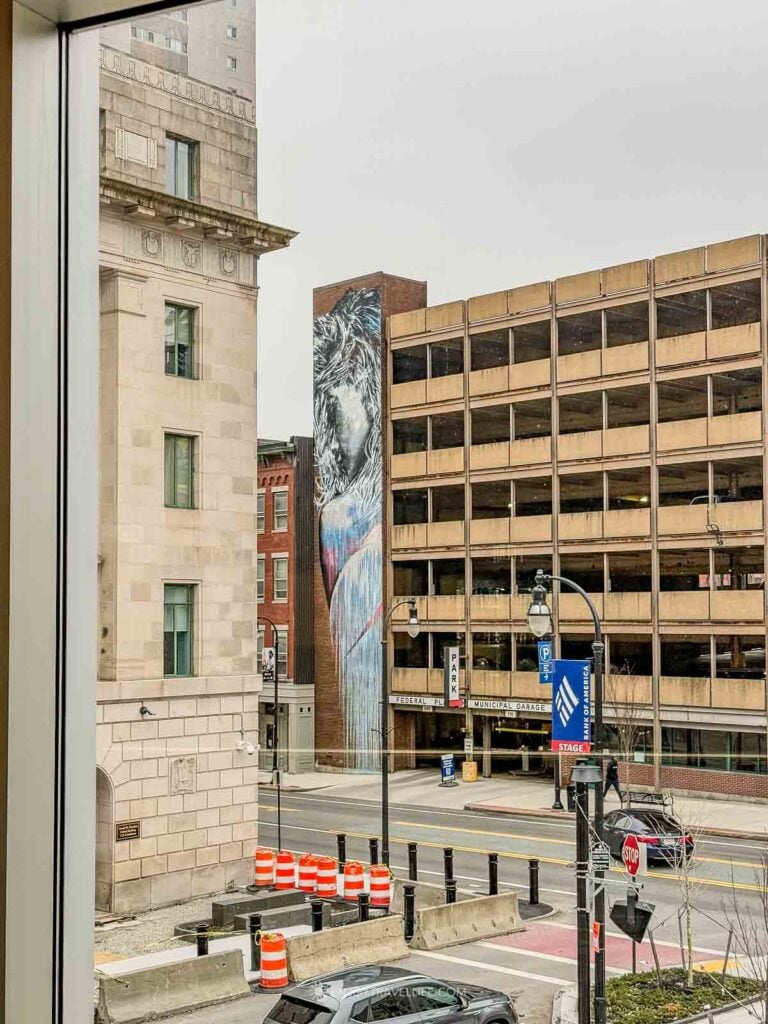
Murals rise several stories at street level, and one fills the view from the Hanover Theatre’s Franklin Square Salon window.
Look through the Gothic window in the Franklin Square Salon and you’ll spot another piece of Worcester’s cultural scene: massive murals on the parking garage across the street.
This set is one of well over 100 murals created across the city since POW! WOW! Worcester first brought artists here in 2016. The project continues today as Worcester Walls, with large-scale works covering buildings throughout downtown and beyond.
You’ll see plenty just walking around. Some cover several stories, turning otherwise ordinary brick walls into public art.
I came across the murals in passing, including those framed by the Salon window.
Next time, I’d make a point of seeing more of them. Discover Central Massachusetts keeps a public art guide if you want to plan a mural walk.
More Cultural Things to Do in Worcester
There was more to see in Worcester than I could fit into this day trip. These places are on my list for next time.
- Mechanics Hall on Main Street is the one I’m most sorry I missed. Built in 1857, Mechanics Hall is listed on the National Register of Historic Places and has been called the nation’s finest pre-Civil War concert hall. It still hosts concerts and other events. You could plan your visit around a performance for the best experience.
- The American Antiquarian Society preserves more than four million items related to American history and culture. Printer Isaiah Thomas founded the research library in 1812, and you can explore it on a free public tour.
- The Timothy Paine House, known as The Oaks, is a 1770s Georgian house on Lincoln Street that still holds furnishings from the Paine family. Timothy Paine remained a Loyalist in a town that supported the Revolution, giving this house a different angle on Revolutionary-era Massachusetts. It’s worth a stop.
- The Cantor Art Gallery at the College of the Holy Cross adds contemporary art to the mix. The free gallery changes its exhibitions throughout the year and occupies the Prior Performing Arts Center, which Holy Cross opened in 2022.
It’s worth noting that Worcester’s colleges add another layer to the city’s cultural history. Holy Cross, Worcester Polytechnic Institute (WPI), Clark University, and Worcester State all call the city home. Sigmund Freud delivered his only lectures in the United States at Clark in 1909, and rocket pioneer Robert Goddard studied and later taught physics there.
Where to Eat in Worcester
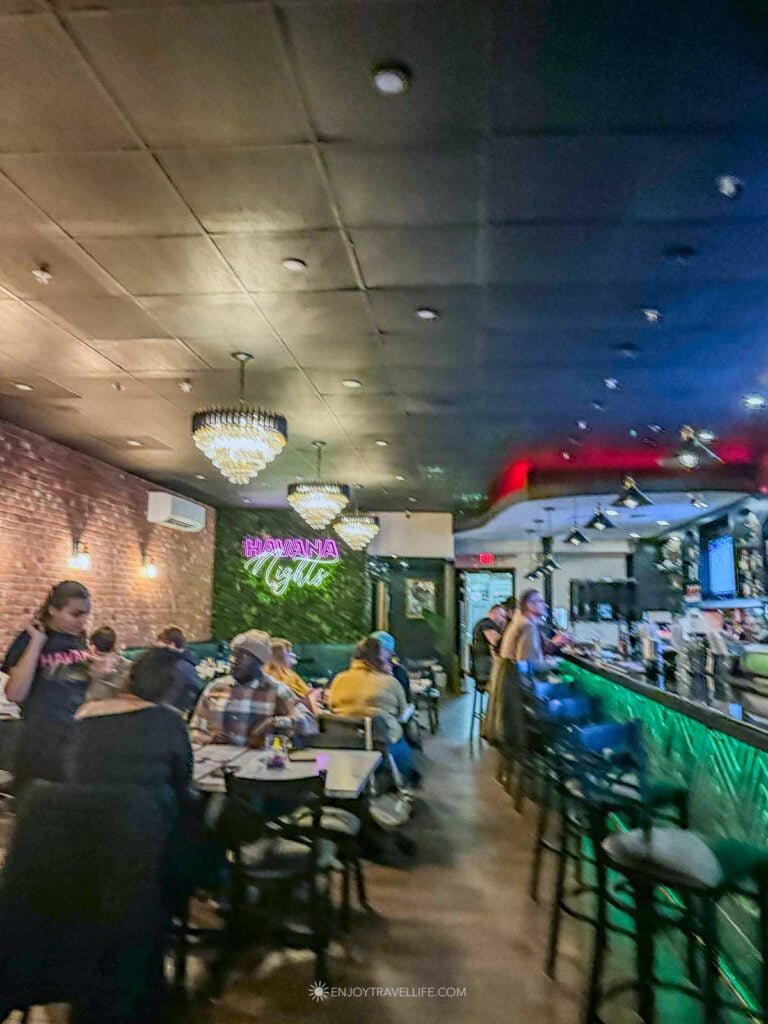

Shared Latin plates filled the narrow Park Avenue room at Havana Nights, before it became Taino Restaurant in 2026.
Dinner in Worcester turned out to be equally rewarding.
Havana Nights on Park Avenue was superb, set within a narrow room, with tables down one side and a bar down the other. They served Latin plates meant to be shared. It looked casual from the door but felt more polished once we settled in. The room was lively, the food was excellent, and we lingered over dinner for a couple of hours.
That era ended in early 2026, when the space became Taino Restaurant, a Caribbean-Asian fusion restaurant from a chef born in the Dominican Republic to Japanese parents. I haven’t eaten there yet, so consider that one a scouting tip rather than a recommendation.
For dinner elsewhere, deadhorse hill downtown serves a changing seasonal menu with a strong wine and cocktail program. Mare E Monti is another well-regarded choice, especially if you’re in the mood for Southern Italian and Sicilian food.
For daytime, the Canal District is Worcester’s old mill quarter, now anchored by the Worcester Public Market food hall, a good stop for lunch or coffee between museums.
Worcester also has a place in American diner history. The Worcester Lunch Car Company built diners here for decades, shipping its distinctive lunch cars throughout New England and beyond. A few still operate in the city, including the Miss Worcester Diner, across from the former factory. If you want something distinctly Worcester, breakfast in one of the city’s original dining cars is hard to beat.
Where to Stay: The Beechwood Hotel
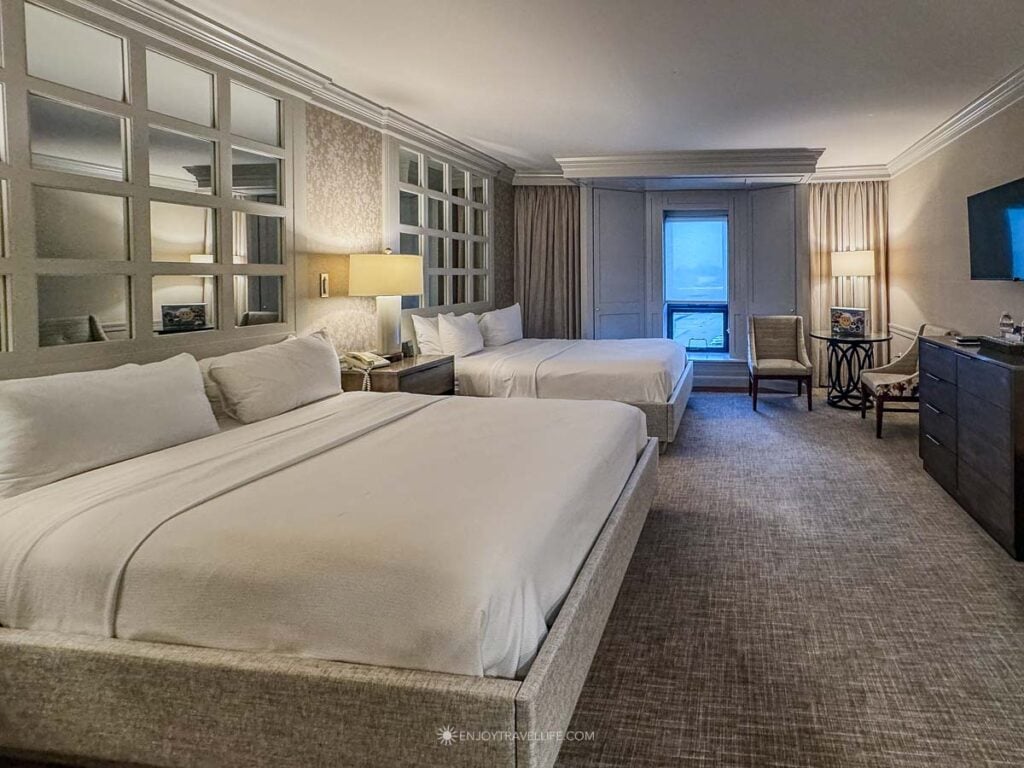
I stayed overnight in Worcester, and I recommend you do too if you have the time. It gives you room for dinner and an evening performance without trying to squeeze everything into a day trip.
I stayed at the Beechwood Hotel, Central Massachusetts’ only AAA Four Diamond hotel. It’s elegant and unique, but not overly formal, making it a great fit if you like a little casual luxury when you travel.
With just 73 rooms and suites, the Beechwood feels intimate for a city hotel. You’ll have free parking, an on-site restaurant and bar, a fitness room, and an outdoor recreation area. The rooms are spacious and comfortable, and you’re only a short drive from downtown and the Worcester Art Museum.
Take some time to look around the hotel, too. At Sonoma, an antique stained-glass dome dating to the late 1800s hangs above the dining room. I had breakfast here before heading out for the day, and it’s worth making time for.
Then there’s the Maria Gill Wilson Chapel, tucked into the property. With its cathedral ceiling, stained glass, and traditional wooden pews, it’s an unexpected find at a city hotel. Today, the chapel serves as a wedding and event space.
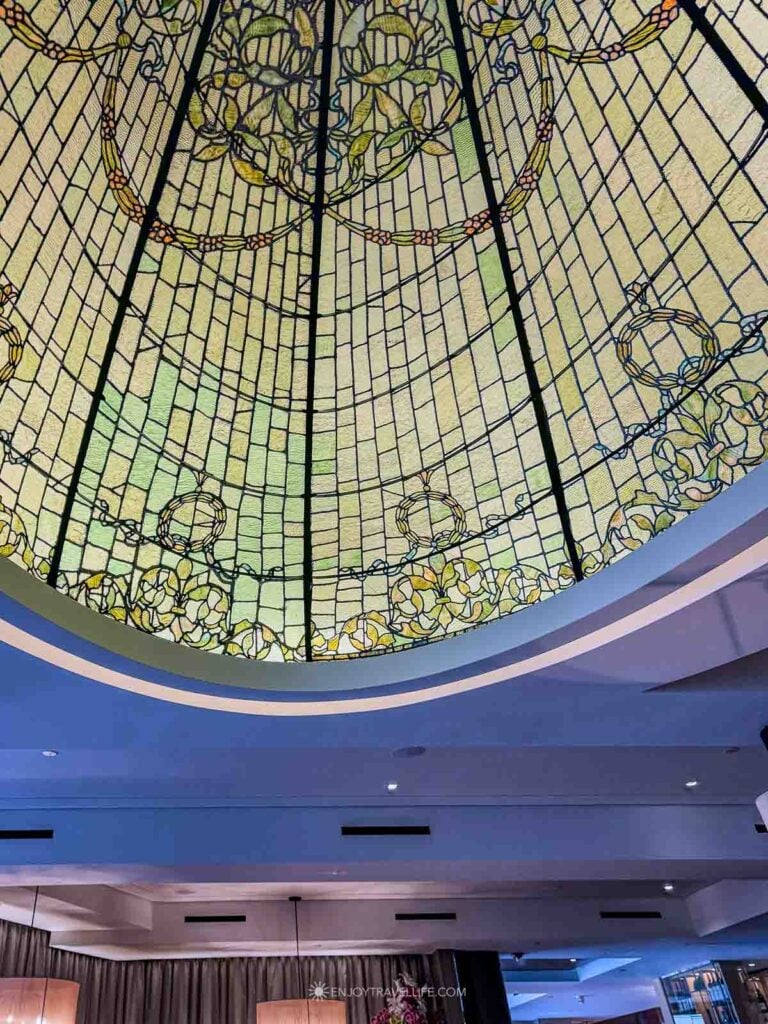
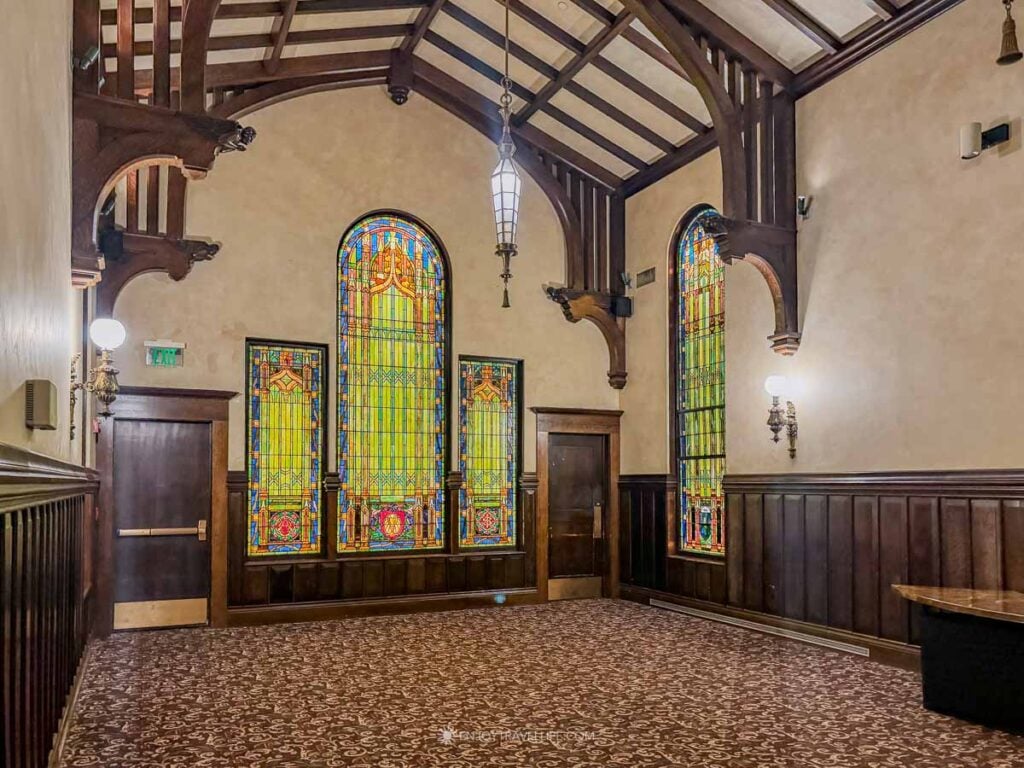
The antique dome glows above Sonoma, and more stained glass fills the Maria Gill Wilson Chapel a few steps away.
Between the historic details, comfortable rooms, and easy location, the Beechwood suited this Worcester trip especially well. It gave me a polished place to come back to at the end of the day without feeling fussy.
I’ve named my favorite Worcester hotel above, but if you’d rather compare what’s open across Worcester on a map, with current rates near the museums and downtown, start here.


Make It a Weekend: Nearby Stops
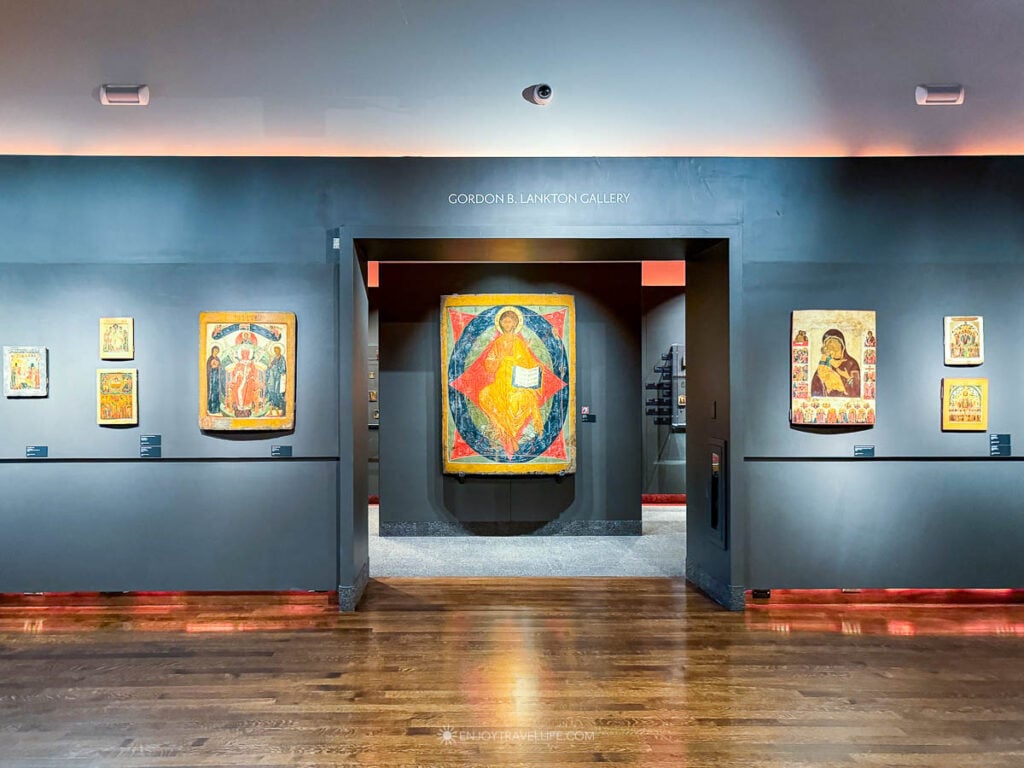
Worcester anchors the trip, but you’ll want to consider folding a few more places into your itinerary that are within a half hour or so.
- Framingham is the easy one. It’s about 24 miles east, on your way to Worcester from Boston, with two museums worth the stop. The Framingham History Center tells the city’s immigration history through old ledgers and a multilingual exhibit, in a building worth seeing for itself. A few minutes away, the Danforth Art Museum, now part of Framingham State University, holds the largest collection anywhere of sculptor Meta Vaux Warrick Fuller, a pioneering Black artist who trained under Rodin, displayed in a re-creation of her Framingham attic studio.
- North in Fitchburg, the Fitchburg Art Museum pairs American painting with a genuinely good ancient Egyptian gallery, its tomb-wall paintings on loan from the Museum of Fine Arts in Boston. It’s one of the few fully bilingual art museums in the country, every label in English and Spanish.
- In tiny Clinton, the Icon Museum and Study Center holds the most comprehensive collection of icons in the United States, six centuries of gilded panels in an old mill, courthouse, and jail. It’s a real detour, and an unusual one.
- Sturbridge, about 20 miles southwest, is the big one: Old Sturbridge Village is New England’s largest living history museum, an entire working 1830s town on more than 200 acres with real tradespeople at the forges and printing presses. It’s easily a full day on its own, so plan it as a bookend rather than a detour.
- If military history is more your speed, the American Heritage Museum in Hudson is close, and I’ve written about it in full. For the wider picture, see my piece on Massachusetts military museums.
- The closest option is the New England Botanic Garden at Tower Hill in Boylston, about 15 minutes northeast of Worcester. I’ve given it whole spring mornings, wandering the Rambles and the orchid-filled greenhouse, and it still swallows more time than I plan for. Treat it as a half day, not a drive-by.
Fitchburg and Clinton are the farthest of these, in opposite directions. If you’d rather not spend the weekend in the car, stay with Worcester and Framingham and save the rest for next time.
Planning Your Worcester Weekend – Itinerary
Worcester is about an hour west of Boston on the Mass Pike (I-90). A weekend gives you time to explore the city without rushing, with room for a nearby stop. For what’s on during your dates, Discover Central Massachusetts keeps a current events calendar.
| When | What |
|---|---|
| Day 1 | |
| Morning | Worcester Art Museum when doors open at 10 (allow 2–3 hours; closed Mon–Tue) |
| Midday | Lunch at the Worcester Public Market in the Canal District |
| Afternoon | Hanover Theatre, then the downtown murals on foot (about an hour) |
| Late afternoon | Check in at the Beechwood |
| Evening | Dinner downtown A show at the Hanover if one lines up |
| Day 2 | |
| Morning | Breakfast under the stained glass at Sonoma Check out |
| Heading home | Pick one: • Old Sturbridge Village, 20 miles southwest (a full day) • Icon Museum, Clinton, 14 miles north (2 hours) • New England Botanic Garden at Tower Hill, Boylston, 15 minutes northeast (a half day) • Fitchburg Art Museum, 28 miles north (2 hours) • American Heritage Museum, Hudson, 17 miles northeast (2–3 hours) • Framingham’s museums, 24 miles east (a half day) |
Only have a day? Run the Day 1 rows and drive home happy.
Stretching to a third day, or visiting midweek? Start with the stops in More Cultural Things to Do in Worcester above; a few of them only open on weekdays.
Final Thoughts on Best Things to Do in Worcester, Massachusetts
Staying overnight in Worcester felt a little funny to me at first. That’s because I live close enough that I could easily have driven home. But spending the day exploring, going out for dinner, and staying over changed the experience.
There are so many more things to do in Worcester, Massachusetts than I managed to see on this visit, and I already have a list for next time.
If Worcester has only ever been somewhere you pass on the way to somewhere else, stop this time. Better yet, stay awhile.
FAQs
Is the Worcester Art Museum worth visiting?
Yes. Its collection spans 50 centuries and includes a 12th-century French chapter house rebuilt indoors and the former Higgins Armory collection, the second-largest of its kind in the country. It’s rarely crowded, so allow two to three hours.
How far is Worcester from Boston?
About an hour west on the Mass Pike (I-90), roughly 45 miles.
What is Worcester known for?
Worcester is the second-largest city in New England and the seat of Central Massachusetts. It’s known for the Worcester Art Museum, the restored Hanover Theatre, a growing food scene in the Canal District, and its history as a mill and immigrant city.
How many days do you need in Worcester?
A weekend covers the museum, the theater, a good dinner, and one nearby stop such as Framingham or Old Sturbridge Village.
What else is near Worcester worth seeing?
The New England Botanic Garden at Tower Hill in Boylston, Old Sturbridge Village in Sturbridge, and the museums of Framingham, Fitchburg, and Clinton are all within easy reach.

Next Steps
For more on exploring Massachusetts, read these next:
- The American Heritage Museum, an Unforgettable Military Museum Near Boston
- Explore 30 Fascinating Massachusetts Military Museums for History Buffs
- Boston to Salem Day Trip: 13 Thrilling Attractions Beyond Halloween
- Spring in Boston: Beautiful Botanical Gardens and Garden Spaces
My visit to Worcester was part of a hosted regional press trip, with lodging, meals, and admissions provided. As always, all opinions are my own.