

Most people looking for things to do in Plymouth MA leave too early. They come for one famous boulder, find it smaller than expected, and are considering heading back on Route 3 by lunch.
Stay for lunch on the waterfront and the day gets better. There’s a working harbor, a marketplace where you can buy hand-dipped fudge, and more history uphill than you realize.
To get the most of your trip to Plymouth, continue reading. You’ll discover what’s worth your time and how to plan your visit.
IN THIS ARTICLE
Plymouth Is More Than the Rock
Plymouth, Massachusetts is about 40 miles south of Boston. It’s at the point where the South Shore starts to feel coastal, just north of the towns of Cape Cod.
This is New England’s oldest town, and the history is only part of the reason it should be on your bucket list.
Most of what you’ll want to see is on Water Street. Breakfast is at number 25. Plymouth Rock is at 79. The waterfront marketplace and two of the better restaurants are at 170 and 173. So you can park once and walk it.
Park once. The metered spaces on Water Street at Pilgrim Memorial State Park have a two-hour limit, so for a full day use one of the town’s 10-hour lots, such as the Memorial Hall lot on the waterfront. Most of the town center is within a few blocks. Save the car for Plimoth Patuxet, the Forefathers monument and Plymouth Long Beach.
In fact, most of the historic downtown and waterfront sights are walkable. You’ll want the car for Plimoth Patuxet, the National Monument to the Forefathers, and Plymouth Long Beach.
Plymouth makes a great day trip, but to fully enjoy the experience, stay over if you can. Use the map below to see what’s available across town.
Start on Water Street
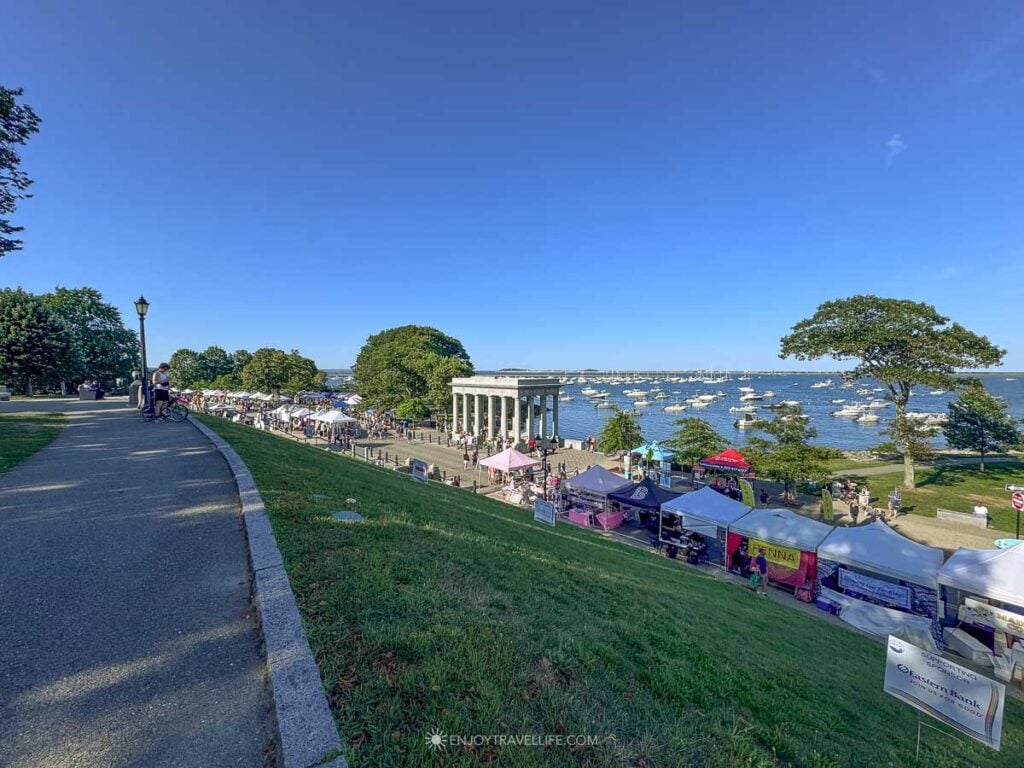
The first stops I recommend are clustered around the waterfront and historic downtown, so you can explore them on foot. Leyden Street and the downtown shops take you uphill from Water Street, but you won’t need to move your car between these stops.
1. Plymouth Rock
Start your itinerary with Plymouth Rock, which you’ll find under a granite portico at the water’s edge in Pilgrim Memorial State Park.
Let me warn you: it’s probably smaller than you are picturing, and it takes about four minutes. I was underwhelmed the first time I saw it as an adult, which seems to be the usual reaction.
We’re also taking an old-timer’s word that this is the right rock. No Pilgrim account mentions stepping onto one. The claim dates to 1741, when a wharf was about to be built over the boulder and Thomas Faunce, a 94-year-old church elder, had himself carried to the shore to point it out as the landing place. His father, who arrived in 1623, had told him so, along with surviving Mayflower passengers. That was 121 years after the landing.
What’s interesting is what’s been done to it.
In 1774 the town hitched about thirty yoke of oxen to the rock to haul it up to the liberty pole in Town Square, and it split in two during the attempt. They dropped the bottom half back at the wharf and took the top half up the hill. The two pieces stayed apart for more than a century and were not reunited until 1880, when the date 1620 was carved into the face.
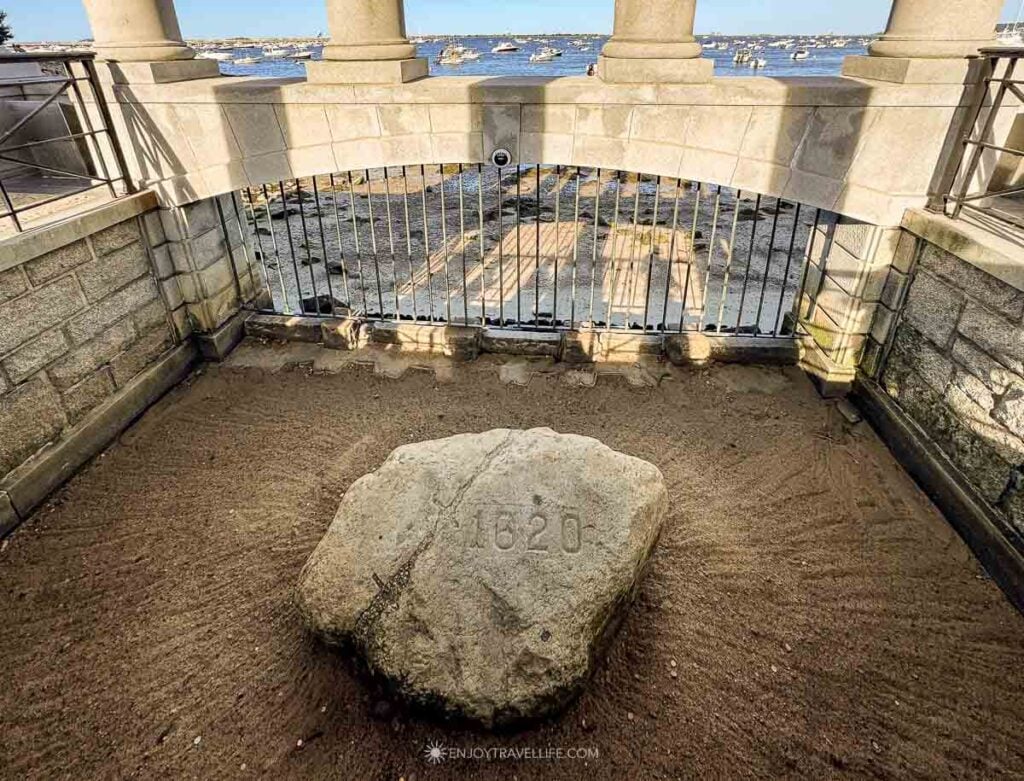
Souvenir hunters chipped at it for generations, and Pilgrim Hall Museum says plainly that the rock today is considerably smaller than it once was.
So what you are looking at is a damaged piece of a larger boulder, broken by people moving it back and forth.
The impressive portico around it today was dedicated in 1921, for the 300th anniversary. It replaced an ornate 1867 canopy that was demolished and dumped as rubble.
The Plymouth Rock, despite its shortcomings, is a must-see when you’re in Plymouth.
The park is open from sunrise to sunset. Street parking nearby is $1.25 an hour, 9 a.m. to 7 p.m. in April through November with a two-hour limit.
2. Mayflower II
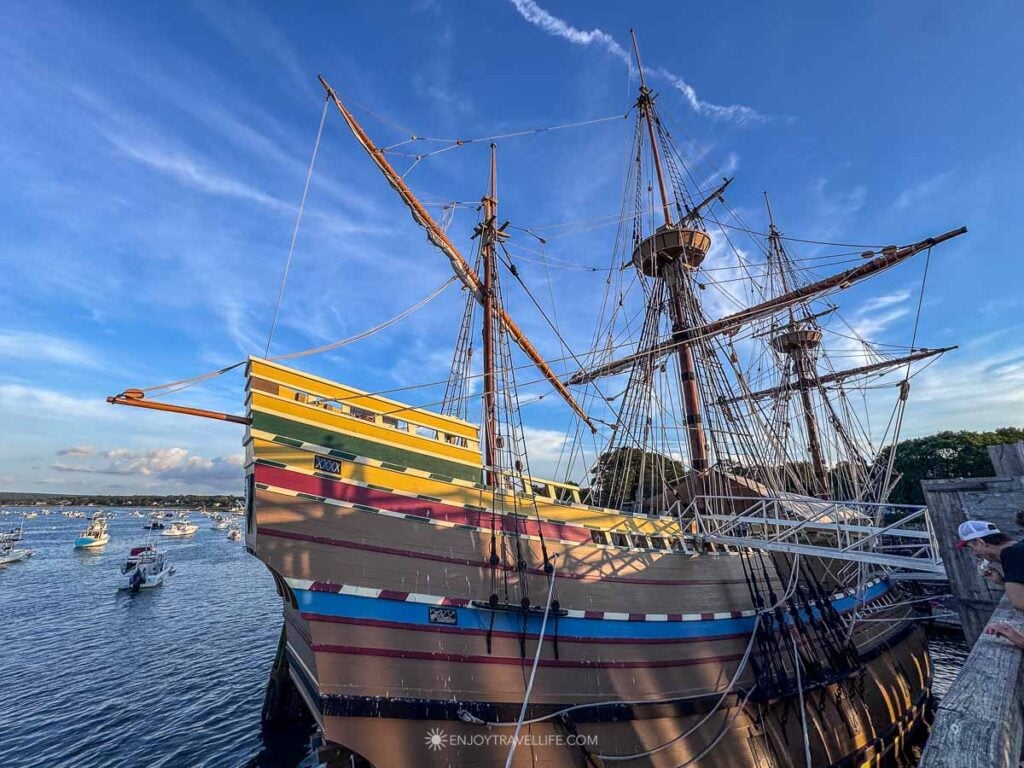
A short walk from the Plymouth Rock, you’ll find the Mayflower II docked at State Pier.
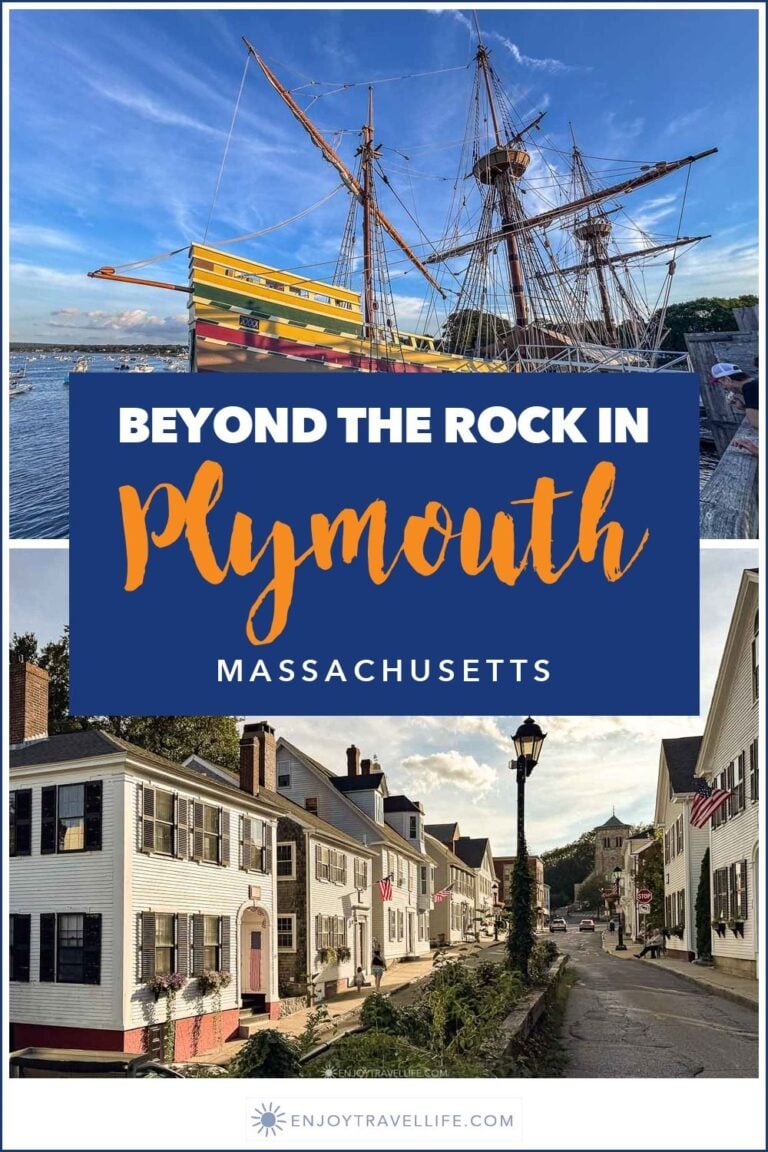
This is a full-scale reproduction of the ship that carried the Pilgrims over to the New World in 1620. It was built in England and sailed across the Atlantic in 1957.
You can board it and walk the decks, or just admire it from the dock. You might be surprised that it, too, is smaller than you might have imagined, carrying 104 settlers and crew onboard. But it’s still impressive, with all the rigging and colorful exterior.
To board, admission is $19 for adults, $17.10 for seniors, and $13 for children. Plimoth Patuxet Museums runs it, so a combination ticket makes sense if you plan to do both the Mayflower II and Plimoth Patuxet, formerly known to locals as “Plymouth Plantation.”
3. The Waterfront Promenade and the Jetty
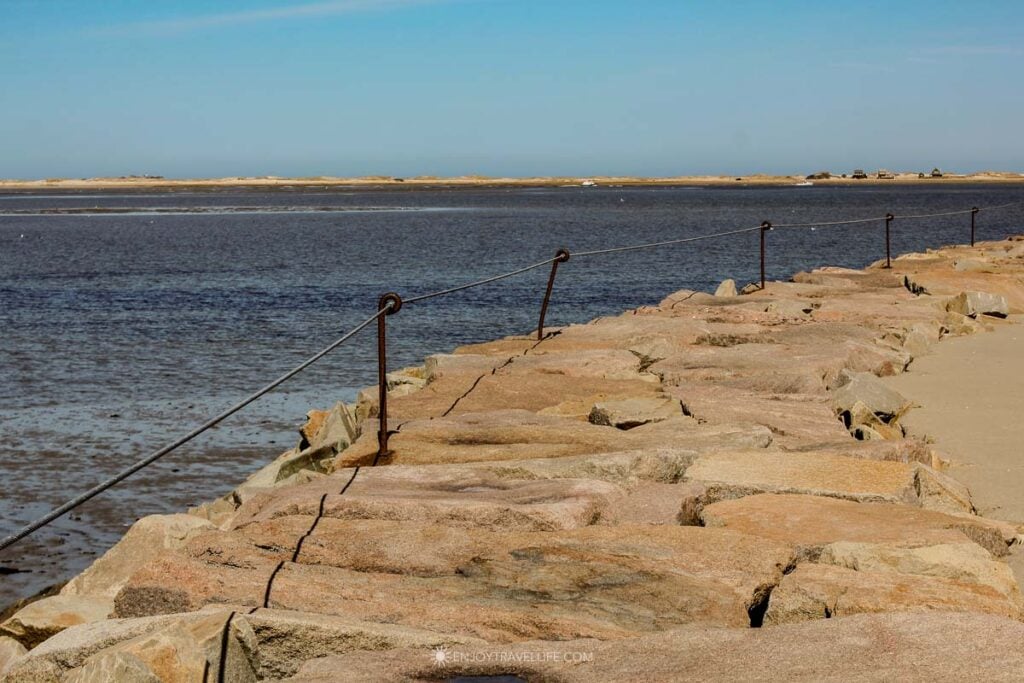
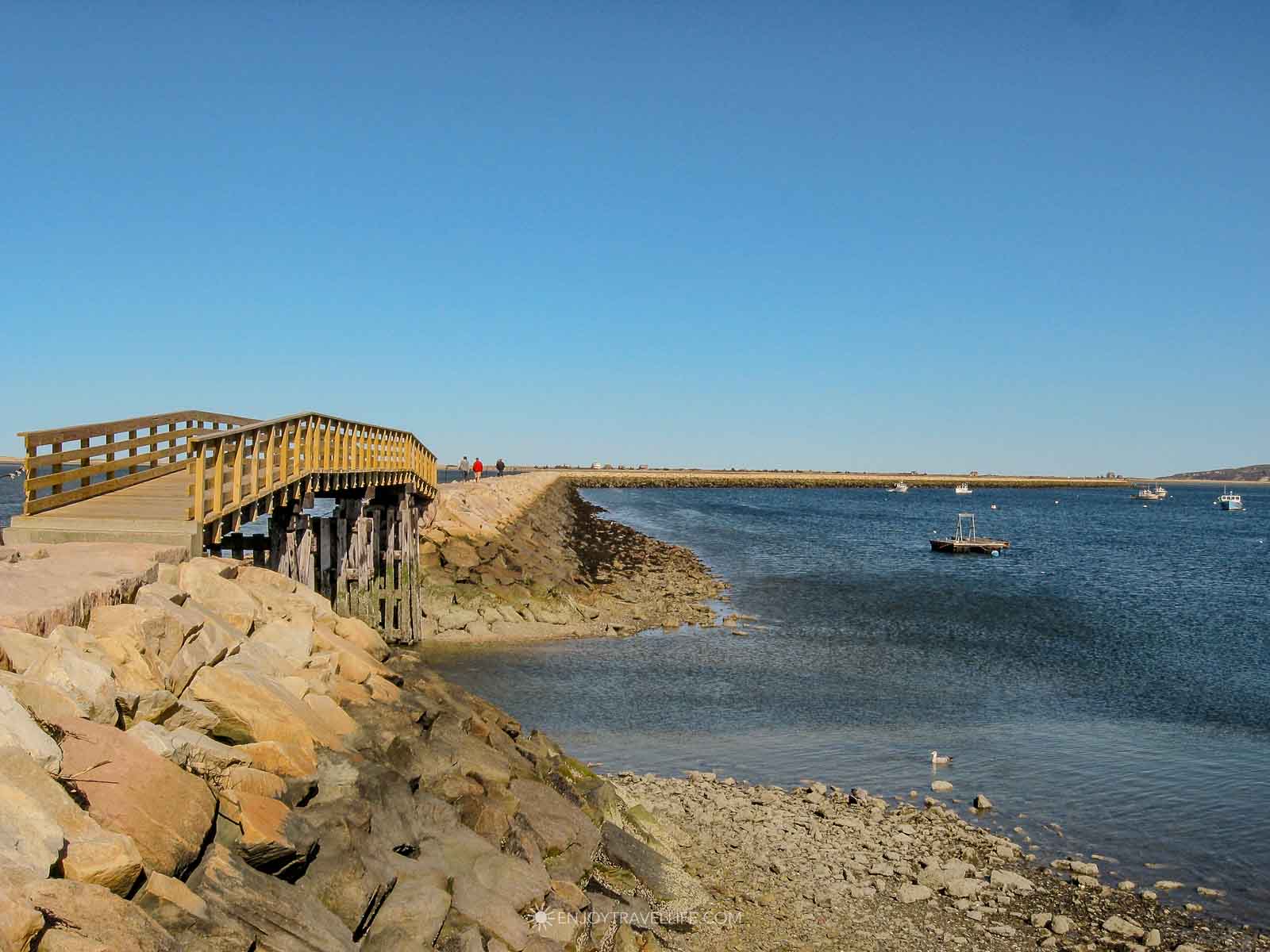
The walkway along the harbor is a place I keep coming back for. It runs past the Plymouth Rock and the moored boats, and at the far end a stone jetty pushes out into the bay.
Walking it takes as long as you want it to. I’ve done it in April with the tidal flats exposed and in July with the whole town out, and the second one is louder but not better.
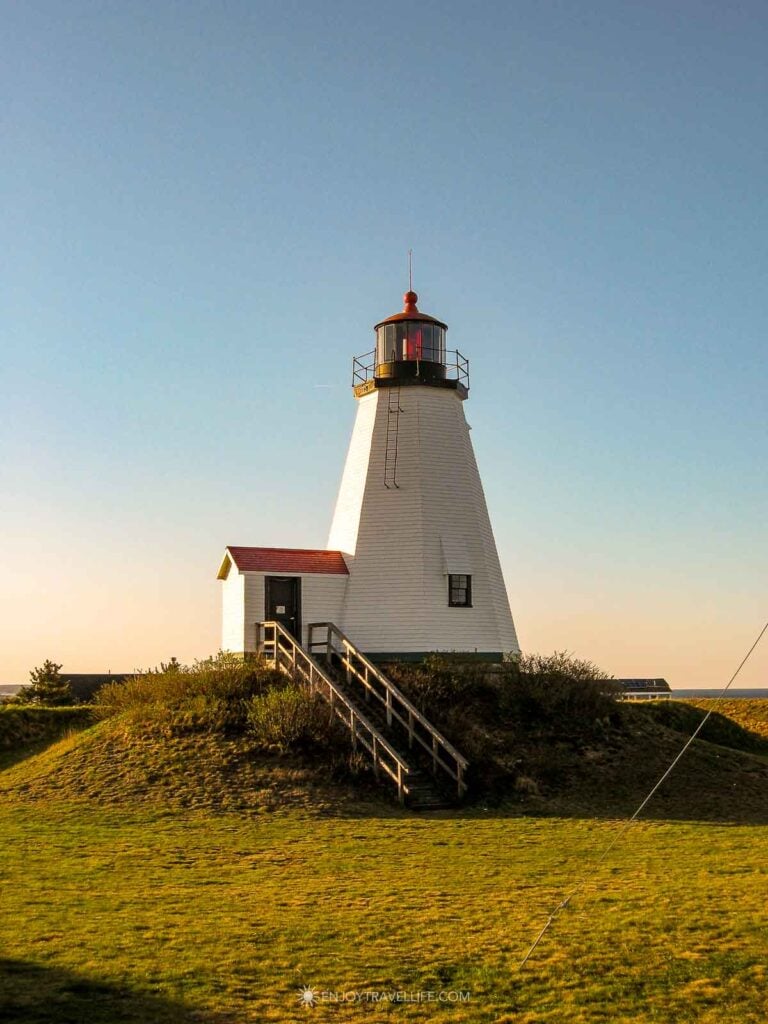
When you look across the water you can pick out two lighthouses. Bug Light, officially Duxbury Pier Light, is the small lighthouse sitting offshore in Plymouth Harbor. Farther out, the white tower on Gurnet Point is Plymouth Light, also known as Gurnet Light. Despite the name, it actually sits in Duxbury and marks the entrance to Plymouth Bay.
I had the chance years ago to get out to Gurnet Light with someone who knew the area. Most visitors will only ever see it from across the water, and that is fine.
You may also notice Brown’s Bank, the long sandbar out in the bay. At low tide, it rises out of the water and becomes a summer gathering spot for local boaters before disappearing again with the tide. You can only get there by boat.
My advice? Walk the jetty near sunset for extraordinary photos.
The waterfront is also an easy place to just hang around for a while. Across from the park are ice cream windows, T-shirt shops and plenty of grab-and-go food. Pick up something and take it across Water Street to one of the benches overlooking the harbor.
That’s exactly what I did.
I also happened to catch the tail end of the annual Plymouth Waterfront Festival on my last visit. Water Street was lined with booths selling jewelry, crafts and other goods, with live music playing and plenty of food vendors. I grabbed lobster sliders and a fresh lemonade and made dinner out of that, too.
4. Brewster Gardens and Town Brook
A short walk south of Plymouth Rock along Water Street, you’ll find Brewster Gardens, a riverside park on land granted to Mayflower Elder William Brewster in 1620.
This scenic, stroller-friendly 1/2-mile walking trail along the river is lovely. Manicured lawns and plantings border Town Brook, where the Pilgrims once drew freshwater. It’s also home to a massive herring run restoration.
As you stroll, keep an eye out for The Pilgrim Maiden, a bronze statue by Henry Hudson Kitson, picturesque stone and wooden bridges, and a pergola walkway. It’s a lovely walk.
Save this article to Pinterest for later.
One caveat for now: The Town Brook Trail between Brewster Gardens and the grist mill is closed during the Jenney Pond construction project, but both attractions remain open. You can reach the mill by the downtown streets instead, or drive if that’s easier.
5. Plimoth Grist Mill
The Plimoth Grist Mill is a working reproduction of the 1636 mill the colonists built on Town Brook, and it still grinds corn.
It’s located downtown near Jenney Pond.
The mill remains open during the Jenney Pond construction project.
Entry prices are Adults $11, seniors $9.90, children $8, or included in the Heritage Pass.
6. Cole’s Hill and the Massasoit Statue
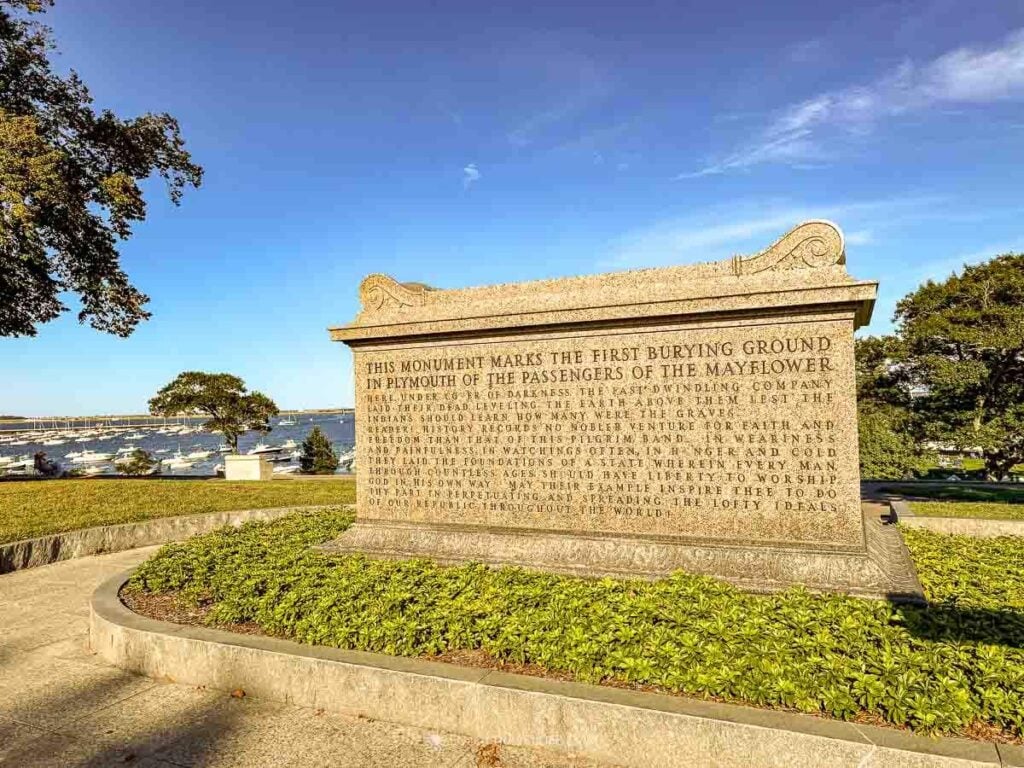
Across from Plymouth Rock, climb the steps to Cole’s Hill. That’s where the Pilgrims buried their dead during the first winter.
The hill overlooks the harbor and is a National Historic Landmark. It’s a great spot to get some sweeping harbor views with the Plymouth Rock portico in the foreground.
On Cole’s Hill, you’ll find the large granite sarcophagus at the top. Pilgrim Sarcophagus holds remains recovered from the hill that are believed to be Mayflower Pilgrims who died during that first harsh winter.
The names of the dead, 50 of 104 Mayflower passengers, seems to go on and on around the monument, making the losses that much more poignant.
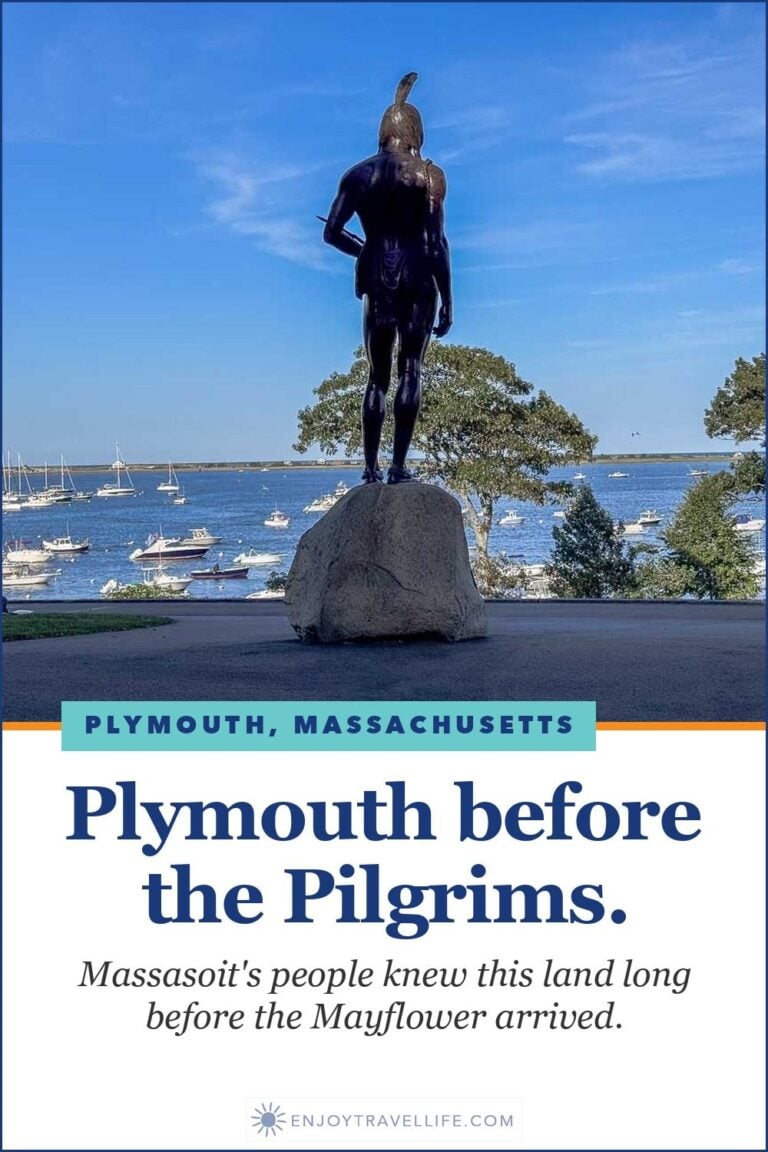
Then there is Massasoit. The bronze statue by Cyrus Edwin Dallin is powerful in person, rising high above the waterfront with Massasoit looking out over the harbor.
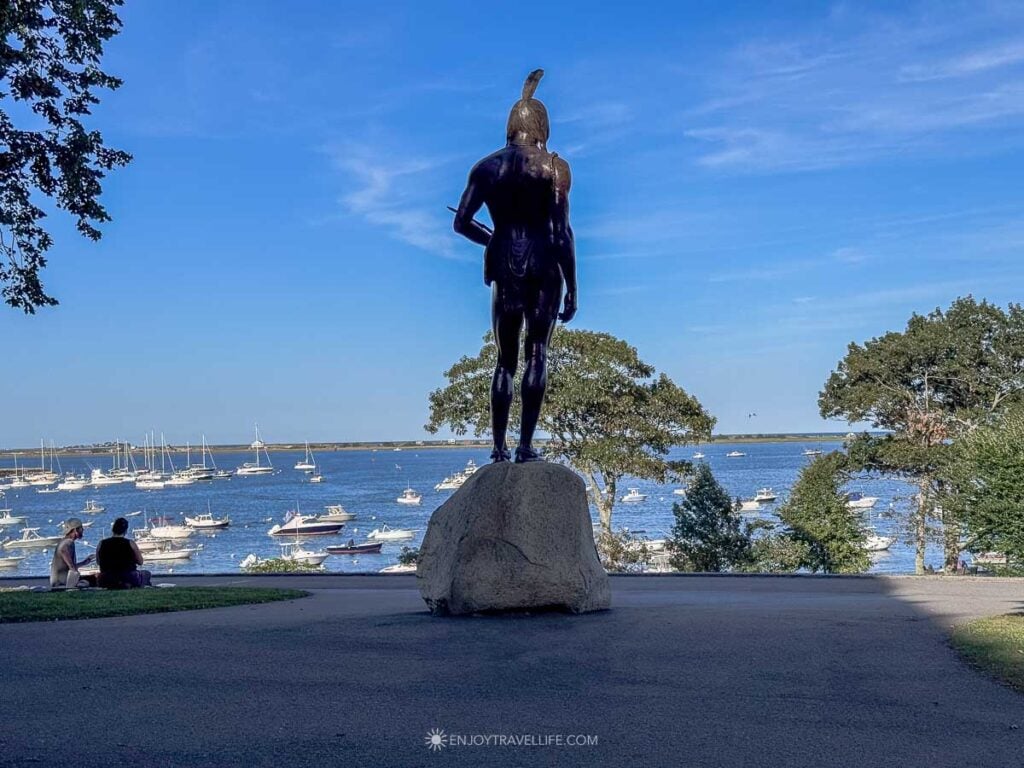
I couldn’t help thinking about what that view represents, with him looking out over lands his people knew long before the Mayflower arrived.
His alliance with the Plymouth colonists helped preserve peace for decades. In March 1621 he signed a mutual-defense treaty with the colonists, and his people helped them through that first year by teaching them to plant corn and fish the local waters. A generation later, that relationship had collapsed into King Philip’s War, led by his son Metacom (“King Philip” to the English).
It gives the hill another layer that’s easy to miss if you come to Plymouth thinking only about the Pilgrims.
Cole’s Hill is free and part of the same state park as Plymouth Rock. Here, you’ll find benches where you can sit and reflect or just enjoy the gorgeous view.
7. Walk Leyden Street to Town Square
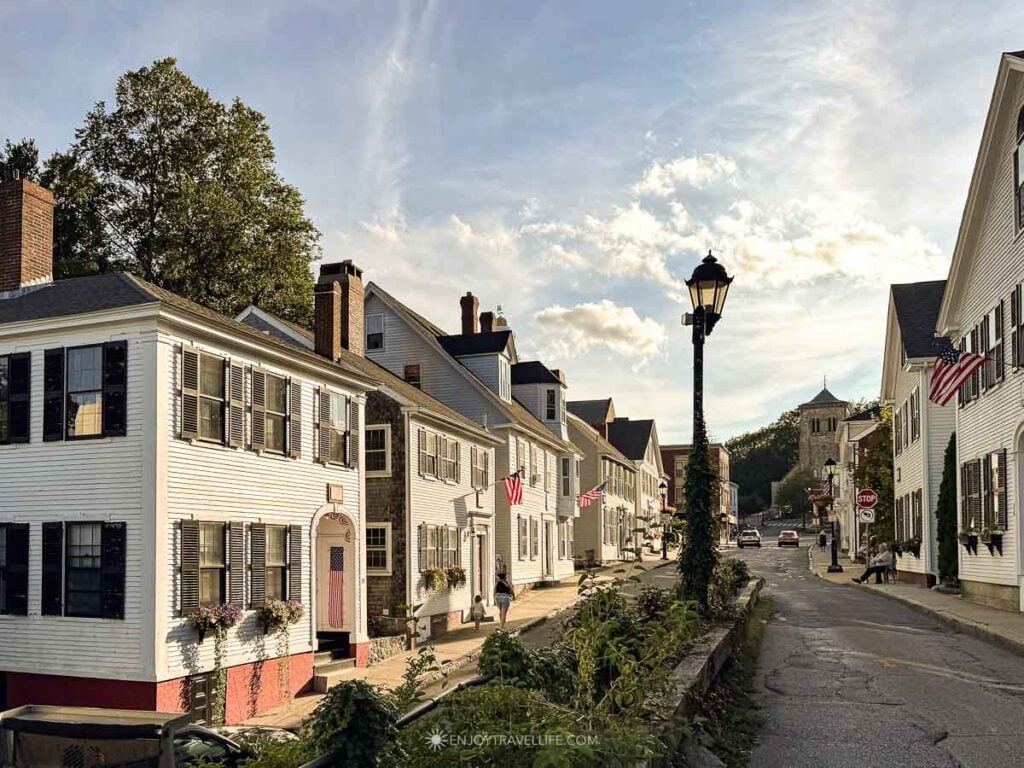
Next, walk up Leyden Street toward Town Square. Laid out in 1620, it follows the route of the original street through the Plymouth settlement. Plaques along the way mark some of the earliest house lots.
The street climbs away from the harbor past beautiful old homes, and every so often another marker reminds you how long people have lived along this route. The houses you see today came later, but you’re walking the same street the first colonists used more than 400 years ago.
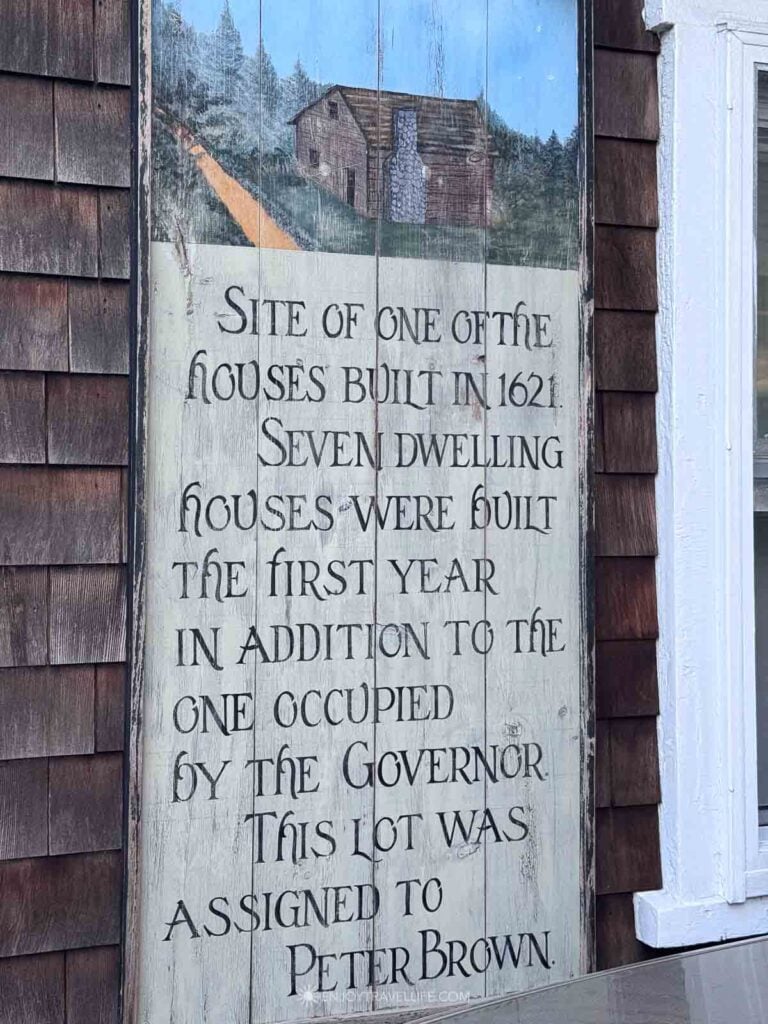
Cross Main Street and keep going up into Town Square. You’ll see First Parish Church at the top and Burial Hill rising behind it.
Don’t rush this walk. It’s where Plymouth’s history feels less like an attraction and more like part of the town. Before heading to Burial Hill, you might want to take some time to explore the downtown shops.
8. Explore Plymouth’s Shops
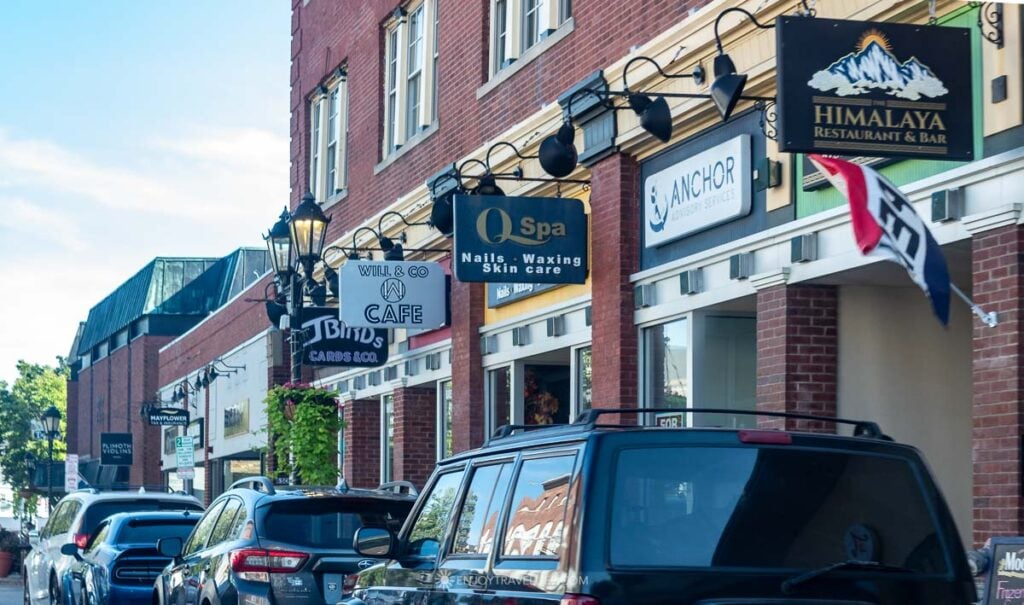
Plymouth’s shopping extends beyond the waterfront.
When you head uphill from Water Street, you’ll find the larger downtown shopping area along Main and Court Streets. It’s filled with independent boutiques, vintage shops, galleries, gifts, and plenty of places to stop for coffee or something to eat.
It’s worth wandering the side streets, too.
On my last visit, I stopped into Sonny and Six, an upscale consignment shop next door to the historic Spooner House on North Street. I discovered some beautiful second-hand clothing along with preowned designer pieces from Louis Vuitton and Gucci. I was tempted, but managed to leave empty-handed.
Back on the waterfront, The Shoppes at Village Landing at 170 Water Street is a smaller cluster of clapboard buildings around a wooden gazebo. You’ll find knitwear, florals, gifts and a barber shop here, along with Fedele’s Hand Dipped Chocolate.
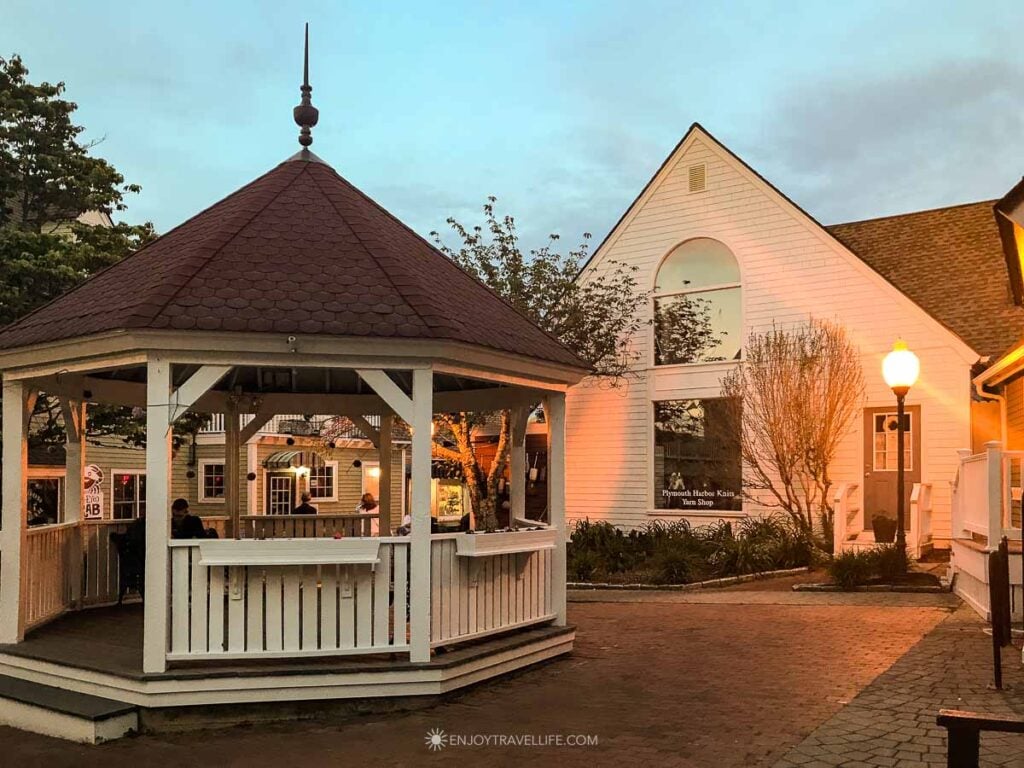
Two of the restaurants I recommend are in and beside Village Landing, covered further down.
Plymouth is also where I first found Quahog Republic, and it’s a large part of why I kept coming back as an adult. Their apparel shop was here in Village Landing, and it pulled me in over a slogan: live, give, relax. I liked the saying enough to buy a red Comfort Colors hoodie carrying it, and I wore that hoodie for years, well past the point it had gone threadbare.
The shop is gone now, and so is the eatery they later opened in town. But the brand stayed with me, and I’ve been a regular at their Onset waterfront eatery ever since.
9. Burial Hill
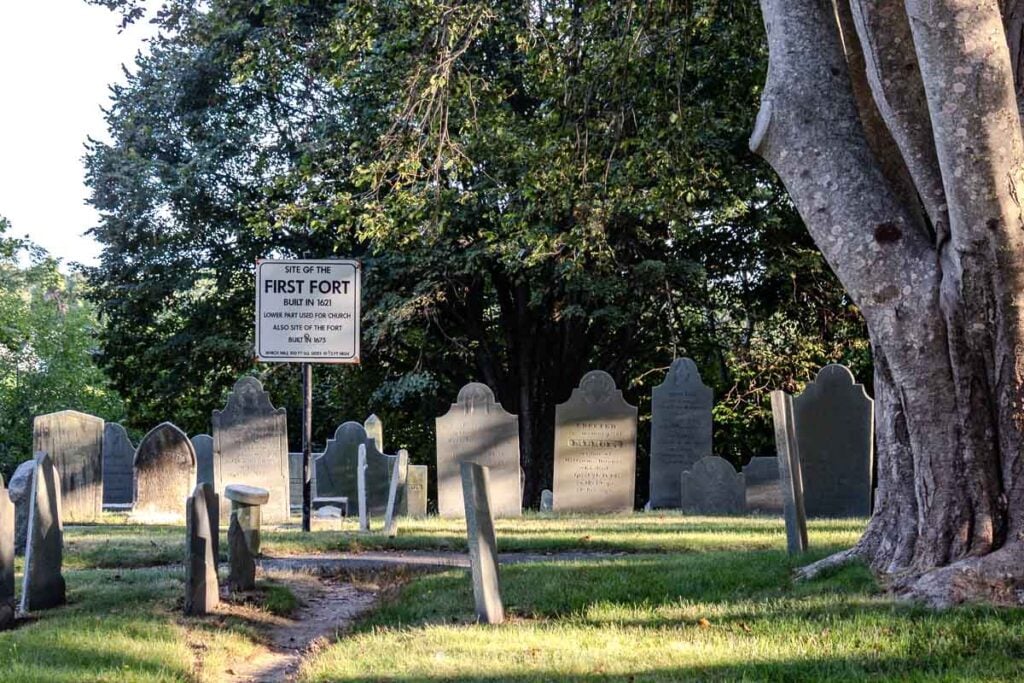
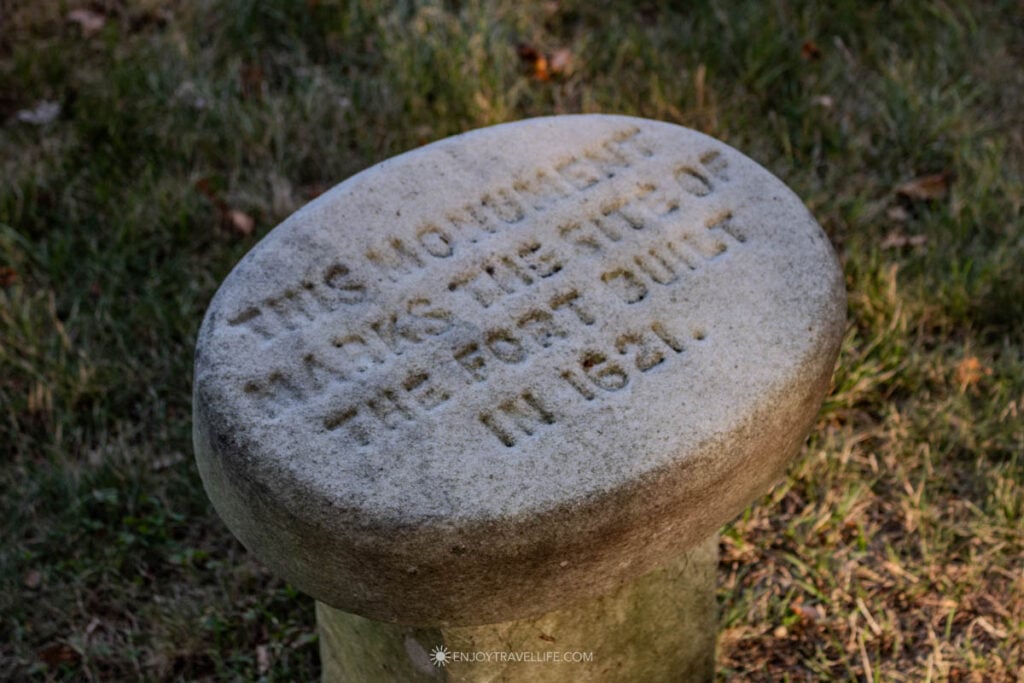
A sign among the old headstones on Burial Hill marks the site of the first fort. A round granite marker on the hill is inscribed with the site of the fort built in 1621.
Steps behind Town Square, climb to the town’s colonial burying ground, high above the harbor. Governor William Bradford is buried here, and most likely John Carver, the colony’s first governor.
I went up twice on my last visit, once during the day to photograph it and again after dark on the ghost tour.
What I hadn’t known was that this was Fort Hill before it became a burying ground. The colonists built their fort and meetinghouse here in 1622, and when you reach the top and look back down over the harbor, you can see exactly why they chose it.
Only five surviving markers carry seventeenth-century dates.
Burial Hill is free and closes at dusk. If you’d like to experience Burial Hill after dark, check whether your evening walking tour includes it. I visited on a guided ghost tour.
There is a free alternative in daylight. Pilgrim Hall Museum and the Plymouth Antiquarian Society run a Burial Hill history tour on the first Saturday of most months, one o’clock to two, at no charge.
10. Pilgrim Hall Museum
At 75 Court Street, Pilgrim Hall opened in 1824 and describes itself as one of the oldest continuously operating public museums in the country.
The difference between this and the living history sites is that the objects here are original possessions carried on the Mayflower, rather than reproductions.
Tickets cost $15 for adults, $12 for seniors and students, and $9 for children six to eighteen. Pilgrim Hall is open Wednesday through Sunday, 9:30 a.m. to 5 p.m., April into early December.
Worth the Short Drive
When you’re done exploring Plymouth on foot, you’ll want to hop in the car and delve deeper into Plymouth’s history. The next two stops are outside the walkable downtown. Plimoth Patuxet (formerly known as Plimouth Plantation) is a few miles south of the waterfront, and the Forefathers monument sits on a hill above town, so this is the point to get back in your car.
11. Plimoth Patuxet Museums
Plimoth Patuxet is a living history museum and the largest of the paid attractions in town. It spans three separate locations, with the main campus requiring a drive:
- The main campus at 137 Warren Avenue, about three miles from the waterfront. This holds the Historic Patuxet Homesite, the 17th-Century English Village and the Craft Center.
- Mayflower II, docked at State Pier on the waterfront.
- The Plimoth Grist Mill, downtown on Town Brook.
If you like stepping back through history this way, Old Sturbridge Village in central Massachusetts works the same way and is worth a separate day.
The museum adopted the Plimoth Patuxet name in 2020 to better reflect both the Indigenous and English histories it interprets. The Historic Patuxet Homesite is staffed by Native people speaking as themselves about a culture that is still here.
The 17th-Century English Village is staffed by role-players who stay in 1627 no matter what you ask them. You’ll also find a Craft Center where artisans work in period technique.
It’s open seven days a week from 9 a.m. to 5 p.m., through the Sunday after Thanksgiving. Adult admission is $35 for the main sites, $44 for a combination pass adding Mayflower II, and $46 for the Heritage Pass adding the Grist Mill.
You’ll also be happy to hear those passes are valid two days if you’re staying over, so it’s worth the money.
Plimoth Patuxet asks visitors to allow at least two and a half hours, and says a full day is possible across all its sites. Seeing the living history sites means about half a mile of walking on uneven ground. The Heritage and Combination passes are valid for two days, which helps if you would rather split the campus and Mayflower II across a morning and an afternoon.
12. National Monument to the Forefathers
At 81 feet tall, the National Monument to the Forefathers looks almost like a granite cousin of the Statue of Liberty. Its on Allerton Street in a residential neighborhood, well back from the waterfront, so it is surprisingly easy to miss.
The cornerstone was placed in 1859, then the Civil War interrupted construction. The monument was finally dedicated in 1889.
Admission and parking are free, and the monument is open dawn to dusk from April through November.
On the Water
Plymouth still has a working waterfront, and there’s more to do here than walk along the harbor.
13. Whale Watching and Harbor Cruises
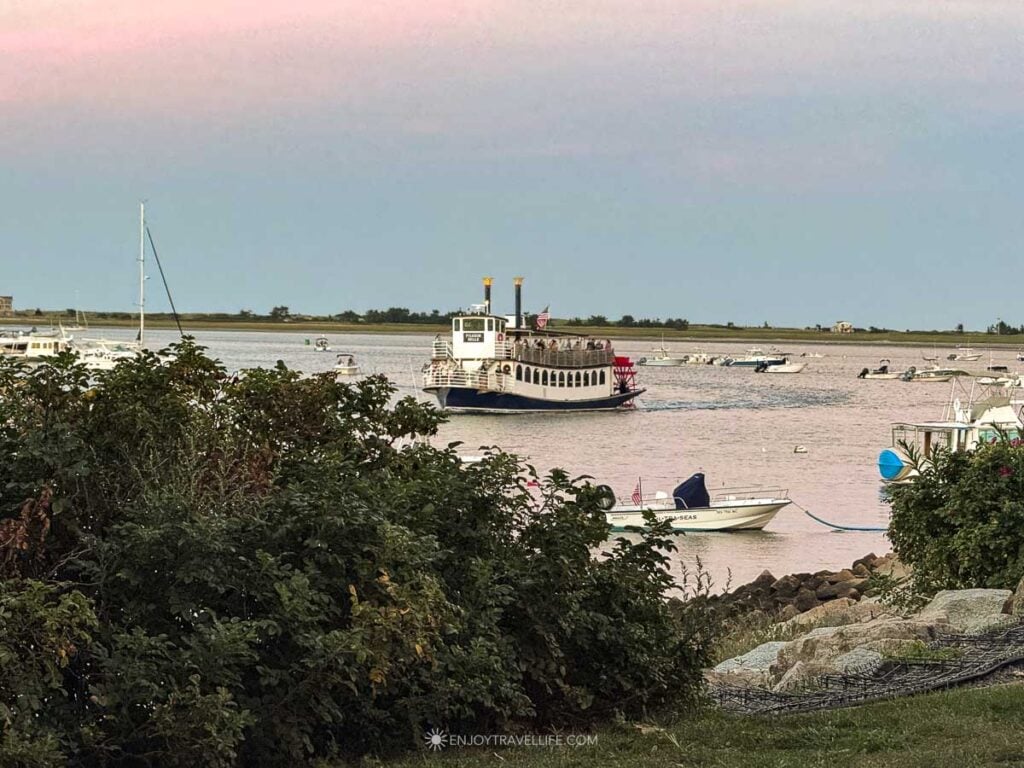
Captain John Boats gives you two ways to get out on the water in Plymouth: a whale watch, or a shorter cruise around the harbor on the Pilgrim Belle, a local paddlewheel boat.
Whale watches leave from 10 Town Wharf, roughly mid-April through October. The trips run three and a half to four hours out to Stellwagen Bank with a naturalist aboard. Adult fares are $74, seniors $64, children $54.
Plan it as the day rather than an add-on. You can book the Plymouth whale watching cruise ahead, which is worth doing on a summer weekend.
If four hours at sea is more than you want, the Pilgrim Belle boards at the Mayflower II State Pier. The harbor cruise takes about 75 minutes, with seating on the open deck or in a climate-controlled cabin and a full bar aboard. Adult tickets are $27, seniors $24 and children $20. A sunset cruise of about an hour and a half starts at $32. You can book the Pilgrim Belle harbor cruise ahead.
14. Plymouth Long Beach
The sandy spit visible from most of the waterfront is Plymouth Long Beach, a three-mile barrier beach off Warren Avenue that shelters the harbor. For most visitors it means the public beach and parking area at the near end.
A daily parking pass is required from late May through Labor Day, 8:30 a.m. to 4:30 p.m., bought through the Passport app or the on-site station. Access farther out along the spit is a separate matter and is often restricted for nesting shorebirds, so check locally before assuming you can drive the length of it.
Nearby, just over the line in Kingston, Gray’s Beach is a quieter alternative with a small park behind it. It is a few minutes north and worth knowing about if the Long Beach lot has filled.
Plymouth After Dark
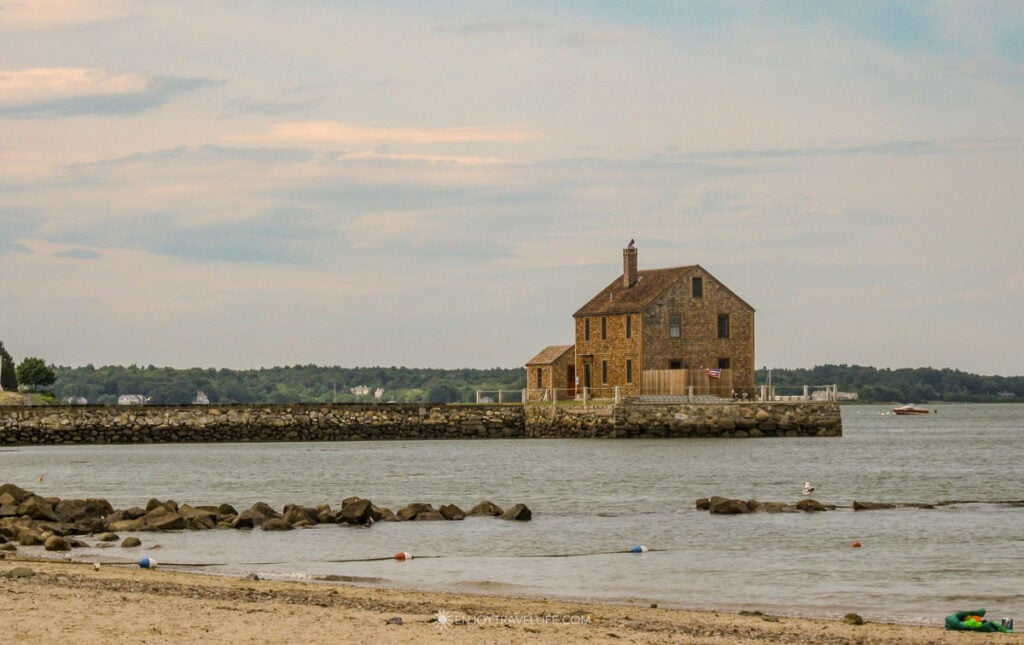
Plan to be on the waterfront about half an hour before sunset. You can watch the light change over Plymouth Harbor, then head into town for your evening tour after dark.
15. A Lantern Tour of the Old Town
Burial Hill is a different experience after dark. Several operators run evening tours.
I took a ghost tour on my most recent visit to Plymouth, and it turned out to be one of the best ways to understand the town after spending the day walking it.
We went back up Burial Hill after dark, through Town Square and along streets I had already explored in daylight, but with a completely different story attached to them.
If you want to see Plymouth after dark, the ghost tour I took returns to Burial Hill and walks through some of the oldest parts of town. Use code ENJOY10 for 10% off your tickets.
Where to Eat in Plymouth

Three of my regular stops are within a hundred yards of each other.
Water Street Cafe, 25 Water Street
I’ve met my friend here for breakfast more than once, which is the best recommendation I can give it. Breakfast and lunch are served all day, and it closes mid-afternoon, so come here earlier in the day rather than saving it for dinner.
The Blue-Eyed Crab, 170 Water Street
I’ve eaten here several times. I usually go for the fresh fish, especially when it comes with one of their creative Caribbean-inspired sides or salsas. I’ve had some great steamers here, too, and their tropical drinks are always fun. It’s one of my favorite places to eat along the waterfront.
East Bay Grille, 173 Water Street
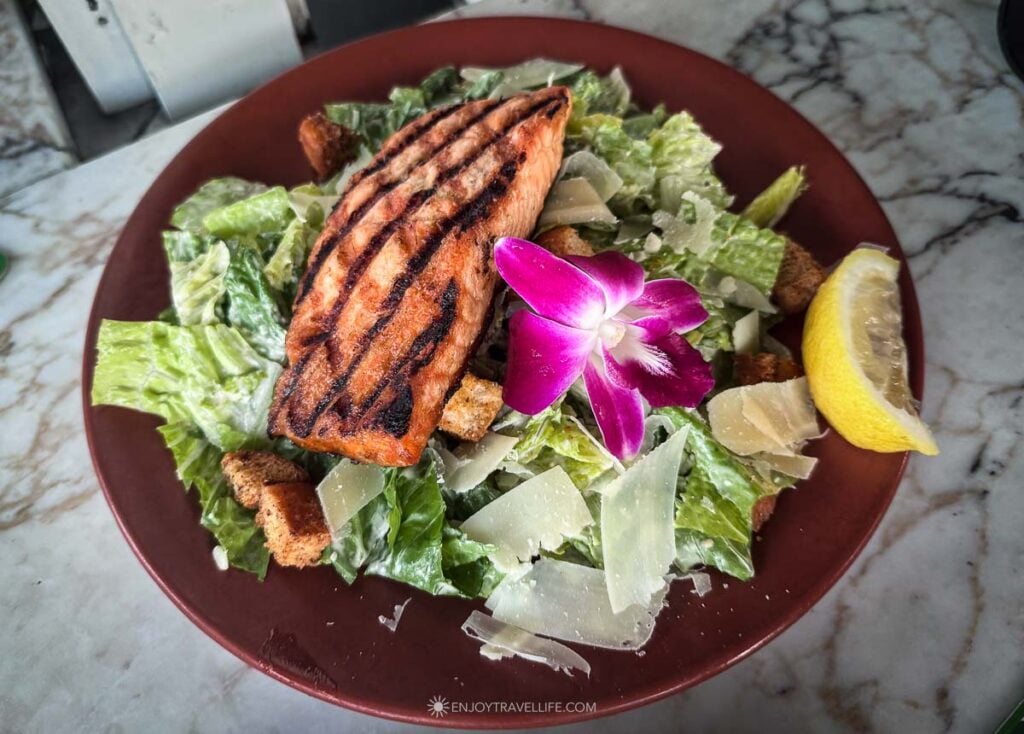
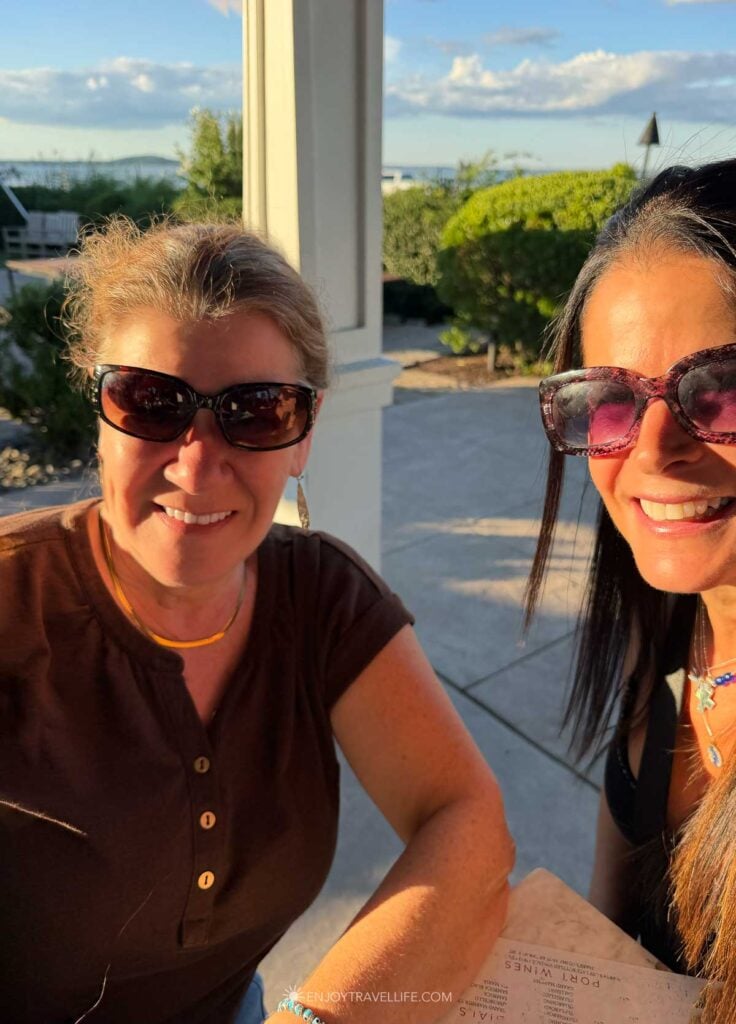
Grilled salmon tops a Caesar salad at East Bay Grille. Jackie and a friend sit on the porch overlooking the water.
I was back here to meet my long-time friend and Realtor, Eleni Brookshire, for dinner. There was a 25-minute wait for a table, but we found seats at the bar with a great view of the water. We shared the bacon-wrapped scallops with hot honey, crab cakes, and a salad with salmon, along with margaritas.
Everything was delicious!
It has plenty of tables indoors and out, and it gets busy. But, it’s worth the wait if you can’t get a table right away.
Terrace Rooftop Dining, 150 Water Street
This rooftop dining spot overlooks Plymouth Harbor from above Water Street. It’s a lovely place for a meal with a harbor view. Check the current opening hours before you go.
1620 Wine Bar, 170 Water Street
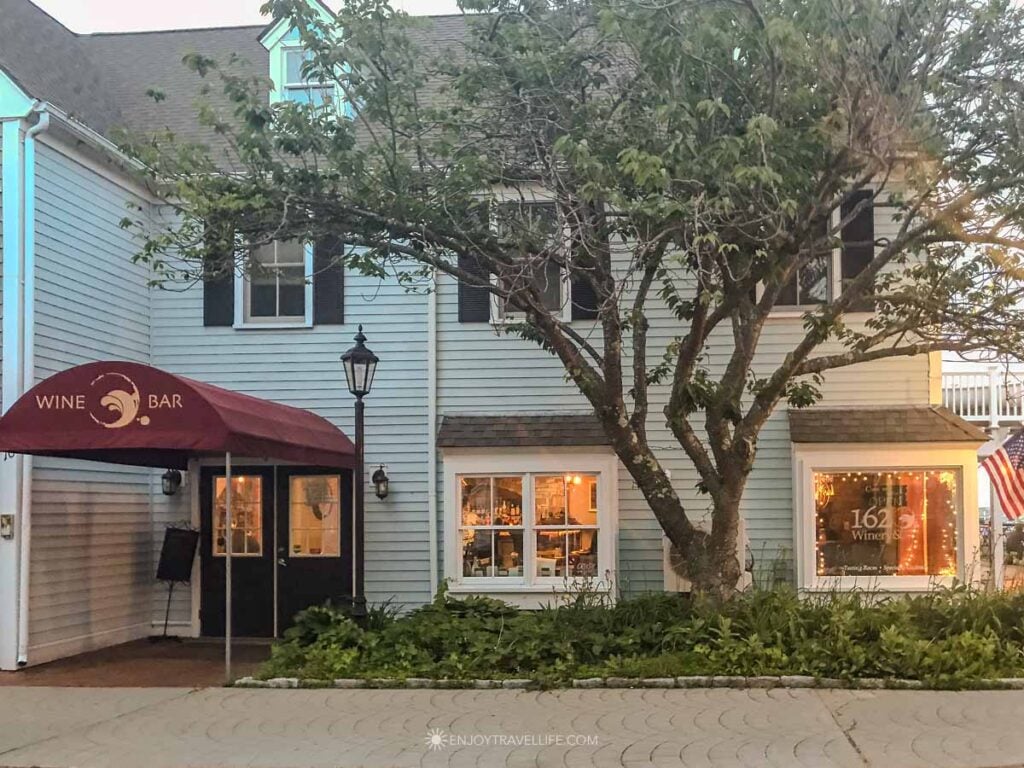
In the Village Landing complex, Sip at 1620 Wine Bar has patio seating and firepits, making it another option if you want to stay around the waterfront after dinner. Sip is a 21-and-over venue, so it’s not an option if you’re dining with children. Check its opening days before you go.
Plymouth Bay Winery
At 114 Water Street, Plymouth Bay Winery makes fruit-forward wines using New England flavors like cranberry and blueberry. Tastings go beyond the wine, with locally made jellies and sauces worked into the pairings.
This is not the stop for a traditional vineyard experience. The wines lean sweet and unconventional, which is part of the experience. If that sounds like your thing, it makes an easy stop as you work your way along Water Street.
Where to Stay in Plymouth
The map earlier in this article shows the full spread across town. These three are the ones worth knowing by name.
Mirbeau Inn & Spa, The Pinehills
Mirbeau gives you a very different reason to stay in Plymouth. The 50-room inn is styled as a French country estate, with gardens modeled on Monet’s at Giverny down to the lily pond and the green footbridge. The 14,000-square-foot spa has a heated foot massage pool indoors and a whirlpool terrace outside. Rooms come with fireplaces, and in summer the Garden Bar serves wood-fired pizza and a raw bar beside the pond.
The trade-off is location. Mirbeau is about 15 minutes inland in The Pinehills, so you’ll drive in for everything else in this article. Check availability.
John Carver Inn & Spa, 25 Summer Street
If you’d rather stay closer to Plymouth’s historic center, John Carver Inn & Spa puts you about an eight-minute walk from Plymouth Rock and Mayflower II. Some rooms have recently been renovated, and there’s a full-service spa and an indoor pool with an 80-foot waterslide, which makes this an especially good option if you’re traveling with kids.
And if Plymouth’s ghost stories have gotten to you, ask about Room 309. Local lore says a Lady in White has been known to make an appearance. Check availability.
Hotel 1620 Plymouth Harbor, 180 Water Street
If you want to stay near the waterfront and leave the car parked, Hotel 1620 Plymouth Harbor puts you within walking distance of the harbor, restaurants, shops, and most of the historic sites in this article. Rooms have recently been renovated, and there’s an indoor pool, hot tub, and splash pad if you’re traveling with kids. Check availability.
Best Time to Visit Plymouth
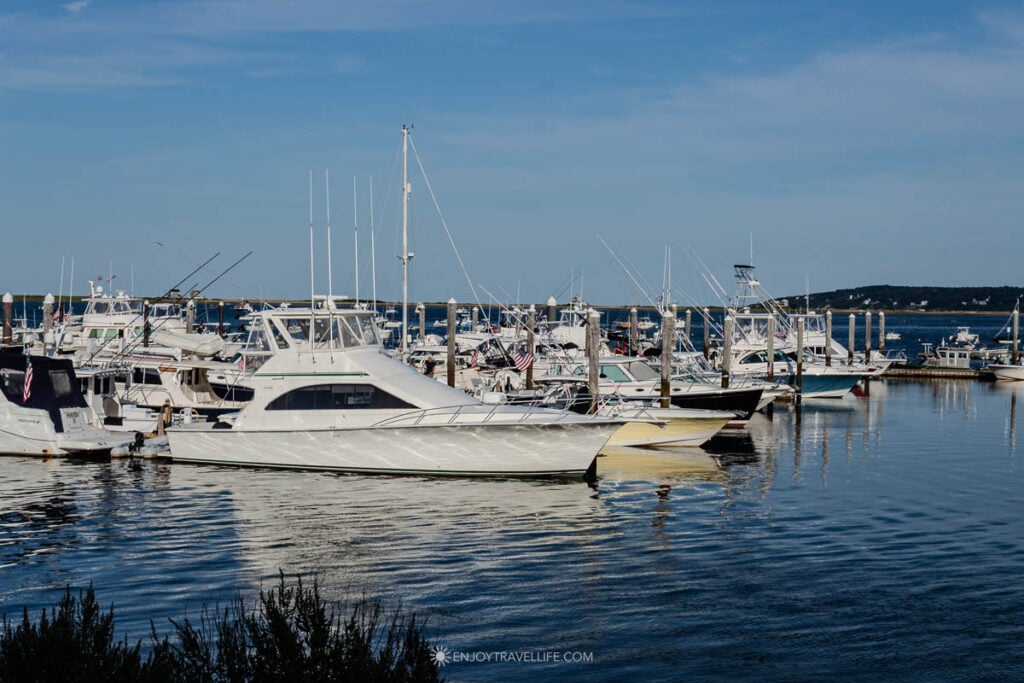
Summer is the obvious answer and the crowded one. The museums are fully staffed, the whale watches run, and the beach parking often fills by mid-morning.
September is better. The crowds thin after Labor Day, Plimoth Patuxet stays open through the Sunday after Thanksgiving, and the light over the harbor gets long and low. October draws more visitors for ghost tours and other Halloween events.
April is quiet and raw, with the tidal flats exposed. I’ve shot the jetty in both April and July, and April gave me the better pictures.
Final Thoughts on the Best Things to Do in Plymouth MA
Plymouth Rock might take four minutes, but the rest of town deserves much more of your time.
Start on Water Street, give Plimoth Patuxet the time it deserves, and stay until the light goes.
FAQs
Is Plymouth MA worth visiting?
Yes, if you give it more than an hour. Plymouth Rock takes minutes, but the town holds a living history museum, a colonial burying ground, a working harbor and a walkable waterfront. There is enough here to fill a full day.
How long do you need in Plymouth MA?
You can enjoy Plymouth in a day if you choose a few waterfront sights and one major museum. Allow at least two and a half hours for Plimoth Patuxet alone. Two days gives you more time for the museums, shops, historic sites, and a whale watch or beach visit without rushing.
What is there to do in Plymouth MA besides Plymouth Rock?
Mayflower II, Plimoth Patuxet Museums, Pilgrim Hall Museum, Burial Hill, the National Monument to the Forefathers, the Plimoth Grist Mill, whale watching from Town Wharf, and the waterfront promenade and jetty.
Is Plymouth MA a good day trip from Boston?
Yes. It is about 40 miles south of Boston, roughly an hour by car outside rush hour, which makes it one of the easier day trips on the South Shore.
What is the best time of year to visit Plymouth MA?
September. The summer crowds thin after Labor Day, the museums stay open through the Sunday after Thanksgiving, and the light over the harbor is at its best.

Next Steps
For more on exploring Massachusetts and New England, read these articles next:
- Plymouth Ghost Tour: What It’s Really Like After Dark
- How to Make the Most of Old Sturbridge Village (Three Visits In)
- Boston to Salem Day Trip: 13 Thrilling Attractions Beyond Halloween
- 15 Amazing Towns of Cape Cod You Need to Know (2026)
- Best Haunted Houses in Boston for Halloween Fun
- Revealing 3 Epic Halloween Tours for Thrill-Seekers!