
A Boston Harbor sail shows you a side of the city you can’t get from the streets. Even lifelong locals miss the evening approach to Boston from the water.
If you’re considering a schooner sail in Boston, make it the sunset departure. You’ll motor out past the working waterfront, sail as the light drops behind the skyline, and come back with the city glowing ahead of the bow.
For where to sit, what to wear, and how to time dinner around an evening departure, keep reading.
IN THIS ARTICLE
Why Boston Looks Different from the Water
Boston is a city you experience on foot, among the world’s “most walkable.” The historic core is compact and the Freedom Trail is a red line you can follow without a map. It’s easy to fill your itinerary with neighborhoods, museums, and meals, here.
All of that happens on land. Even the Old North Church, which sent its signal out toward the water, gets visited from the sidewalk.
The harbor is the reason any of it exists.
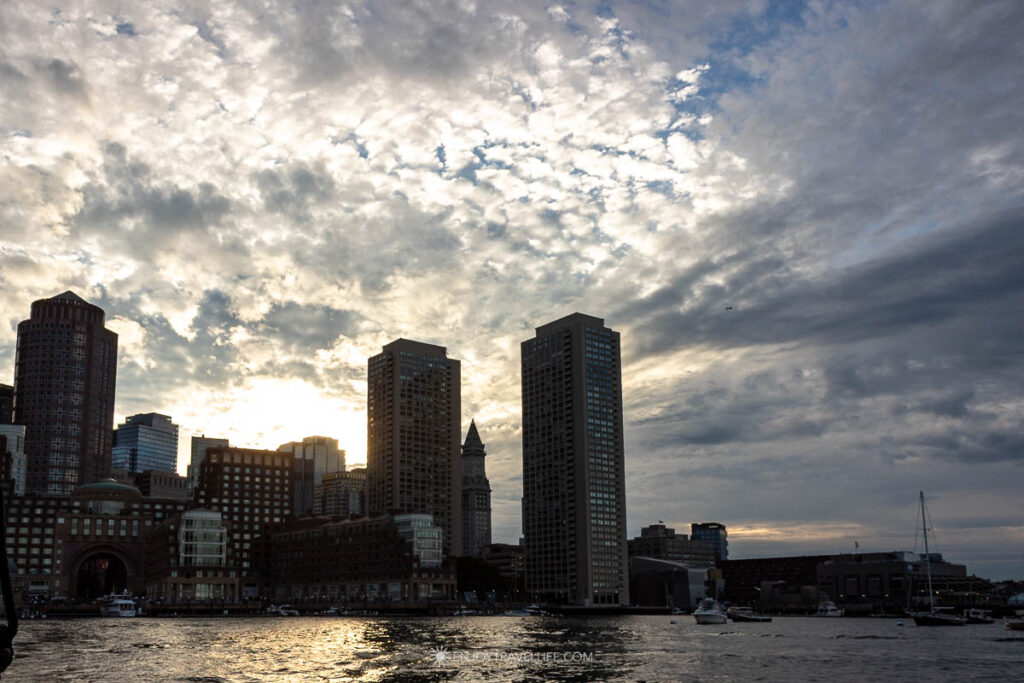
Boston grew up around a working waterfront and much of the city still revolves around water. When you get offshore, the skyline organizes itself. You’ll see colonial brick and church spires, the glass towers of the Seaport, and the harbor islands low and green on the horizon.
After a day of walking Boston, a couple of hours sitting on the water feels restorative. On a hot summer day, the breeze offshore is a welcome change from the heat radiating off the city sidewalks.
I was invited to take a sunset sail with Classic Harbor Line – Boston. Here’s how the experience unfolded for me, and what you can expect.
What Two Hours on the Schooner Adirondack Are Actually Like
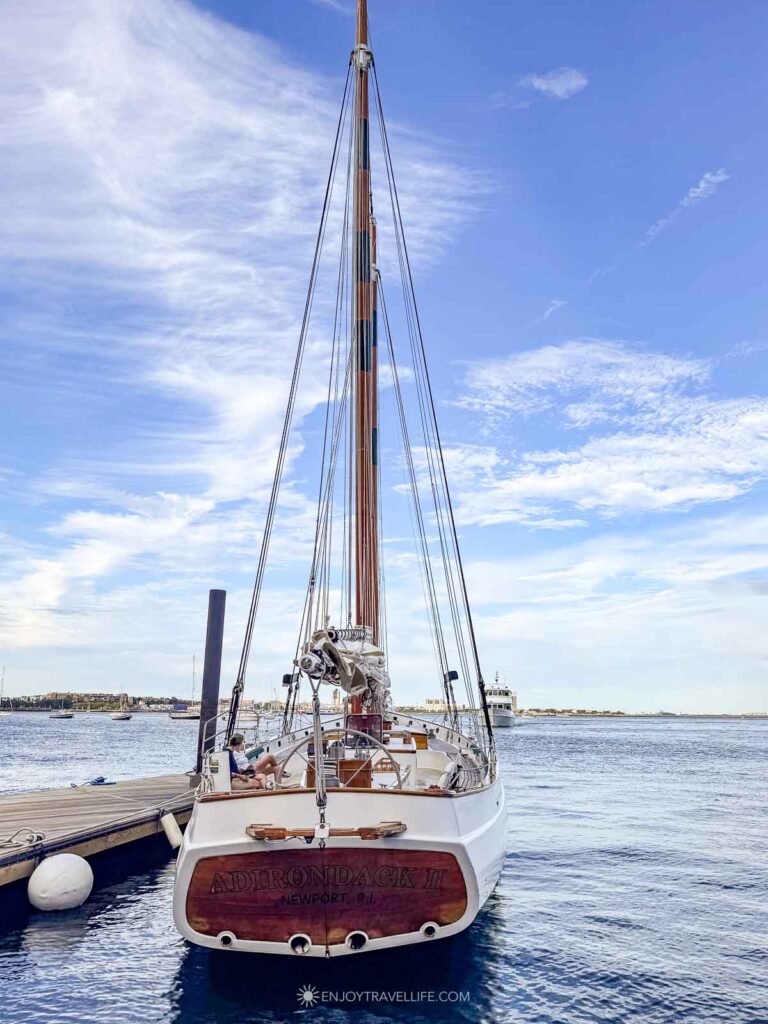
The Adirondack III ties up at Rowes Wharf behind the Boston Harbor Hotel. This beautiful schooner is 80 feet overall and carries up to 41 guests.
It’s worth noting when you buy your tickets online, your confirmation email isn’t a boarding pass. You’ll need to stop at the ticket window at the ferry terminal to get the real thing before boarding.
Classic Harbor Line does a great job explaining this ahead of time. My confirmation included detailed directions and a diagram showing exactly where to find the ferry terminal. This is helpful if you’re unfamiliar with Rowes Wharf. They recommend checking in 15 to 30 minutes before departure, and the schooner leaves promptly.
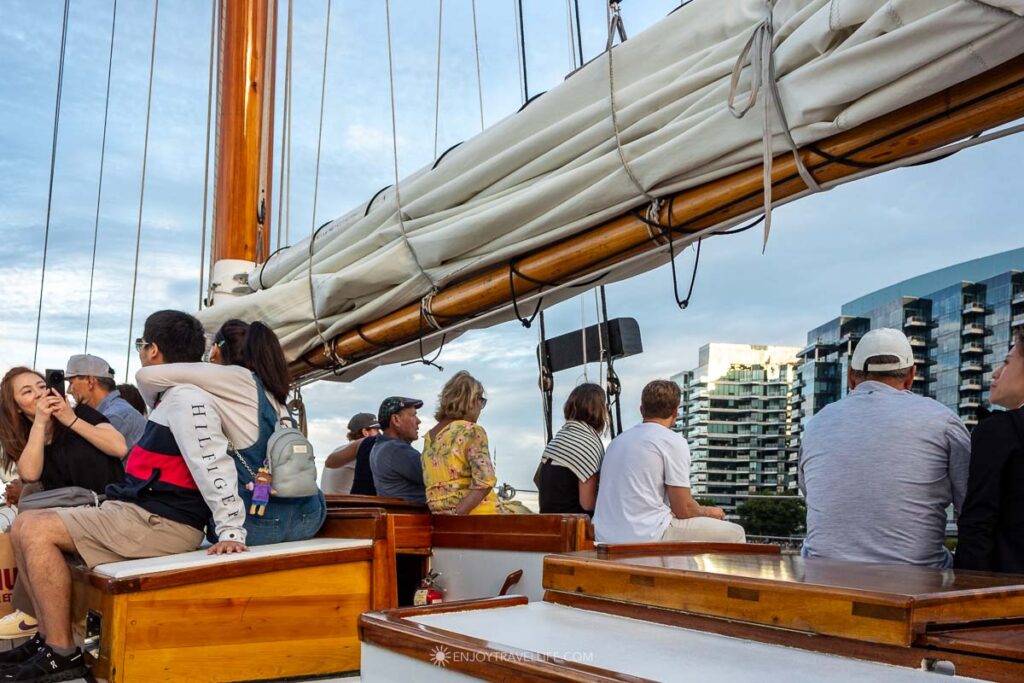
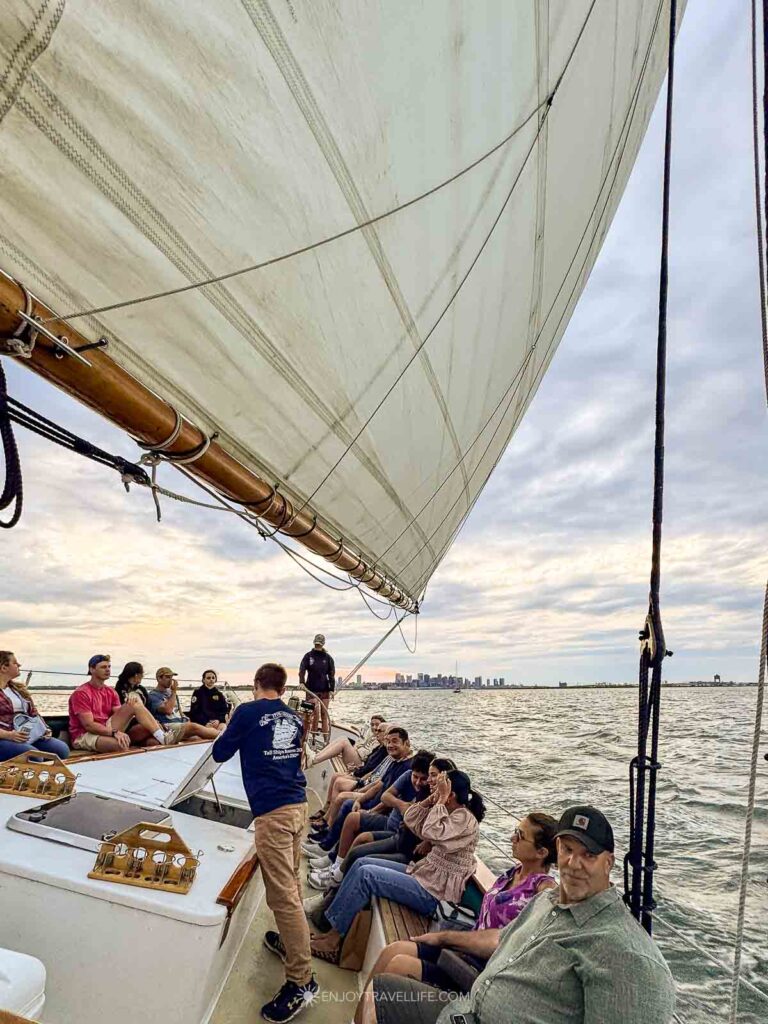
Seating is open, with benches running along both sides of the boat and raised seating on the deck cabinets.
Where Should You Sit?
The raised seats will give you a higher vantage point and face outward toward the water. The wooden benches along the sides have narrow vinyl padding along the back and were described during boarding as the more comfortable choice.
Take that with a grain of salt.
I chose a side bench, which felt more secure to me once we were under sail. But two hours of twisting around to see everything left my back feeling it the next day. Still, I would make that choice again.
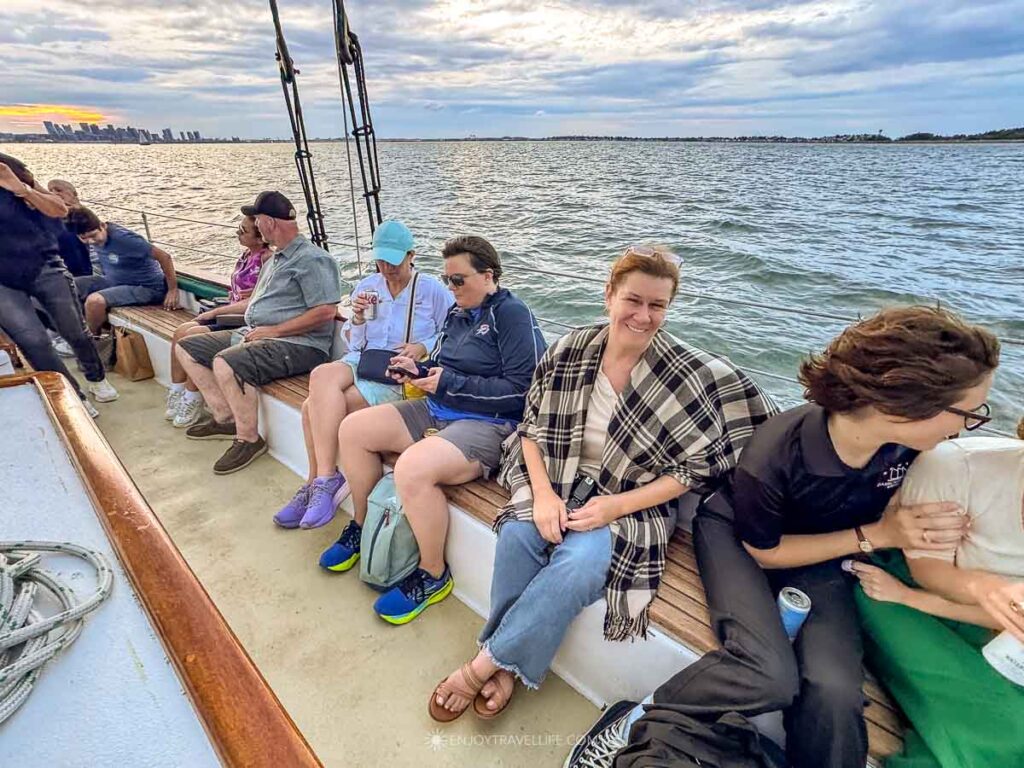
The good news is, you don’t have to worry about choosing the “right” side to sit on. The Captain regularly turned the schooner so guests on both sides had good views of the skyline, harbor islands, and changing light.
You aren’t confined to your seat, either, and are welcome to walk around during the sail for a better view or photos. I moved often to take photographs and it paid off.
Before departure, the crew gave a brief safety orientation, including the location of life jackets and what to expect once we were under sail.
When the Sails Go Up
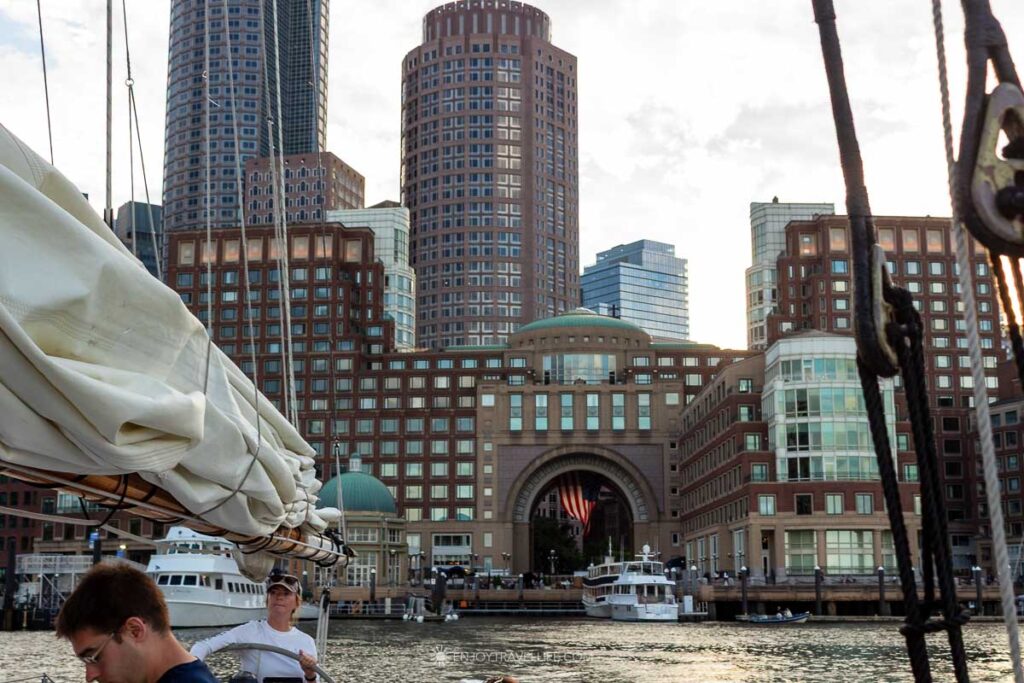
The Adirondack leaves Rowes Wharf under engine. You’ll feel the vibration beneath the deck and may catch the faint smell of the engine as the schooner moves through harbor traffic.
Then the crew gets to work. On my sail, a few strong volunteers were enlisted to help haul the sails up by hand. They earned applause from the rest of us when the first sail went up!
Then the engine stopped.
The boat leaned.
A lot.
The crew had warned us the schooner might heel (lean) under sail. At times, the angle felt dramatic enough that the powerful spray was close to the rail.
According to Captain Therese, we had excellent wind that evening. Once the sails caught it, we moved at a good clip without the engine and we didn’t need to tack back and forth. The enormous booms overhead are positioned above passengers, but I was still perfectly happy that they stayed put.
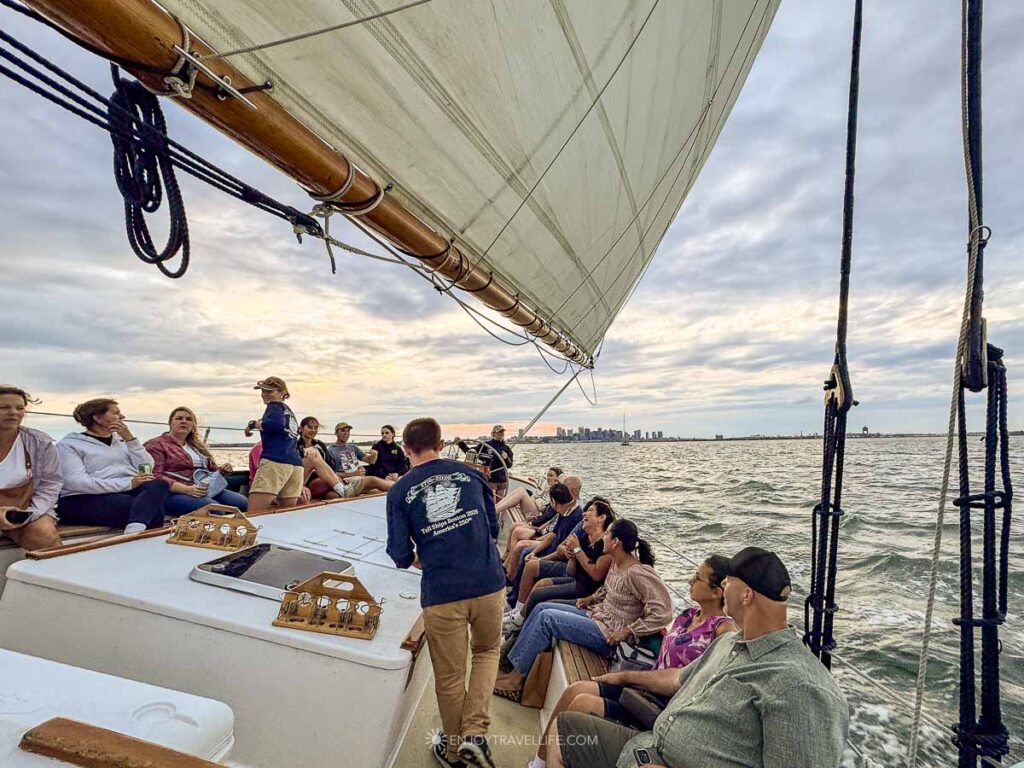
With the engine off, the sounds change. You’ll hear water moving rhythmically along the hull, and the sails fluttering overhead in the wind. Conversation around you buzz as the passengers sip a beverage, take in the experience, and enjoy the ride.
The captain is still steering. The crew is still working. And the schooner moves delightfully fast under sail.
What You’ll See on a Boston Harbor Sunset Sail
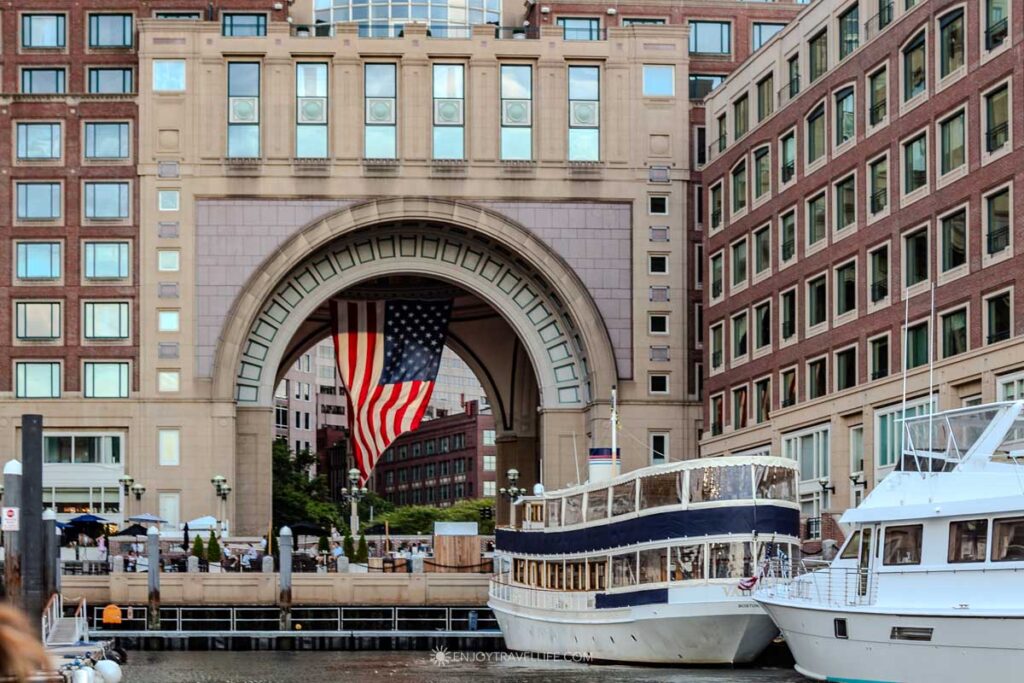
You’ll depart with a view of the arch at Rowes Wharf, which most visitors only see from the land side. Within minutes, the Boston Fish Pier and Seaport come into view, with working waterfront structures a short distance from the newer glass towers. It’s a striking architectural contrast.
Then the harbor opens up.
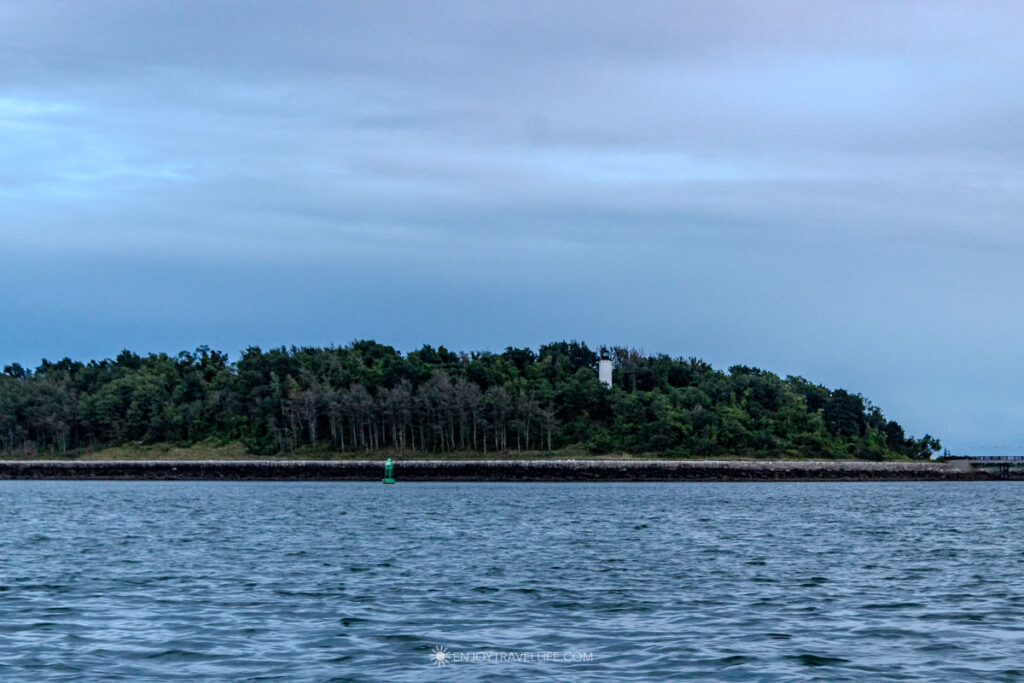
Castle Island and Fort Independence anchor the South Boston shore. Farther out, the Boston Harbor Islands form a low green chain against the horizon. You’ll see the egg-shaped anaerobic digester tanks at Deer Island and Long Island Head Light tucked within the trees. On my sail, we continued toward Georges Island before eventually turning back toward Boston to catch the sunset view.
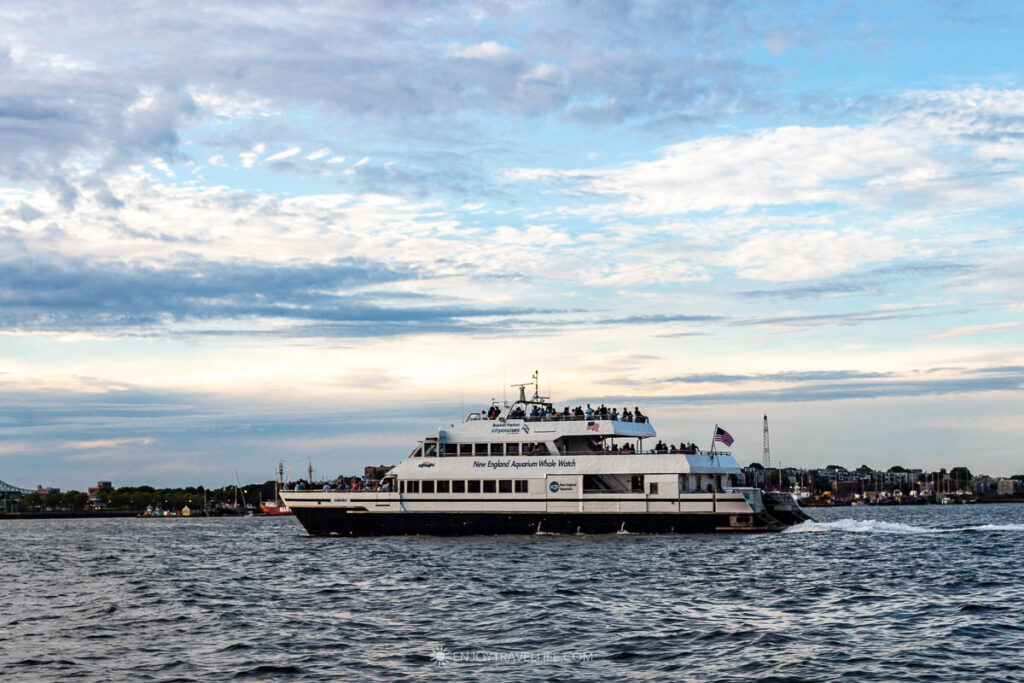
The harbor itself stays busy. Ferries, private sailboats, yachts, tour boats, and working vessels share the water, and some of them move fast. Even the Aquarium’s whale watch boat threw a wake.
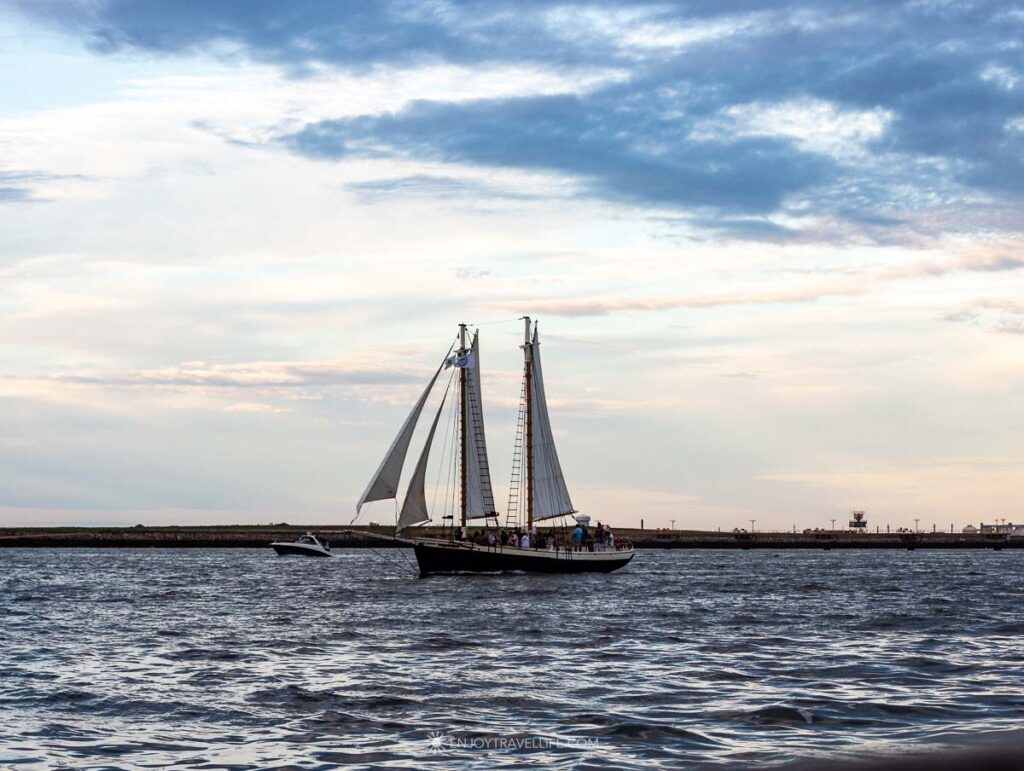
One vessel sent what I thought was an enormous wake toward us that had me instinctively bracing for a jolt. Captain Therese adjusted our course as they approached, and the schooner rode through them smoothly.
Watching her work is half the show.
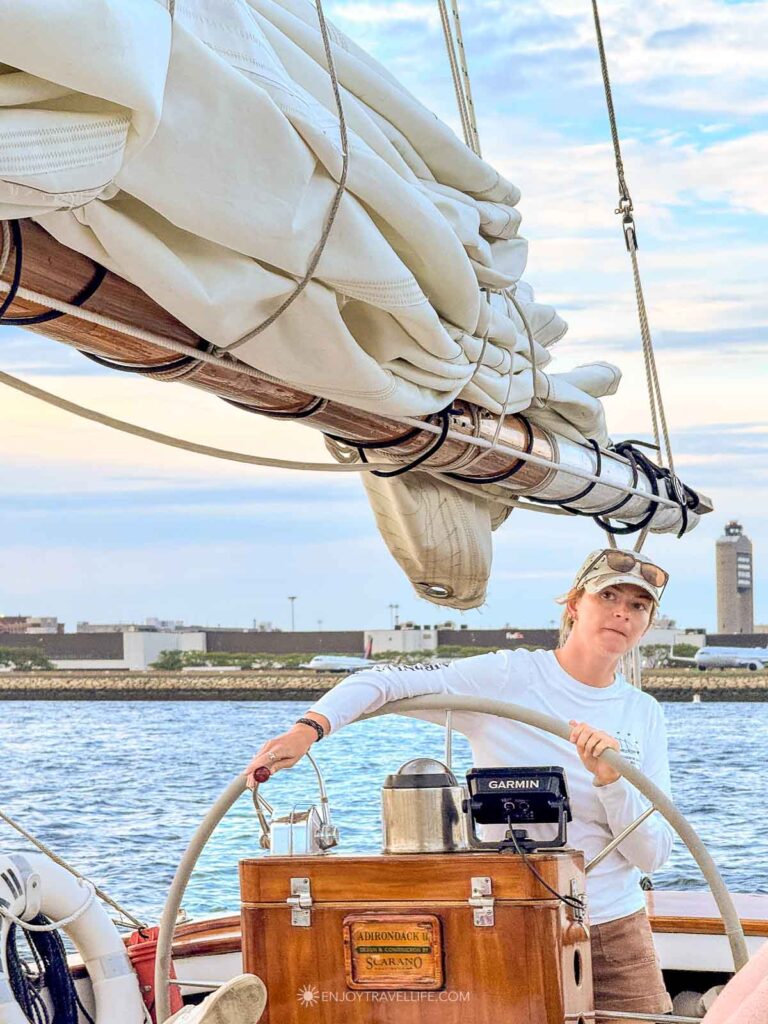
I was initially surprised (and pleased!) to see a woman at the helm. That surprise quickly turned into admiration for how confidently she handled the schooner.
At times, she stepped onto a raised section of the deck so she could see up and over the guests across the length of the vessel while navigating. She also kept an eye on the passengers’ view, turning the schooner at different points so both sides could take in the city and islands.
I immediately knew we were in skilled hands just a few minutes into the sail.
And Then There Are the Planes
Logan Airport is directly across the harbor, so air traffic becomes part of the scenery. The control tower is an easy landmark from the water.
Planes pass low enough overhead that you can spot the carrier name as they fly over, aircraft engines roaring.
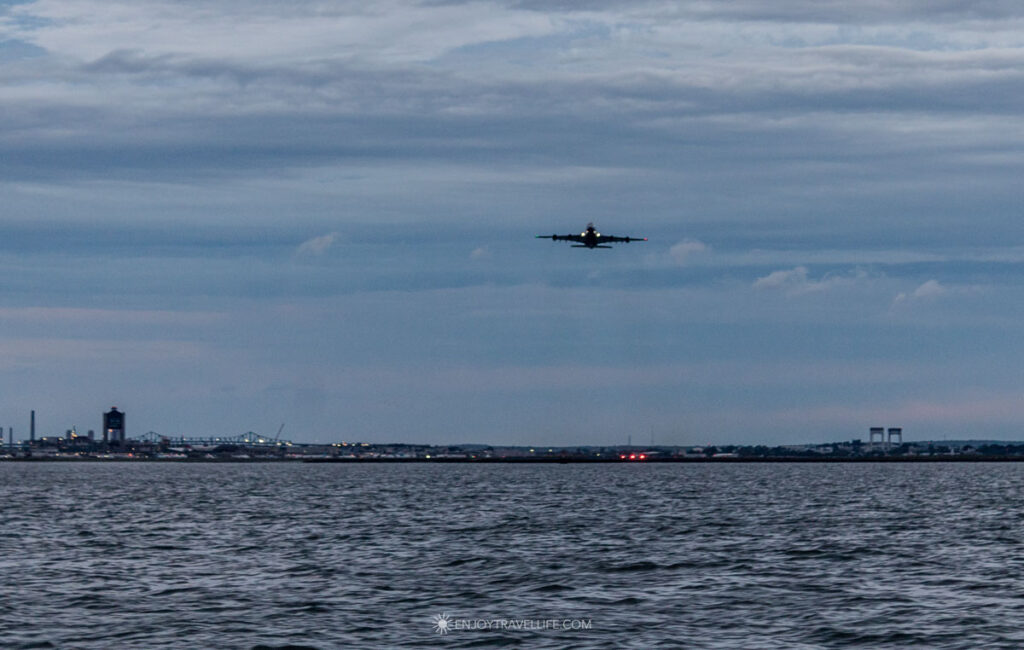
As a travel-lover, I found them to be a highlight of the sail, as I wondered what destination they were headed for.
From the schooner, the planes looked massive. As night fell, they became silhouettes overhead, marked by twinkling lights heading toward or away from Boston.
Don’t Give Up on a Cloudy Sunset
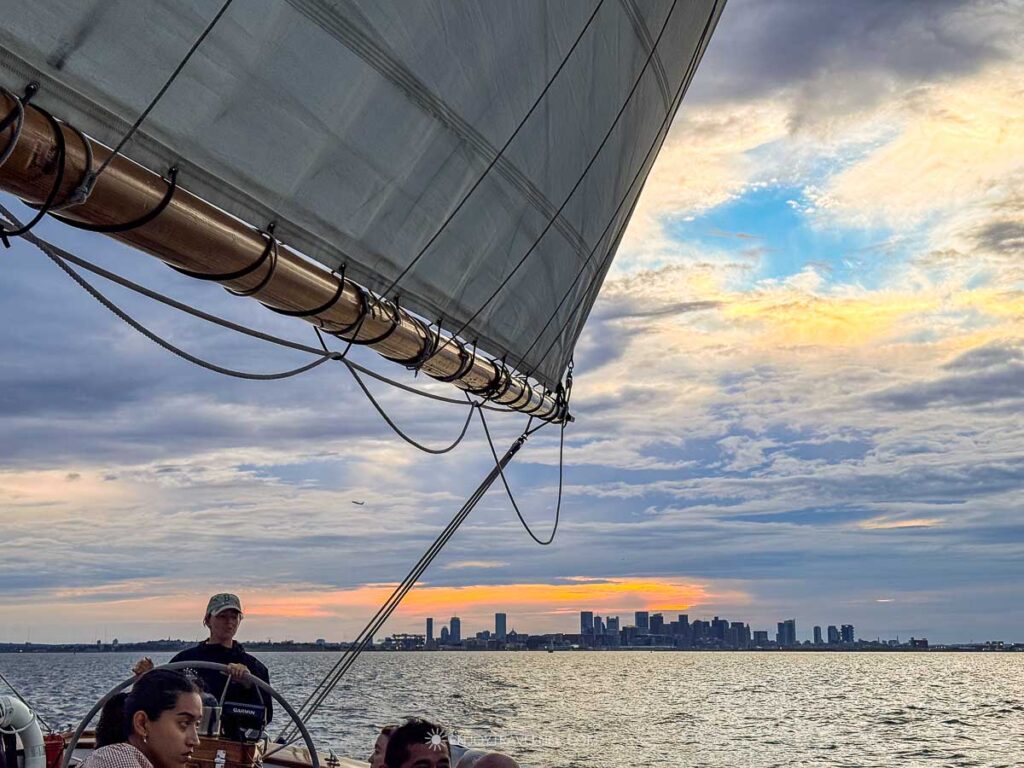
Let me be honest with you: I almost canceled this sail.
The sky was completely overcast when I woke up. My weather app showed clouds throughout the day. By about 10AM, small breaks in the clouds offered some hope.
And let’s face it, this is New England. The weather can turn on a dime.
We never got the clear blue sky you might hope for on a sunset sail. But in hindsight, the clouds and changing winds were an added bonus.
For one reason, the winds were excellent for sailing.
As we moved farther out and picked up speed, the breeze strengthened. I could feel the damp salt air on my skin, and about a half hour in, I was glad I’d brought a wrap.
Then the wind eased as our direction changed. The clouds over Boston began catching the sunset. Oranges and yellows spread behind the city like smears of sherbet across the skyline.
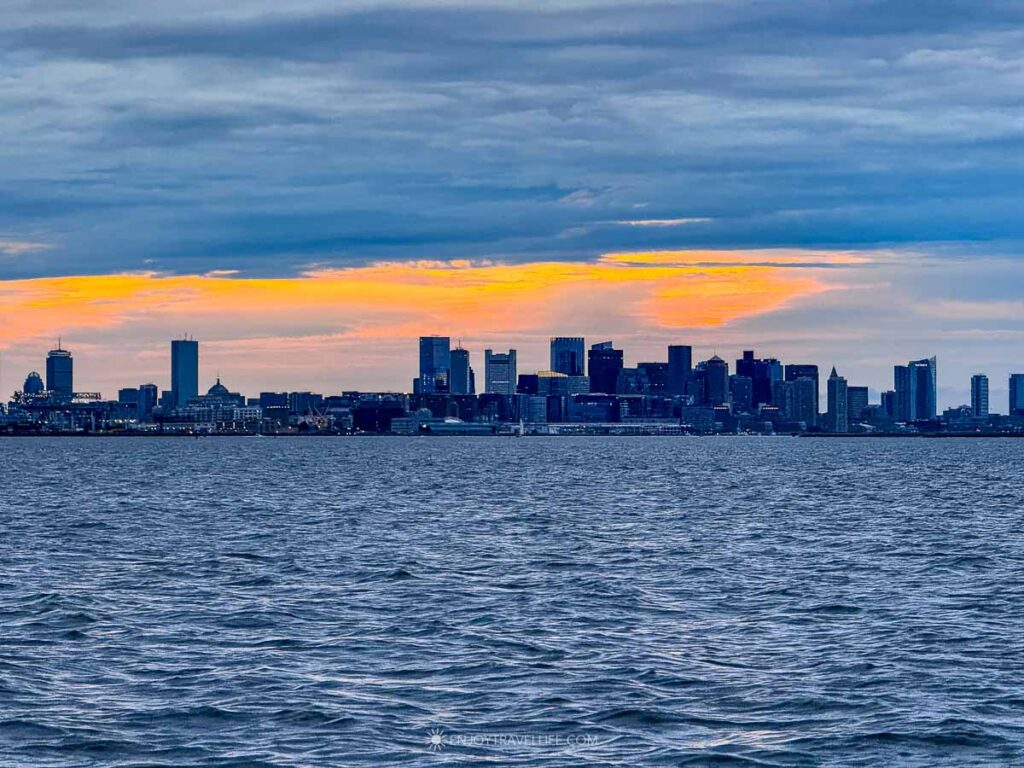
The clouds I’d spent the morning worrying about had given us good sailing conditions and, in the end, beautiful color over Boston.
Don’t automatically give up on a sunset sail because the forecast calls for clouds. Clouds can create beautiful sunset color, and an overcast evening can still deliver excellent sailing conditions. Sails run in light rain and moderate weather, and the captain may cancel when conditions turn severe or unsafe.
A Sail Is Not a Harbor Cruise
You might book a harbor experience without thinking much about the difference between a sail and a cruise. They’re not the same experience.
The Adirondack sail isn’t narrated. The experience is the schooner itself, including the sails, the wind, the water, and the harbor moving around you.
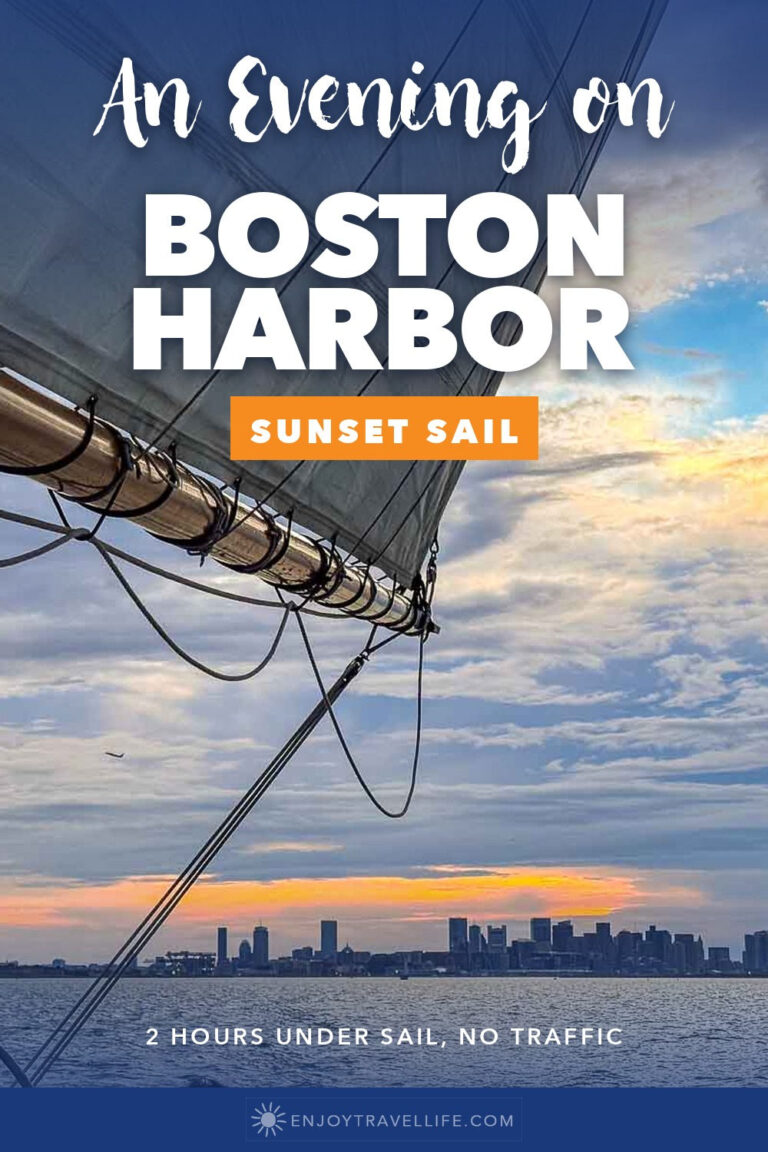
Save this article to Pinterest for later.

If your goal is a narrated sightseeing experience, choose a harbor tour designed around history and landmarks instead.
But if you’d rather watch the sails go up, feel the schooner respond to the wind, and experience the harbor without continuous commentary, choose the sail.
| What you want | A harbor sail | A narrated cruise |
|---|---|---|
| History and context | Not the focus | Narration and sightseeing |
| Experience | Wind, sails, water and views | More structured sightseeing |
| Best for | Couples, photographers, experiential travelers | Travelers prioritizing history and landmarks |
| What you remember | The sailing and the views | What you saw and learned |
Who Should Sail, and Who Should Skip It?
This Boston Harbor sail is ideal for couples and empty nesters who’ve done the museum-and-monument circuit and want an evening that doesn’t require more walking. It’s equally appealing for locals who want to see a familiar city from a completely different perspective.
In fact, it works for anyone who enjoys being on the water without wanting a party cruise, although the libations do flow on demand.
Finally, it’s perfect if you love great photo opportunities. I went solo with my camera and made some new friends, local and from away.
Our sail included couples, families, and groups of friends. There was plenty of conversation and laughter, but the atmosphere remained relaxed.
Mobility deserves consideration, too. This is a working sailboat, the deck may heel substantially under sail. Getting below deck to use the restroom requires steep, ladder-like steps. If you have mobility limitations, contact Classic Harbor Line before booking to discuss your needs and determine whether the sail is a good fit for you.
Planning Your Boston Harbor Sail
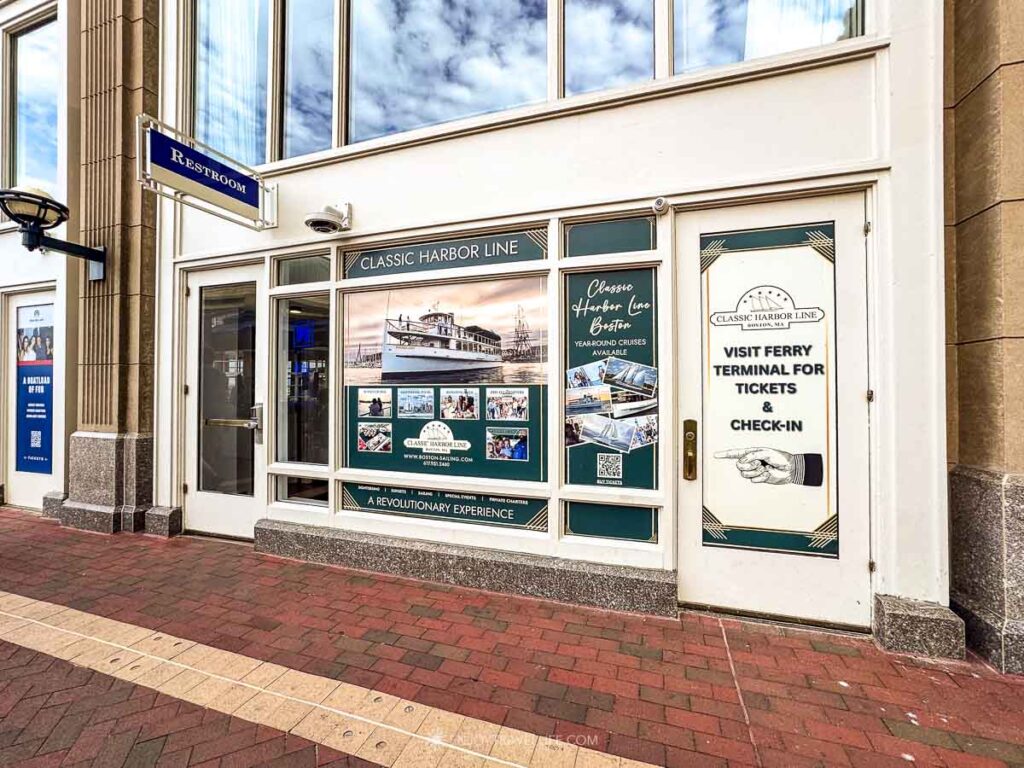
Where: Classic Harbor Line departs from Rowes Wharf behind the Boston Harbor Hotel. You’ll check in inside the ferry terminal at 60 Rowes Wharf. Trips return to the same dock.
How Long: The sunset sail runs two hours, and the daytime sails are 1.5 hours. Departure times shift through the season to match the sunset, so check the schedule for your date.
When to Arrive: Classic Harbor Line recommends arriving 15 to 30 minutes early. I recommend arriving at least 30 minutes beforehand to enjoy the scenes at Rowes Wharf and check in on time. Check-in requires a physical stop at the ticket counter. Boarding begins shortly before departure. The schooner leaves on time and can’t return for late passengers. Book ahead if you can. Sunset sails sell out, there is no waitlist, and midweek departures hold seats longest. A week out is comfortable, further for a summer weekend.
Check in as early as they’ll let you, then get in the boarding line rather than wandering off. Seating is unassigned, so the queue decides whether you get a rail seat with a clear view or a spot behind someone’s shoulder. The ferry terminal is air conditioned, so the early arrival costs you nothing on a hot evening.
Parking: The Boston Harbor Hotel garage is directly beneath Rowes Wharf, and the evening rate is reasonable for downtown Boston. At the time of my visit, parking after 5:00 pm on weekdays and all day on weekends was $20, reduced to $14 with a Classic Harbor Line validation. If you’re driving, set your GPS to the Rowes Wharf Garage on Atlantic Avenue to self-park.
Ask for parking validation when you check in at the ferry terminal. They had run out on the evening of my sail, so it’s worth being prepared for the possibility that one may not be available.
If you’re taking public transportation, Aquarium Station on the Blue Line and South Station are both within walking distance.
Restrooms: There are two marine heads (bathrooms) below deck, reached by ladder-like steps. They’re marine plumbing, so they operate with a foot-pedal flushes and paper goes in the trash. For a two-hour sail, I’d rather use a restroom before boarding. I used the restroom at Rowes Wharf Sea Grille before the sail. You’ll also find public restrooms in the ferry-terminal check-in area, although they happened to be out of order during my visit.
Drinks and Food
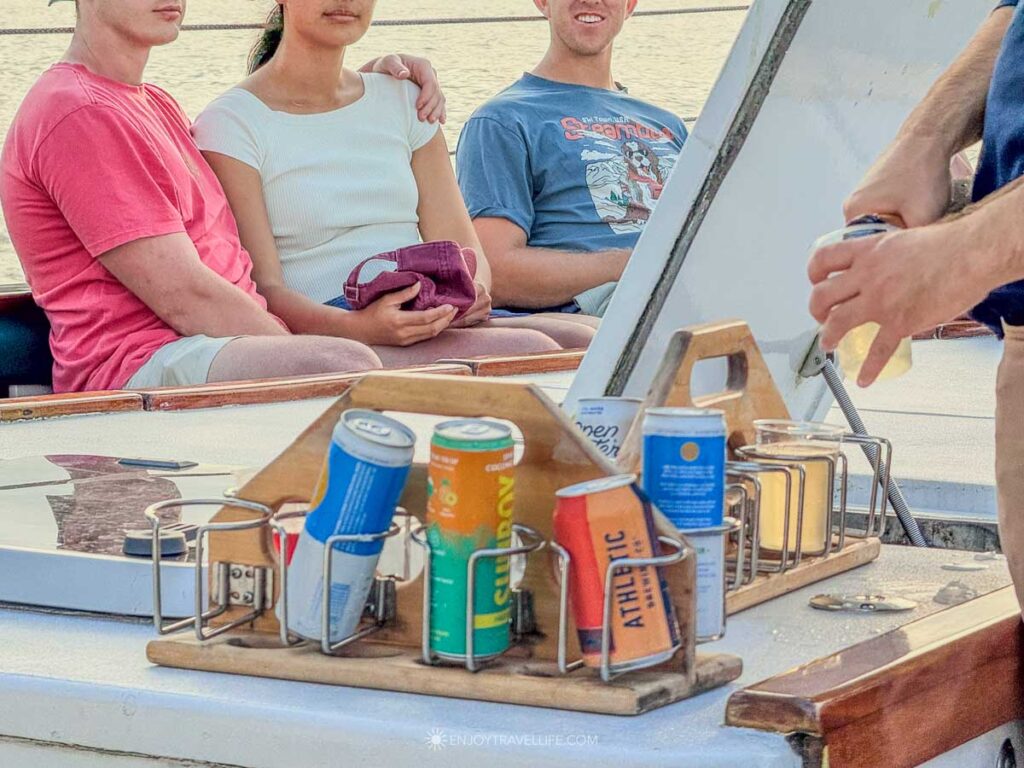
The bar list includes beer, wine, canned cocktails like High Noon, soda, water, and a nonalcoholic IPA. Cards are the only form of payment accepted onboard. You may also bring food aboard, although outside alcohol and coolers aren’t permitted.
The crew was exceptionally attentive, bringing drinks directly to guests while also handling the sails and keeping the schooner running smoothly.
Gratuity isn’t included, and tipping the crew is customary. So, you’ll want to bring some cash. After watching the crew work throughout the evening, I was happy to leave a cash gratuity in the silver tip bucket as we stepped off the boat.
What to Wear
Dress for the boat, not just the temperature in Boston.
It was mid-80s and humid in the city on the afternoon of my sail, and the breeze still turned cool once we picked up speed in the outer harbor. For an evening sail, you’ll want:
- Long pants or jeans, even when the city forecast is warm. The harbor runs cooler than downtown.
- A wrap, hoodie, windbreaker, or other layer you can add once the wind builds.
- Flat, soft-soled shoes.
- Sunglasses and sunscreen for the first half, since the glare comes off the water long before sunset.
- A hat if you like, as long as it won’t take off in the wind, and a hair tie if you have long hair.
- A bottle of water, even though refreshments are sold aboard.
- Your phone camera or DSLR. Just be sure to hold on to it!
Photography Notes
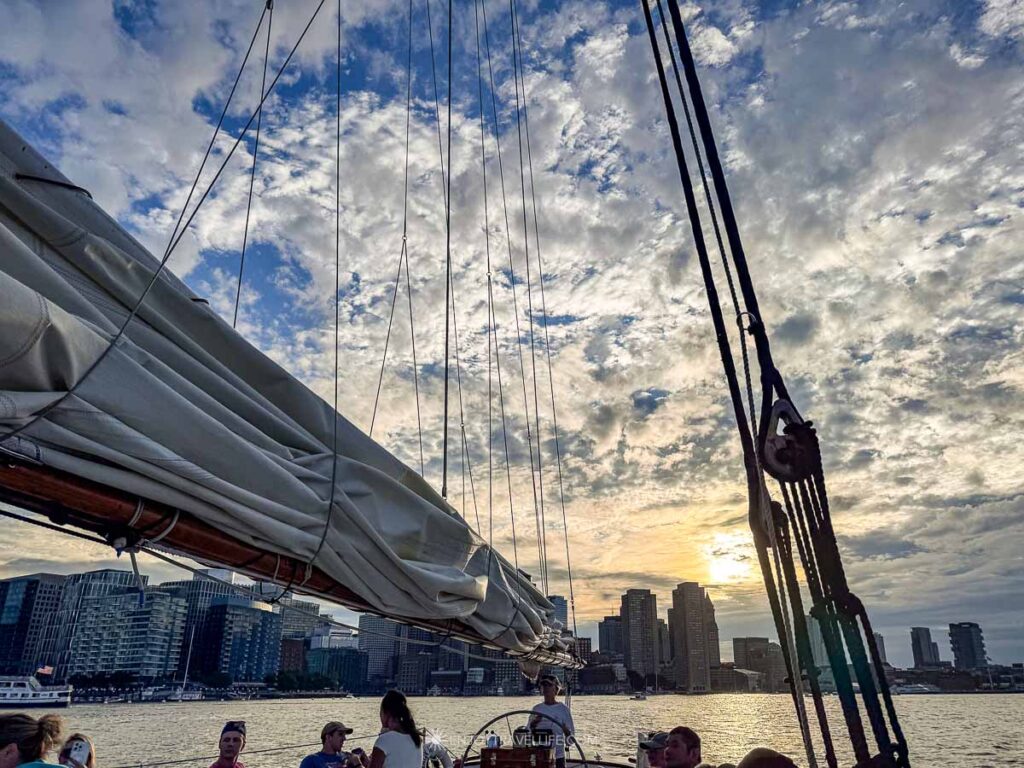
Golden hour does much of the work here, but don’t put your camera away if clouds roll in.
The mast, boom, sails, and rigging make natural foreground frames for the skyline, and moving around the deck gives you very different compositions.
Try photographing the city throughout the sail rather than waiting for sunset. The light changes quickly, and the view on the return is completely different from what you saw heading out.
Phones handle the experience well, too. Just keep a secure grip when you’re moving around the deck. You’ll want to bring a lens cloth, too. Salt spray may be light, but spots show up quickly against a bright sky.
Making an Evening of It Around Rowes Wharf
A sunset sail works even better when you make Rowes Wharf part of the evening. I had dinner at Rowes Wharf Sea Grille before my 7:00 pm departure, just steps from the ferry terminal.
I had a harbor view table and went with an early dinner that was light, fresh, and delicious rather than heavy.
Massachusetts oysters arrived over ice, fresh and briny, with lemon and two tiny eyedroppers, one with hot sauce and the other with vinaigrette. A generously filled crab cake followed with shaved fennel, lemon, and sauce, and panna cotta finished the meal. The light, fresh meal suited an evening on the water perfectly.
My server, Mira, knew I had a sail to catch and kept everything moving without making dinner feel rushed.
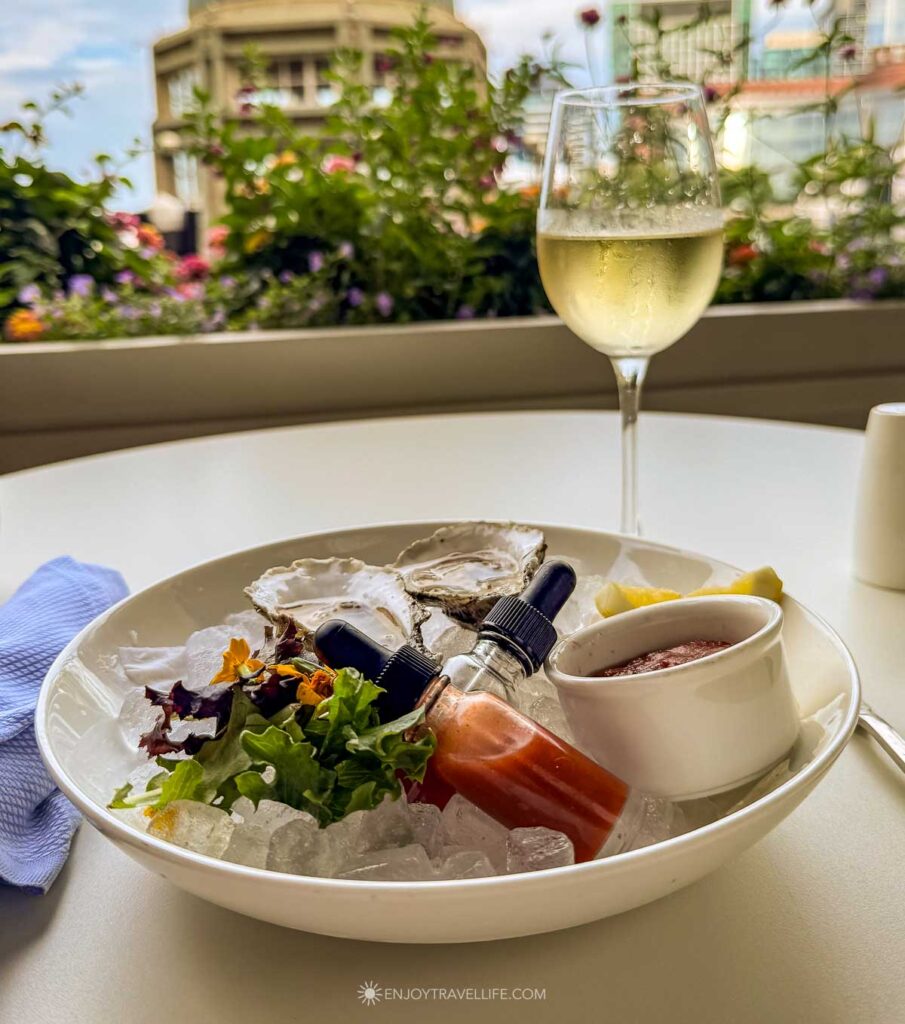
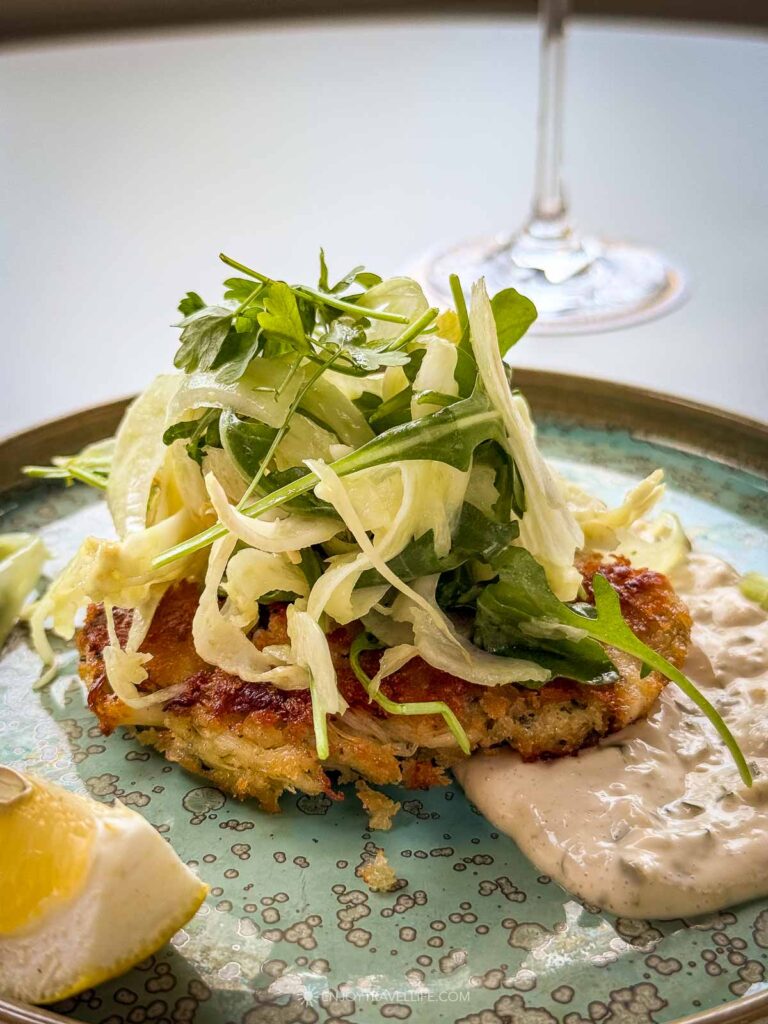
Oysters and a crab cake with shaved fennel start the evening on the terrace at Rowes Wharf Sea Grille, steps from the ferry terminal.
On the waterfront, acoustic music played while people talked and laughed over dinner. Families and couples moved along the waterfront, and a bride and groom appeared among the evening crowd.
If you’re early, take a walk along Rowes Wharf. You’ll likely see catamarans, speedboats, tiki boats, ferries, and schooners coming and going, and you’ll find places to sit and watch the activity.
Trillium is nearby if you’d rather have something more casual, and 1928 Rowes Wharf sets a dressier tone in the Boston Harbor Hotel building. If you have the time, the North End is about a 15-minute walk from the harbor.
And if you’re planning a longer stay in Boston, the Salem ferry leaves from Long Wharf, which is a short walk up the Harborwalk. A Boston to Salem day trip makes an easy addition to your itinerary.
Book the table around the sail, not the sail around the table. Sit down about two hours before departure, since you’ll want to be at the ticket counter thirty minutes ahead. If you’d rather eat after, reserve for twenty minutes past the scheduled return and mention you’re coming off a boat. Sea Grille is steps from check-in, Trillium is the casual fallback, and the North End is about a 15-minute walk.
The waterfront is part of the experience before you ever leave the dock. If you’re building a night around the harbor, the map below shows what’s open nearby and what it costs.
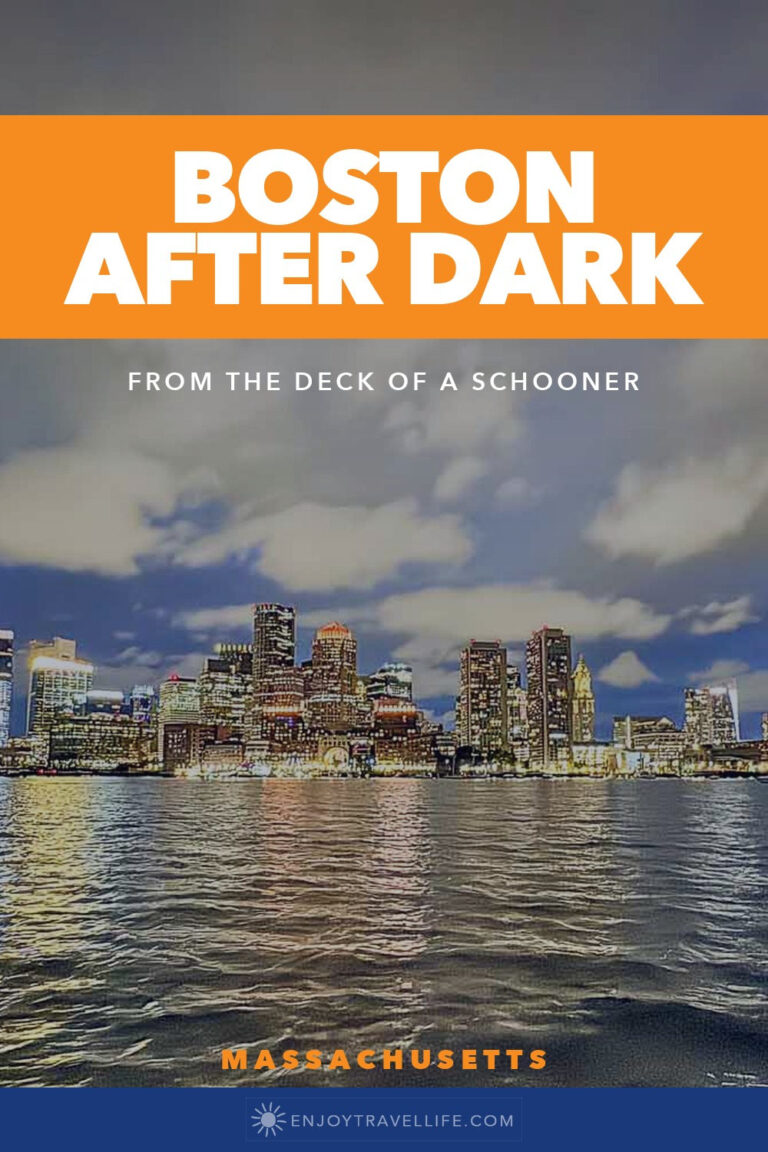
Don’t Miss the Approach to Boston After Dark
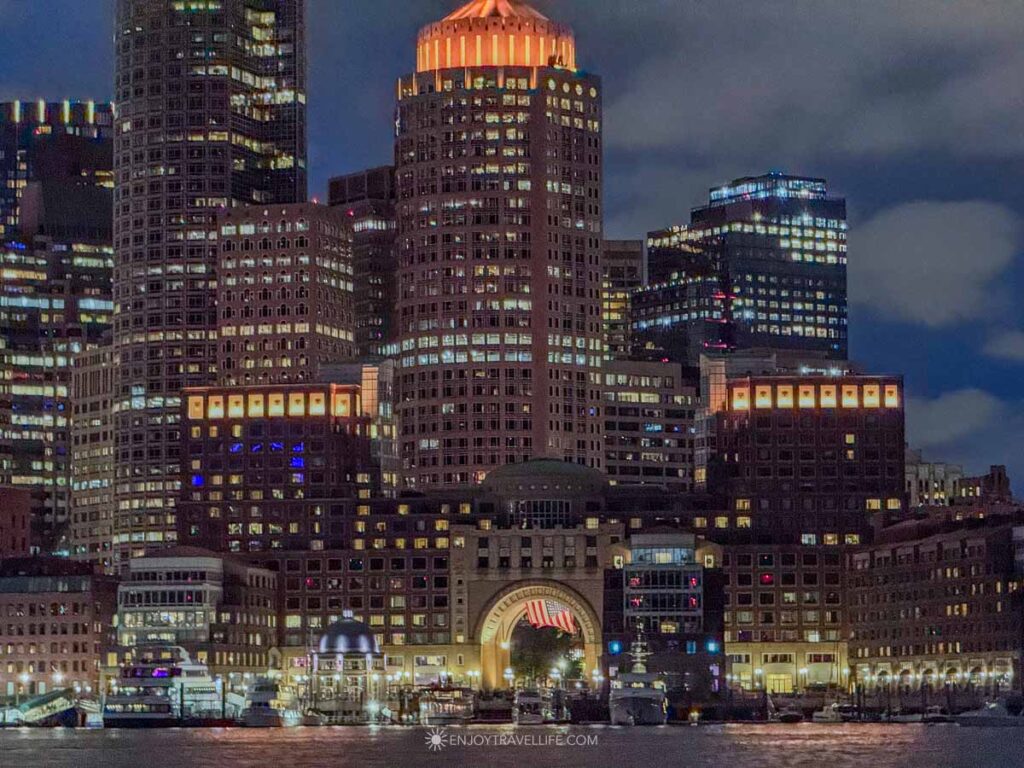
The sunset gets top billing on a sunset sail. For me, the return was even better.
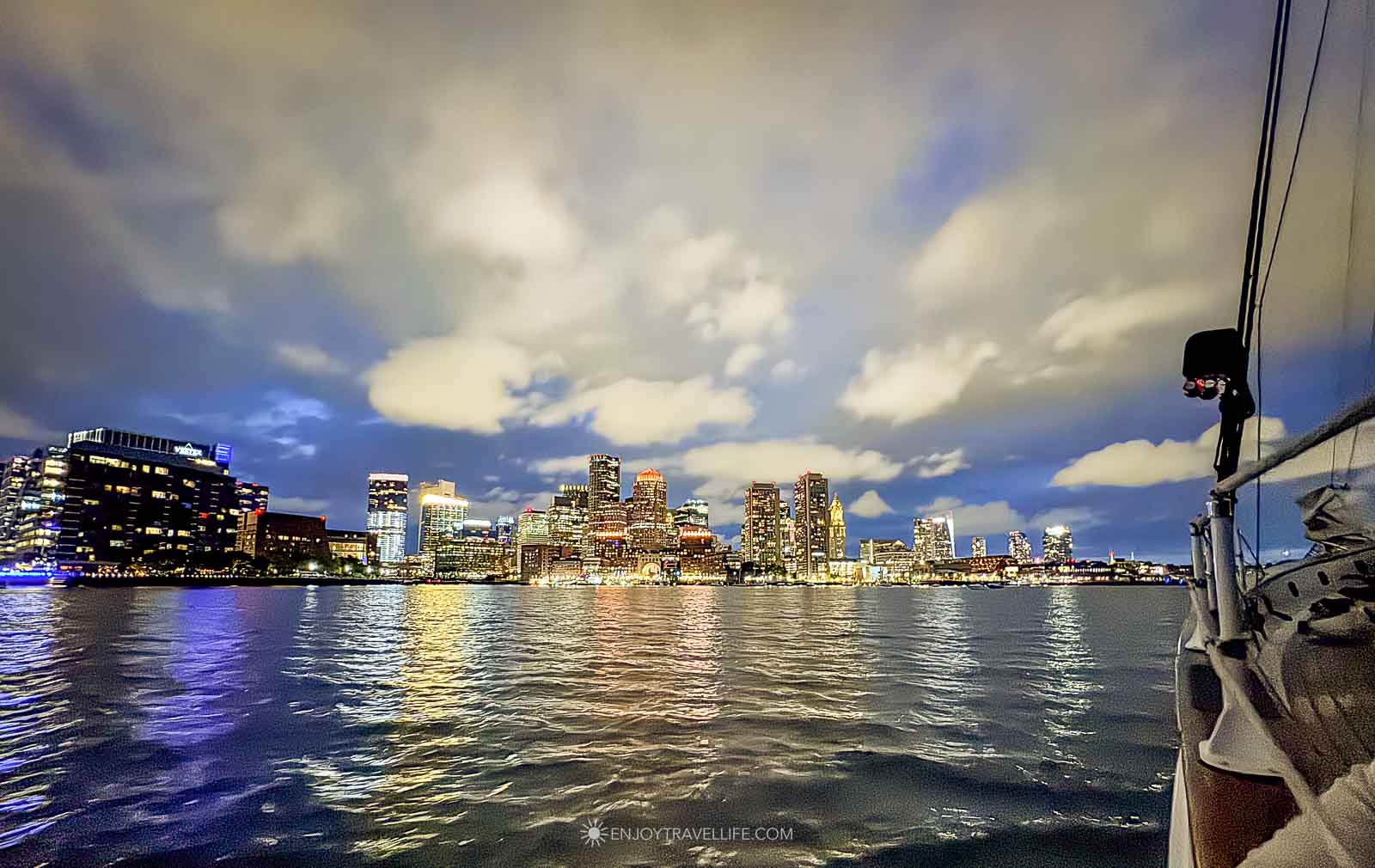
As daylight disappeared, Boston began lighting up. From the water, you’ll see the waterfront unfold from the Seaport to the illuminated arch of the Boston Harbor Hotel and across toward East Boston and Logan Airport.
The lights reflect in the water as the city grows larger ahead of you.
I’ve lived here my whole life, and I don’t know how I’ve overlooked the evening approach to Boston from the harbor. That unexpected view was a bonus on a really lovely excursion on the harbor.
Final Thoughts on a Boston Harbor Sail
Boston gives you more to do than a long weekend can hold, and most of it happens at street level. A Boston Harbor sail gives you a fresh perspective.
The clouds that nearly caused me to cancel gave us excellent sailing winds and eventually caught the sunset in streaks of orange and yellow. Then Boston lit up for the return.
As we stepped off the schooner and started up the ramp at Rowes Wharf, I felt the first few drops of rain. We couldn’t have timed it better.
Classic Harbor Line provided a complimentary Boston Harbor sunset sail. As always, all opinions, experiences, and photos in this article are my own.
FAQs
Is a Boston Harbor sail worth it?
Yes, if you’d trade one evening of sightseeing for two hours on the water. You get the skyline from an angle you can’t walk to, and the city lights up for the return. Skip it if you want narrated history, since the sail isn’t a tour.
What should you wear on a Boston Harbor sunset sail?
Dress warmer than the city forecast. The harbor runs cooler and damper than downtown, and the breeze builds once the boat picks up speed. Jeans, flat soft-soled shoes, and a layer you can add mid-sail are the right call in summer.
What happens if it rains on a Boston Harbor sail?
Light rain doesn’t necessarily cancel a sail. The captain may cancel if conditions become severe or unsafe. Canceled tickets can be rescheduled, converted to credit, or refunded. Cloud cover alone is no reason to bail. It often means better wind and more color at sunset.
Is the Boston Harbor sail narrated?
No. The crew answers questions and points things out, but there’s no running commentary, and that’s the appeal. If you want the history of the harbor, book a narrated tour instead.
Where do you park for a Boston Harbor sail?
The Boston Harbor Hotel garage sits directly beneath Rowes Wharf. Evening and weekend parking runs $20, or $14 with a Classic Harbor Line validation, so ask at the ticket counter before they run out. The Blue Line to Aquarium and South Station are both an easy walk.

Next Steps
For more on planning a Boston trip, read these articles next:
- Old North Church: How to Maximize Your Visit to Boston’s Historic Landmark
- Boston vs NYC: Which World-Famous City Has the Better Boutique Hotels?
- Boston to Salem Day Trip: 13 Thrilling Attractions Beyond Halloween
- Spring in Boston: 19 Beautiful Botanical Gardens and Garden Spaces
- Best Haunted Houses in Boston for Halloween Fun
- 9 Gorgeous New England Road Trips You’ll Want to Take This Year