
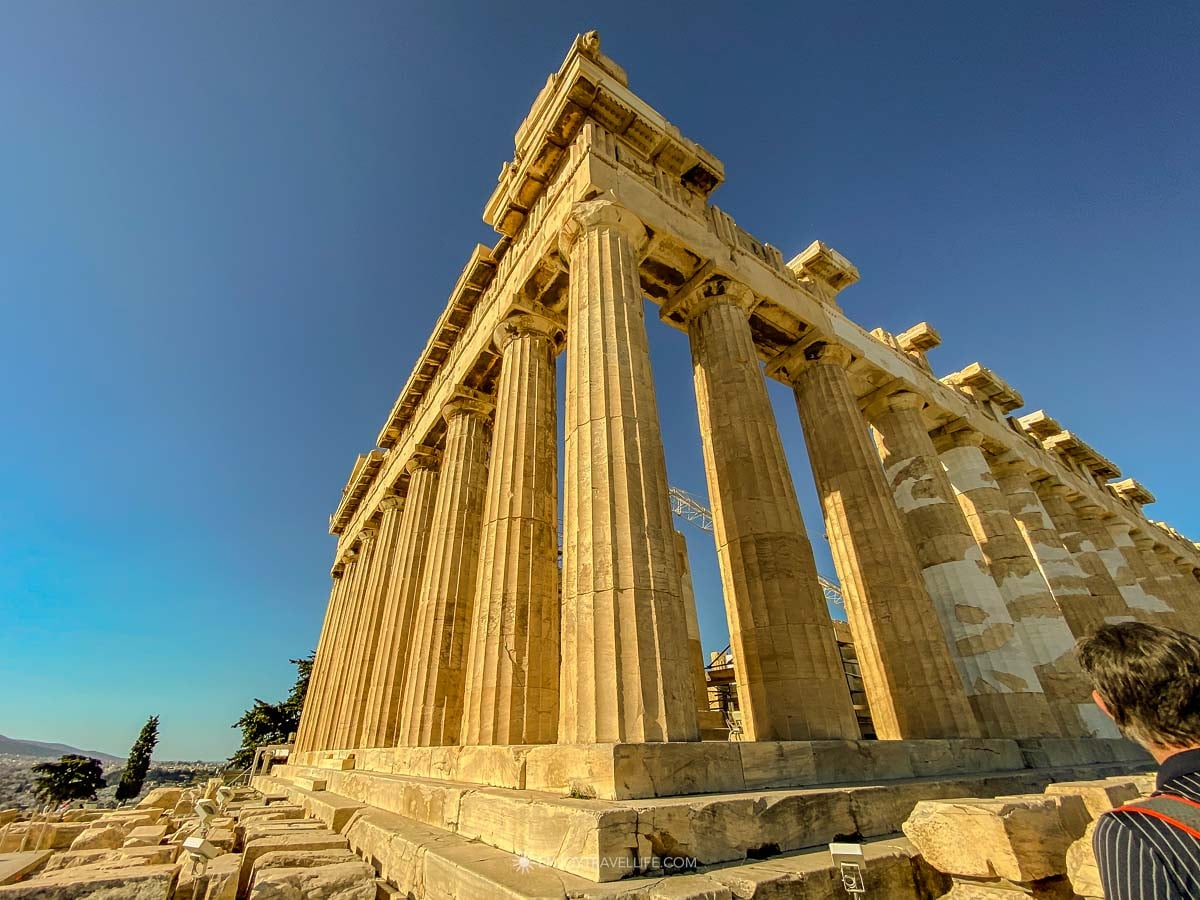

Two days in Athens sounds too short for a city this old, but it’s enough when you plan well. This Athens city guide covers a sunrise Parthenon visit, a food tour that offered a deeper look at how Greeks gather around food, and the walkable neighborhoods that tie the two together.
It covers what I did, what it cost, and what I’d change on a second trip. Keep reading for the 2-day itinerary that makes a short Athens stop count.
IN THIS ARTICLE
Why Two Days in Athens Works
On Day 1, I walked the Acropolis before the crowds arrived, on a press tour that got me through the gates at first entry. On Day 2, I wandered the neighborhoods, found a rooftop with a Parthenon view, and took a food tour that changed how I think about Greek food.
Athens doesn’t need a week, although you could easily fill it. It needs two focused days and a willingness to walk. The historic center is small, and the big sights sit within a short walk of each other.
If you’re passing through on the way to the islands or the mainland, this is the itinerary that makes those two days count.
Athens 2-Day Itinerary at a Glance
| Day | Morning | Afternoon | Evening |
|---|---|---|---|
| Day 1 | Acropolis & Parthenon at first entry (the Walks tour) | New Acropolis Museum, then the Plaka and Monastiraki | Rooftop sunset drink with an Acropolis view |
| Day 2 | Coffee at Syntagma, then walk Psyri, Monastiraki, and Kolonaki | Athens food tour; National Garden and Panathenaic Stadium | Late taverna dinner in the Plaka |
If you’re working out where to base yourself, use the map below to compare places to stay in Athens across the center. I cover my own pick in the Where to Stay section further down.
Day 1: The Pristine Parthenon Tour
I joined the Pristine Parthenon Tour by Walks, and it delivered. The idea is simple: get to the top of the Acropolis for the first viewing of the day, before the crowds.
You get skip-the-line tickets, an expert guide, and a pace that lets you actually look at what you’re seeing.
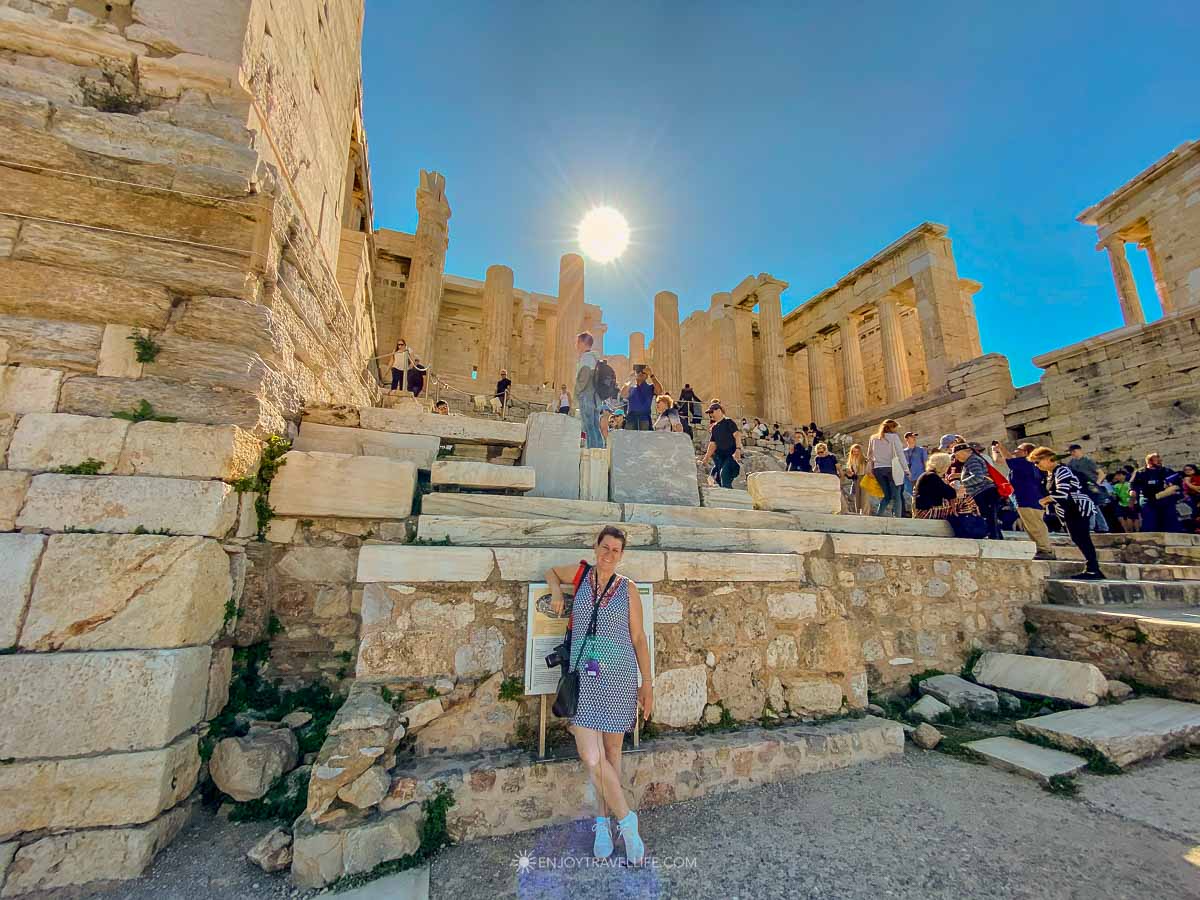
We met at 7:30 AM near the Acropolis, about a 10-minute walk from most Plaka hotels. The tour ran roughly three hours.
By 10:30 AM, I’d seen more than some see in a day.
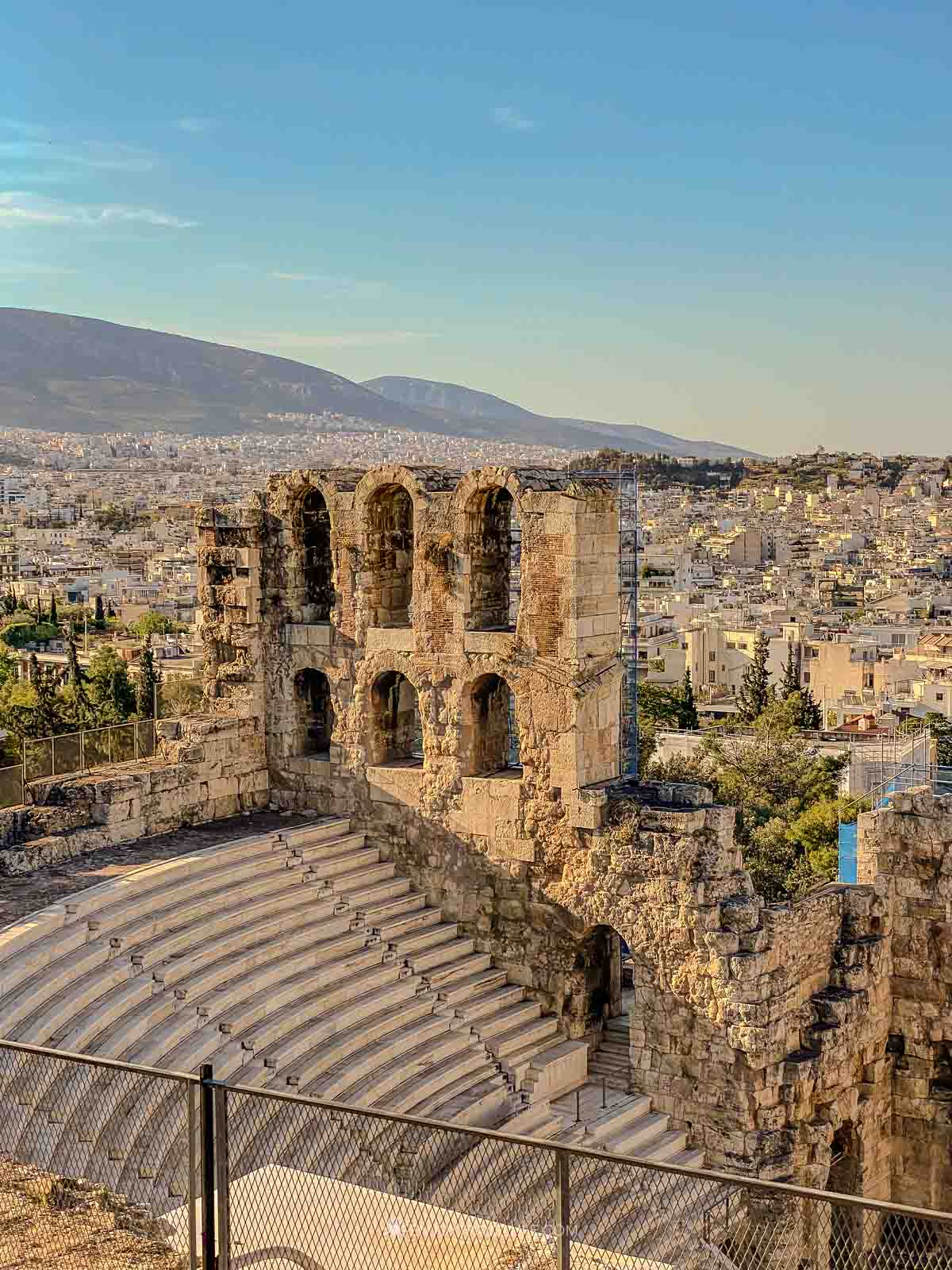
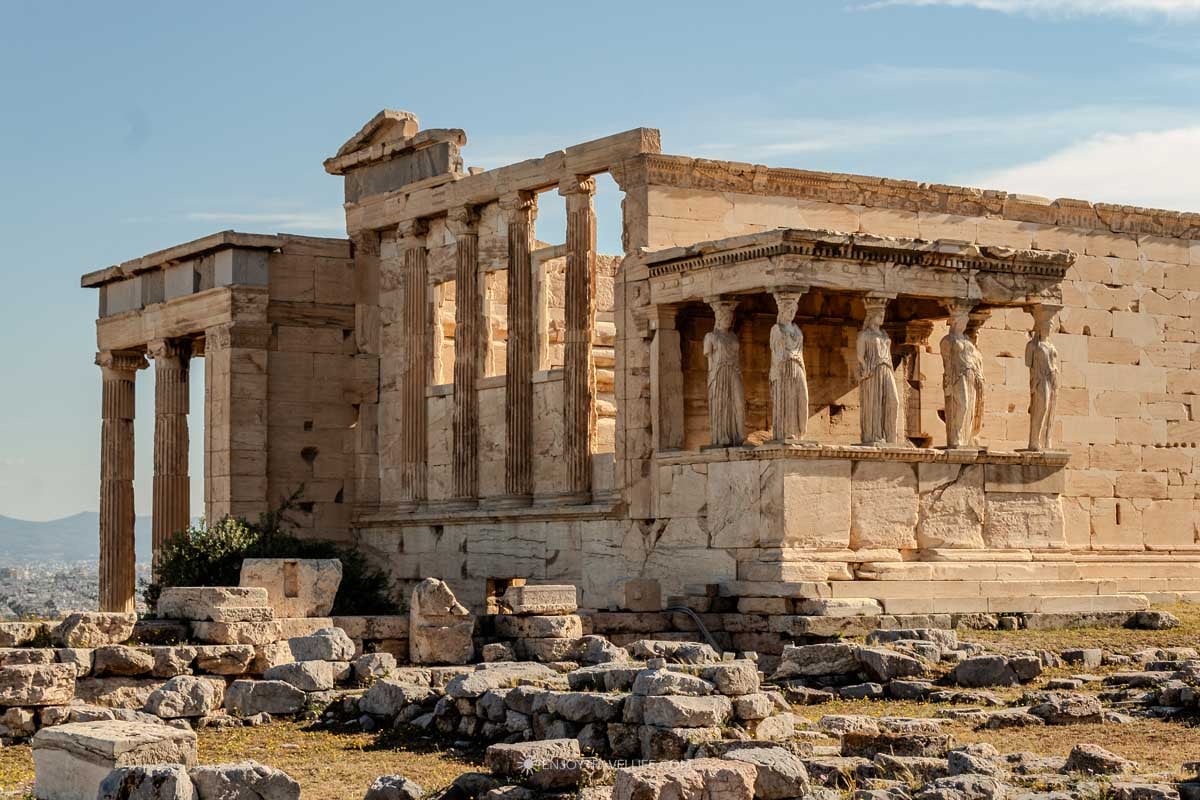
The tour included the Parthenon, the Erechtheion, the Monumental Gateway, the Temple of Athena Nike, the Theater of Dionysus, and the Theater of Herodes Atticus. Better yet, it was all in morning light before the mid-day heat and with manageable crowds.
What Made the Tour Worth It
- First entry timing. By 10 AM the Acropolis was packed, and we were already on our way down. The gap between 7:30 AM and 10 AM up there is the difference between experiencing the Parthenon and being herded past it.
- The guide. Three hours of context turned columns and rubble into stories. I learned more about Athenian democracy on that walk than I retained from any textbook.
- Skip-the-line access. In peak season, the regular ticket line can take 30 to 45 minutes. We walked straight in.
If the Walks Pristine Parthenon tour isn’t available, book the earliest possible timed entry on the official Acropolis site. Take the first slot of the day, any day of the week, and arrive 15 minutes early. The Acropolis at 8 AM and the Acropolis at noon aren’t the same place.
The New Acropolis Museum
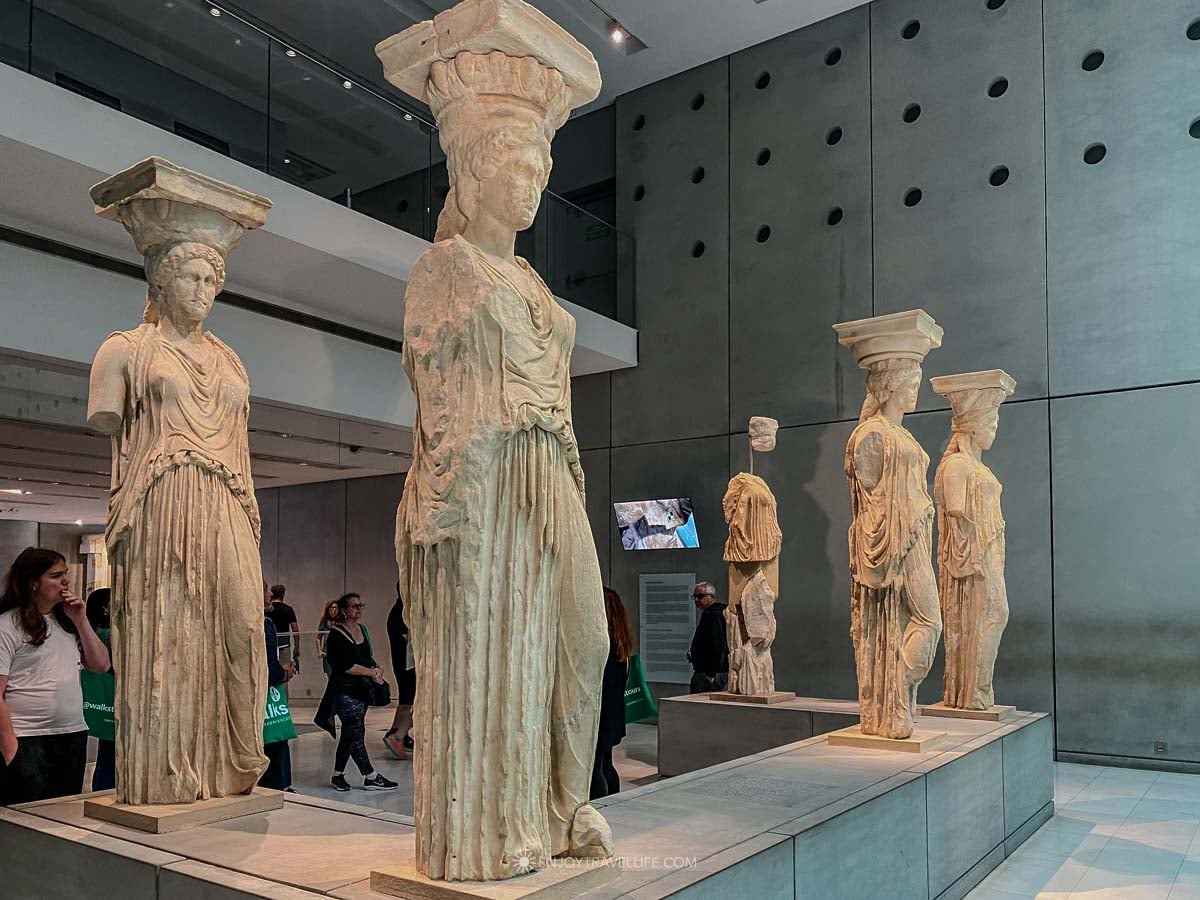
The tour included a guided visit to the New Acropolis Museum after the Acropolis itself.
The museum sits at the base of the hill, and the top floor lines up exactly with the Parthenon above. You can see the temple through the glass walls while standing among the friezes and sculptures that once decorated it.
Three things are worth your time inside:
- The Parthenon Marbles gallery on the top floor
- The Caryatids from the Erechtheion (the originals, not the copies you saw on the hill)
- The underground excavations visible through the glass floor in the lobby.
The museum is modern and well organized, and it doesn’t need more than 60 to 90 minutes. But plan longer if you want to browse the gift shop and bring home a souvenir.
If you’re going on your own, the Acropolis costs €30 ($33) with timed entry, and the Acropolis Museum is a separate €20 ($22). No single ticket covers both, since the hill and the museum are run by different organizations. The €30 ($33) Acropolis combo bundles other ancient sites for five days (the Roman Agora, Hadrian’s Library, and more), but not the museum. You can check hours and tickets on the official Acropolis Museum site before you go.
My Acropolis tickets and museum entry were both included with the Pristine Parthenon Tour by Walks. For a bit more than the roughly €50 ($55) you’d spend on the two tickets alone, the tour adds first entry before the crowds and an expert guide who makes the ruins make sense. If you add one thing to your Athens budget, make it this tour.
Afternoon in the Plaka and Monastiraki
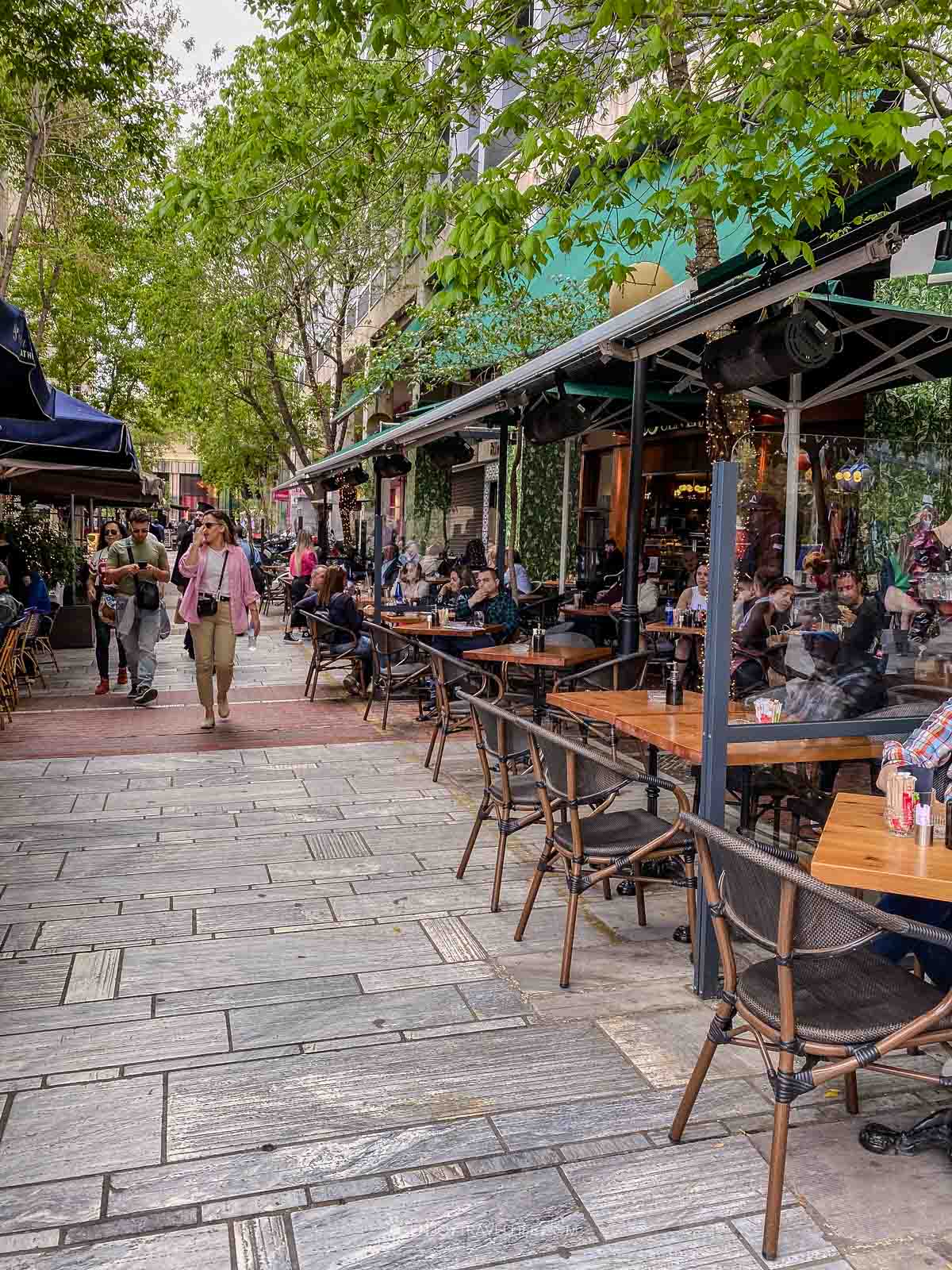
After the Acropolis and the museum, the rest of Day 1 was free, so I walked.
Athens is a walking city if you stay in the historic center, and the Plaka, at the base of the Acropolis, is where most visitors end up. You’ll find narrow streets, neoclassical buildings, souvenir shops (some tacky, some not), and a taverna on every corner.
From the Plaka, I wandered into Monastiraki. The flea market area mixes antique shops, street vendors, and cafes with rooftop terraces.
If you want the photo of the Acropolis lit up at sunset with a drink in your hand, this is where you find it. The rooftop bars around Monastiraki Square all compete for the best view.
What to See on the Walk
- Hadrian’s Library. You can glimpse it from the street, but the small entry fee (about €6/$7 in summer, €3/$3 in winter, or covered by the €30/$33 multi-site combo) is worth it to stand right among the columns. Unlike Rome’s Colosseum, where you’re kept back from the stone (understandably), here you’re up close.
- The Roman Agora and Tower of the Winds. Worth a stop if you have a combination ticket.
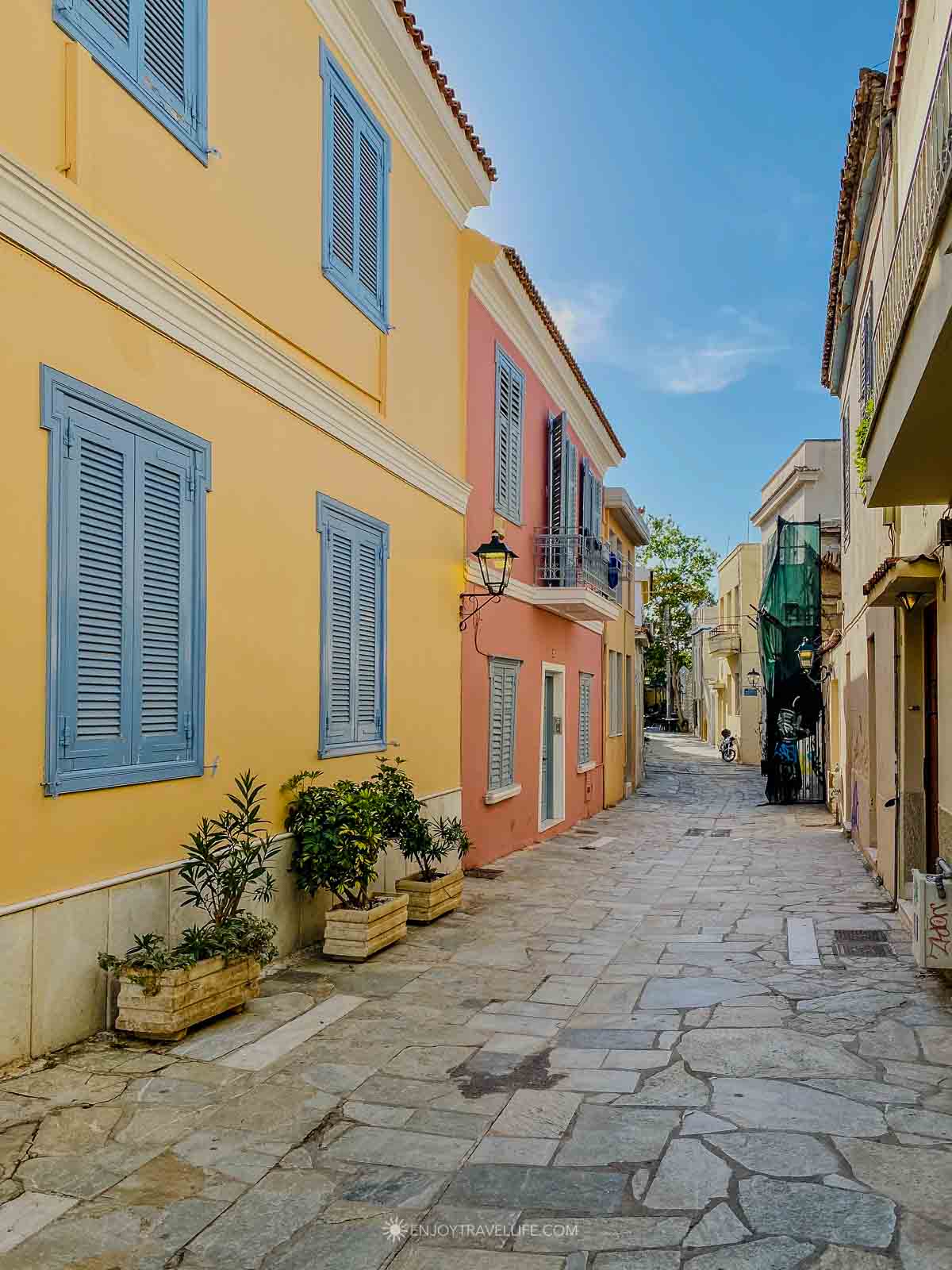
- Anafiotika. My Greek friend told me there was one place in Athens worth working into my itinerary, and she was right. Tucked into the hillside beneath the Acropolis, Anafiotika was built by workers from the Cycladic island of Anafi in the 1800s. Whitewashed homes, stone paths, blue shutters, flower pots, and cats make it feel more like a Greek island village than part of a capital city. It’s small, easy to explore, and one of the places I remember most clearly from Athens.
Day 2: Markets, Neighborhoods, and Rooftop Views
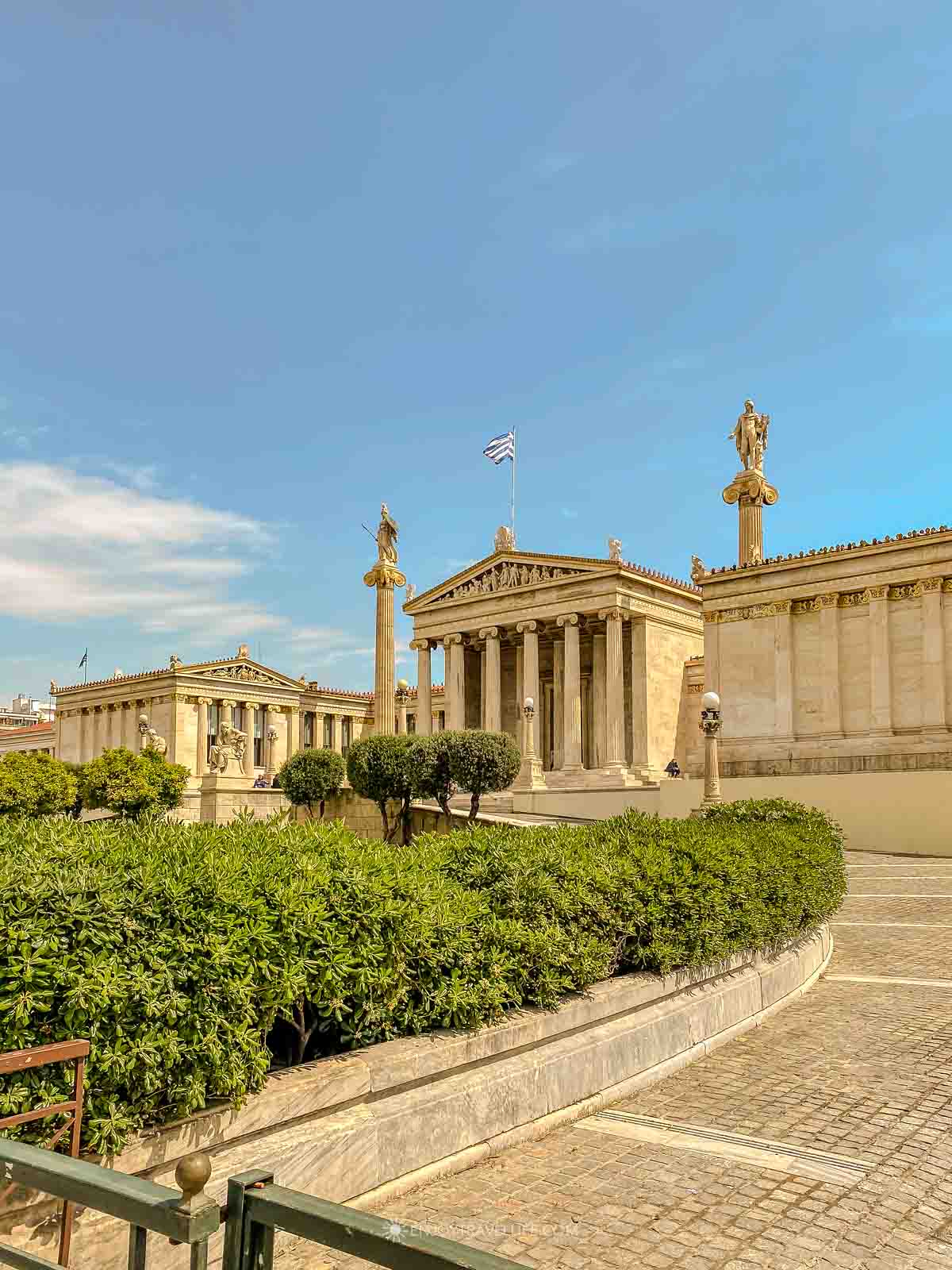
Day 2 had no agenda, and that was the point. After the structured Parthenon tour, I wanted a day of wandering. I started with coffee near Syntagma Square and set out on foot.
One thing that surprised me about Athens was how quickly the neighborhoods changed.
- Syntagma Square is the city’s transportation and civic hub.
- Plaka sits beneath the Acropolis and is full of tavernas, shops, and winding lanes.
- Monastiraki is busier, with rooftop bars, markets, and constant activity.
- A few blocks farther, Psyri feels more local, with cafés, apartments, street art, and nightlife.
You can walk between all four in less than 30 minutes, but each has its own personality.
I spent most of the morning exploring on foot. You can cross from Kolonaki, which is upscale and good for coffee, to Psyri, with its street art, younger crowd, and busy bar scene, in about 30 minutes.
Athens is smaller and more walkable than many first-time visitors expect.
I returned to Athens after my Delphi and Meteora 2-Day Guided Tour and spent a few nights in a small apartment in Psyri.
Before sunrise, I could hear vendors setting up the weekend flea market below my balcony. (Greeks aren’t known for doing things quietly.) By the time I was making coffee, the neighborhood was already awake.
At night, I could see the Acropolis glowing on the hill in the distance. Staying in Psyri gave me a glimpse of Athens beyond the major sights and made the city feel more alive.
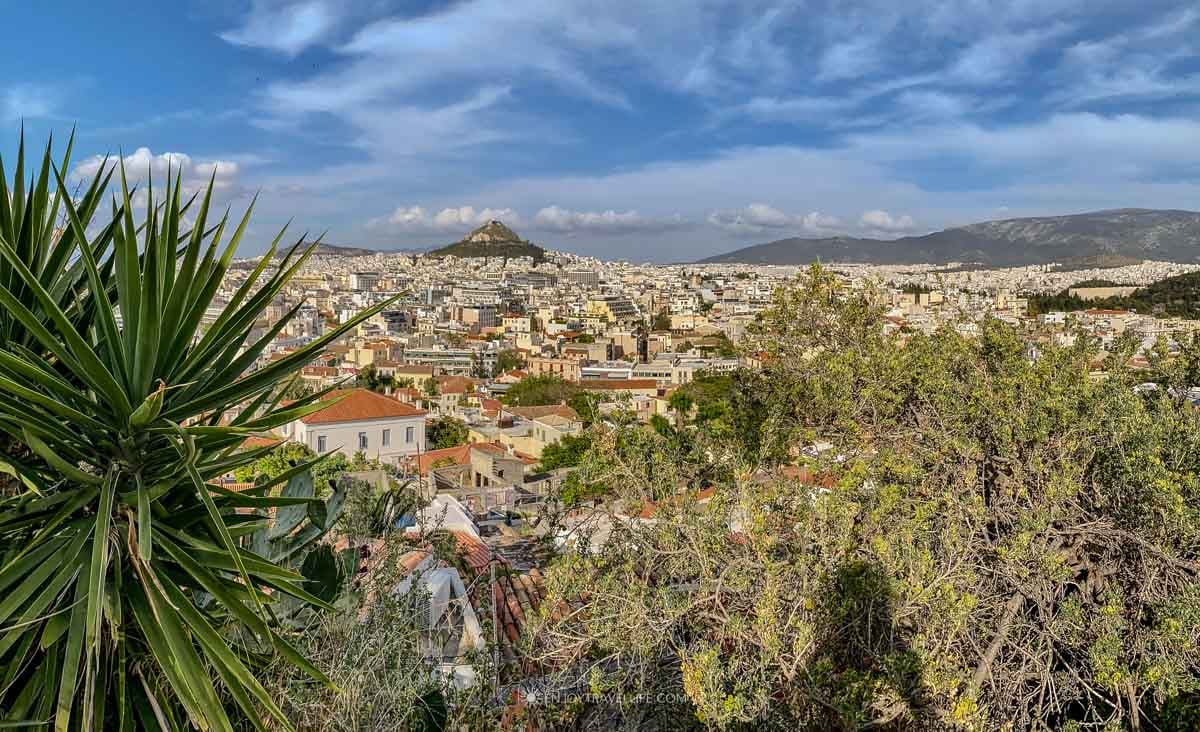
If you have time and energy left, two stops near Syntagma are easy to add. The National Garden is a quiet green break that most tourists skip, and the marble Panathenaic Stadium, home of the first modern Olympics in 1896, sits a short walk beyond it. You can walk onto the stadium track for a few euros.
The Athens Food Tour
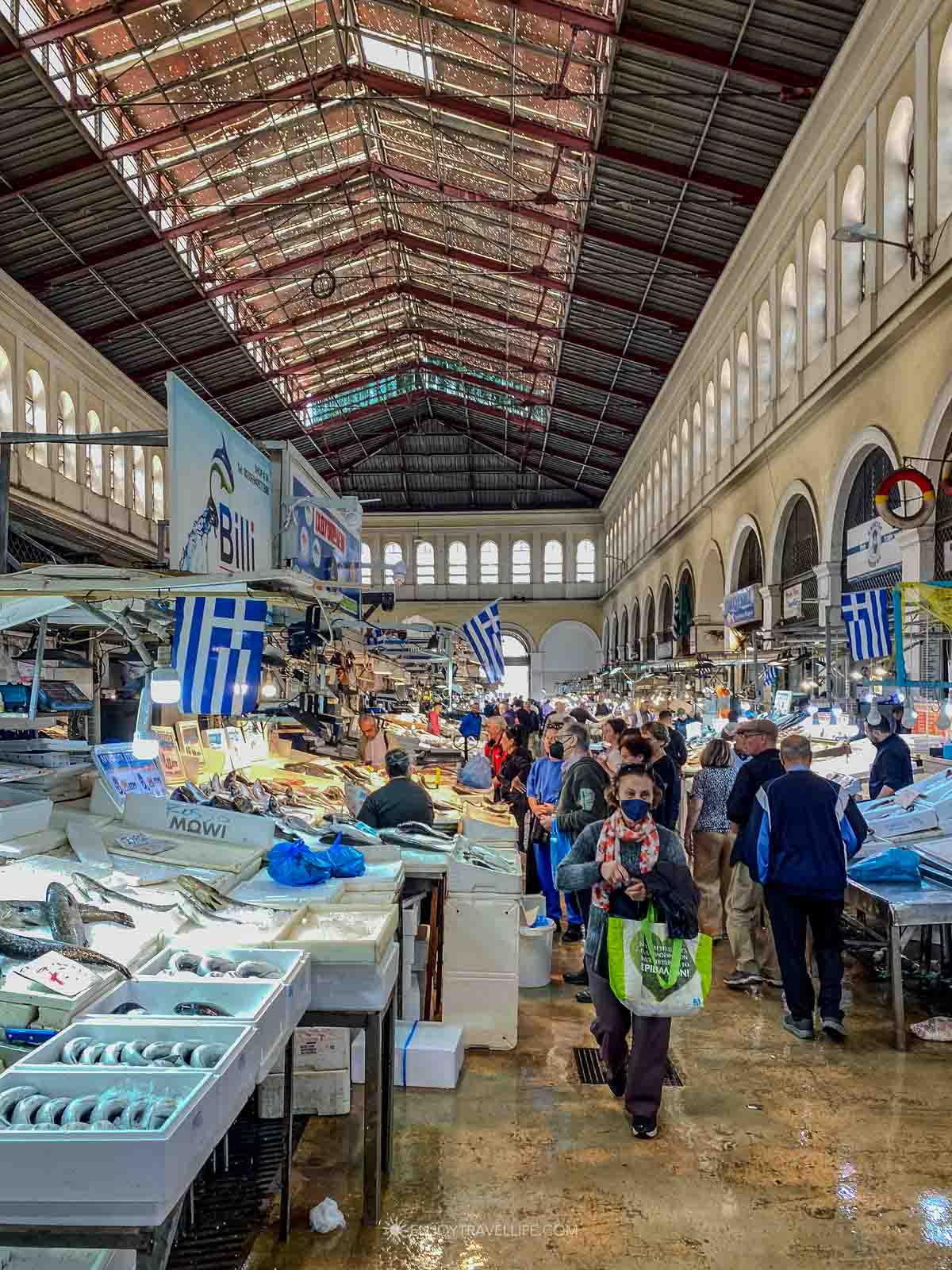
If you do one organized thing in Athens beyond the Acropolis, make it a food tour.
Greek food runs on a different set of rules than what most of us picture as “Greek food.” The pita, the olive oil, and the cheese are all different. And the way Greeks eat, communally and slowly over small plates or meze, is something a tour teaches you in a way a menu never will.
My tour ran about three to four hours through the city center, stopping at bakeries, cheese shops, the Varvakios central market, and small restaurants I’d never have found on my own.
It was the best single investment of my two days.
A half-day Athens food tour like this runs about €65 to €95 ($70 to $105) per person, which buys a string of stops and tastings you’d never line up on your own.
I’ve written a full guide to the experience, so I’ll keep this short. Read the deep dive next: Best Athens Food Tour: Must-Try Greek Food and Culture.
Where to Stay in Athens: The Marblous Hotel
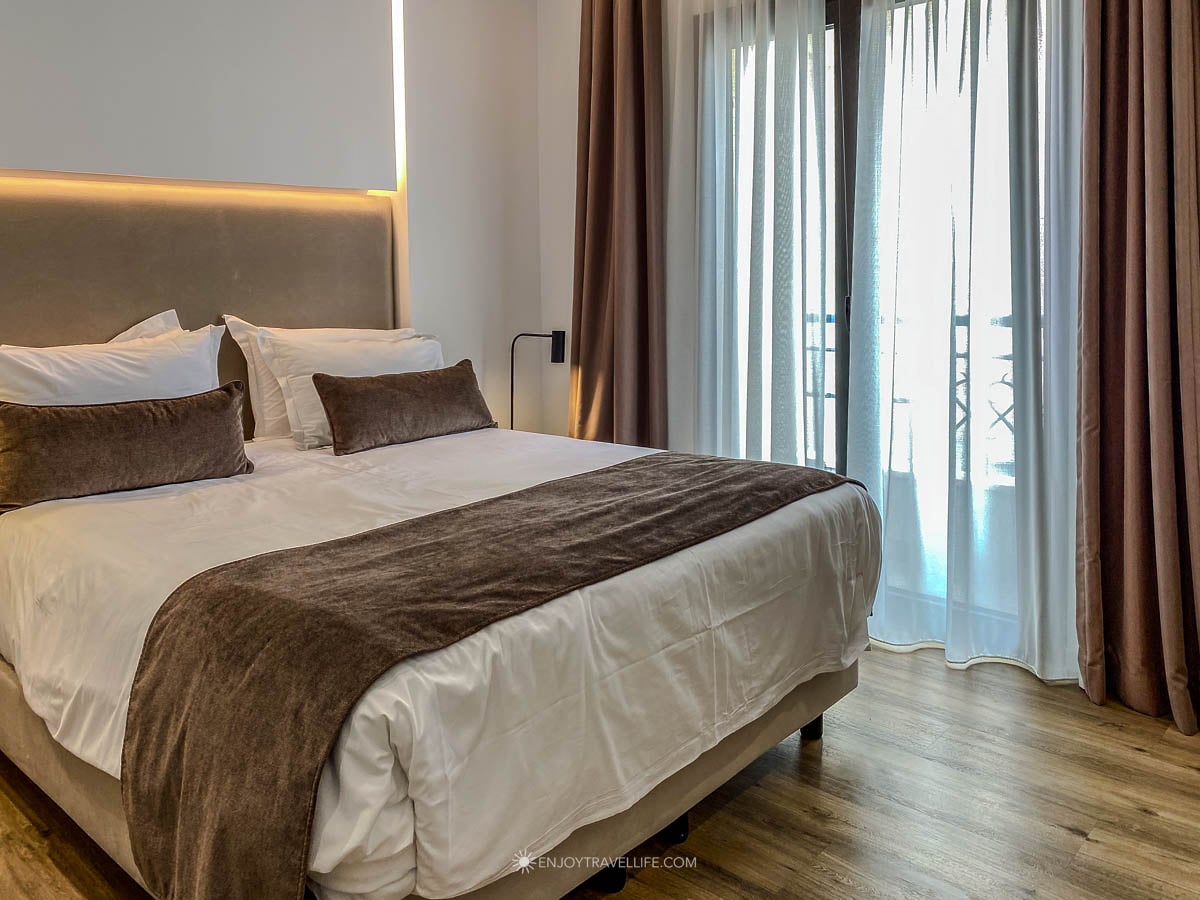
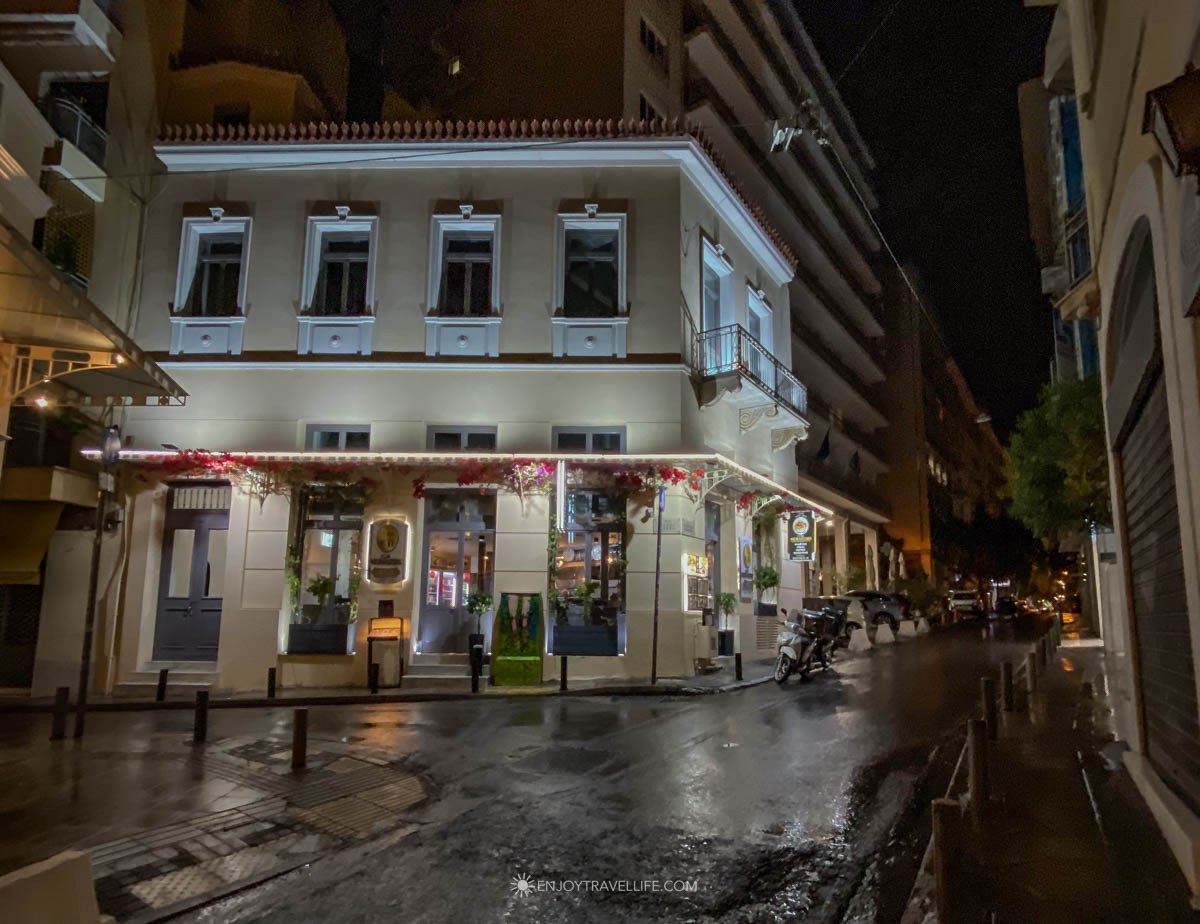
I stayed at The Marblous on Voulis Street, a short walk from Syntagma Square and the Plaka. It’s a small, modern hotel in the absolute center, with rates that run roughly €110 to €240 ($120 to $260) a night depending on the season. I checked in after a late flight via Istanbul and checked out two mornings later before the Delphi tour.

What worked:
- Location. Voulis Street puts you within a 10-minute walk of the Acropolis, Syntagma Square, the Plaka, and Monastiraki. You don’t need transport.
- Breakfast included. A standard European spread of eggs, bread, cheese, olives, and strong coffee. It’s enough fuel for a morning of walking.
- A restaurant downstairs. There’s a small restaurant on the ground floor, handy for a meal or a drink without heading back out.
- Modern and clean. The rooms are small but well designed, with a good bed, a decent bathroom, and reliable Wi-Fi.
- A thoughtful touch. A small welcome gift waited on the mirrored vanity: a bottle of nail polish. An unexpected, slightly quirky detail you don’t usually get at this price.
What I’d flag:
- Smaller rooms. They’re fine for two nights, but if you’re used to big, American hotel rooms, this will feel cramped. Ask for a room with a balcony. For a longer stay, you’d probably want more space.
- Street noise. Voulis Street is central, which means foot traffic and a city that stays up late. If you’re a light sleeper, bring earplugs or ask for an interior room.
Would I book it again? For a two-night Athens stay, yes. The location is hard to beat and the price was reasonable. Also, the marble throughout the hotel was gorgeous.
For a longer stay, I’d rent an apartment for more room and a kitchen.
I’d hoped to find one in the Plaka or Kolonaki, but I booked too late and options were limited. Instead, I rented the Ancient Agora Apartments in Psyri, and it worked out perfectly.
Getting Around Athens: Athens City Guide
Athens has a metro, buses, and trams, but for a two-day visit focused on the historic center, you can walk almost everything. The Acropolis, Plaka, Monastiraki, Syntagma Square, and Psyri all sit within about a 15-minute walk of each other. I didn’t take a single bus or metro ride during my two days.
Getting from the Airport
Athens International Airport sits about 30 to 40 minutes from the center. The metro runs straight from the airport to Syntagma Square, and a taxi is the simplest option if you land late, when the metro isn’t running.
| Option | Time to center | Cost (2023) | Good to know |
|---|---|---|---|
| Metro (Line 3) | About 40 minutes | Around €9 ($10) one way | Direct to Syntagma Square. Does not run overnight. |
| Taxi | 30 to 40 minutes | About €35 to €40 ($38 to $44) | Best for late arrivals after the metro stops. |
Athens is hilly, and the streets around the Acropolis involve stairs and uneven cobblestones. Wear comfortable walking shoes, not sandals, for the sightseeing days. Save the sandals for the taverna.
What I’d Do Differently on a Second Trip
I’d plan a few things differently next time:
- Add a third day. Two days covered the essentials, but a third would have made room for the National Archaeological Museum, a half-day trip to Cape Sounion, or a slow afternoon doing nothing. Athens earns the extra day.
- Take the food tour earlier. I did it on Day 2, which meant I ate one full Athens dinner without its guidance. Earlier in the trip would have improved every meal that followed, and it would have acclimated me to the neighborhoods from the start.
- Stay up later. Athens comes alive after 10 PM. Jet lag from the Istanbul layover had me crashing early both nights. Next time I’d plan a late dinner in the Plaka and a rooftop drink in Monastiraki.
Final Thoughts on 2 Days in Athens
Athens had a reputation for years as a city people passed through on the way to somewhere else. Economic struggles, graffiti, and stories of decline seemed to dominate the conversation. That’s not the city I found.
I found lively neighborhoods, excellent food, welcoming people, and layers of history woven into everyday life. One moment you’re standing on the Acropolis looking out over the city. The next you’re wandering through Anafiotika, a neighborhood that feels like a Greek island village hidden beneath it.
Yes, the Acropolis is worth the trip. But Athens turned out to be much more than a gateway to the rest of Greece.
Start with the Parthenon at first entry. End with the food tour. Walk everything in between. And don’t skip the rooftop drink at sunset, because the Acropolis lit up against a pink sky is the image that stays with you.
Frequently Asked Questions
Is 2 days enough in Athens?
Yes. Two full days cover the Acropolis and Parthenon, the New Acropolis Museum, the Plaka and Monastiraki neighborhoods, a food tour, and a rooftop dinner with views. You’ll want to come back for more, but two days give you a strong introduction to the city. Add a third day if you want the National Archaeological Museum or a day trip to Cape Sounion.
Is the Parthenon worth visiting?
Absolutely. The Acropolis and Parthenon are the reason Athens exists as a tourist destination, and they earn it. Book a skip-the-line ticket or guided tour for first entry in the morning. The experience before 9 AM, with morning light and few crowds, is completely different from midday, when thousands of visitors are on the hill at once.
Is a food tour in Athens worth it?
Yes. A food tour in Athens teaches you how Greek food actually works: the olive oil, the cheese, and the communal style of eating over small plates. You’ll visit bakeries, markets, and restaurants that aren’t in the tourist guidebooks, and the knowledge improves every meal you eat for the rest of your trip. Book it for your first full day if you can.
Where should I stay in Athens for 2 days?
Stay in the city center near Syntagma Square, the Plaka, or Monastiraki. These neighborhoods put you within walking distance of the Acropolis, restaurants, and nightlife. Mid-range hotels in this area run about EUR 100 to 180 ($110 to $195) a night. The location matters more than the hotel, because you’ll spend most of your time outside walking.

Next Steps
For more on planning your trip to Greece, read these articles next:
- Best Athens Food Tour: Must-Try Greek Food and Culture
- Traveling to Greece on a Budget: How to Penny-Pinch in Paradise
- 5 of The Most Beautiful Places in Greece You Should Visit
- How to Plan a Trip to Greece: Top Travel Tips You Must Consider
- Planning a Naxos Sailing Tour? An Essential Guide for First-Timers