

2 days in Seville is enough for the essential sights, if you keep a brisk pace. The real challenge is fitting them in without feeling rushed, so your trip feels less about ticking off a checklist and more about understanding Seville.
With the right plan, two days is enough to do both.
I managed it on a recent trip through Andalusia, and the pacing took some figuring out. If you want to know what to see, where to eat, and how to spend two days in Seville while immersing yourself in the culture, keep reading.
IN THIS ARTICLE
What to Expect from Two Days in Seville
Seville was the part of my Spain trip that I didn’t plan myself. After the TBEX travel conference in Marbella, a group of us were invited on a familiarization trip: two days in Seville with a local tourism organization, with guides, meals, and accommodations included.
I said yes without thinking twice.
I’m glad I didn’t have to think about it, because Seville won me over almost immediately. It’s modern and lively, with slick hotels, manicured gardens, and good restaurants.
It’s also full of landmarks that have stood for a thousand years. The old and the new sit together more comfortably here than in most cities I know.
Two days isn’t quite enough, and I’ll say that upfront.
But it’s enough to see the river, the markets, and the monuments, enjoy great food and flamenco, and take in some essential experiences.
Here’s how my two days went, so you can build your own version.
Getting to Seville
Seville is easy to reach, whether you come by train, by plane, or by car.
The train is the easiest option for a two-day trip. The fast Renfe AVE train connects Seville to most of Southern Spain, and the city’s Santa Justa station is central enough to walk or grab a short taxi to most hotels.
- From Málaga: about 2.5 hours by car, or 2 hours by the fast Renfe AVE train
- From Granada: about 3 hours by car, or train via Antequera (check Renfe schedules, as direct options vary)
- From Córdoba: 45 minutes by AVE train, worth a stop if you’re passing through
- From Madrid: about 2.5 hours by AVE high-speed train
Book Renfe train tickets in advance on renfe.com. Prices climb as the travel date gets closer, and a Málaga to Seville ticket booked two to three weeks early can cost half of what you’d pay at the station.
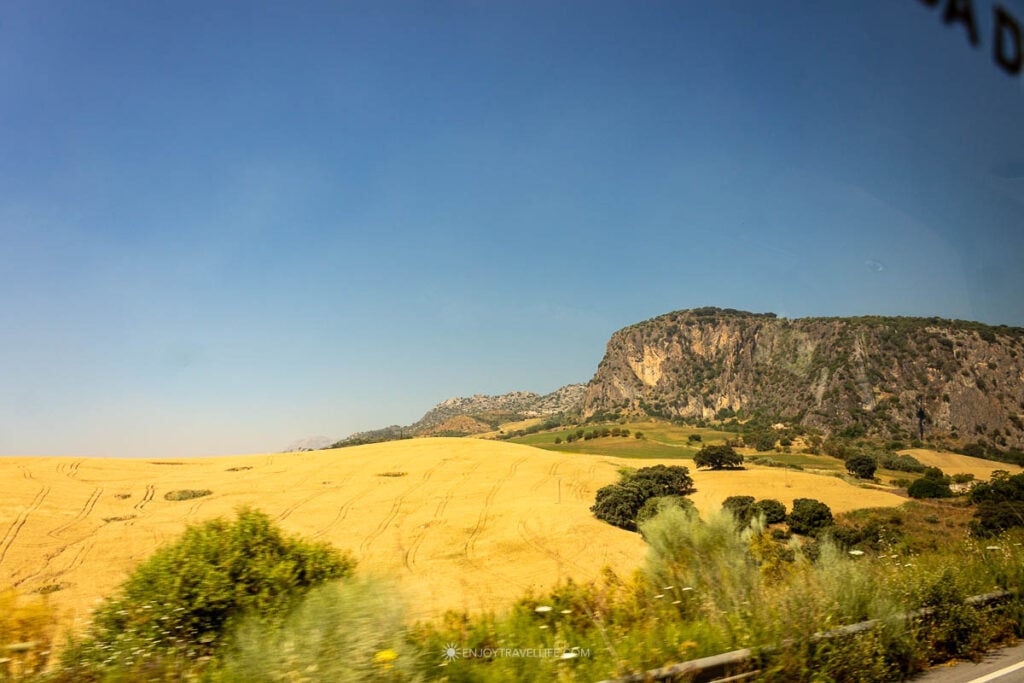
Many visitors skip the drive and fly straight into Seville. The airport (SVQ) is about 6 miles (10 km) northeast of the center, a 15-minute taxi, about $30 (€28), or a 30-minute ride on the EA airport bus, about $5 (€5).
Ryanair, Vueling, Iberia, British Airways, and others connect Seville across Spain and Europe. If there’s no direct flight from home, connect through Madrid or Barcelona and finish on the fast AVE train.
Once you’re in Seville, you won’t need a car.
The historic center is walkable, with the Cathedral, the Alcázar, and the old quarter all within a few minutes of each other. Triana sits just across the river, a short walk over the bridge.
For anything farther, taxis and rideshares are cheap and easy.
Where to Stay in Seville
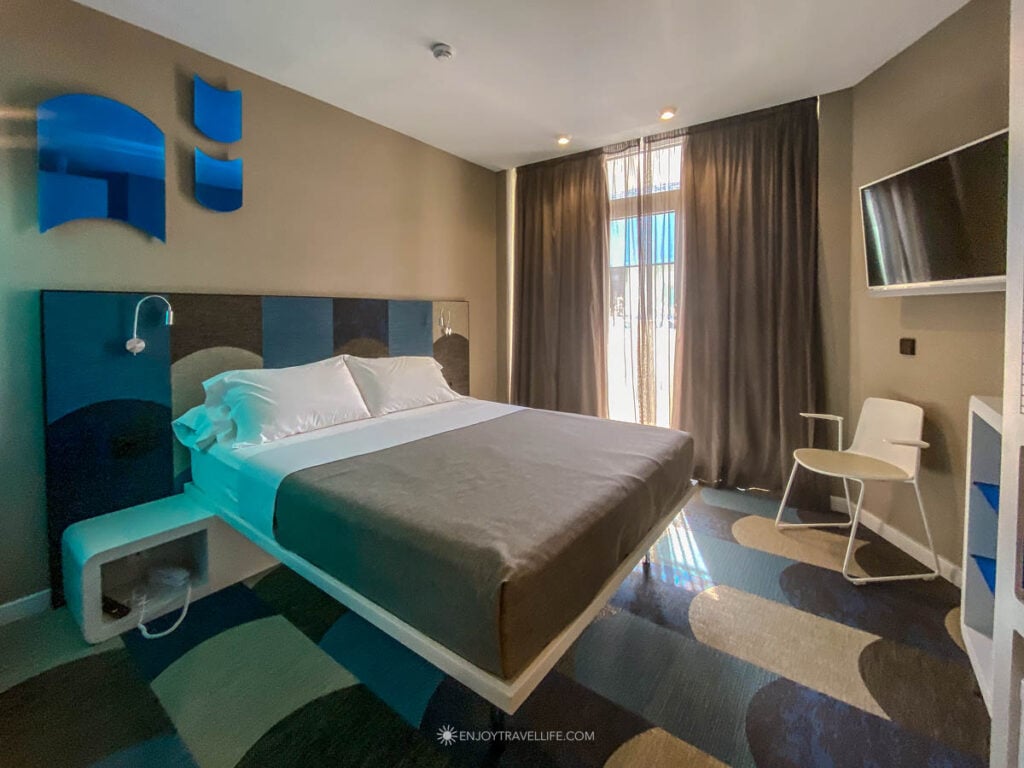
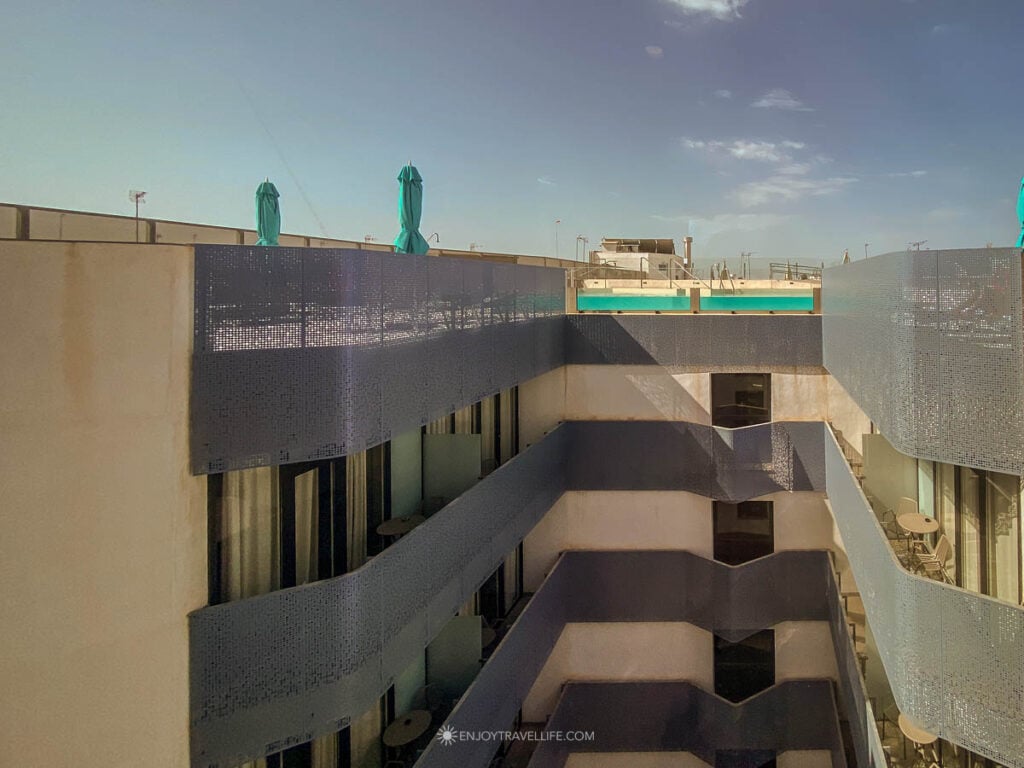
My room at the Hotel Macià Sevilla Kubb was conveniently located. The rooftop pool looks out over the city.
I stayed at the Hotel Macià Sevilla Kubb, a four-star hotel a short walk from the Santa Cruz quarter. It’s modern and clean. The rooftop infinity pool earns its keep in the June heat and looks out over the city.
The room wasn’t large, which is normal for a city hotel, but it had a small balcony with a table, and a view to the pool. As a central, comfortable base for two days of sightseeing, it worked well.
If you want to compare neighborhoods and hotel prices, the map below shows what’s available across the city. You can filter by date and preferences, too.
Your 2-Day Seville Itinerary at a Glance
Here’s the shape of your 2 days in Seville before the details. The pace is full but doable, with a midday rest during the hottest hours, the way locals do it.
| When | What |
|---|---|
| Day 1 | |
| Morning | Arrive in Seville Check in at the Hotel Macià Sevilla Kubb (or your hotel of choice) if they allow early check-in |
| Midday | Visit Seville Cathedral and La Giralda Walk through Santa Cruz |
| Afternoon | Visit Real Alcázar Lunch at Ispal Siesta |
| Evening | Visit Plaza de España at golden hour Dinner at Mercado Lonja del Barranco |
| Day 2 | |
| Morning | Tile-making workshop at Barroazul in Triana Stroll Mercado de Triana |
| Midday | Cruise on the Guadalquivir |
| Afternoon | Lunch at Casa Montalván Siesta |
| Evening | Percussion workshop followed by Flamenco performance at El Palacio Andaluz |
Rough time to budget at each stop: about an hour for the Cathedral and La Giralda, two to three hours for the Alcázar, an hour for the river cruise, and around ninety minutes for the flamenco show. The rest of each day is walking, eating, and the midday break.
Day 1 in Seville: Cathedral, Alcázar, and Plaza de España
Day one stays in the historic center, where Seville’s UNESCO World Heritage sites cluster together. The Cathedral and the Alcázar sit a few minutes’ walk apart.
Between them they cover close to a thousand years, from Moorish rule to the age of New World exploration. You can see both in a morning and still have time for lunch.
Seville Cathedral and La Giralda
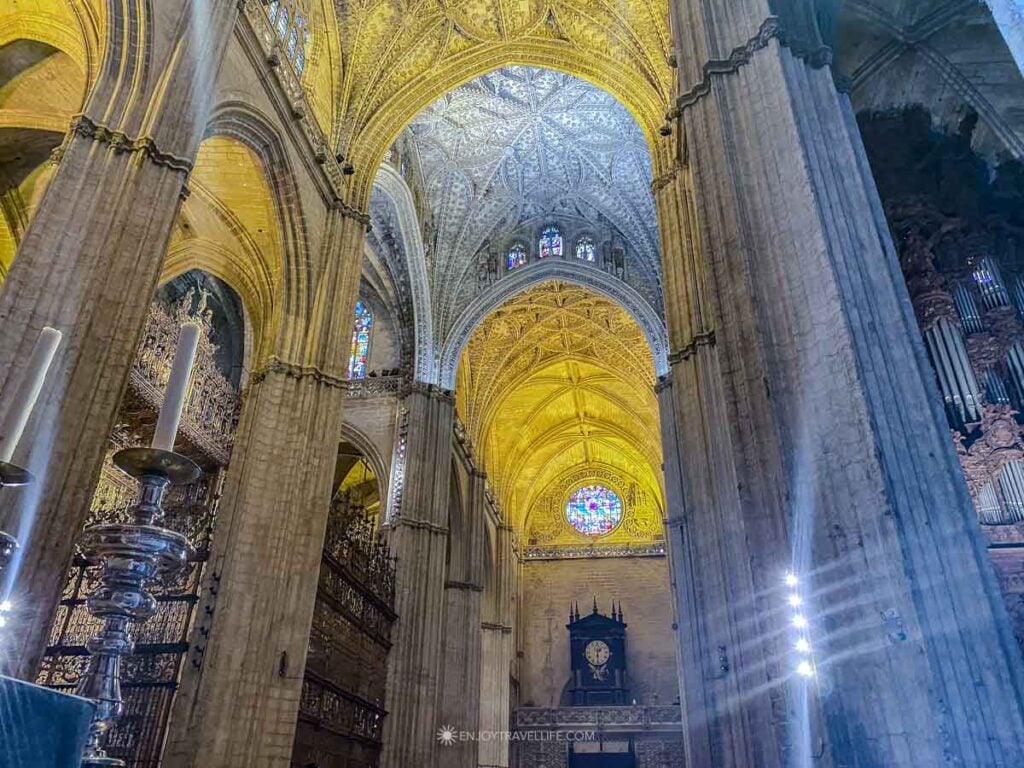
Seville’s Cathedral is the largest Gothic cathedral in the world. The stat sounds like guidebook filler until you walk in and feel the size of the space.
You’ll enter through tall wooden doors carved with Gothic detail and studded with handmade nails. Inside, the stained glass glows, the coffered ceilings run high overhead, and a carved pipe organ anchors the nave. The art collection includes work by Spanish masters like Murillo and Goya.
The altarpiece is the largest in Christendom. Tucked in here, too, is the tomb attributed to Christopher Columbus, carried by four bronze figures that represent the kingdoms of Spain.
La Giralda, the bell tower, started as the minaret of the mosque that stood here before the cathedral. Curved, crested, and covered in intricate brickwork, it reminded me of the campanile at St. Mark’s in Venice. It’s not quite cake frosting, but it’s close.
You climb it by a series of ramps instead of stairs, built so the muezzin, the man who called the faithful to prayer, could ride a horse to the top.
The reward is a wide view over the city, worth the entry fee on a clear day.
From the cathedral, the walk continues through Santa Cruz, the old Jewish quarter, on the way to the Alcázar.
It’s a maze of narrow, whitewashed lanes draped in bougainvillea, with tiled doorways and small plazas that turn up where you don’t expect them.
The Real Alcázar
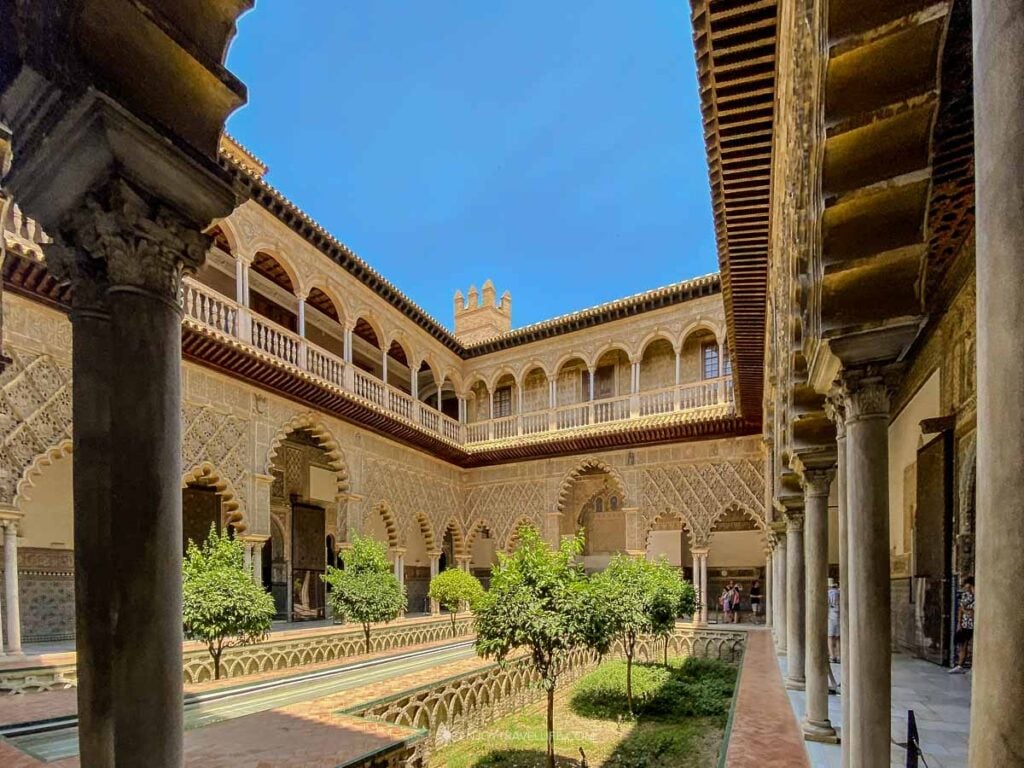
The Real Alcázar is a royal palace that’s been in continuous use since the 10th century, and it was the stop I’d go back to first.
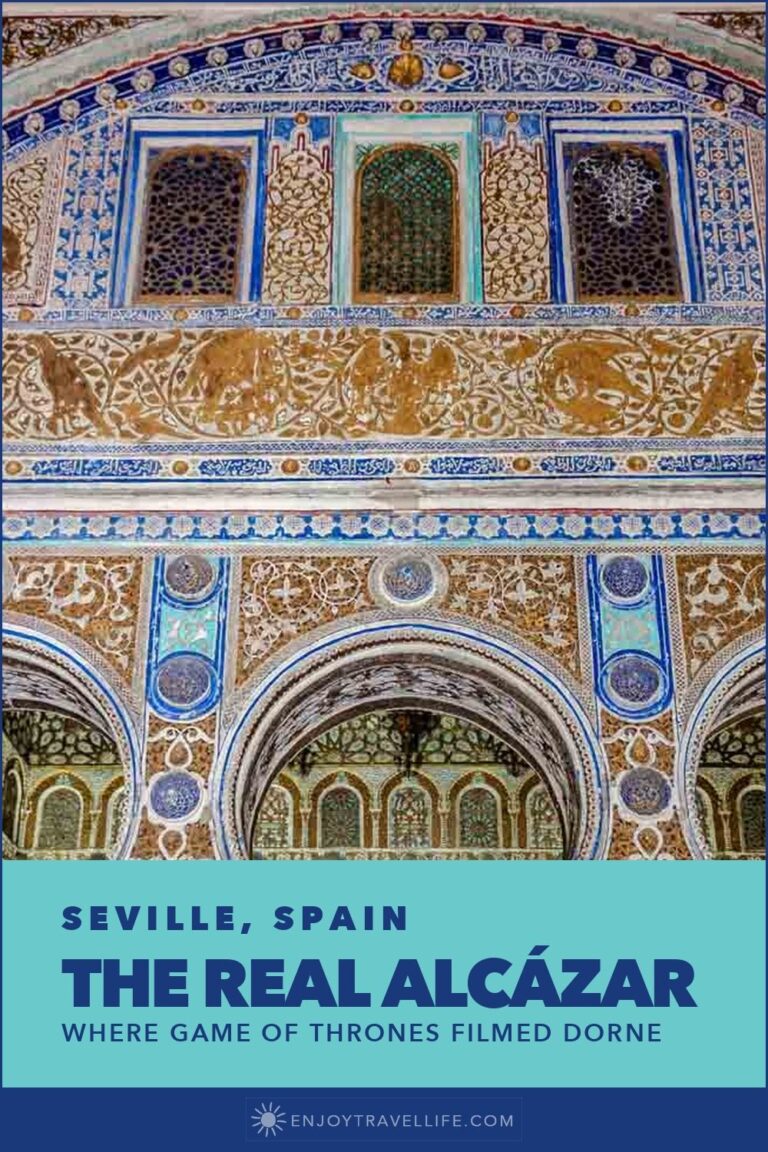
Orange trees in the courtyards echo the warm hues of the buildings. Inside, the craftsmanship is staggering. You’ll find arches and columns, keyhole windows and balconies, and gold and green and deep blue tilework.
All of it is composed so beautifully that the whole reads as a single piece of art.
The Patio de las Doncellas, with its pointed arches, carved plaster, and a long reflecting pool, is the architectural high point. Skip-the-line tickets are worth it in high season.
What struck me most about this place was what I’ll call the “layering.” Andalusia has a strong identity of its own, but it sits over and through centuries of Islamic culture, and nowhere is that clearer than here. You could close your eyes and easily believe you were in Morocco.
It’s easy to imagine the royalty who once lived inside these walls. In fact, today, Spanish officials still use this palace when they are in Seville. I
f the Alhambra in Granada impressed you, and it will, the Alcázar shows how that same Moorish style was adapted by the Christian kings who followed.
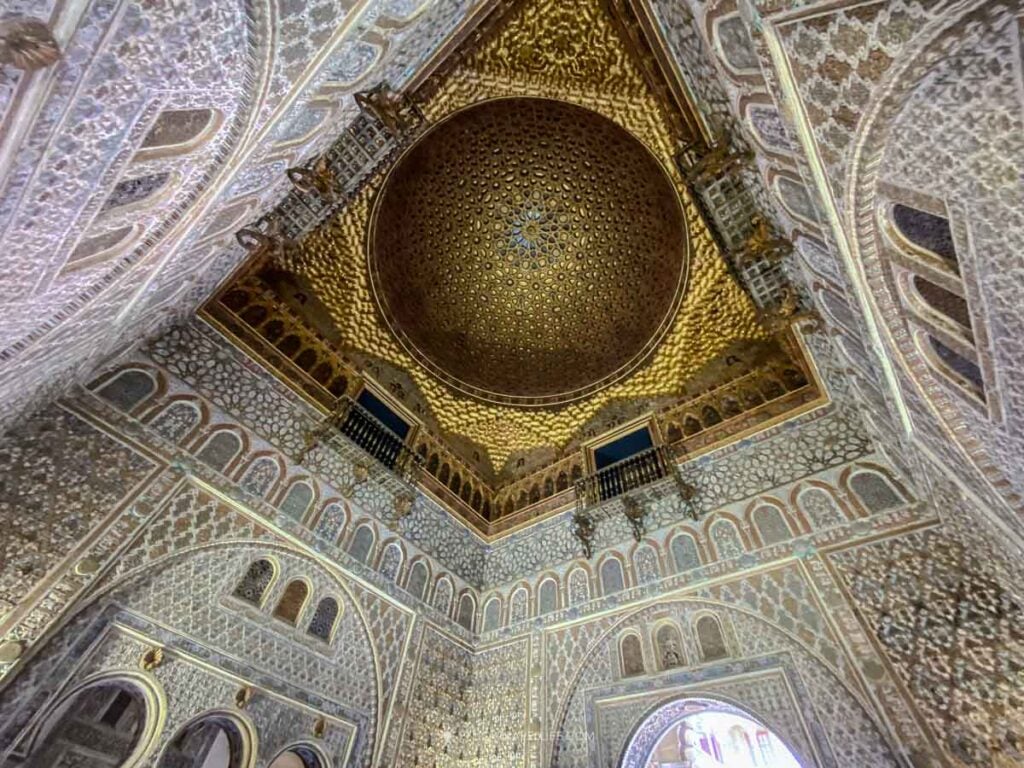
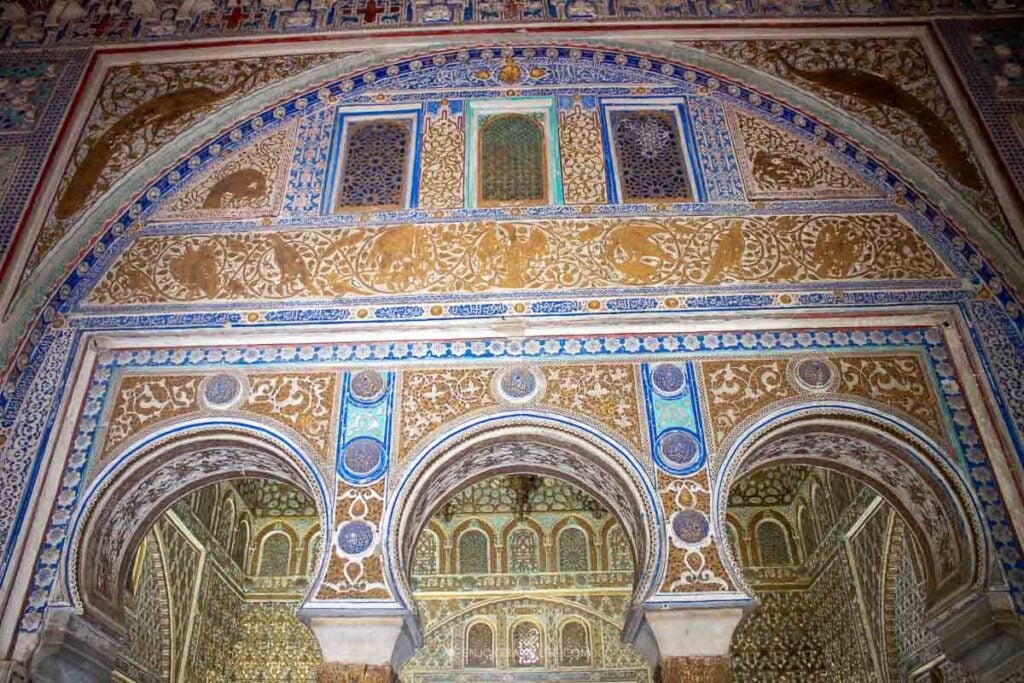
The Ambassadors’ Hall dome and the carved Moorish arches inside the Real Alcázar are breathtakingly detailed with tiles.
The gardens behind the palace are worth an hour on their own, with tile-lined walkways, hedge mazes, and hidden fountains. If you’ve watched Game of Thrones, you’ll recognize the Dorne scenes filmed here.
Look for the Balcón de Rosina, a corner balcony in nearby Plaza de Alfaro that legend ties to Rossini’s opera The Barber of Seville. The building is newer than the opera, so it’s more story than fact, but it’s a fun one.
Book timed-entry tickets for the Alcázar online in advance. Like the Alhambra in Granada, it runs on a timed-entry system and the popular slots sell out. Early morning is best: fewer people, and cooler temperatures for the gardens.
Lunch at Restaurante Ispal
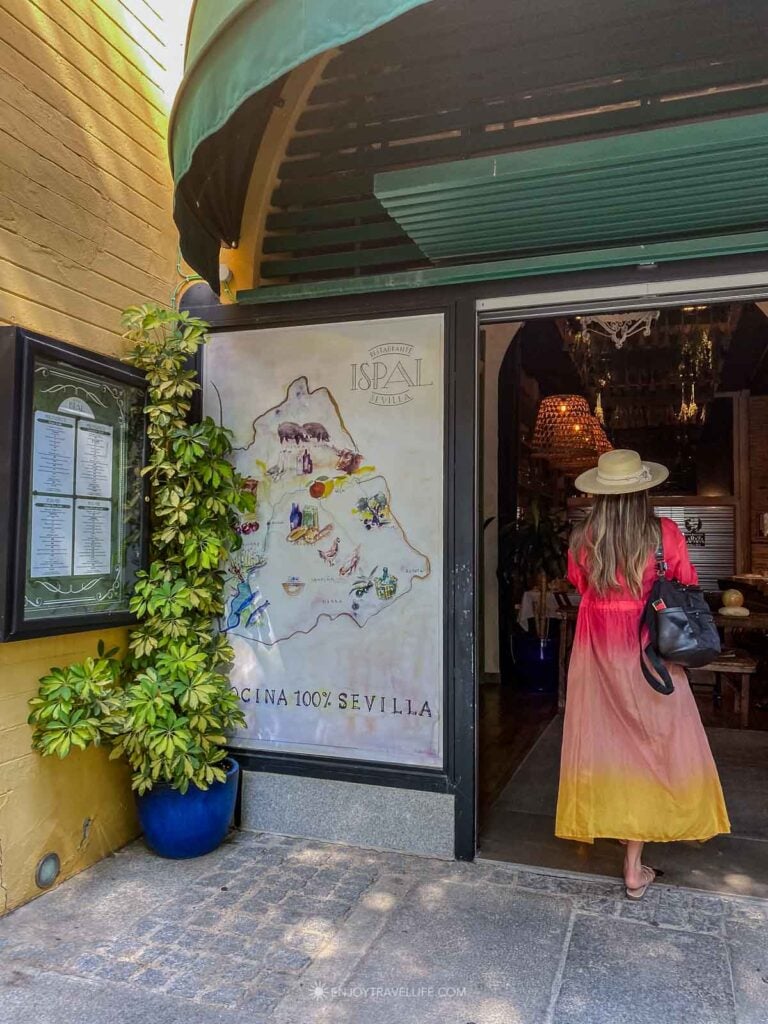
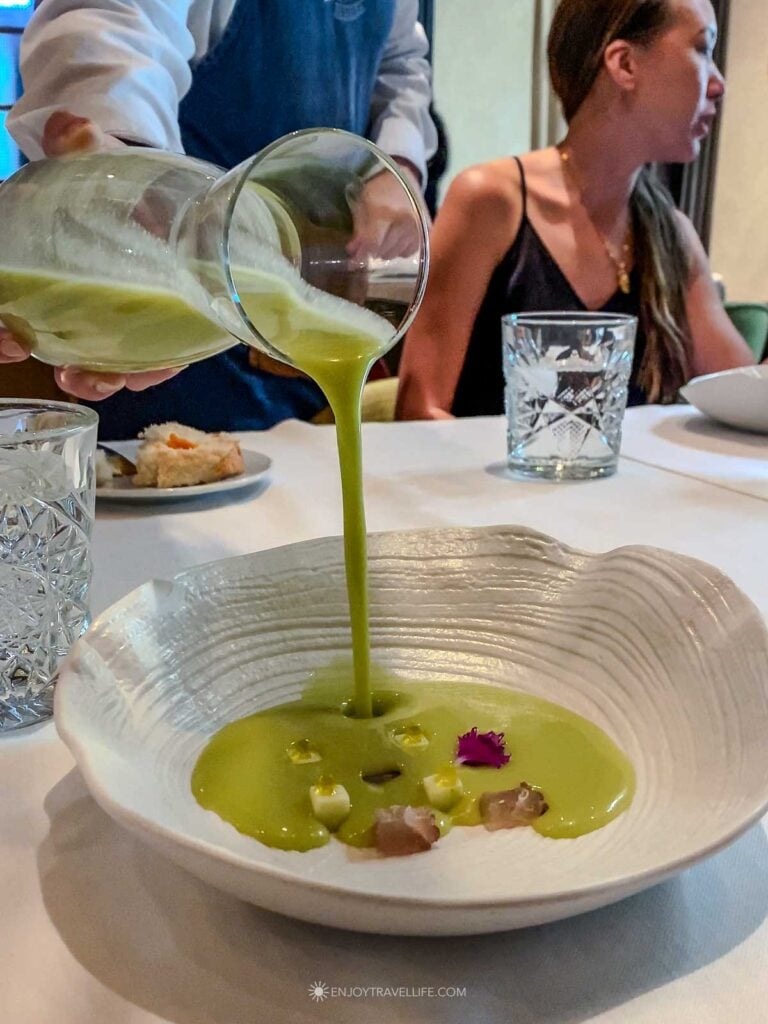
Stepping into Restaurante Ispal for a long, local lunch proves to be rewarding.
Lunch at Restaurante Ispal, won’t be the traditional Spanish meal you might expect, but it will delight you just the same.
The experience is a refined, multi-course meal built around ingredients grown, raised, or caught in the province. Even the name is local: Ispal is what the Phoenicians and Romans called Seville.
Here, the cuisine may be inspired by heritage, but takes on an elevated spin, artfully plated. The food is delicious, and the ambiance is relaxed, not stuffy.
If you want one nicer meal in Seville, I’d spend it here. Reserve ahead, especially for lunch.
Plaza de España at Golden Hour
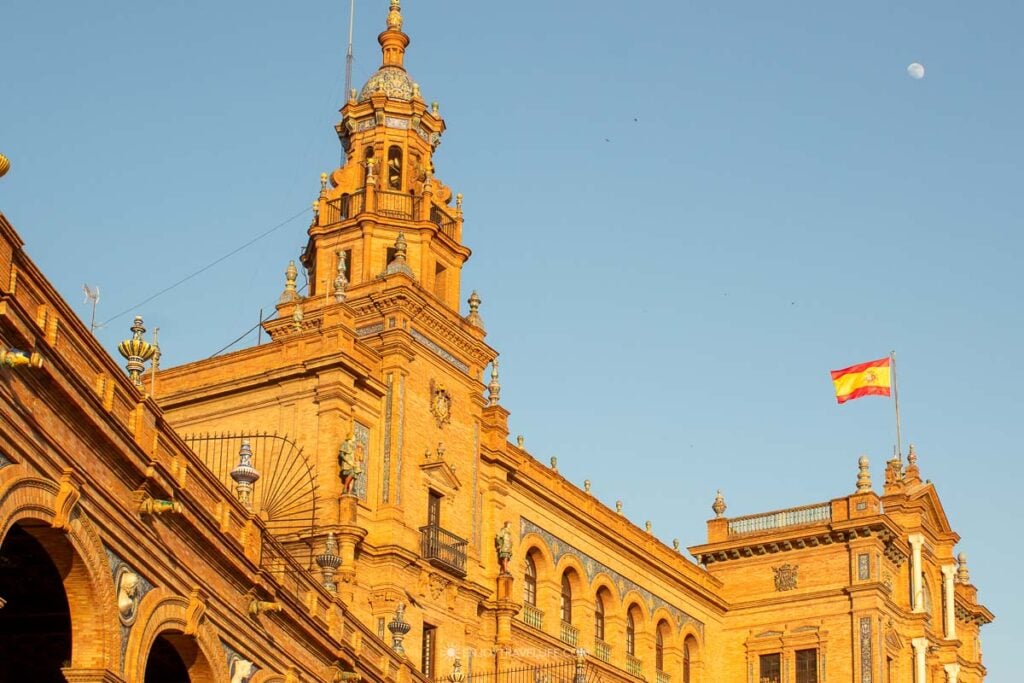
The Plaza de España at golden hour was one of my favorite stops of the Seville trip.
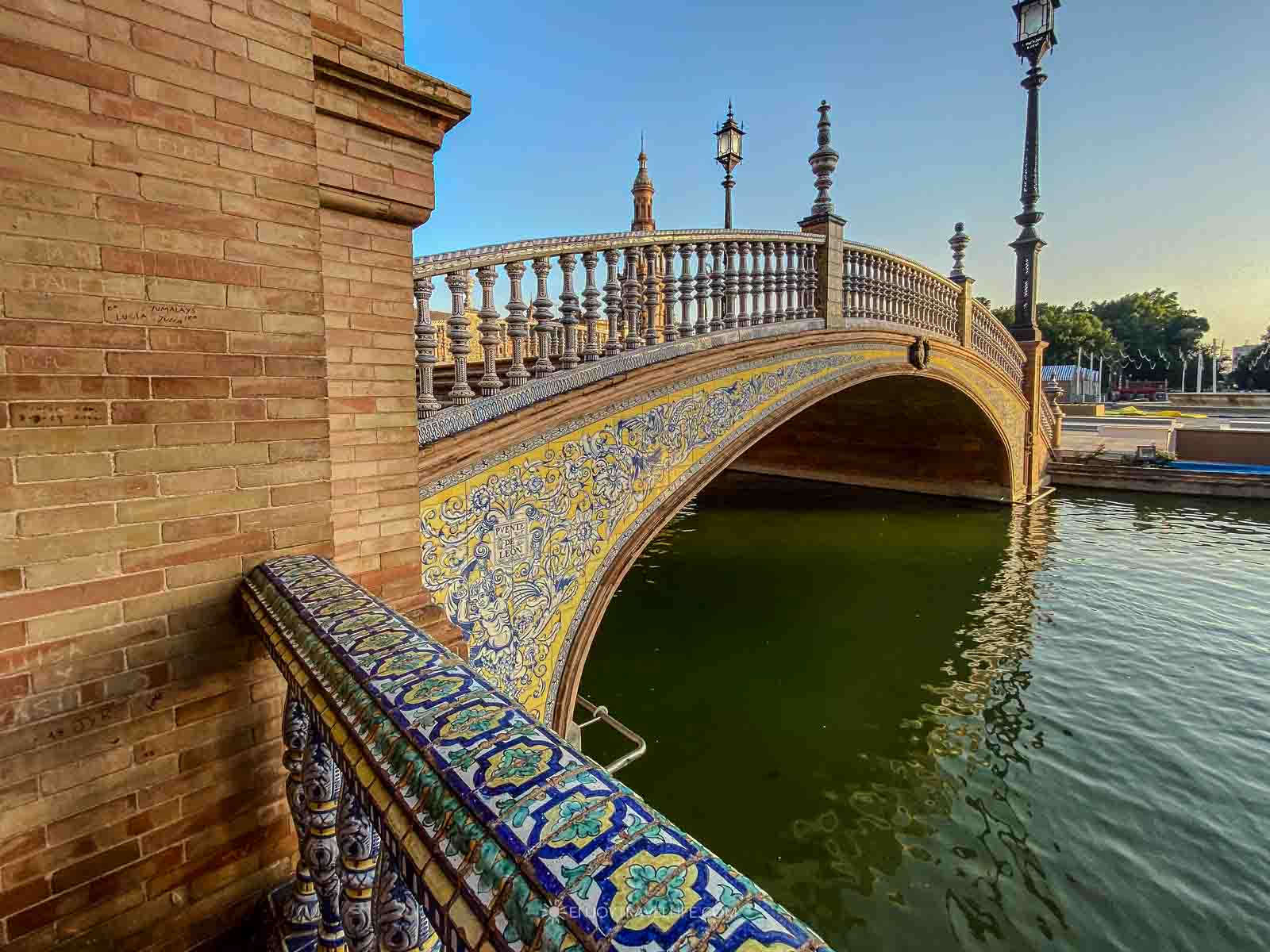
The scale is hard to take in at first: a long curved facade, painted tile alcoves down its length, and bridges arcing over a shallow canal. The ornate details are reminiscent of St. Marks in Venice in some ways, but it’s not quite cake frosting.
Walk the perimeter on a warm evening, when plenty of locals are doing the same, and it never feels crowded. Go at golden hour if you can. The low light turns the tilework gold, which is also the best time for photos.
The plaza was built for the 1929 Ibero-American Exposition. It has since stood in for the planet Naboo in Star Wars: Attack of the Clones and for British Army headquarters in Lawrence of Arabia.
Save this article to Pinterest for later.
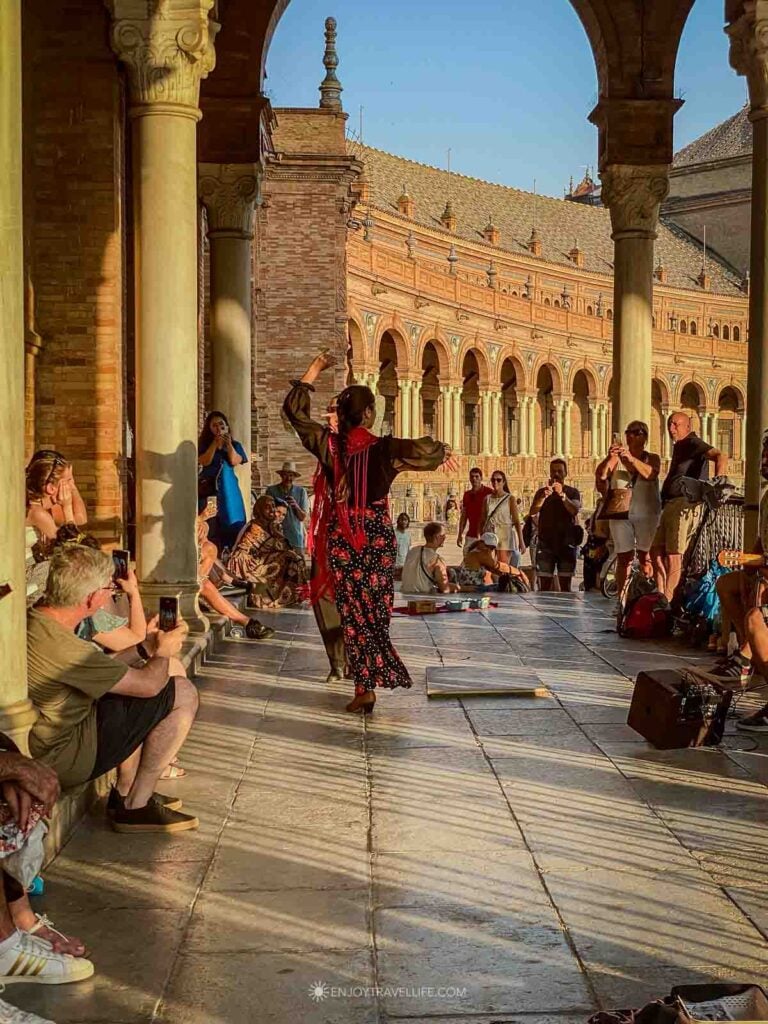
While I was there there, a woman started dancing flamenco on one of the landings. She wore red and black, with hard-soled shoes, and moved in time to a drumbeat while a small crowd formed. It wasn’t part of any program.
Almost a hundred years on, you’ll find people still use the plaza the way it was built to be used.
A Walk Through Parque de María Luisa
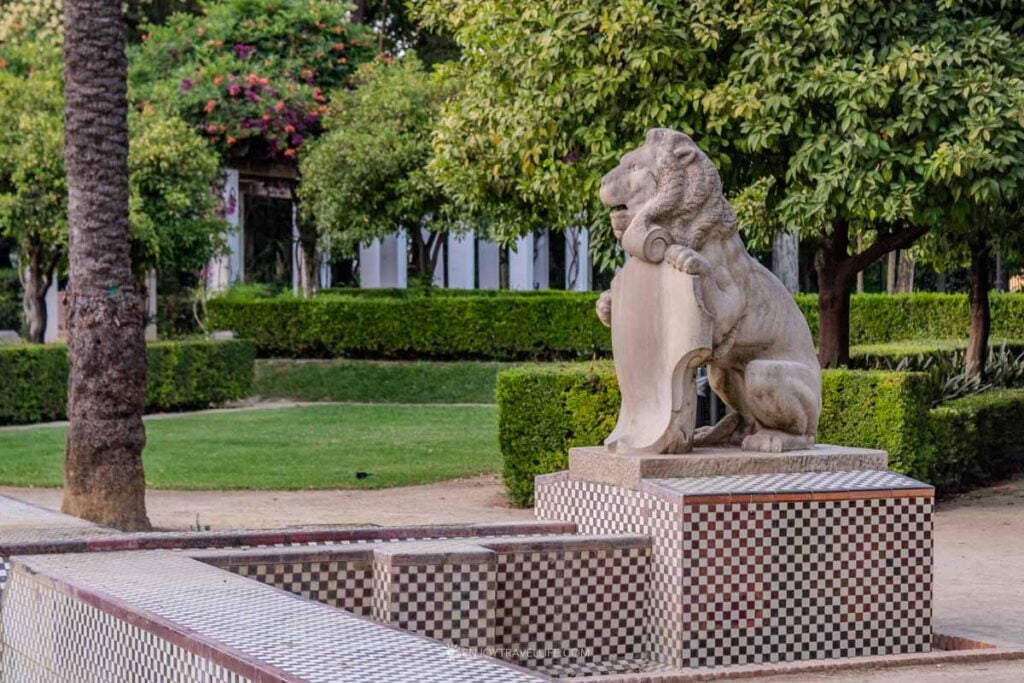
The plaza sits inside Parque de María Luisa, and the park earns its own slow loop. The park was laid out for the same 1929 exposition as the plaza, and you can still see it in the tiled benches, the fountains, and the small hidden plazas among the trees.
The park runs cooler than the open plaza, and it’s free, so it’s a good place to slow down and reset in the heat. On a hot afternoon, it’s worth building in time here to walk slowly, find a shaded bench, and let the pace drop before the next stop.
It’s one of the largest green spaces in the city.
Dinner at Mercado Lonja del Barranco
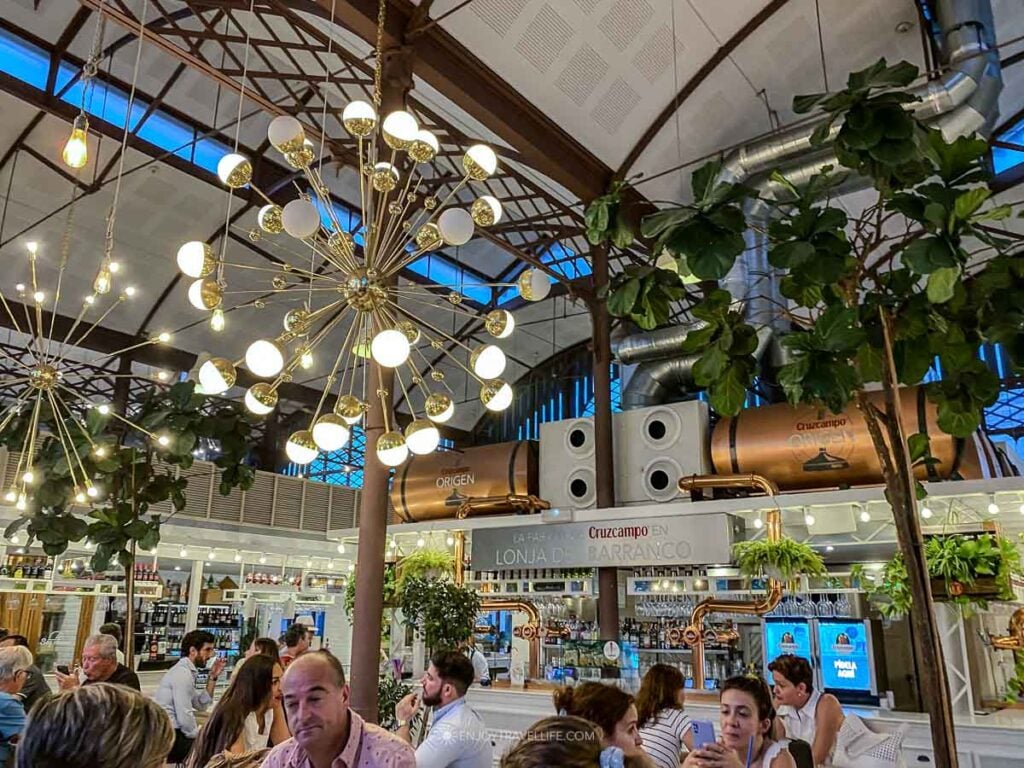
For dinner, head to the Mercado Lonja del Barranco, a riverside food hall in an iron-and-glass building beside the Puente de Triana.
You can graze on tapas or build a full spread from different stalls and carry it to shared tables. There are enough stalls that it’s worth walking the whole place once before you order.
Eating at a shared table, passing plates and talking, is how a lot of meals work in Spain. The hall stays open past midnight, so there’s no need to rush. Remember, dinner in Spain between 9 and 10pm, so you’ll be in good company.
Day 2 in Seville: Triana, the River, and Flamenco
Day two starts across the river in Triana, so plan an early start.
Triana is the old working-class neighborhood on the west bank of the Guadalquivir. It’s the birthplace of flamenco and the center of Seville’s ceramics tradition, and it feels different from the historic center.
The day here runs from hands-on craft in the morning to a flamenco show at night.
Triana and a Tile-Making Workshop
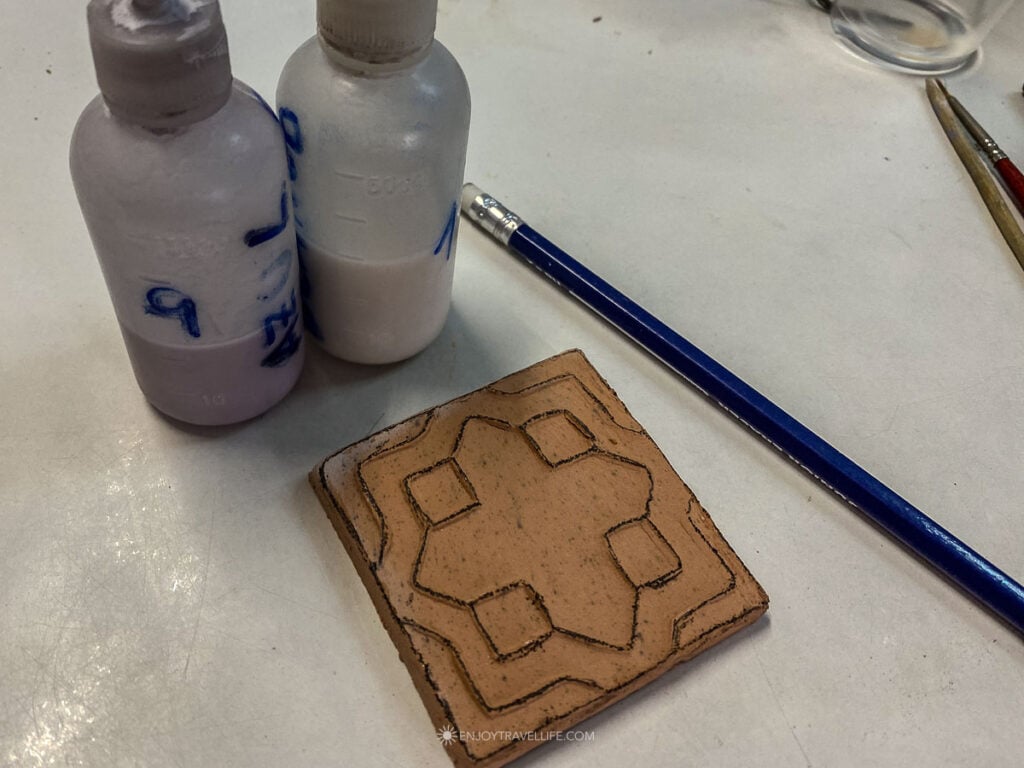
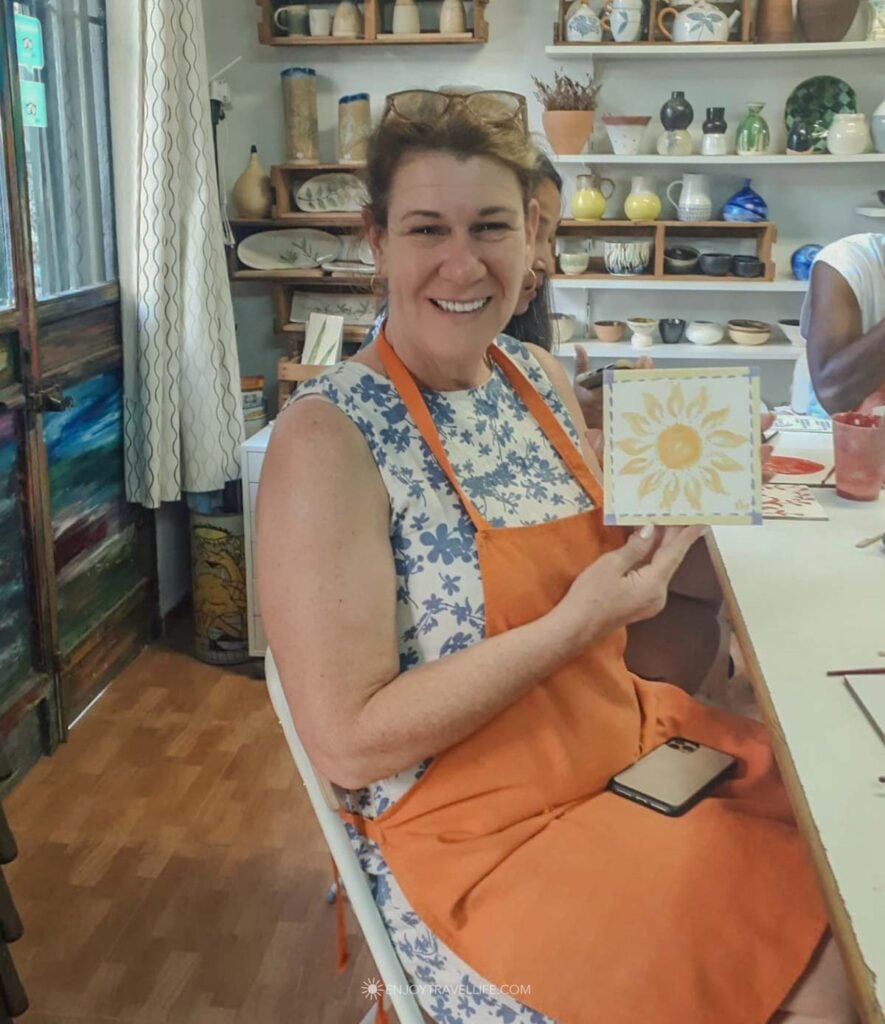
After painting an azulejo tile at a Triana workshop, I was excited to add the finished piece to my travel souvenirs.
After seeing azulejo tiles all over Seville, from palace walls to walking paths to street signs, you can try your hand at making your own. Head over to Barroazul, a traditional ceramics studio in Triana to paint one by hand.
An instructor will shows you how the tiles are made with stamps and paint, and then you’ll choose your own design.
I painted two tiles, a small sun and a cross, and the studio fired and shipped them home They’re among my favorite souvenirs from the trip.
Mercado de Triana
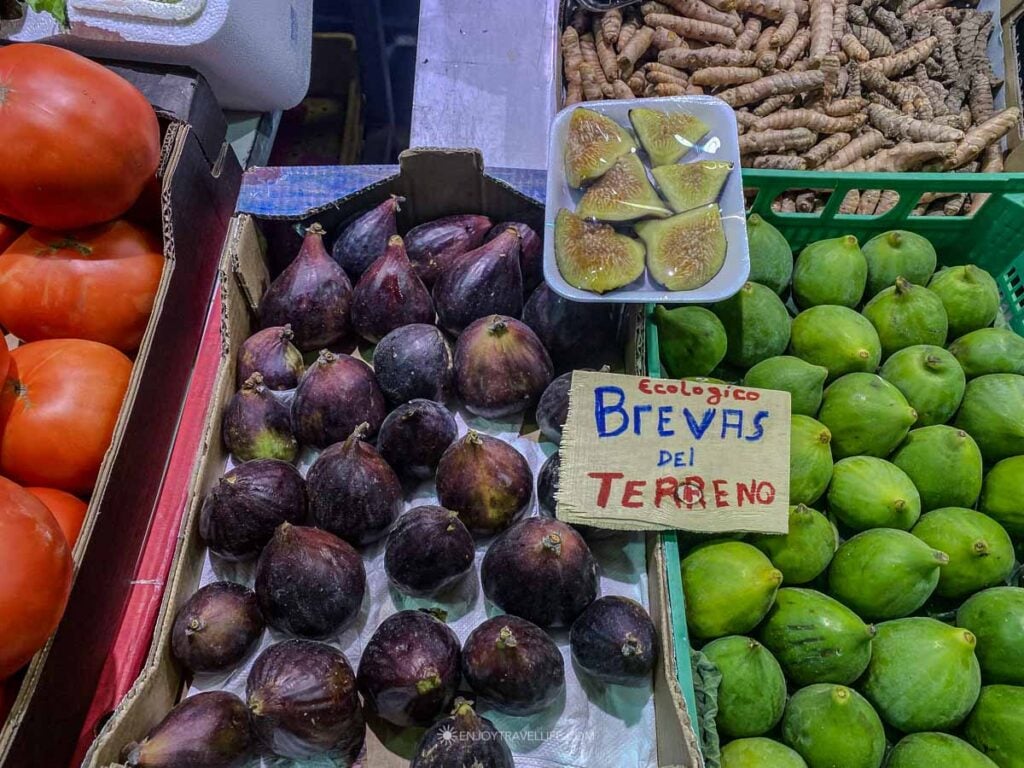
A few steps from the workshops is the Mercado de Triana, built on the foundations of the old Castle of San Jorge. You can still see the ruins through glass panels in the floor.
It’s a working neighborhood market, with traditional stalls and a few newer tapas counters.
The stalls are piled with olives, hanging legs of jamón (cured Spanish ham), wheels of Manchego, and the morning’s fresh fish.
Even a quick walk through is worth it to see locals doing their daily shopping and pick up a snack.
A Cruise on the Guadalquivir
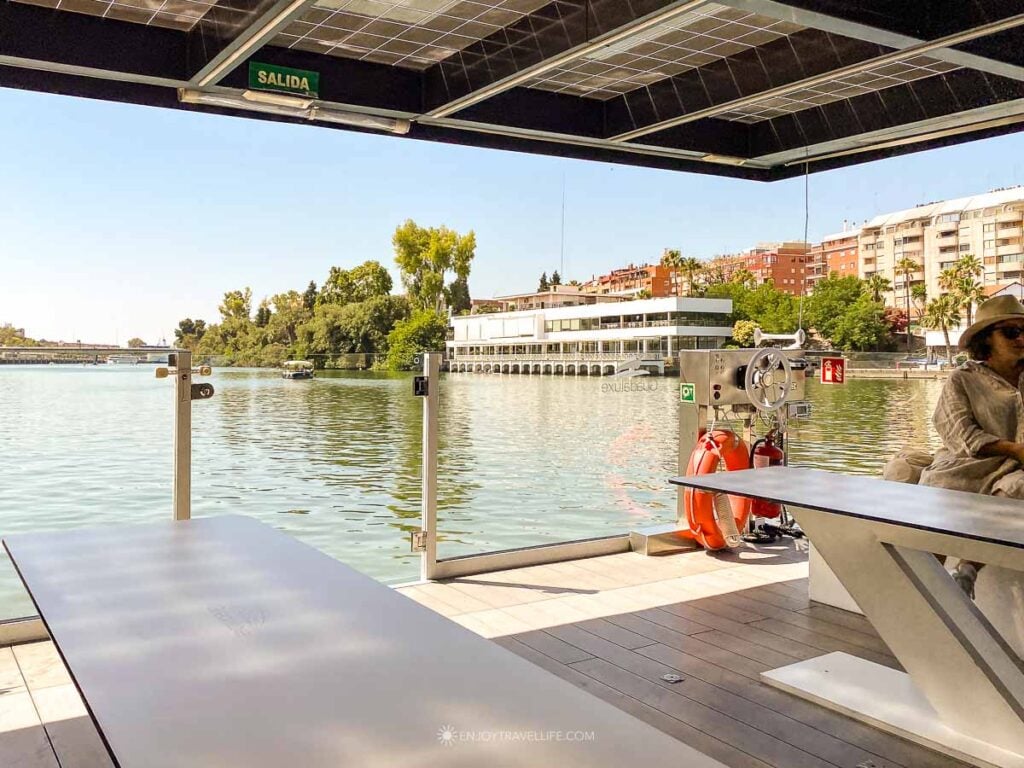
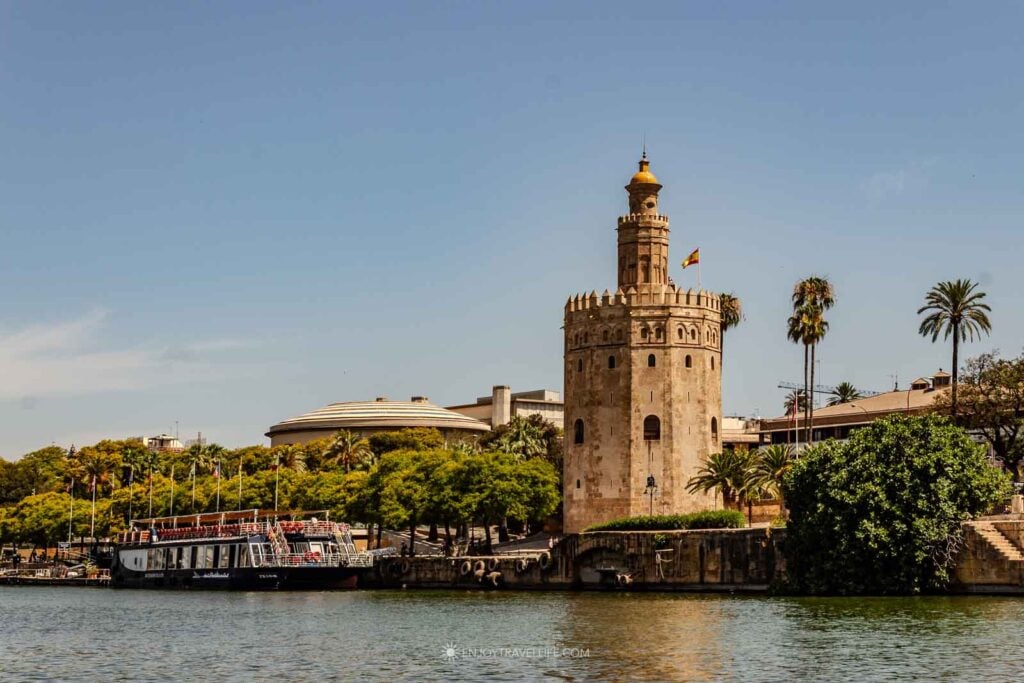
Glide peacefully past the Torre del Oro on the electric eco-cruise along the Guadalquivir.
A river cruise is an easy way to see Seville from the water, and a smart move in the afternoon heat. You can even book a short eco-cruise online before you arrive.
Guadaluxe‘s boats are electric and nearly silent, so there’s no engine noise to talk over.
There’s a bar on board if you want a drink (bring cash), and you get a slow loop past the landmarks, including the Torre del Oro, the 13th-century watchtower on the bank.
The pace is relaxed and easy, which feels about right as the temperatures begin to rise.
Guadaluxe runs trips through the day, so book one for the early afternoon, when walking gets uncomfortable, and use the hour to sit and cool off.
Lunch at Casa Montalván

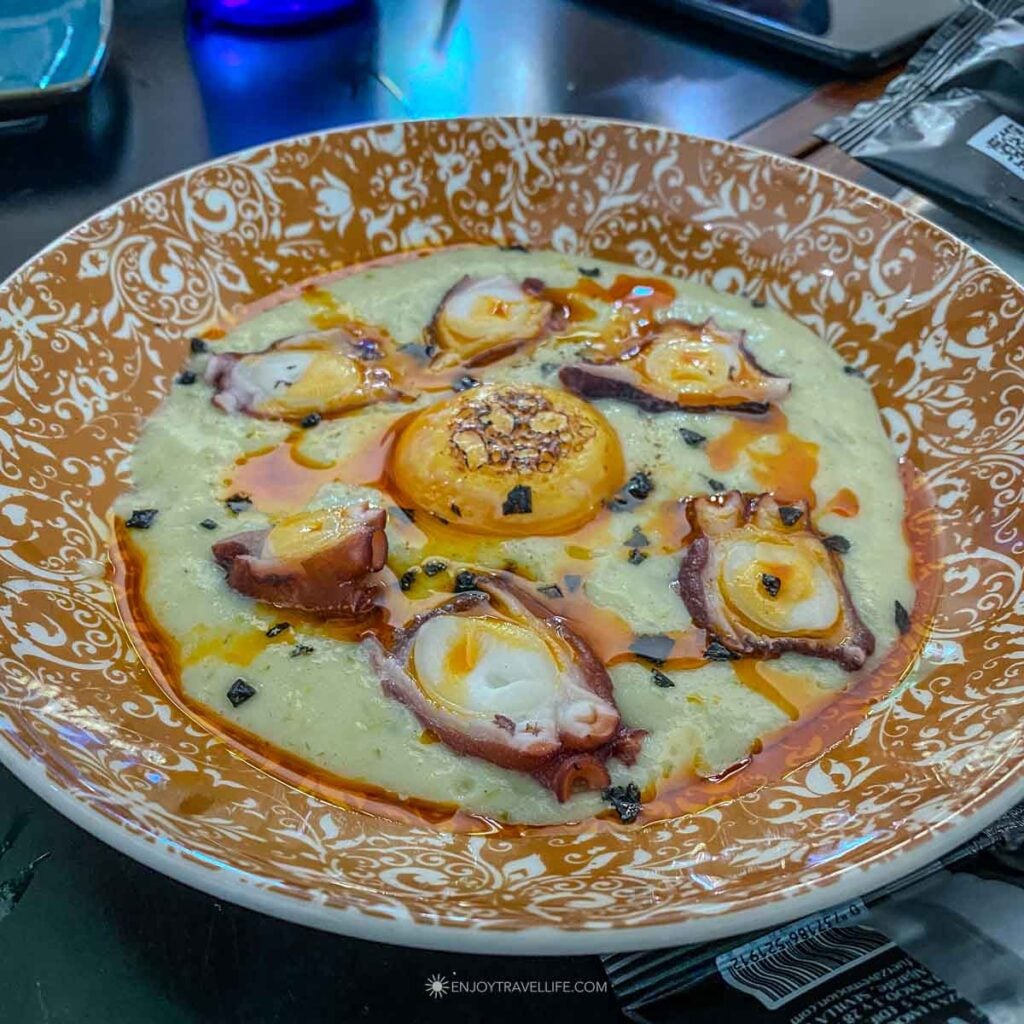
Fried tapas and octopus over potato at Casa Montalván make for a delicious lunch in Seville.
Stop for lunch at Casa Montalván, which is in a former ceramics factory in Triana. You’ll notice the original tilework is still in place.
If Ispal was the modern tasting menu, Casa Montalván is traditional side. You’ll enjoy classic Andalusian cooking, done well, in a room that feels like authentic Seville.
This is a delicious place for a lunch break, and the dishes seem to keep coming.
Afterwards, head back to the hotel for an afternoon rest. The siesta is a real habit here, and it makes sense in the hottest part of the day, so it’s smart to build one into your own plan.
Flamenco at El Palacio Andaluz
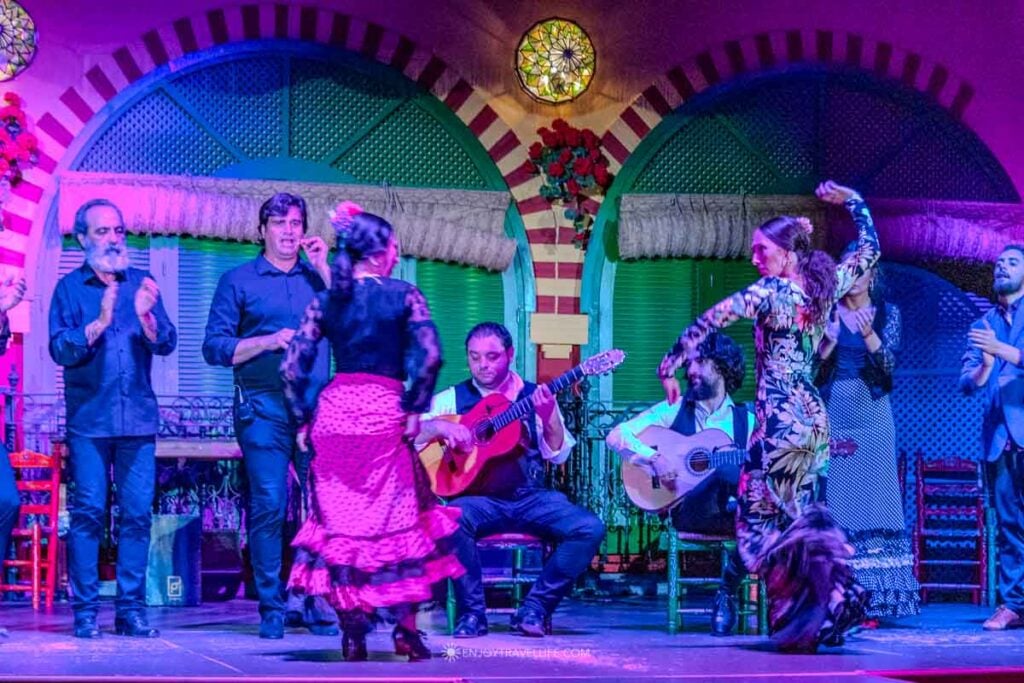
In the evening, head over to El Palacio Andaluz for a percussion workshop before the show. It’s a popular venue, so you’ll want to book ahead. Music runs through everything in Southern Spain, flamenco most of all.
You’ll learn the rhythmic handclapping, called palmas, and try the cajón, the flamenco box-drum. It’s a playful, hands-on lesson, and a good warm-up for the performance. You’ll appreciate it even more.
The show follows, with a tapas tasting included.
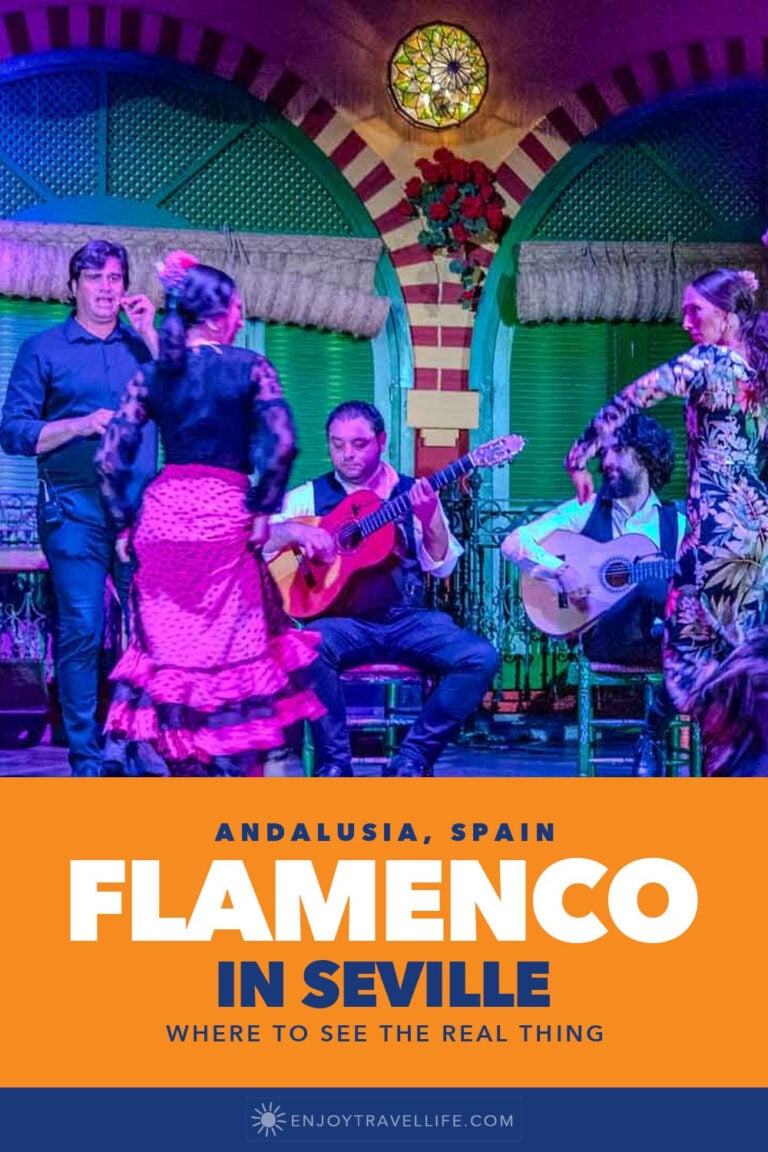
El Palacio Andaluz is a theatre-style tablao, more cabaret than back room, with a proper stage. The flamenco dancer wear bright dresses, synching their movements to the guitar, hand-clapping, castanets, and the percussion of their own shoes.
They work up a real sweat and the performance is passionate! The footwork is fast and precise, and you can see how much timing and strength it takes.
The stamping comes up through the floor, reverberates in your gut, and the palmas and guitar fill the room.
Even without words, a passionate story comes through.
The flamenco show is a high note to end a full 2 day Seville itinerary.
Seville has flamenco at every scale, from tiny back-room tablaos to big theatre-style venues like El Palacio Andaluz. Both are worth doing, and they’re different experiences. Book ahead in summer (the bigger venues sell tickets online), and choose a show-only or tapas format so you’re watching the stage, not your dinner plate.
Where to Eat in Seville (Tapas Bars and Beyond)
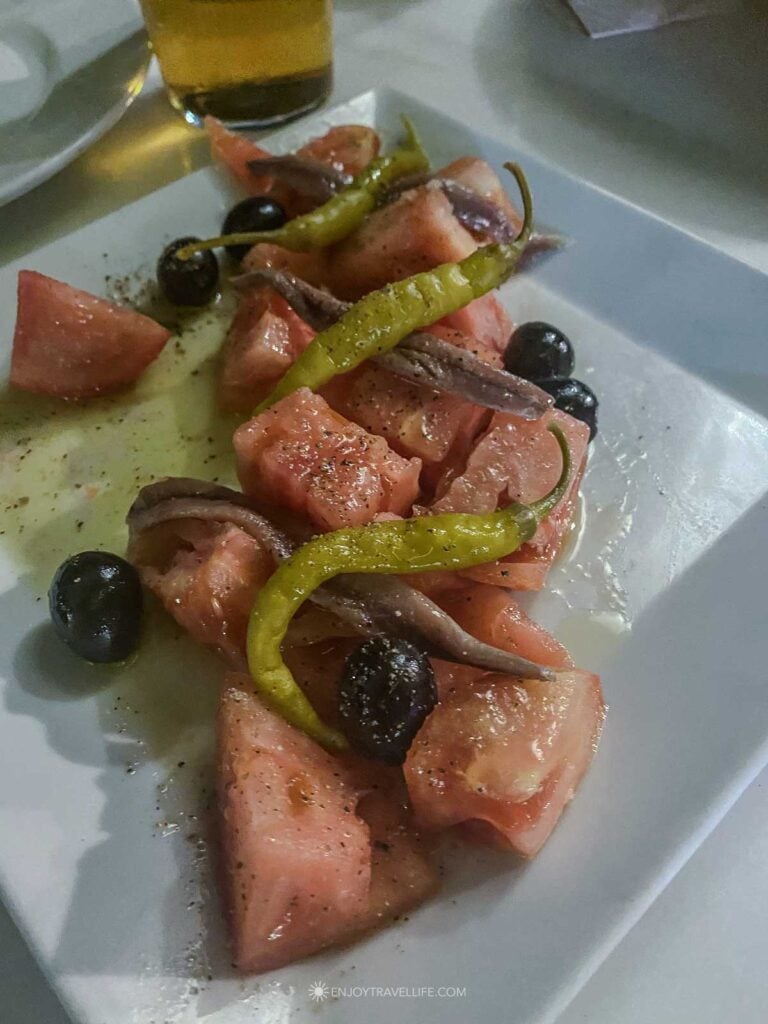
Seville’s food scene leans on tapas. Unlike Granada, you usually pay for them here rather than getting them free with a drink, but the quality is high and the portions are generous.
The city runs on small plates, cold beer, and late dinners that don’t start until around 9 or 10:00 PM.
Over two days I ate across the range, from a tasting menu to a riverside food hall to a traditional Andalusian lunch. Here are my recommendations:
- Restaurante Ispal for a refined, hyper-local, elevated tasting menu when you want a special meal.
- Mercado Lonja del Barranco for a casual, graze-and-share food hall by the river. Walk every stall first.
- Casa Montalván in Triana for traditional Andalusian cooking in a tiled former ceramics factory.
For neighborhood tapas anywhere in the center, one rule will serves you well: Ask for the tapa of the day (tapa del día). It’s usually the freshest option and the best value, and the good bars are often a street or two back from the big monuments.
Be sure to check for current prices before you go. Seville costs a bit more for food than Granada, but it’s still well under Barcelona or Madrid.
How Much Does 2 Days in Seville Cost?
2 days in Seville is reasonably priced. Here’s what the main things run, so you can plan ahead. Prices are approximate and worth checking before you book.
| Item | Approx. cost | Good to know |
|---|---|---|
| Hotel | $110-165 (€95-145) / night | Mid-range to 4-star; breakfast included at many, otherwise budget for it |
| Seville Cathedral + La Giralda | $15 (€13) | Buy online; includes the Giralda climb |
| Real Alcázar | $18 (€15.50) | Book a timed slot ahead (book skip-the-line tickets) |
| Guadalquivir river cruise | from $17 (€15) | About an hour; drinks extra (cash bar, bring cash) (reserve a river cruise) |
| Flamenco show | $30-55 (€26-48) | Varies: show only vs. show with tapas (book the flamenco show) |
| Ceramic tile workshop (Triana) | ~$45 (€39) + shipping | Optional; they fire your tiles, shipping is extra |
| Sit-down tapas meal | $20-30 (€17-26) / person | With a drink |
| Food-hall meal (Mercado Lonja) | $18-25 (€16-22) / person | Graze across the stalls |
| Bike rental | ~$14 (€12) / day | Flat, bike-friendly city |
| Airport (SVQ) to center | $30 taxi (€28) / $5 bus (€5) | 15-min taxi or the EA bus |
Outside of lodging, plan on roughly $150 to $200 per person for two days of sights, meals, and a show. Book the Alcázar and any flamenco show ahead, since the popular slots sell out.
How Many Days Do You Need in Seville?
Two days is enough to see Seville’s highlights, and that’s how long I had.
In that time you can cover the Cathedral and La Giralda, the Alcázar, Santa Cruz, the Plaza de España, Triana, and a flamenco show without feeling like you missed the essentials. And, you’ll have immersed yourself in some of Seville’s most meaninful cultural experiences.
The honest catch is the pace.
Two days means moving briskly. We also lost the first half-day to the drive from the coast, so plan around that. Arrive the night before if you can, or book two nights so you get two full days instead of a day and a half.
If you can spare it, three days is the sweet spot. It covers the same sights at a slower pace and leaves room for a day trip, since Seville makes an easy base.
Córdoba is about 45 minutes away by fast train, and Cádiz and the white hill towns are within reach. You’re also closer to Portugal than you’d think. The border sits about 90 miles (145 km) west, so the Algarve is doable on a longer stay.
In the end, it comes down to your goals. Plan two days for an efficient first visit, three or more if you’d rather slow down and wander.
What I’d Do With More Time
Two days covered the highlights, but if I went back, a few things would make the trip even better.
- I’d read up on the Moors and Andalusian history first. The Islamic influence is everywhere in the architecture, especially at the Alcázar, and it all means more once you understand the history behind it.
- I’d also leave time to wander the quieter backstreets with no plan, the slow kind of exploring that two packed days don’t allow.
- And I’d go beyond watching flamenco. Seville has beginner classes and flamenco-dress photo sessions, and even if you’re not especially coordinated (I’m not), it looks like a fun way to step into the tradition for an hour.
- I’d also make time for Las Setas de Sevilla, the giant wooden Metropol Parasol in the old town. You can walk across the top for a view over the rooftops, and it’s a change of pace from all the old monuments.
Final Thoughts on 2 Days in Seville
What stayed with me about Seville wasn’t any single attraction. It was how layered the city feels, with Moorish influence running through the architecture and the food, sitting easily beside Gothic stone and modern life.
Andalusia has its own strong identity, with North Africa close under the surface, and that mix is what makes it worth the trip.
Seville also feels lived-in, not staged for visitors. If you’re planning 2 days in Seville, book at least two nights, rest at siesta in the warm months, and save your energy for the evenings. That’s when the plazas fill and the city feels most like itself.
Frequently Asked Questions
Is 2 days enough for Seville?
Two days is enough for Seville’s main sights: the Cathedral and Giralda, the Real Alcázar, Santa Cruz, the Plaza de España, Triana, and a flamenco show. It’s a brisk pace, though. Three days is the sweet spot for an unrushed visit, with time for a day trip to Córdoba or Cádiz.
What is the Triana neighborhood in Seville known for?
Triana is the historic working-class neighborhood on the west bank of the Guadalquivir River. It’s known as the birthplace of flamenco, the center of Seville’s ceramics tradition (the hand-painted azulejo tiles you see all over the city), and home to the Mercado de Triana, a covered market built on the ruins of the Castle of San Jorge. Many workshops offer tile-painting sessions where you can make your own.
Where is the best flamenco in Seville?
Seville has flamenco at every scale, and it’s the city where the art form lives. Big theatre-style tablaos like El Palacio Andaluz pair excellent dancers with tapas or dinner in a cabaret setting, while smaller back-room venues in Triana and Santa Cruz feel more intimate. Both are worth it. Book ahead in summer, and you may even catch impromptu flamenco in public spaces like the Plaza de España.
How do you get from Marbella to Seville?
Marbella to Seville is about 124 miles (200 km), or two and a half to three hours by car, via the AP-7 and A-92 motorways. Ronda makes a scenic stop along the way if you want to break up the drive. You can also take a bus, or take the train from nearby Málaga: the Renfe AVE from Málaga to Seville takes about 2 hours and is cheapest booked in advance on renfe.com.
When is the best time to visit Seville?
Spring (March to May) and early fall (September and October) are the best times to visit Seville, with warm, comfortable weather and lively festivals. Summer, especially July and August, is extremely hot, often above 97°F (36°C), so if you go then, sightsee early and late and rest at midday. Whenever you visit, bring sun protection, water, and comfortable shoes.

Next Steps
To continue planning your trip to Southern Spain, read this next: Marbella Costa del Sol: 3 Stops You Can’t Miss (2026 Guide).